
BuddhistCatholicContemplativeEvangelicalGeneral ChristianHinduJewishLatter-day SaintMuslimNew VisionsProgressive Christian
Beliefs
- Buddhist
- Catholic
- Contemplative
- Evangelical
- General Christian
- Hindu
- Jewish
- Latter-day Saint
- More Voices
- Muslim
- New Visions
- Pagan
- Progressive Christian
Topics
- Religion News
- Food and Religion
- Sports and Religion
- Religious Art
- Religious Music and Entertainment
- Religious Events
- History and Religion
- Style and Religion
- Politics and Religion
- Women in Religion
- Recreation Outdoors and Religion
- Business Finance and Religion
- Careers Workplace and Religion
- Education and Religion
- Family Parenting and Religion
- Health Fitness and Religion
- Home and Religion
- Relationships and Religion
- Technology and Religion
- Travel and Religion
Columnists
- Buddhist Columnists
- Business Finance and Religion Columnists
- Careers Workplace and Religion Columnists
- Catholic Columnists
- Contemplative Columnists
- Education and Religion Columnists
- Evangelists Columnists
- Family Parenting and Religion Columnists
- General Christian Columnists
- Health Fitness and Religion Columnists
- Hindu Columnists
- History and Religion Columnists
- Home and Religion Columnists
- Jewish Columnists
- More Voices Columnists
- Latter Day Columnists
- Muslim Columnists
- New Visions Columnists
- Nonreligious Columnists
- Pagan Columnists
- Politics and Religion Columnists
- Progressive Columnists
- Recreation Outdoors and Religion Columnists
- Relationships and Religion Columnists
- Religion News Columnists
- Religious Art Columnists
- Religious Events Columnists
- Religious Music and Entertainment Columnists
- Sports and Religion Columnists
- Style and Religion Columnists
- Technology and Religion Columnists
- Travel and Religion Columnists
- Women in Religion Columnists
Resource Library
- 2026 Calendar
- Library of World Religions
- The 100 Most Holy Places on Earth
- Patheos Answers
- Podcasts
- Videos
- Faith Leaders Database
- Anglican Episcopalian
- Bahai
- Baptist
- Buddhism
- Christianity
- Confucianism
- Eastern Orthodoxy
- Hinduism
- Holiness and Pentecostal
- ISKCON
- Islam
- Judaism
- Lutheran
- Methodist
- The Church of Jesus Christ of Latter-day Saints
- New Age
- Paganism
- Presbytarian and Reformed
- Protestantism
- Religion Behind the Scenes
- Roman Catholic
- Scientology
- Shia Islam
- Sikhism
- Sufism
- Sunni Islam
- Taoism
- Zen
- See all religions
Research Tools
 Ad-Free & Subscriber Log-In Subscription Support
Ad-Free & Subscriber Log-In Subscription Support
Follow Patheos 

- Trending:
- Forgiveness
- |
- Marriage
- |
- Consciousness
- |
- Death Penalty
- |
- Election
- |
- Halloween
 Storied Theology
- Home
- Progressive Christian
- Holy Week: Table Service
Holy Week: Table Service
Last updated on: March 24, 2016 at 6:29 am by J. R. Daniel Kirk
Holy Week: Table Service 2016-03-24T06:29:44-08:00 J. R. Daniel Kirk
Patheos Explore the world's faith through different perspectives on religion and spirituality! Patheos has the views of the prevalent religions and spiritualities of the world.
In this year’s Lectionary cycle, Luke’s Gospel is walking many of us through the life and death of Jesus. Luke has his own invitation to issue in looking at the death of Jesus.
But he also makes a brilliant move in bringing a scene from elsewhere in the story squarely into the frame of Jesus’s passion.
It’s a story that shows us that the death of Jesus is not just about him. It’s about us.
Christ and Follower
In Mark’s Gospel we see three passion predictions. Each time, the disciples reject such a destiny for Jesus. And each time Jesus tells them that this cruciform destiny isn’t just about him. It’s about them as well. 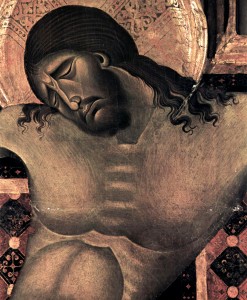
“If anyone wants to be my disciple, that person must deny herself, take up her cross, and follow me.”
Luke brings one of these exchanges into the upper room. Jesus has passed around the cup. He has distributed the bread. He has predicted that the Son of Man is about to be betrayed.
Then they do it.
The disciples start arguing about which one of them seems to be the greatest.
Seriously. Right after Jesus invites them into the story of his death. Right after he says that betrayal is right around the corner. Right after (in other words) Jesus making it clear that “seeming to be great” is not the stuff of the Kingdom of God.
What is true for the King must be true for the subjects as well. The disciples are looking for the glory while rejecting the way of the cross.
So Jesus calls them back.
It’s the kings of the Gentiles who lord it over their people. (I’m not that kind of king.)
Those who have authority over them want to be called benefactors. (I’m not bringing or giving to you that kind of authority.)
Jesus invites them to flip all of this on its head:
Become like the person at the bottom of the pecking order. Pursue greatness by becoming like the youngest.
Do you want to be thought to be something? Become like the person who serves.
You can’t separate the king and the kingdom. You can’t separate Christ and his followers. This is probably the most important thing that the cross shows us and does for us: it demonstrates that the economy of the kingdom of God turns the world’s economy of power and glory and wealth and honor on its head.
Serving Tables
Jesus has served the disciples the Passover meal. He has served them his very life as he has given them his body and blood. It seems that they might have missed it. So Jesus goes on to connect the dots.
Who’s greater? The one who stands to serve or the one who sits to be served? Look–I’m here as the one serving the table.
Greatness, faithfulness, honor, privilege, being thought to be greatest—a subversive new vision is being enacted before their eyes.
It’s a hard lesson to learn. Every day we swim in waters of judgment and self-assessment that push us toward being thought to be something.
We are enculturated to judge by what we see, to participate in the economy of greatness that makes our own kings and rulers rise to the top.
It’s a hard lesson to learn. Just ask the disciples.
After Jesus’s death and resurrection, while the church was starting to bustle in Jerusalem, there was a dispute. The Greek-speaking Jewish widows were being neglected in the daily distribution of food. The problem was brought to the disciples.
“Well… It would be a huge mistake for us to leave aside the really. important. stuff we do. I mean, seriously–leave aside the preaching of the word and prayer for… what? serving tables? I don’t think so.”
And then the story of Acts, for the most part, quietly leaves the disciples behind as the table-servers fulfill Jesus’s mandate to take the gospel to all Judea and Samaria.
It’s a hard lesson to learn.
The easiest thing in the world is for us to create a Christian sub-culture that is just our own version of what’s on offer “out there.” The easiest thing in the world is for us to laud and honor those who can run a successful multi-million dollar business. The easiest thing in the world is for us to laud and honor those who can earn Ph.D.s at research universities. The easiest thing in the world is for us to scrap and fight for our agendas and ourselves even in the church.
But the Passion Narrative points to a different way.
It shows us that entrusting ourselves to this story is dangerous business. It shows us that the danger did not pass on Easter Sunday. It shows us that we risk everything to follow Jesus.
We, too, must be like the servant. We, too, must be like the child. We, too, must betray the power brokering of the world we find ourselves in every day and expect to be betrayed in kind.
Yes, there’s plenty of glory to be had. Yes, there’s plenty of greatness to be considered. “But not so among you.”
Previous Post
March 23, 2016
Holy Week: the Penultimate Supper
Next Post
March 25, 2016 Holy Week: Good Friday
Browse Our Archives
Select a Category American Culture Bible Book Reviews Church Culture Conferences LectioCast Newbigin House Pop Culture Uncategorized
Select a Month October 2017 March 2017 February 2017 January 2017 November 2016 October 2016 September 2016 August 2016 July 2016 June 2016 May 2016 April 2016 March 2016 February 2016 January 2016
Follow Us!
TAKE THE
Religious Wisdom Quiz
Which disciple brought his brother to Jesus, saying, 'We have found the Messiah'?
Select your answer to see how you score.
Andrew John James Peter
Related posts from Storied Theology



Love Your Enemy: Thoughts on Donald Trump

Today, the Human Jesus Matters
TRENDING AT PATHEOS Progressive Christian

What Being a Modern-Day Apostle Means to Me
In my last column, I discussed the ins and outs of modern-day...

Did Ancient China Once Worship the God of...
Across human history, a common thread weaves through the origins of the...

Love Your Neighbor – Including Earth-Kin: Lev. 19,...
God’s command to love your neighbor means acting in an ethical and...

Lead a Church Study of “Jesus and Lao...
Guest writer Jack Thomas (The Irreverent Reverend) reflects on leading his church...

Pastoral Wisdom for Responding to Sermon Pushback
Getting sermon pushback on your social justice sermon? Learn practical, Proverbs-based strategies...

Principles for Understanding the Apostolic Ministry Today
Whenever people discover that my formal ministry title is "apostle," as in...
view all Progressive Christian blogs
Ad-Free & Subscriber Log-In Subscription Support
- About Us
- 2026 Calendar
- Videos
- Podcasts
- Library of World Religions
- Faith In Media Tracker
- Advertise With Us
- Write for Us
- Privacy Policy
- Terms of Service
- Do Not Sell My Data
- Contact Us
- Radiant Digital
- Manage Newsletter Subscriptions
- Unsubscribe From Notifications
- Sitemap
Copyright 2008-2026, Patheos. All rights reserved.
Subscription Support Ad-Free & Subscriber Log-In
Follow Patheos