
BuddhistCatholicContemplativeEvangelicalGeneral ChristianHinduJewishLatter-day SaintMuslimNew VisionsProgressive Christian
Beliefs
- Buddhist
- Catholic
- Contemplative
- Evangelical
- General Christian
- Hindu
- Jewish
- Latter-day Saint
- More Voices
- Muslim
- New Visions
- Pagan
- Progressive Christian
Topics
- Religion News
- Food and Religion
- Sports and Religion
- Religious Art
- Religious Music and Entertainment
- Religious Events
- History and Religion
- Style and Religion
- Politics and Religion
- Women in Religion
- Recreation Outdoors and Religion
- Business Finance and Religion
- Careers Workplace and Religion
- Education and Religion
- Family Parenting and Religion
- Health Fitness and Religion
- Home and Religion
- Relationships and Religion
- Technology and Religion
- Travel and Religion
Columnists
- Buddhist Columnists
- Business Finance and Religion Columnists
- Careers Workplace and Religion Columnists
- Catholic Columnists
- Contemplative Columnists
- Education and Religion Columnists
- Evangelists Columnists
- Family Parenting and Religion Columnists
- General Christian Columnists
- Health Fitness and Religion Columnists
- Hindu Columnists
- History and Religion Columnists
- Home and Religion Columnists
- Jewish Columnists
- More Voices Columnists
- Latter Day Columnists
- Muslim Columnists
- New Visions Columnists
- Nonreligious Columnists
- Pagan Columnists
- Politics and Religion Columnists
- Progressive Columnists
- Recreation Outdoors and Religion Columnists
- Relationships and Religion Columnists
- Religion News Columnists
- Religious Art Columnists
- Religious Events Columnists
- Religious Music and Entertainment Columnists
- Sports and Religion Columnists
- Style and Religion Columnists
- Technology and Religion Columnists
- Travel and Religion Columnists
- Women in Religion Columnists
Resource Library
- 2026 Calendar
- Library of World Religions
- The 100 Most Holy Places on Earth
- Patheos Answers
- Podcasts
- Videos
- Faith Leaders Database
- Anglican Episcopalian
- Bahai
- Baptist
- Buddhism
- Christianity
- Confucianism
- Eastern Orthodoxy
- Hinduism
- Holiness and Pentecostal
- ISKCON
- Islam
- Judaism
- Lutheran
- Methodist
- The Church of Jesus Christ of Latter-day Saints
- New Age
- Paganism
- Presbytarian and Reformed
- Protestantism
- Religion Behind the Scenes
- Roman Catholic
- Scientology
- Shia Islam
- Sikhism
- Sufism
- Sunni Islam
- Taoism
- Zen
- See all religions
Research Tools
 Ad-Free & Subscriber Log-In Subscription Support
Ad-Free & Subscriber Log-In Subscription Support
Follow Patheos 

- Trending:
- Forgiveness
- |
- Marriage
- |
- Consciousness
- |
- Death Penalty
- |
- Election
- |
- Halloween
 Storied Theology
- Home
- Progressive Christian
- Abomination and God’s Embrace
Abomination and God’s Embrace
Last updated on: February 22, 2016 at 11:09 am by J. R. Daniel Kirk
Abomination and God’s Embrace 2016-02-22T11:09:31-08:00 J. R. Daniel Kirk
Patheos Explore the world's faith through different perspectives on religion and spirituality! Patheos has the views of the prevalent religions and spiritualities of the world.
Abomination to the Egyptians
The idea of “abominations” has deep roots in Israel’s story.
Back before Israel had any laws. Before the Ten Commandments. Before the Exodus. Before they had been given any rules about what to eat and what not to eat.
The idea (and the word) first appears when Joseph is Pharaoh’s righthand man and his brothers come and find him.
Joseph eats alone. Joseph’s brothers are then served on their own. And the Egyptians eat with neither—because eating bread with the Hebrews would be an abomination to the Egyptians (Genesis 43:32).
Israel in Egypt is a people excluded from table fellowship with their hosts because they, themselves, are an abomination to their host people.
And when Jacob, the patriarch of this family joins his sons in Egypt, when the whole family comes with all their flocks and herds, this exclusion is compounded. They are shepherds. And every shepherd is an abomination to the Egyptians (Genesis 46:34), so Israel will live in Goshen.
So when, five chapters later in the book of Exodus, God sides with Israel, God is siding with the abomination. He is not only coming to take the side of the enslaved against the oppressor, he is coming to take those who, from the very beginning, had been excluded from table fellowship because they were “an abomination.” He is coming to side with those who, from the very beginning of their time in Egypt, had been excluded from daily social intercourse because they were “an abomination.”
God took their side, embracing the abomination as God’s own beloved, first-born son.
Turning the Tables
As the laws for Israel unfold, they turned the tables on the nations around them. Israel an abomination? No—it’s the people of the land who are an abomination.
Israel was to keep its social relations from mirroring the abominations of the people who were in the land before them (Leviticus 18).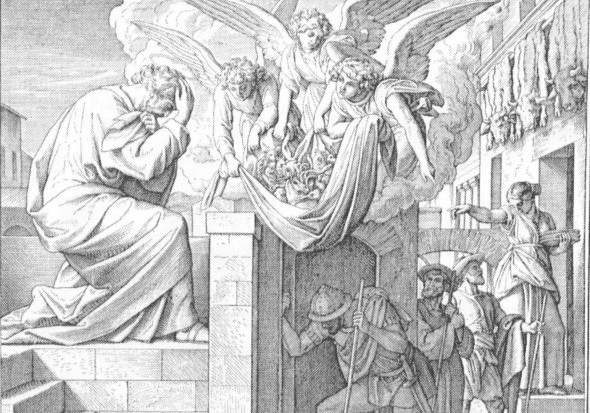
Israel was to keep its divine worship from mirroring the idolatrous abominations of the people who were in the land before them (Deuteronomy 7, 12, 13, 17, 18). In fact, the people of the land were to be utterly annihilated so that they would not teach Israel worship practices that are an abomination (Deuteronomy 20:16–18).
Then, of course, there was the food. Israel was not to eat foods that were an “abomination” (Deuteronomy 14:3). Just as Israel had been an abomination to the Egyptians, and this isolated them, prohibiting them from sharing a meal, so Israel would insulate itself with its own food laws, keeping its table “pure” from the “defilements” of the people around them.
The labeling of each of these things as “abominations” was not simply a statement of how they were perceived by God. They were statements of how Israel perceived their neighbors. They were religious commitments with severe social judgments.
Israel would be separate. They would avoid the people of the land. They would annihilate the people of the land.
They had adopted the script of the Egyptians, but written themselves into the place of powerful.
Opening Up the Table
The apostle Peter might be excused for having a hard time with his alleged dream. When a sheet of creepy crawly things appears and a voice says, “Rise! Kill and eat!” it is almost certainly going to be a test.
“Will you, Peter, stand for the purity demanded by the Lord, rather than eat this sizzling piece of bacon?” “Yes, Father! Nothing unclean has ever passed my lips. No abominations for me! Now, please take that plate away!”
But that’s not how it went down. Instead, it was a massive revision in the abominable. God was embracing the abomination as God has done at the Exodus. God was purifying what previously was “unclean.”
“What I have purified, don’t you defile.”
The table would be opened up. Now, no longer would the law of purity and impurity, of food as “abomination,” isolate the people of God from the people of the land.
The script had changed. No longer was it the same script of the powerful pure sealing themselves off from the abominable outsiders. God had embraced the abomination. Again. And shown that the purifying power of God’s embrace overcomes the defiling power of the world’s “abominations.”
And So the Pastor Reads
In 2016 the pastor stands up to read: “You shall not lie with a male as with a woman. It is an abomination” (Leviticus 18:22).
And we must ask: where is God in this?
Is God upholding the script of the Egyptians that excluded the Israelites as an abomination? Is God upholding the script of the Israelites that held the people of the land and their practices to be an abomination? Is God upholding this division between the people of the land and the people who came before? Is God on the side of the circumcision party, demanding the assimilation of the abominable outsiders to the pure practices of Israel?
Or is God embracing the abomination? Is God renewing God’s favor for the enslaved and excluded? Is God demonstrating, yet again, that God’s power to create purity overwhelms the world’s power to create defilement?
Which plot better describes the character of God in the story you believe?
Previous Post

February 19, 2016
Life's Too Short to Not Read David Dark
Next Post

February 23, 2016 Still A Christian: I Believe
Browse Our Archives
Select a Category American Culture Bible Book Reviews Church Culture Conferences LectioCast Newbigin House Pop Culture Uncategorized
Select a Month October 2017 March 2017 February 2017 January 2017 November 2016 October 2016 September 2016 August 2016 July 2016 June 2016 May 2016 April 2016 March 2016 February 2016 January 2016
Follow Us!
TAKE THE
Religious Wisdom Quiz
Who did God call to lead the Israelites out of Egypt?
Select your answer to see how you score.
David Aaron Joseph Moses
Related posts from Storied Theology



Love Your Enemy: Thoughts on Donald Trump

Today, the Human Jesus Matters
TRENDING AT PATHEOS Progressive Christian

What Being a Modern-Day Apostle Means to Me
In my last column, I discussed the ins and outs of modern-day...

Did Ancient China Once Worship the God of...
Across human history, a common thread weaves through the origins of the...

Love Your Neighbor – Including Earth-Kin: Lev. 19,...
God’s command to love your neighbor means acting in an ethical and...

Lead a Church Study of “Jesus and Lao...
Guest writer Jack Thomas (The Irreverent Reverend) reflects on leading his church...

Pastoral Wisdom for Responding to Sermon Pushback
Getting sermon pushback on your social justice sermon? Learn practical, Proverbs-based strategies...

Principles for Understanding the Apostolic Ministry Today
Whenever people discover that my formal ministry title is "apostle," as in...
view all Progressive Christian blogs
Ad-Free & Subscriber Log-In Subscription Support
- About Us
- 2026 Calendar
- Videos
- Podcasts
- Library of World Religions
- Faith In Media Tracker
- Advertise With Us
- Write for Us
- Privacy Policy
- Terms of Service
- Do Not Sell My Data
- Contact Us
- Radiant Digital
- Manage Newsletter Subscriptions
- Unsubscribe From Notifications
- Sitemap
Copyright 2008-2026, Patheos. All rights reserved.
Subscription Support Ad-Free & Subscriber Log-In
Follow Patheos