
BuddhistCatholicContemplativeEvangelicalGeneral ChristianHinduJewishLatter-day SaintMuslimNew VisionsProgressive Christian
Beliefs
- Buddhist
- Catholic
- Contemplative
- Evangelical
- General Christian
- Hindu
- Jewish
- Latter-day Saint
- More Voices
- Muslim
- New Visions
- Pagan
- Progressive Christian
Topics
- Religion News
- Food and Religion
- Sports and Religion
- Religious Art
- Religious Music and Entertainment
- Religious Events
- History and Religion
- Style and Religion
- Politics and Religion
- Women in Religion
- Recreation Outdoors and Religion
- Business Finance and Religion
- Careers Workplace and Religion
- Education and Religion
- Family Parenting and Religion
- Health Fitness and Religion
- Home and Religion
- Relationships and Religion
- Technology and Religion
- Travel and Religion
Columnists
- Buddhist Columnists
- Business Finance and Religion Columnists
- Careers Workplace and Religion Columnists
- Catholic Columnists
- Contemplative Columnists
- Education and Religion Columnists
- Evangelists Columnists
- Family Parenting and Religion Columnists
- General Christian Columnists
- Health Fitness and Religion Columnists
- Hindu Columnists
- History and Religion Columnists
- Home and Religion Columnists
- Jewish Columnists
- More Voices Columnists
- Latter Day Columnists
- Muslim Columnists
- New Visions Columnists
- Nonreligious Columnists
- Pagan Columnists
- Politics and Religion Columnists
- Progressive Columnists
- Recreation Outdoors and Religion Columnists
- Relationships and Religion Columnists
- Religion News Columnists
- Religious Art Columnists
- Religious Events Columnists
- Religious Music and Entertainment Columnists
- Sports and Religion Columnists
- Style and Religion Columnists
- Technology and Religion Columnists
- Travel and Religion Columnists
- Women in Religion Columnists
Resource Library
- 2026 Calendar
- Library of World Religions
- The 100 Most Holy Places on Earth
- Patheos Answers
- Podcasts
- Videos
- Faith Leaders Database
- Anglican Episcopalian
- Bahai
- Baptist
- Buddhism
- Christianity
- Confucianism
- Eastern Orthodoxy
- Hinduism
- Holiness and Pentecostal
- ISKCON
- Islam
- Judaism
- Lutheran
- Methodist
- The Church of Jesus Christ of Latter-day Saints
- New Age
- Paganism
- Presbytarian and Reformed
- Protestantism
- Religion Behind the Scenes
- Roman Catholic
- Scientology
- Shia Islam
- Sikhism
- Sufism
- Sunni Islam
- Taoism
- Zen
- See all religions
Research Tools
 Ad-Free & Subscriber Log-In Subscription Support
Ad-Free & Subscriber Log-In Subscription Support
Follow Patheos 

- Trending:
- Forgiveness
- |
- Marriage
- |
- Consciousness
- |
- Death Penalty
- |
- Election
- |
- Halloween
 Storied Theology
- Home
- Progressive Christian
- Christian Ed: Not Quite Dead?
Christian Ed: Not Quite Dead?
Last updated on: February 13, 2016 at 7:52 am by J. R. Daniel Kirk
Christian Ed: Not Quite Dead? 2016-02-13T07:52:05-08:00 J. R. Daniel Kirk
Patheos Explore the world's faith through different perspectives on religion and spirituality! Patheos has the views of the prevalent religions and spiritualities of the world.
“Bring Out Your Dead”
It seems that I have inadvertently staged a reenactment of one of the greatest scenes in cinematographic history—that incomparable moment in Monty Python and the Holy Grail when a man with a cart and gong is rounding up the plague-killed bodies.
“Bring out your dead.”
“Here’s one.”
“Nine pence.”
“I’m not dead.”
…
“He says he’s not dead.”
“Yes he is.”
“I’m not.”
Utter perfection.
My particular rendition referred to another plague: the plague of the (Evangelical) Christian higher ed administrator. Yes, I proclaimed that it is not possible to work at such a place as a faculty member and maintain one’s academic integrity.
Hard as it is to believe, not everyone nodded knowingly at my proclamation. Jack Levison responded to me at some length on Huffington Post.
The proverbial, “I’m not dead.”
Power Postures
The opening salvo of Levison’s article lays bare for me the core difference in posture between those who see Christian higher ed as dead (or at least mortally wounded) and those who see it as perhaps flawed but generally a place where flourishing is possible. That posture is this: whether we fundamentally side with people who are in power in the exercise of that power and take umbrage at people who stand as outliers and prophets or whether we have a basic posture of siding with the prophets who raise their voices from the margins.
Here’s his surprise intro:
I am appalled — but not for the reasons you may think.
I am appalled by how indiscriminately Mr. Kirk generalized his claim that Christian Higher Education is dead.
There is always a grave danger in thinking that someone who does not respond the same way that we do to a certain event is somehow wrong or lesser or off base. But in this case if the appalling treatment that Dr. Hawkins received at the hands of Wheaton is not the foremost reason someone is appalled, then we have quite different postures toward institutions, administrators, and their vulnerable employees. 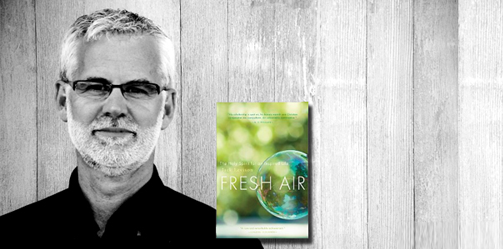
For my money, I generally find myself closer to the gospel when I side with the victim rather than aligning myself with those in power or those who come to the victim’s defense.
To take this as the place of offense in the story is all the more surprising given that Levison goes on to describe another situation in Christian higher ed, one that he endured, that demonstrates my point precisely.
SPU: Another Example
Levison tells of the time he and his wife shared a position at Seattle Pacific University.
For example, the LGBTQ community, called Haven, struggled and strove for acceptance as a club. Repeatedly, the administration — white, male administrators — stalled and equivocated. Time and again.
Yes, these are the kinds of problems I’m talking about.
Priscilla, a United Methodist minister, celebrated the eucharist right under the provost’s nose two weeks after he had forbidden it.
Yes, these are the kinds of problems I’m talking about.
And we lost — for a while. I lost some privileges I once had. We lost nights’ sleep. We lost camaraderie with the administration — and with some faculty colleagues.
Yes, these are the kinds of problems I’m talking about.
Levison goes on say that they never lost a job or a paycheck, and that a subsequent president gave Haven club status. That’s truly great.
But the overall point is this: the only way for the Levisons to do their work with integrity was to cut against the grain of the institution, to stand up against the administration, to lose professional ground, and endanger their livelihoods.
Being at Christian institution did not foster or incubate their ability to do their work with integrity, they did their work with integrity despite the Christian institution.
They were fortunate to not lose their jobs. They dodged a bullet. But if anything Levison shows another example of why I would say that Christian higher ed, as such, is dead, and you are better off going to a State University or post-Christian liberal arts college or mainline college or seminary.
I had a mental list of schools that I thought substantiated my thesis that Christian higher ed is dead (Calvin, Cedarville, Lincoln Christian, Wheaton, Gordon). Had I known the story Levison told on Huffington Post, I might have had SPU in mind as well.
Now for the Log
So much for the speck in my brother’s eye. True to my “always follow Jesus” form, I will now get things precisely backward by turning to acknowledge my own shortcoming in the blog piece.
It was not a nuanced piece. I do not think that moments of injustice are times for the niceties of nuance. I am haunted by the myriad ways and in untold pockets of our society play the part of the white pastors to whom Martin Luther King Jr. wrote his Letter from a Birmingham Jail. Injustice is never ok. Silence is always complicity. Being nice is always a play into the hands of the powerful.
I tried to leave an out, but it was not sufficiently clear. I said:
Each school must point to itself and show that evolution, and critical biblical scholarship, and measured assessments of the world’s religions are part of the warp and woof of the academic curriculum.
I welcome any school to give it a shot.
Here’s what I should have made more clear: the notion that only the Bob Joneses of the world are fundamentalist institutions where education takes a back seat to indoctrination is a myth that has been exploded (Frank Shaffer goes off even more strongly on this here). With each Calvin or Wheaton or Gordon (three schools from which I would have expected better) that parts ways with a professor for being thoughtfully Christian in unexpected ways, the assumption that all self-identifying (Evangelical / conservative) Christian schools are so run becomes more and more warranted.
For my money, this means that any school that wants to be perceived differently must come out and make a strong stand to say, “Not on my watch.”
A school whose administrators recognize the tragedy entailed in losing a professor like Dr. Hawkins need to say, at the expense of ruffling the feathers of their peers at peer institutions, “That was grossly mishandled and from what we can tell as outsiders, that will never happen here.”
That means taking a proactive stand on everything that scared, fundamentalist, Republican donors are not going to like, stating publicly that there is room for them at your school:
- Yes, someone can work here and believe and teach evolution.
- Yes, they can follow those conclusions in ways that make us reimagine human origins and original sin.
- Yes, someone can work here and think that Christian posture toward Muslims should be tempered by our common confession that the God of Abraham is the Creator God, the one true and living God.
- Yes, someone can work here and recognize that people are sometimes born neither male nor female and open conversations about what this means for Christian sexual ethics.
- Yes, someone can work here and recognize that the Gospels do not give us verbatim accounts of the life and words of Jesus.
- Yes, someone can work here and argue that part of our theology (e.g., the divinity of Christ) is true, but not the perspective of a given biblical writer of New Testament book.
Any administrator who will not say these things publicly, any school that will not affirm them, is not a place where scientists, theologians, biblical scholars, sociologists, anthropologists, or psychologists can work with integrity and true academic freedom.
It can be done–but who will do it?
The Problem: What Makes Us Christian?
The problem with Christian colleges is the besetting problem of post-Constintinian Christianity. It is the conviction that thinking the right things is what defines us as faithfully Christian. And so we create lists of things we have to think in order to play on one particular playing field.
The problem with this is that the whole point of academic pursuit is the expansion of knowledge. And if knowledge is expanding, it will always come at the expense of what we thought we knew before.
This is why “Christian” will always be a hard ground to hold in “academia” so long as being “Christian” in the right way means signing a statement of faith. No statement of faith, even the most basic set of affirmations such as the Nicene Creed, can stand untarnished by years of scholarship. We discover how deeply influenced everything is by its own time and place, and the scholar gathers the tools to name the distance and the ways that our society rejects the premises upon which earlier declarations were based.
If Christian academia is going to survive, it has to find a better way to define Christian. Perhaps this is why mainline Christians and some Catholic schools (but not all) have found their way forward better than conservative evangelicals.
All these schools, but especially those with strict statements of faith, have to start thinking about Christianity as faithfully following Jesus on the way of the cross.
But this will mean a cost that few colleges are willing to bear: recognizing that it is not the crucifying / firing / manipulating administrators whose work embodies the will of God, but the crucified / fired / out-maneuvered faculty whose careers bear on their bodies, from the hands of those administrators and senior colleagues, the marks of Jesus.
Previous Post

February 11, 2016
Fasting in the Midst of Plenty
Next Post

February 15, 2016 Justice Scalia and Justice Upheld
Browse Our Archives
Select a Category American Culture Bible Book Reviews Church Culture Conferences LectioCast Newbigin House Pop Culture Uncategorized
Select a Month October 2017 March 2017 February 2017 January 2017 November 2016 October 2016 September 2016 August 2016 July 2016 June 2016 May 2016 April 2016 March 2016 February 2016 January 2016
Follow Us!
TAKE THE
Religious Wisdom Quiz
Which river did Naaman wash in to be healed of leprosy?
Select your answer to see how you score.
Nile River Jordan River Euphrates River Arnon River
Related posts from Storied Theology

"God Made Me Like This"? Sexuality & Culture


Love Your Enemy: Thoughts on Donald Trump

TRENDING AT PATHEOS Progressive Christian

What Being a Modern-Day Apostle Means to Me
In my last column, I discussed the ins and outs of modern-day...

Did Ancient China Once Worship the God of...
Across human history, a common thread weaves through the origins of the...

Love Your Neighbor – Including Earth-Kin: Lev. 19,...
God’s command to love your neighbor means acting in an ethical and...

Lead a Church Study of “Jesus and Lao...
Guest writer Jack Thomas (The Irreverent Reverend) reflects on leading his church...

Pastoral Wisdom for Responding to Sermon Pushback
Getting sermon pushback on your social justice sermon? Learn practical, Proverbs-based strategies...

Principles for Understanding the Apostolic Ministry Today
Whenever people discover that my formal ministry title is "apostle," as in...
view all Progressive Christian blogs
Ad-Free & Subscriber Log-In Subscription Support
- About Us
- 2026 Calendar
- Videos
- Podcasts
- Library of World Religions
- Faith In Media Tracker
- Advertise With Us
- Write for Us
- Privacy Policy
- Terms of Service
- Do Not Sell My Data
- Contact Us
- Radiant Digital
- Manage Newsletter Subscriptions
- Unsubscribe From Notifications
- Sitemap
Copyright 2008-2026, Patheos. All rights reserved.
Subscription Support Ad-Free & Subscriber Log-In
Follow Patheos