
BuddhistCatholicContemplativeEvangelicalGeneral ChristianHinduJewishLatter-day SaintMuslimNew VisionsProgressive Christian
Beliefs
- Buddhist
- Catholic
- Contemplative
- Evangelical
- General Christian
- Hindu
- Jewish
- Latter-day Saint
- More Voices
- Muslim
- New Visions
- Pagan
- Progressive Christian
Topics
- Religion News
- Food and Religion
- Sports and Religion
- Religious Art
- Religious Music and Entertainment
- Religious Events
- History and Religion
- Style and Religion
- Politics and Religion
- Women in Religion
- Recreation Outdoors and Religion
- Business Finance and Religion
- Careers Workplace and Religion
- Education and Religion
- Family Parenting and Religion
- Health Fitness and Religion
- Home and Religion
- Relationships and Religion
- Technology and Religion
- Travel and Religion
Columnists
- Buddhist Columnists
- Business Finance and Religion Columnists
- Careers Workplace and Religion Columnists
- Catholic Columnists
- Contemplative Columnists
- Education and Religion Columnists
- Evangelists Columnists
- Family Parenting and Religion Columnists
- General Christian Columnists
- Health Fitness and Religion Columnists
- Hindu Columnists
- History and Religion Columnists
- Home and Religion Columnists
- Jewish Columnists
- More Voices Columnists
- Latter Day Columnists
- Muslim Columnists
- New Visions Columnists
- Nonreligious Columnists
- Pagan Columnists
- Politics and Religion Columnists
- Progressive Columnists
- Recreation Outdoors and Religion Columnists
- Relationships and Religion Columnists
- Religion News Columnists
- Religious Art Columnists
- Religious Events Columnists
- Religious Music and Entertainment Columnists
- Sports and Religion Columnists
- Style and Religion Columnists
- Technology and Religion Columnists
- Travel and Religion Columnists
- Women in Religion Columnists
Resource Library
- 2026 Calendar
- Library of World Religions
- The 100 Most Holy Places on Earth
- Patheos Answers
- Podcasts
- Videos
- Faith Leaders Database
- Anglican Episcopalian
- Bahai
- Baptist
- Buddhism
- Christianity
- Confucianism
- Eastern Orthodoxy
- Hinduism
- Holiness and Pentecostal
- ISKCON
- Islam
- Judaism
- Lutheran
- Methodist
- The Church of Jesus Christ of Latter-day Saints
- New Age
- Paganism
- Presbytarian and Reformed
- Protestantism
- Religion Behind the Scenes
- Roman Catholic
- Scientology
- Shia Islam
- Sikhism
- Sufism
- Sunni Islam
- Taoism
- Zen
- See all religions
Research Tools
 Ad-Free & Subscriber Log-In Subscription Support
Follow Patheos 

- Trending:
- Advent
- |
- Forgiveness
- |
- Thanksgiving
- |
- Election
- |
- Seasonal Holidays
- |
- Marriage

- Home
- Catholic
- Five Ways to Spot Spiritual Abuse
Five Ways to Spot Spiritual Abuse
Last updated on: February 16, 2021 at 8:28 pm by Mary Pezzulo
Five Ways to Spot Spiritual Abuse 2021-02-16T20:28:38-04:00 Mary Pezzulo
Patheos Explore the world's faith through different perspectives on religion and spirituality! Patheos has the views of the prevalent religions and spiritualities of the world.
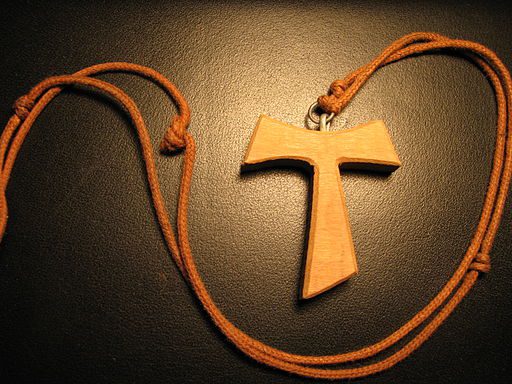
Many years ago now, I went on retreat for the weekend with my FUS “faith household.”
A faith household is an institution unique to Franciscan University, kind of like a combination of a sorority or fraternity and a mini religious order. The members have mandatory daily prayer, business meetings and once-a-semester retreats; they also hang out together and have a lot of fun. Each of them has a theme, patron saints and a charism; when I was at Franciscan University, my Faith Household was called Totus Tuus Maria.
I loved being in Totus Tuus Maria. I considered them my family. I had household sisters for bridesmaids in my wedding and we sang the Household song during the wedding Mass. There were so many wonderful girls in that group. I feel that I have to say that first, before talking about faith households. I loved them. I miss them, and I wish things had ended differently.
But anyway, eleven or twelve years ago we went on retreat. We were all excited to go on that retreat. We loved the long weekends we got to spend together like a real family, praying, going to Mass, listening to spiritual talks, playing games and staying up late giggling. We got ready for this retreat like getting ready for a sleepover: packing comfy pajamas, playing cards, and bags full of snacks.
When we got to the retreat, an hour away from Steubenville with no way to get home since we’d all carpooled, there was a surprise announcement that this retreat would be different. The “household coordinator,” a popular young student elected to run the household for a year, had decided that we would have a silent retreat. From this moment until Sunday after Mass, there would be no talking on the retreat. Our cell phones were to go into the basket by the chapel. And we weren’t allowed to eat the snacks we brought, because we were fasting this weekend. Three meals would be served, but we were going to fast between meals as penance. We were doing penance for the sin of always paying too much attention to the refreshments at Household business meeting instead of humbly paying attention to what the household coordinator wanted to say.
We were shocked and annoyed to have our fun weekend turned into a weekend of self-denial, but we all complied. Nobody broke the rules. I actually liked the silence because I am an introvert, but I don’t think most of the other girls did.
You’d think I’d have learned then that the coordinator was a bully and not trustworthy. But I didn’t. That actually took a long time to catch on. She was more and more overtly pushy as the year went on, and I kept not catching on because of the way she did it– with a smile on her face and a gentle voice, always with the insistence that she was only doing all that she did because she loved us. Eventually she revealed something embarrassing I’d shared in confidence to the entire Household Alumnae email loop, just to be cruel to me, and at that point I realized what I was dealing with. I went over her head and talked to the priest in charge of Household Life.
The priest bawled me out and verbally abused me, yelling until I was in tears and then forced me to resign from being an active member in the household, as a favor to the coordinator, who was a personal friend. And that wasn’t the end of my punishment; I talk about what the priest did next in my book, upcoming in April.
But it also was a good thing that I spoke out, because somebody contacted me privately to thank me for talking about the bullying and secrecy at Franciscan University, which she explained most of the students are too scared to talk about. At first I thought it was just her and me. But then I met another person who had a traumatic experience with bullying in the faith households. And then I met another. And then I found out that I was just one, relatively mild, case in an epidemic of spiritual abuse.
I’m bringing this up right now because I only remembered the retreat with the surprise compulsory silence and fasting a few days ago. And that was the first time in a decade I realized that those penances were themselves a form of spiritual abuse and a warning of everything that came later. I’d thought of it as an annoying weekend before. It took me this long to realize how wrong it was, and how it ought to have been one of the first red lights that the household coordinator was not to be trusted.
I’ve been pondering why it took so long to realize we were being abused, and that it was spiritual abuse.
Why is it so hard to notice when we’re being spiritually abused?
Why is spiritual abuse so hard to name?
I have defined spiritual abuse as abuse perpetrated by someone we perceive as a spiritual authority, using their position as an authority as the excuse. Spiritual abuse can be physical, emotional, sexual, or verbal. Any time a religious authority causes harm to someone in the name of their shared faith, they’re not just committing ordinary abuse. They’re piling spiritual abuse on top of it.
A priest sexually battering somebody and then telling them it was their fault for being sexy is an obvious, extreme example of spiritual abuse. So is a parent beating a child and telling them they’re “training them up in the fear of the Lord,” or a cult leader starving and beating his followers. These are such blatantly wrong examples of spiritual abuse that it’s easier to recognize them. But spiritual abuse can also be emotional and verbal, and that abuse is also traumatic in a different way. A Charismatic community leader who scares people all the time to keep them on their toes and obedient is being abusive. So is a pastor who spreads gossip about a family of parishioners that leads to their being shunned by the community. So is a catechist who humiliates a student. So is any leader who teaches their followers that they’re bad and evil and only by being punished by the leader can they be good again.
Which brings me back to Franciscan University. A household coordinator might not be someone you think of as a spiritual authority like a priest or a catechist, but at Franciscan University they were. On paper they’re supposed to be more like a secretary, keeping the household organized, leading the meetings and keeping track of phone numbers and birthdays. But, at least while I was there, they were treated like a mother superior– in fact, when I complained about the bullying in the household, the priest in charge ordered me over the phone to “be obedient to your superior.” He viewed that bullying coordinator as my superior in a religious order, and himself as the superior to both of them.
And, at least until I was thrown out of household, I bought that. I tried to obey them for a ridiculously long time. I was downright shocked when it finally sunk in that these people were bullies and abusers, not followers of God at all.
These are some things I’ve discovered in the years since I’ve been at Franciscan University. They may seem obvious to some of you, but for people who have been spiritually abused for a long time, they’re things we have to learn. Learning to spot abuse and to stand up for yourself when you are used to being abused is a process, similar to learning a new language.
The first point is that you are a good person deeply loved by a God Who made you on purpose. God gave you the ability to know love from abuse, and He doesn’t want you to be hurt. We live in a fallen world where nobody is perfect. You’re not perfect either. You’re capable of hurting people and of having bad ideas; you’re in need of repentance just like anybody else. But you’re not uniquely messed up or unable to hear the prompting of the Holy Spirit. You can know what’s good for you, and you can know whether you’re being abused. You have to hold onto that knowledge, because abusers can smell someone who’s uncertain about it a mile away. They will use it to take advantage of you.
Secondly, if you’ve been spiritually abused in the past, chances are you’re accustomed to it, so you have to take special care. My family had been involved in a very ugly sect of the Charismatic Renewal, and then I was briefly involved with Regnum Christi and some other abusive movements, so by the time I got to Franciscan University I was used to being spiritually abused and couldn’t spot an abuser. And I’m not alone; many people have been spiritually abused multiple times. Each time you’re abused it gets harder to spot the abuser the next time, so you have to care for yourself by learning what abuse is all over again.
Third, spiritual abuse can be difficult for us to spot, because it comes to us in sheep’s clothing. Abusers probably don’t look like you think they’re going to look. You’ve been groomed to think that a certain group of people are bad, and another group of people are good– everybody is raised with expectations like that in one way or another. But for those of us who have a history of being spiritually abused that list probably has a lot of random designations on it. For me, for example, religious brothers and sisters who didn’t wear habits were presented as bad and disobedient, but the ones who walk around all day in a strict habit are obedient and good. People who pray the Rosary every day were “real Catholics” and people who practiced a different devotion were fakes. Maybe you’ve been raised to believe that priests are always trustworthy and another group of people are always not, or that Franciscans are good and Jesuits or bad, or something like that. Spiritual abusers take advantage of sets of rules like this by being ostentatious about outward signs that code as “good.” In order to protect yourself, you need to look at outward signs of piety as neutral rather than a good sign of trustworthiness. Abusers can take advantage of any good thing for their own purposes. Both trustworthy and untrustworthy people can join religious orders and wear habits. Both saints and abusers pray the Rosary after Mass. Both kind and unkind people wear scapulars. It’s how people treat one another that tells us if they’re trustworthy.
Fourth, spiritual abuse is usually committed in the name of love. Spiritual abusers are great at saying they love you. They’re experts at making you feel deeply loved one minute and torturing you the next– and, often enough, while you’re reeling from the abuse, you’re still feeling that the abusive person loves you so it must be for your own good somehow. Every single Saturday afternoon Household “Lord’s Day” prayer meeting, we would pass a lit candle to one another and say “you are the light of the world and I love you.” The household coordinator told us that she loved us all the time. When she sensed that we were going to protest what she was about to say, she’d smile and say “How much do you want me to love you?” and when we answered that we wanted her to love us very much, she said “I just wanted to challenge you…” and then gave us our marching orders. You can protect yourself from that kind of abuse by remembering that love is not just a word. Love is an action. If someone says they love you while acting in a way that hurts, you have to look closely at what they’re doing and exercise sound judgement– because what they’re doing probably isn’t loving after all.
The fifth point is extremely important: pain is a sign that something is wrong. Many victims of spiritual abuse are taught that pain is a sign of love. Pain, we’re told, is something our abusers inflict to help us be good. We’re only suffering so much because we’re bad people they’re trying to fix. But remember the first rule: you’re already a good person. You’re capable of mistakes and sins just like anybody else, but you can look at what’s going on, and at your own feelings, and make good choices. God made humans capable of feeling pain because pain is a barometer. We have to listen to our pain, to try and figure out what’s happening to us. Sometimes pain will point out our own flaws. Sometimes we’re in pain because we’ve done a bad thing and now we’re confronted with the consequences of our actions. Sometimes we’re in pain because we’re unused to doing a good thing and the unfamiliarity hurts. But often, pain is a sign that we’re being abused. If being with a person makes you deeply uncomfortable, listen to that discomfort and ask yourself why. If something a spiritual authority is asking you to do feels painful. humiliating or unfair, chances are that that authority is being abusive.
If someone is surprising you with penances that hurt, it’s a good bet that that person is abusive. Good spiritual advice and formation come from a place of freedom, not a place of feeling trapped.
If you protest against something that hurts and the authority figure goes on to bully or embarrass you, you can be certain they’re abusive. Even if they have a reputation for holiness and carry a big Rosary.
God loves you, and true love doesn’t want people to be hurt.
There’s a lot more to know than that, and I’m still learning all the time. But I hope this helps.
Image via Pixabay
Mary Pezzulo is the author of Meditations on the Way of the Cross and Stumbling into Grace: How We Meet God in Tiny Works of Mercy.
Steel Magnificat operates almost entirely on tips. To tip the author, visit our donate page.
Franciscan University of Steubenville
Previous Post

February 12, 2021
On the Homeless Woman Arrested for Sheltering Her Children
Next Post

February 15, 2021 Christ is the Lord of the Clean and the Unclean
Browse Our Archives
Select a Category abortion Abuse Advent America American Christianity angel angels Annunciation Appalachia apparition apparition chaser apparition chasers apparition culture art art review babies baby baby Jesus Bad Lip Reading bad statue contest bath beauty Bible story blog blogkeeping blood book review Brandon Sanderson breastfeeding bus Catholic catholic conspiracy alarmism Catholic Oppositional Disorder Charismatic Renewal Charlie the Cat chastity Christ Christian idenitity Christianity and Judaism Chronic Illness clean clothing COD piece comedy compassion conscience conspiracy theory conversion cop-on-black violence Crucifixion cry of the poor culture Daesh Daily Saints death death penalty devotional diaconate diaper diapers dirty disability Donald Trump Dorothy Day dream drugs Eastern Catholicism Eastern Christianity education election election update Elsewhere on Patheos empathy environment Fear feminism film review fish flashback fluffy buns food Franciscan University of Steubenville Friendship Room fun Gabriel gardening gospel hair-splitting Heaven hell heresy Hillary Clinton history Holly the Witch Holy Spirit holy war Homeschooling homosexuality horror human dignity humor Icon idol immigrants infection inter-religious dialogue Interpretation of Scripture Islam Jesus Jihad Joseph joy laity and lay vocations lamb dinner laundry lent lgbtq literature love manners Mary Medicine and Science Meditation mercy mess milk misogyny Missouri monasticism monster motherhood mourn with those mourn movies movis music mystery nature neurodiversity New Pro-Life Movement news nonsense nostalgia O antiphons obituary objectification Ohio Valley Ordinary Time ordination Ordo Amoris parable paradox Passover peanut butter personal beliefs pets philosophy Planet Charismatic poetry politics polls poop Pope Francis Pope Leo power in the Church prayer prayer request prayers preferential option for non-violence president presidential election priest primary private revelation pro-life prophecy Public face of Catholicism Pure Flix Q and A race racism random rape rape. sexuality reader's request Reckoners refugee religious trauma ressurrection Right to life Saints saints and celebrations same-sex same-sex marriage satire scandal secular feasts seder Seven Joys Seven Last Words sex sexual ethics sexuality silencing six months skid row slavery social justice Speculative fiction spiritual abuse spoon stain story suffering suffrage suffragette Sunday Gospel temple Tenebrae Responsories Terror the exorcist The Friendship Room The New Pro-Life Movement Things I Learned on the Internet tin cup traffic true story tv review Uncategorized USCCB vice and temptation violence Virtue virtue and vice war Way of the Cross whimsy whole life women's ordination work of mercy Year A
Select a Month November 2026 October 2026 September 2026 August 2026 July 2026 June 2026 May 2026 April 2026 March 2026 February 2026 January 2026 December 2025 November 2025 October 2025 September 2025 August 2025 July 2025 June 2025 May 2025 April 2025 March 2025 February 2025 January 2025 December 2024 November 2024 October 2024 September 2024 August 2024 July 2024 June 2024 May 2024 April 2024 March 2024 February 2024 January 2024 December 2023 November 2023 October 2023 September 2023 August 2023 July 2023 June 2023 May 2023 April 2023 March 2023 February 2023 January 2023 December 2022 November 2022 October 2022 September 2022 August 2022 July 2022 June 2022 May 2022 April 2022 March 2022 February 2022 January 2022 December 2021 November 2021 October 2021 September 2021 August 2021 July 2021 June 2021 May 2021 April 2021 March 2021 February 2021 January 2021 December 2020 November 2020 October 2020 September 2020 August 2020 July 2020 June 2020 May 2020 April 2020 March 2020 February 2020 January 2020 December 2019 November 2019 October 2019 September 2019 August 2019 July 2019 June 2019 May 2019 April 2019 March 2019 February 2019 January 2019 December 2018 November 2018 October 2018 September 2018 August 2018 July 2018 June 2018 May 2018 April 2018 March 2018 February 2018 January 2018 December 2017 November 2017 October 2017 September 2017 August 2017 July 2017 June 2017 May 2017 April 2017 March 2017 February 2017 January 2017 December 2016 November 2016 October 2016 September 2016 August 2016 July 2016 June 2016 May 2016 April 2016 March 2016
Follow Us!
TAKE THE
Religious Wisdom Quiz
What fruit of the Spirit is described as "patience" or "longsuffering"?
Select your answer to see how you score.
Patience Pride Apathy Anger
Related posts from Steel Magnificat

The American Pro-Life Movement Lied. Now What?

The Hedge, the Leviathan, and the Mystery of...
A New Series on the Abuse at Franciscan...

The Difference a Name Can Make
TRENDING AT PATHEOS Catholic

"Why Do Churches Talk So Much About Money?"
If you were inclined to do so, you could probably find any...

Watch and Pray: On Mark 13:33-37
Jesus said to his disciples: “Be watchful! Be alert! You do not...

Debate on Purgatory & Biblical Evidences for It
This is from a combox on my video channel, Catholic Bible Highlights....

Set the table for the coming King
On Thursday we visited my sister-in-law for Thanksgiving, and throughout the entire...

If I Stop Becoming, Will I Disappear?
(At our most recent half day Zen retreat, Dr Chris Hoff, a...

A Modest Proposal for President Trump
Trump should just quit the loser Republicans who failed him so badly...
view all Catholic blogs
Ad-Free & Subscriber Log-In Subscription Support
- About Us
- 2026 Calendar
- Videos
- Podcasts
- Library of World Religions
- Faith In Media Tracker
- Advertise With Us
- Write for Us
- Privacy Policy
- Terms of Service
- Do Not Sell My Data
- Contact Us
- Radiant Digital
- Manage Newsletter Subscriptions
- Unsubscribe From Notifications
- Sitemap
Copyright 2008-2026, Patheos, part of the Radiant Digital network of media brands. All rights reserved.
Subscription Support Ad-Free & Subscriber Log-In
Follow Patheos