
BuddhistCatholicContemplativeEvangelicalGeneral ChristianHinduJewishLatter-day SaintMuslimNew VisionsProgressive Christian
Beliefs
- Buddhist
- Catholic
- Contemplative
- Evangelical
- General Christian
- Hindu
- Jewish
- Latter-day Saint
- More Voices
- Muslim
- New Visions
- Pagan
- Progressive Christian
Topics
- Religion News
- Food and Religion
- Sports and Religion
- Religious Art
- Religious Music and Entertainment
- Religious Events
- History and Religion
- Style and Religion
- Politics and Religion
- Women in Religion
- Recreation Outdoors and Religion
- Business Finance and Religion
- Careers Workplace and Religion
- Education and Religion
- Family Parenting and Religion
- Health Fitness and Religion
- Home and Religion
- Relationships and Religion
- Technology and Religion
- Travel and Religion
Columnists
- Buddhist Columnists
- Business Finance and Religion Columnists
- Careers Workplace and Religion Columnists
- Catholic Columnists
- Contemplative Columnists
- Education and Religion Columnists
- Evangelists Columnists
- Family Parenting and Religion Columnists
- General Christian Columnists
- Health Fitness and Religion Columnists
- Hindu Columnists
- History and Religion Columnists
- Home and Religion Columnists
- Jewish Columnists
- More Voices Columnists
- Latter Day Columnists
- Muslim Columnists
- New Visions Columnists
- Nonreligious Columnists
- Pagan Columnists
- Politics and Religion Columnists
- Progressive Columnists
- Recreation Outdoors and Religion Columnists
- Relationships and Religion Columnists
- Religion News Columnists
- Religious Art Columnists
- Religious Events Columnists
- Religious Music and Entertainment Columnists
- Sports and Religion Columnists
- Style and Religion Columnists
- Technology and Religion Columnists
- Travel and Religion Columnists
- Women in Religion Columnists
Resource Library
- 2026 Calendar
- Library of World Religions
- The 100 Most Holy Places on Earth
- Patheos Answers
- Podcasts
- Videos
- Faith Leaders Database
- Anglican Episcopalian
- Bahai
- Baptist
- Buddhism
- Christianity
- Confucianism
- Eastern Orthodoxy
- Hinduism
- Holiness and Pentecostal
- ISKCON
- Islam
- Judaism
- Lutheran
- Methodist
- The Church of Jesus Christ of Latter-day Saints
- New Age
- Paganism
- Presbytarian and Reformed
- Protestantism
- Religion Behind the Scenes
- Roman Catholic
- Scientology
- Shia Islam
- Sikhism
- Sufism
- Sunni Islam
- Taoism
- Zen
- See all religions
Research Tools
 Ad-Free & Subscriber Log-In Subscription Support
Ad-Free & Subscriber Log-In Subscription Support
Follow Patheos 

- Trending:
- Forgiveness
- |
- Marriage
- |
- Consciousness
- |
- Death Penalty
- |
- Election
- |
- Halloween

- Home
- Catholic
- The Price of Ordinary
The Price of Ordinary
Last updated on: June 7, 2020 at 6:40 pm by Mary Pezzulo
The Price of Ordinary 2020-06-07T18:40:46-04:00 Mary Pezzulo
Patheos Explore the world's faith through different perspectives on religion and spirituality! Patheos has the views of the prevalent religions and spiritualities of the world.
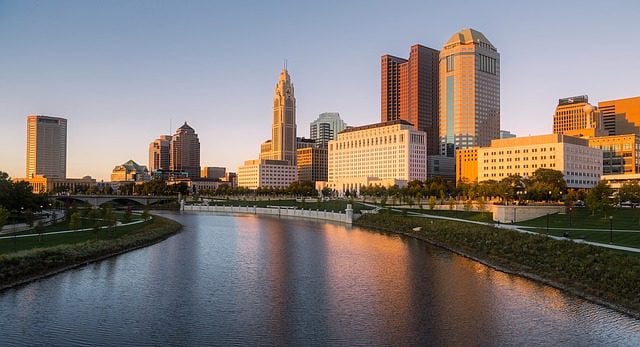
Columbus, Ohio, is an ordinary place.
I’m not using “ordinary” as a pejorative there; I’m just stating a fact. The population of Columbus is so demographically dead average that I’m told corporations regularly test new products in Columbus, to get an idea of how the entire rest of the United States will react.
When I grew up in Columbus wanted an adventure out of a fairy story, but what I got was Leave it to Beaver. My family wasn’t very ordinary, but we lived in an ordinary neighborhood, on a picturesque residential street where everyone had a pretty garden in the front yard. We were two blocks from the Whetstone branch library, with a big abstract metal sculpture outside of it that I didn’t know was supposed to be a giant book with fluttering pages. Behind the public library was a playground. A few blocks down was a medium-priced grocery store with no liquor, because that was a “dry street” where liquor stores were illegal. A few blocks up the other way was an expensive grocery store with imported European treats and a generous liquor section, because that was right on the other side of the border of the “dry” neighborhood. We bought our groceries from the medium store most of the time, and the expensive store on special occasions. We went to the library more than once a week and went to the park afterwards when it was nice outside. Everyone who lived in the neighborhood was white, everyone was middle class or richer.
The worst crime that ever happened on our street, when I was a child, was that somebody spray painted a nonsense word on our fence one night. I got a notebook and pencil and skulked around the yard like Harriet the Spy for days, trying to figure out who did it, but I never did.
That was my part of Columbus.
There were other parts of Columbus that weren’t like mine, and I knew it. There were districts far more wealthy and luxurious than my neighborhood. There was the Short North, the artsy district which made my very conservative mother nervous. There was the Ohio State University Campus, which was crowded and diverse and more than a little frightening to a shy girl. There were neighborhoods where immigrants lived and I never went there. There were neighborhoods where Black people lived and those were usually poorer than the white ones. I could never understand why that was, because no one had taught me about red-lining and the generational poverty it produced. There was downtown, where the Catholic church with the communion rail and all the Dominican priests was. We went to that church instead of the one in our neighborhood because we were the Right Kind of Catholics, though it meant travelling into a neighborhood that was a bit “sketchy.” There was always a police officer outside that church during Mass, a smiling man who called himself “policeman Bill.” Policeman Bill’s job was to make sure that the wrong people, the people who actually lived in that part of downtown, never went into the church. Sometimes they did– sometimes panhandlers would wander in during choir practice, and have to be shown out.
This counts as ordinary, as medium-sized American cities go. This is ordinary as can be, ordinary enough to be the background city in a sitcom. There’s nothing strange about it.
I have missed being in Columbus. I haven’t been “home” for thirteen years.
Over the past two weeks, I’ve watched the protests taking place in my hometown with shock. The first night or two there was rioting, as there has been in every part of this country. I don’t condone the rioting. But I didn’t see very much rioting compared with other places, and it quickly settled down into much more peaceful protesting with acts of civil disobedience that didn’t hurt anyone. But everywhere I looked I saw the police escalating it or trying to start violence rather than calming things down. I saw a police officer carefully protected by riot gear, punching and then pepper spraying an unarmed and unmasked protester who verbally heckled him. I saw the police pepper spray reporters and peaceful protesters sitting or standing in the street with their hands up– or even peacefully walking away. There were clouds of tear gas. There were beatings. A college student attending a rally died— allegedly killed by the tear gas. My friend came home from the rallies with stories of police cornering protesters and torturing them with wooden bullets.
They even maced a Congresswoman.
The city enacted a ten o’clock curfew every night “until further notice.” A friend from Columbus told me they even shot tear gas and rubber bullets at people sitting on their own porches. You had to be locked up indoors or you’d be hurt. There were helicopters flying low above the quiet residential neighborhoods; they called in the National Guard. Ohio doesn’t have a very good history with peaceful protesters and the National Guard. And even though the curfew was at ten, the police insisted on locking down all the roads into downtown at six, blocking them off with snow plows, asking for identification at checkpoints.
I tried to understand how the friendly policemen in a boring, ordinary city could have a week’s worth of tear gas and rubber and wood bullets just lying around the precinct in case of a circumstance like this. I tried to wrap my mind around this level of reaction to a protest against racism, not to the rioters making trouble but to college students holding signs. I found out that an entire third of Columbus’s budget goes to “public safety,” well over 600 million to the police last year, while the public schools can’t even afford air conditioning. The charts and graphs make the police’s budget look like a tumor sucking the city’s coffers dry. I discovered that the United States Department of Justice recently found that Columbus police are engaged in excessive force, false arrests, and improper searches and seizures. And Black people seem to be victims of their violence at a shockingly disproportionate rate.
I hadn’t known any of that when I grew up, in a picturesque residential neighborhood where nothing ever happened, going to church under the watchful eye of Policeman Bill. I ought to have known. It was all around me if only I’d seen. But I didn’t.
The price of that perfect veneer of ordinariness was a heavily funded violent police force, slapping down anyone who misbehaved so the people of means never noticed anything out of the ordinary, hoarding gear for an eventual war against the civilian population if the ordinary was questioned. I had longed to have an adventure like something out of one of my speculative fiction books, and all the while I’d lived on the planet Camazotz.
The price of ordinary for a certain percentage of the population, was terror for everyone else.
I think that’s also an average, ordinary way to run an American city– terror for many so that a few can pretend terror doesn’t exist.
I watched the protest marches, growing instead of shrinking in size as the days wore on. They’re even marching in the pleasant upper-class neighborhoods now. I saw a crowd of protesters with Black Lives Matter picket signs, at the corner by the medium-priced grocery store I’d been to a hundred times. I saw crowds of police cars lying in wait by that public library. But the violence somehow tapered off as the crowds grew. Maybe this was because they were protesting in the well-to-do neighborhoods where the police were afraid to be violent. Maybe it was because the National Guard was actually keeping the police in check.
I saw a video of a sweet-looking elderly woman coming out on her porch to cheer the protesters a night or two ago, and they cheered back.
Last night’s protest moved me the most. This was the night after curfew was finally lifted, in response to a lawsuit. There were thousands of people there. A tight, well-organized line of white protesters carrying rectangular shields surrounding the crowd, blocking the intersections; I saw them thumping the street rhythmically with their shields as they prepared to march and watched them walking shoulder to shoulder. Black protesters were on the inside of the barrier of shields, making speeches into megaphones, protected at least a little from police violence.
But that night, I didn’t see any violence.
When the parade of protesters reached an intersection where the National Guard was parked, they all broke into a chant. “Whose streets? OUR STREETS. Whose streets? OUR STREETS! Whose streets? OUR STREETS!” And then they turned the shields around. On the opposite side of the shields were metal mirrors. The police and the National Guardsmen were staring at themselves. They would have to attack their own images, if they attacked the line.
But they didn’t attack. They let them through.
“Have a safe night,” said one of them to his reflection, as the enormous parade of demonstrators went by.
They made it all the way across downtown.
I don’t know what’s going to happen tonight, or tomorrow night, or any night after that.
But whatever happens, I pray: Columbus, never be ordinary again.
Image via Pixabay
Mary Pezzulo is the author of Meditations on the Way of the Cross.
Steel Magnificat operates almost entirely on tips. To tip the author, visit our donate page.
Previous Post
June 6, 2020
If You Cannot See Christ in This Dead Child...
Next Post

June 8, 2020 The June Tin Cup Rattle
Browse Our Archives
Select a Category abortion Abuse Advent America American Christianity angel angels Annunciation Appalachia apparition apparition chaser apparition chasers apparition culture art art review babies baby baby Jesus Bad Lip Reading bad statue contest bath beauty Bible story blog blogkeeping blood book review Brandon Sanderson breastfeeding bus Catholic catholic conspiracy alarmism Catholic Oppositional Disorder Charismatic Renewal Charlie the Cat chastity Christ Christian idenitity Christianity and Judaism Chronic Illness clean clothing COD piece comedy compassion conscience conspiracy theory conversion cop-on-black violence Crucifixion cry of the poor culture Daesh Daily Saints death death penalty devotional diaconate diaper diapers dirty disability Donald Trump Dorothy Day dream drugs Eastern Catholicism Eastern Christianity education election election update Elsewhere on Patheos empathy environment Fear feminism film review fish flashback fluffy buns food Franciscan University of Steubenville Friendship Room fun Gabriel gardening gospel hair-splitting Heaven hell heresy Hillary Clinton history Holly the Witch Holy Spirit holy war Homeschooling homosexuality horror human dignity humor Icon idol immigrants infection inter-religious dialogue Interpretation of Scripture Islam Jesus Jihad Joseph joy laity and lay vocations lamb dinner laundry lent lgbtq literature love manners Mary Medicine and Science Meditation mercy mess milk misogyny Missouri monasticism monster motherhood mourn with those mourn movies movis music mystery nature neurodiversity New Pro-Life Movement news nonsense nostalgia O antiphons obituary objectification Ohio Valley Ordinary Time ordination Ordo Amoris parable paradox Passover peanut butter personal beliefs pets philosophy Planet Charismatic poetry politics polls poop Pope Francis Pope Leo power in the Church prayer prayer request prayers preferential option for non-violence president presidential election priest primary private revelation pro-life prophecy Public face of Catholicism Pure Flix Q and A race racism random rape rape. sexuality reader's request Reckoners refugee religious trauma ressurrection Right to life Saints saints and celebrations same-sex same-sex marriage satire scandal secular feasts seder Seven Joys Seven Last Words sex sexual ethics sexuality silencing six months skid row slavery social justice Speculative fiction spiritual abuse spoon stain story suffering suffrage suffragette Sunday Gospel temple Tenebrae Responsories Terror the exorcist The Friendship Room The New Pro-Life Movement Things I Learned on the Internet tin cup traffic true story tv review Uncategorized USCCB vice and temptation violence Virtue virtue and vice war Way of the Cross whimsy whole life women's ordination work of mercy Year A
Select a Month October 2026 September 2026 August 2026 July 2026 June 2026 May 2026 April 2026 March 2026 February 2026 January 2026 December 2025 November 2025 October 2025 September 2025 August 2025 July 2025 June 2025 May 2025 April 2025 March 2025 February 2025 January 2025 December 2024 November 2024 October 2024 September 2024 August 2024 July 2024 June 2024 May 2024 April 2024 March 2024 February 2024 January 2024 December 2023 November 2023 October 2023 September 2023 August 2023 July 2023 June 2023 May 2023 April 2023 March 2023 February 2023 January 2023 December 2022 November 2022 October 2022 September 2022 August 2022 July 2022 June 2022 May 2022 April 2022 March 2022 February 2022 January 2022 December 2021 November 2021 October 2021 September 2021 August 2021 July 2021 June 2021 May 2021 April 2021 March 2021 February 2021 January 2021 December 2020 November 2020 October 2020 September 2020 August 2020 July 2020 June 2020 May 2020 April 2020 March 2020 February 2020 January 2020 December 2019 November 2019 October 2019 September 2019 August 2019 July 2019 June 2019 May 2019 April 2019 March 2019 February 2019 January 2019 December 2018 November 2018 October 2018 September 2018 August 2018 July 2018 June 2018 May 2018 April 2018 March 2018 February 2018 January 2018 December 2017 November 2017 October 2017 September 2017 August 2017 July 2017 June 2017 May 2017 April 2017 March 2017 February 2017 January 2017 December 2016 November 2016 October 2016 September 2016 August 2016 July 2016 June 2016 May 2016 April 2016 March 2016
Follow Us!
TAKE THE
Religious Wisdom Quiz
Who was the prophet that confronted King David about his sin with Bathsheba?
Select your answer to see how you score.
Isaiah Nathan Samuel Elijah
Related posts from Steel Magnificat

The Thing I Don't Understand about Rich People...

The American Pro-Life Movement Lied. Now What?

Want a Tradwife? You'll Have to be a...
On Drugs, Homiletics, and an Urban Legend
TRENDING AT PATHEOS Catholic

How to Make a Decision When You Can't...
Main point: It’s much more valuable to stay close to God so...

Archdiocese Hosts Military Marriage Retreat in Germany
RASTATT, Germany — The transient military lifestyle, with its frequent deployments and...

Nearly every morning, I make the drive to Detroit with my high-school-age...

The Real AI Story Is Adoption Without Trust
Artificial intelligence has crossed a political threshold. It is no longer a...

A new article, written by Jeff Lindsay and Gale L. Pooley,...

Swimfan: Forgotten Aughts Pleasures
This is a recovery effort. In 2002, My Big Fat Greek Wedding...
view all Catholic blogs
Ad-Free & Subscriber Log-In Subscription Support
- About Us
- 2026 Calendar
- Videos
- Podcasts
- Library of World Religions
- Faith In Media Tracker
- Advertise With Us
- Write for Us
- Privacy Policy
- Terms of Service
- Do Not Sell My Data
- Contact Us
- Radiant Digital
- Manage Newsletter Subscriptions
- Unsubscribe From Notifications
- Sitemap
Copyright 2008-2026, Patheos. All rights reserved.
Subscription Support Ad-Free & Subscriber Log-In
Follow Patheos