
BuddhistCatholicContemplativeEvangelicalGeneral ChristianHinduJewishLatter-day SaintMuslimNew VisionsProgressive Christian
Beliefs
- Buddhist
- Catholic
- Contemplative
- Evangelical
- General Christian
- Hindu
- Jewish
- Latter-day Saint
- More Voices
- Muslim
- New Visions
- Pagan
- Progressive Christian
Topics
- Religion News
- Food and Religion
- Sports and Religion
- Religious Art
- Religious Music and Entertainment
- Religious Events
- History and Religion
- Style and Religion
- Politics and Religion
- Women in Religion
- Recreation Outdoors and Religion
- Business Finance and Religion
- Careers Workplace and Religion
- Education and Religion
- Family Parenting and Religion
- Health Fitness and Religion
- Home and Religion
- Relationships and Religion
- Technology and Religion
- Travel and Religion
Columnists
- Buddhist Columnists
- Business Finance and Religion Columnists
- Careers Workplace and Religion Columnists
- Catholic Columnists
- Contemplative Columnists
- Education and Religion Columnists
- Evangelists Columnists
- Family Parenting and Religion Columnists
- General Christian Columnists
- Health Fitness and Religion Columnists
- Hindu Columnists
- History and Religion Columnists
- Home and Religion Columnists
- Jewish Columnists
- More Voices Columnists
- Latter Day Columnists
- Muslim Columnists
- New Visions Columnists
- Nonreligious Columnists
- Pagan Columnists
- Politics and Religion Columnists
- Progressive Columnists
- Recreation Outdoors and Religion Columnists
- Relationships and Religion Columnists
- Religion News Columnists
- Religious Art Columnists
- Religious Events Columnists
- Religious Music and Entertainment Columnists
- Sports and Religion Columnists
- Style and Religion Columnists
- Technology and Religion Columnists
- Travel and Religion Columnists
- Women in Religion Columnists
Resource Library
- 2026 Calendar
- Library of World Religions
- The 100 Most Holy Places on Earth
- Patheos Answers
- Podcasts
- Videos
- Faith Leaders Database
- Anglican Episcopalian
- Bahai
- Baptist
- Buddhism
- Christianity
- Confucianism
- Eastern Orthodoxy
- Hinduism
- Holiness and Pentecostal
- ISKCON
- Islam
- Judaism
- Lutheran
- Methodist
- The Church of Jesus Christ of Latter-day Saints
- New Age
- Paganism
- Presbytarian and Reformed
- Protestantism
- Religion Behind the Scenes
- Roman Catholic
- Scientology
- Shia Islam
- Sikhism
- Sufism
- Sunni Islam
- Taoism
- Zen
- See all religions
Research Tools
 Ad-Free & Subscriber Log-In Subscription Support
Ad-Free & Subscriber Log-In Subscription Support
Follow Patheos 

- Trending:
- Forgiveness
- |
- Marriage
- |
- Consciousness
- |
- Death Penalty
- |
- Election
- |
- Halloween

- Home
- Catholic
- Theology of the Pea Patch
Theology of the Pea Patch
Last updated on: June 1, 2016 at 7:20 pm by Mary Pezzulo
Theology of the Pea Patch 2016-06-01T19:20:03-04:00 Mary Pezzulo
Patheos Explore the world's faith through different perspectives on religion and spirituality! Patheos has the views of the prevalent religions and spiritualities of the world.
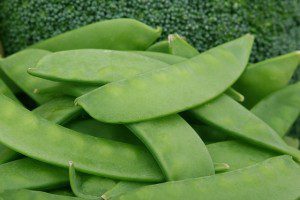
The garden is growing by leaps and bounds; the zucchini seedlings are already doubled in size, set to conquer the world as zucchini always does. The corn is almost four inches. We’ll pick lettuce within a week. But the sugar snap peas are already abundant. Sugar snap peas always come first; you’re supposed to sow soaked peas in mid-March, so that they start bearing fruit in late May and early June. When they die off in the July heat, I’ll plant a second batch for an autumn crop. We’ve got an abundance of sugar snap peas, but I haven’t brought a single one into the house, and I haven’t eaten any myself. I don’t know if I’ll get to eat even one. You see, they’re not for me.
Sugar snap peas are my daughter’s favorite, one of the only vegetables she truly enjoys. They’ve become her special domain. It’s a frustratingly rainless spring here in the Ohio Valley, so our afternoons are taking on a pattern: I drag the rain barrel inside, fill it from the tap, shove it outside and water the garden. Rose scavenges through the pea trellises, eating her fill of bright green pods, and then she jumps in what’s left of the water to play while I pull weeds. When the beans are ripe, she’ll hunt and eat beans off the bush, without quite as much relish as she has for the peas; when the carrots are ripe, she can pick her own carrots. I won’t have to strategize how to get vegetables into her until frost.
Yesterday evening, Rose was eating a handful of peas from the garden, when her friends rode by on their bikes. “Rose,” they said, panicked. “Don’t eat those! They’re poison!”
Rose tried to explain that they weren’t.
“No! You can’t eat those! They’re poison!”
She repeated that they weren’t, but her friends would not believe her. I was puzzled. Why would they think I was growing poisonous vegetables?
Then I remembered that one afternoon earlier this spring, Rose had been picking buttercups and clover for a bouquet, when Ezra the neighbor boy confronted her gravely. “Why are you picking poison flowers?”
I gather that it’s the custom in the Ohio Valley, for parents to tell their very young children that all plants are poisonous. They drill that into them when they’re very small, to keep them from nibbling weeds or house plants that might actually harm them. Slap your child on the wrist, waggle your finger and say “poison” often enough, and they’ll be safe.
Now, I don’t want to turn this post into a diatribe against northern Appalachian parenting techniques. I don’t know what works for other people’s families; I barely even know what works for mine. But imagine thinking that all plants were poisonous. Imagine raising someone else to believe that all plants are poisonous.
One of the first things I did with Rose, when she was old enough to walk behind me, was to take her foraging for wild black raspberries in the alley behind our old apartment. I pointed out what was a berry and what wasn’t, the weeds that were poison and the weeds she could eat. A friend helped me with the plants I couldn’t identify, and she taught Rose as well. I kept her away from lawns that had just been sprayed, but I let her walk barefoot just about everywhere else. Later that same spring, we foraged for violets and dandelions for salad, but we didn’t eat plants I couldn’t identify. Then we planted our own garden. She eats snap peas and raw beans; she picks heads of broccoli and crunches them like apples.
Imagine not knowing you could eat a head of broccoli like an apple. Imagine not knowing what a black raspberry was. Imagine not knowing the difference between food and poison, because you were taught that food was bad for you.
I think there’s a school of thought that would catechize children in the same way that my neighbors teach their children botany. It’s not something all homeschoolers do, but I’ve seen it in homeschoolers. It’s not something that all Catholic schools do, but I’ve seen it afoot in some of the ways people are taught in Catholic schools. It’s not intrinsic to Evangelical Christianity, but I’ve seen Evangelical Christians do it. There’s a certain school of thought that thinks everything is poison.
In this school of thought, every object in your field of vision is a potential danger. You can’t let your child watch a cartoon without watching the cartoon first to check for Satanic symbols. You can’t let your child play with a cootie catcher for fear it’s divination. You can’t read your child fairy tales or let them watch Bedknobs and Broomsticks, for fear they’ll become pagans. They can’t wear shorts on a hot day for fear they’ll be sexualized. If you let them be civil to people from different religions than you, they might convert away from the Faith. If they go to a party, they might take drugs. If they dance, they might have sexual thoughts before the proper time. If they listen to secular music, they might be distracted from the Lord. Better to keep them away from everything that might conceivably be an occasion of sin. Don’t teach them how to forage; better to tell them that everything is poison.
When you belong to that school of thought, you quickly find the world shrinking. Fewer and fewer activities go on the “food” list, while the “poison” list gets more and more out of hand. And it’s so hard to tell that it’s getting out of hand, because scruples look so much like piety. Of course, you’re not supposed to conform to the ways of the world. Of course, the world will hate you and make it difficult for you. Doesn’t that mean, then, that you’re following God, when you wear ridiculous clothing and never let your children have any fun? Isn’t it just your sanctity that makes people think you’re a prude? And there’s the real danger: you might come to think that through your own efforts, through fasting from all good things for fear of poison, you’ve made yourself holy. You may mistake your squeamishness for virtue and your multiplication of efforts for virtuous acts. You may come to think that you can buy your own sanctity, by bargaining away the gifts God has given you in His creation. OCD and other neuroses that lead to scruples are pathologies and not sins, but there is an occasion of sin here, for people who take up this heavy cross willingly. The sin is pride. No action of ours, least of all spiritual orthorexia, can make us holy. And declaring harmless things sinful goes a step further; you usurp God’s position as judge, and you call evil the things which He pronounced good.
I am not an excellent person, but I have found a more excellent way.
God created the whole universe, every tree and plant, every rock, every star. God created people who love to play and dance and eat and make up stories. God created these things and pronounced them good. He made them so good that every created thing would point back to Him, the source of all goodness. And then, through our grievous fault, Creation fell. Now everything, except for God Himself, is laced with a bit of poison, and we are in danger. But our Father has not abandoned us. He takes us foraging in the alleys, and teaches us which berries are delicious and which we must not eat. He doesn’t want us grazing on grass that has been sprayed, but He takes us out barefoot into the garden. He bids us eat all the peas we like, and then come play in the water.
The first commandment was not “do not eat from the tree of the knowledge of good and evil,” it was “you may eat from any of the trees you like.” The one restriction came after the assurance of great freedom. The Serpent tempted Eve by telling her that God had given her more restrictions than He already had. Thus was man trapped. Don’t make that mistake. Teach your children what things are actually forbidden, because they are poison; don’t neglect that. But most of your time should be spent teaching them that everything that isn’t poison is good. It’s wonderful. God’s creation is wonderful, and we ought to eat and dance and play and rejoice. We ought to eat broccoli like apples, right off of the stalk. We ought to forage in the sugar snap peas. We ought to go barefoot where the grass hasn’t been sprayed. God is good, creation is good, and food is delicious. Peas are good for you. Be free, and have fun in the garden.
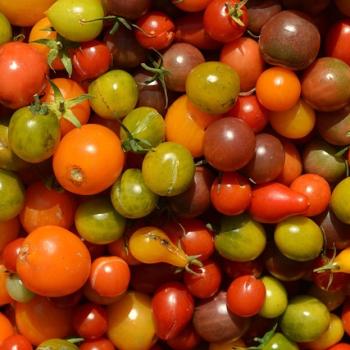
(Image via pixabay)
Previous Post
May 31, 2016
Thank you, Dear Readers! (tin cup update)
Browse Our Archives
Select a Category abortion Abuse Advent America American Christianity angel angels Annunciation Appalachia apparition apparition chaser apparition chasers apparition culture art art review babies baby baby Jesus Bad Lip Reading bad statue contest bath beauty Bible story blog blogkeeping blood book review Brandon Sanderson breastfeeding bus Catholic catholic conspiracy alarmism Catholic Oppositional Disorder Charismatic Renewal Charlie the Cat chastity Christ Christian idenitity Christianity and Judaism Chronic Illness clean clothing COD piece comedy compassion conscience conspiracy theory conversion cop-on-black violence Crucifixion cry of the poor culture Daesh Daily Saints death death penalty devotional diaconate diaper diapers dirty disability Donald Trump Dorothy Day dream drugs Eastern Catholicism Eastern Christianity education election election update Elsewhere on Patheos empathy environment Fear feminism film review fish flashback fluffy buns food Franciscan University of Steubenville Friendship Room fun Gabriel gardening gospel hair-splitting Heaven hell heresy Hillary Clinton history Holly the Witch Holy Spirit holy war Homeschooling homosexuality horror human dignity humor Icon idol immigrants infection inter-religious dialogue Interpretation of Scripture Islam Jesus Jihad Joseph joy laity and lay vocations lamb dinner laundry lent lgbtq literature love manners Mary Medicine and Science Meditation mercy mess milk misogyny Missouri monasticism monster motherhood mourn with those mourn movies movis music mystery nature neurodiversity New Pro-Life Movement news nonsense nostalgia O antiphons obituary objectification Ohio Valley Ordinary Time ordination Ordo Amoris parable paradox Passover peanut butter personal beliefs pets philosophy Planet Charismatic poetry politics polls poop Pope Francis Pope Leo power in the Church prayer prayer request prayers preferential option for non-violence president presidential election priest primary private revelation pro-life prophecy Public face of Catholicism Pure Flix Q and A race racism random rape rape. sexuality reader's request Reckoners refugee religious trauma ressurrection Right to life Saints saints and celebrations same-sex same-sex marriage satire scandal secular feasts seder Seven Joys Seven Last Words sex sexual ethics sexuality silencing six months skid row slavery social justice Speculative fiction spiritual abuse spoon stain story suffering suffrage suffragette Sunday Gospel temple Tenebrae Responsories Terror the exorcist The Friendship Room The New Pro-Life Movement Things I Learned on the Internet tin cup traffic true story tv review Uncategorized USCCB vice and temptation violence Virtue virtue and vice war Way of the Cross whimsy whole life women's ordination work of mercy Year A
Select a Month October 2026 September 2026 August 2026 July 2026 June 2026 May 2026 April 2026 March 2026 February 2026 January 2026 December 2025 November 2025 October 2025 September 2025 August 2025 July 2025 June 2025 May 2025 April 2025 March 2025 February 2025 January 2025 December 2024 November 2024 October 2024 September 2024 August 2024 July 2024 June 2024 May 2024 April 2024 March 2024 February 2024 January 2024 December 2023 November 2023 October 2023 September 2023 August 2023 July 2023 June 2023 May 2023 April 2023 March 2023 February 2023 January 2023 December 2022 November 2022 October 2022 September 2022 August 2022 July 2022 June 2022 May 2022 April 2022 March 2022 February 2022 January 2022 December 2021 November 2021 October 2021 September 2021 August 2021 July 2021 June 2021 May 2021 April 2021 March 2021 February 2021 January 2021 December 2020 November 2020 October 2020 September 2020 August 2020 July 2020 June 2020 May 2020 April 2020 March 2020 February 2020 January 2020 December 2019 November 2019 October 2019 September 2019 August 2019 July 2019 June 2019 May 2019 April 2019 March 2019 February 2019 January 2019 December 2018 November 2018 October 2018 September 2018 August 2018 July 2018 June 2018 May 2018 April 2018 March 2018 February 2018 January 2018 December 2017 November 2017 October 2017 September 2017 August 2017 July 2017 June 2017 May 2017 April 2017 March 2017 February 2017 January 2017 December 2016 November 2016 October 2016 September 2016 August 2016 July 2016 June 2016 May 2016 April 2016 March 2016
Follow Us!
TAKE THE
Religious Wisdom Quiz
What tax collector wrote a Gospel and was called by Jesus?
Select your answer to see how you score.
Barnabas Mark Luke Matthew
Related posts from Steel Magnificat

A Place Where Anything Can Happen

The Flood Never Comes from the Crick
TRENDING AT PATHEOS Catholic

Pope Leo Celebrates Mass for Nurses & Docs...
I don't have any idea how he did it, but Pope Leo...

The Sermon on the Mount, Part I: Matthew...
The Sermon on the Mount, Part I (Matthew 4:12-5:12) St. Matthew moves...

What's up from Crossway: Reviewing some of their latest A few weeks...

Janie Learns the Way of the Cross: A...
Teaching children about Jesus' Passion can be challenging. Many parents and educators...

Looking For Good Catholic Writing - October 2026
He alone extends the heavens, and he walks upon the waves of...

In "Irreplaceable," our book on vocation and technology, Trevor Sutton and I...
view all Catholic blogs
Ad-Free & Subscriber Log-In Subscription Support
- About Us
- 2026 Calendar
- Videos
- Podcasts
- Library of World Religions
- Faith In Media Tracker
- Advertise With Us
- Write for Us
- Privacy Policy
- Terms of Service
- Do Not Sell My Data
- Contact Us
- Radiant Digital
- Manage Newsletter Subscriptions
- Unsubscribe From Notifications
- Sitemap
Copyright 2008-2026, Patheos. All rights reserved.
Subscription Support Ad-Free & Subscriber Log-In
Follow Patheos