
BuddhistCatholicContemplativeEvangelicalGeneral ChristianHinduJewishLatter-day SaintMuslimNew VisionsProgressive Christian
Beliefs
- Buddhist
- Catholic
- Contemplative
- Evangelical
- General Christian
- Hindu
- Jewish
- Latter-day Saint
- More Voices
- Muslim
- New Visions
- Pagan
- Progressive Christian
Topics
- Religion News
- Food and Religion
- Sports and Religion
- Religious Art
- Religious Music and Entertainment
- Religious Events
- History and Religion
- Style and Religion
- Politics and Religion
- Women in Religion
- Recreation Outdoors and Religion
- Business Finance and Religion
- Careers Workplace and Religion
- Education and Religion
- Family Parenting and Religion
- Health Fitness and Religion
- Home and Religion
- Relationships and Religion
- Technology and Religion
- Travel and Religion
Columnists
- Buddhist Columnists
- Business Finance and Religion Columnists
- Careers Workplace and Religion Columnists
- Catholic Columnists
- Contemplative Columnists
- Education and Religion Columnists
- Evangelists Columnists
- Family Parenting and Religion Columnists
- General Christian Columnists
- Health Fitness and Religion Columnists
- Hindu Columnists
- History and Religion Columnists
- Home and Religion Columnists
- Jewish Columnists
- More Voices Columnists
- Latter Day Columnists
- Muslim Columnists
- New Visions Columnists
- Nonreligious Columnists
- Pagan Columnists
- Politics and Religion Columnists
- Progressive Columnists
- Recreation Outdoors and Religion Columnists
- Relationships and Religion Columnists
- Religion News Columnists
- Religious Art Columnists
- Religious Events Columnists
- Religious Music and Entertainment Columnists
- Sports and Religion Columnists
- Style and Religion Columnists
- Technology and Religion Columnists
- Travel and Religion Columnists
- Women in Religion Columnists
Resource Library
- 2026 Calendar
- Library of World Religions
- The 100 Most Holy Places on Earth
- Patheos Answers
- Podcasts
- Videos
- Faith Leaders Database
- Anglican Episcopalian
- Bahai
- Baptist
- Buddhism
- Christianity
- Confucianism
- Eastern Orthodoxy
- Hinduism
- Holiness and Pentecostal
- ISKCON
- Islam
- Judaism
- Lutheran
- Methodist
- The Church of Jesus Christ of Latter-day Saints
- New Age
- Paganism
- Presbytarian and Reformed
- Protestantism
- Religion Behind the Scenes
- Roman Catholic
- Scientology
- Shia Islam
- Sikhism
- Sufism
- Sunni Islam
- Taoism
- Zen
- See all religions
Research Tools
 Ad-Free & Subscriber Log-In Subscription Support
Ad-Free & Subscriber Log-In Subscription Support
Follow Patheos 

- Trending:
- Forgiveness
- |
- Marriage
- |
- Consciousness
- |
- Death Penalty
- |
- Election
- |
- Halloween
 Starlight Witch
- Home
- Pagan
- The Search For A Moonblood / Menstruation Goddess
The Search For A Moonblood / Menstruation Goddess
Last updated on: November 12, 2018 at 12:25 am by Astrea Taylor
The Search For A Moonblood / Menstruation Goddess 2018-11-12T00:25:34-04:00 Astrea Taylor
Patheos Explore the world's faith through different perspectives on religion and spirituality! Patheos has the views of the prevalent religions and spiritualities of the world.
There are so many goddesses that it’s hard to keep track of all of them. I could easily name five death goddesses, six mother goddesses, ten love goddesses, a dozen virginal goddesses, fourteen goddesses of war, and a gaggle of moon goddesses. But why isn’t there one for moonblood?
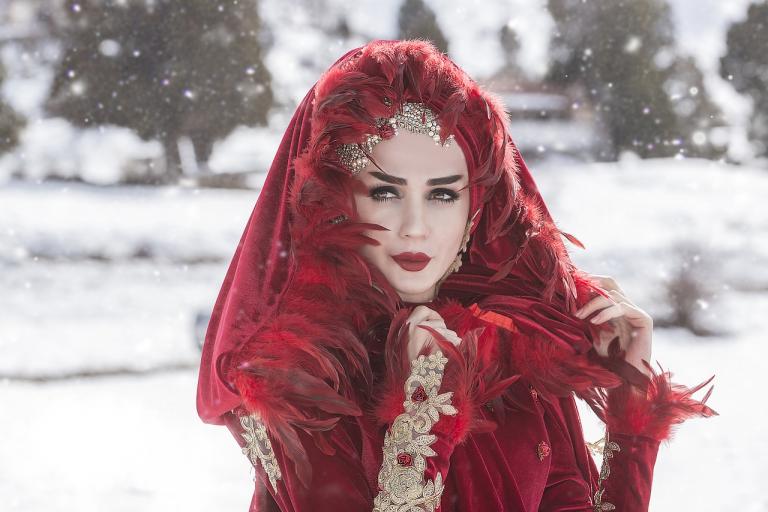
Source, CC0
Menstruation (or moonblood, as I call it) happens to many women all over the world on a very regular basis. Most women of child-bearing age (from as early as 9 to as late as 55 or older) experience this natural phenomenon about thirteen times a year. Our cycles are so regular that they can be calculated in an app. This is a mass phenomenon, yet, if you google “menstruation goddess,” the results are nearly nil — only one goddess appeared (see Sati, from the Hindu pantheon, in the list of moonblood goddesses below).
Our Invisible Herstory
I blame this lack of information about women’s cycles and goddess worship on the conservative historians and archaeologists (mostly men from an older age) who had a deep squeamishness of moonblood. Despite the fact that it’s not actually dirty and it’s a completely natural process, men feared it and made rules against it in attempts to shame the women. It’s incredibly sad that some of those rules are still in place today.
It’s obvious to me that women’s spiritualities weren’t recorded as much and men’s, and women’s moonblood practices were recorded even less. Whether ancient people didn’t think these practices were important enough to document; or whether it was in more modern times, when historians and archaeologists filtered information through their male-centric thinking,* one thing is clear. The wisdom of the past is missing.
Source, CC0
Sadly, it may be that both modern and ancient cultures were culpable in the coverup, especially the case in heavily patriarchal cultures. In any case, the people who were in charge of handling this precious information about our pagan pasts have failed us. If more women were archeologists or recorders of history, or if moonblood wasn’t as taboo, we might have more discourse on the subject. Instead, those old guys came up with a catch-all phrase for anything dealing with women’s stuff: fertility. And instead of digging into these feminine mysteries, historians were either be unable or unwilling to elaborate further on the taboo subject.
It’d be nice to know more about these mysteries. For example, did the limited-thinking historians lump fertility with the infertility symptoms of moonblood, due to their discomfort of all things female? If so, it’s be very ironic, but not past their limited foresight. It’d also be helpful to know if any of the “fertility goddesses” reigned over any specific aspects of moonblood, such as hormonal cycles, cramps, mood changes, headaches, body cramps, heightened spiritual insights, starting, changing, stopping, flow, et cetera.
I find it hard to believe that there was only one moonblood goddess. Who among us hasn’t cried out to one goddess or another when a cramp brings her to her knees, or when her head swarms with so many hormonal thoughts that she can’t hear her soul speak?
“Fertility Goddess”
I decided to look deeper into “fertility goddesses” for any that might have a moonblood/cycle connection. A fertility deity is “a god or goddess associated with sex, fertility, pregnancy, and childbirth.” However, this definition is lacking for several reasons.
Source, CC0
The first problem with the term “fertility goddess” is that it’s vague. It’s unclear if the fertility relates to women bearing children, livestock bearing young, or the crops being plentiful. All were probably important, but this is quite broad, and seems to relegate women to a rather un-authoritative position.
The second problem with the term “fertility goddess,” is that, if it relates to women being fertile, it infers that all ancient women who worshipped said fertility goddess wanted to have children. Certainly, that couldn’t have always been true. There were times when women would rather not want to bear children. In times of war, poverty, poor health, and older age, a fertility goddess would not be worshipped because food and and good health would be so scarce. Also, fertility was not possible for all ancient women for many different reasons. To assume that all women of these ancient cultures wanted children is to reduce women to little more than incubators, which is a terribly misogynistic viewpoint.(Handmaid’s Tale, anyone?)
Source, CC0
I suppose that’s why there are so many complex goddesses who rule over fertility and war, such as Astarte and Inanna.
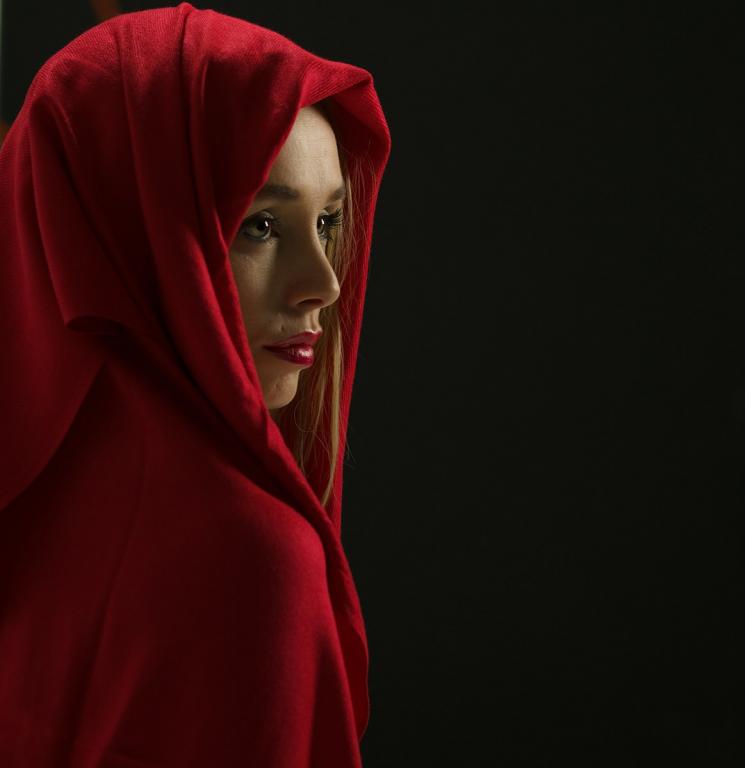
The last and most important issue I have with the term “fertility goddess” is that is dismisses the power of the moon cycle, of being able to bleed for several days and not die, of being able to withstand the natural changes of life, to wax and wane and experience one of the thrills of womanhood, the insights, and heightened spiritual moments that occur during this time. Moonblood was celebrated in many cultures for these reasons until the fearful Abrahamic religions made an unmentionable experience. The cycle itself, which is uncontrollable (except in modern-day hormonal regulation) could have been seen as its own force of nature, as a goddess force. To deny the celebration and power of moonblood is to deny the core of most women. To shame moonblood is to shame women at their very core.
Source, Wikimedia Commons

It’s high time for history books and artifacts to be reexamined from women’s points of view.** We need a goddess who not only looks like us, but bleeds like we bleed. I yearn to commune with a goddess who assists in the moonblood cycles, who can provide relief and deep understanding.
It’s my belief that if history has wiped out all but a trace of moonblood goddesses, it’s up to us to claim them back. I scoured the internet for several hours to find the goddesses cited below which are associated with moonblood (or could have been).
Moonblood Goddesses
Selene, Ancient Greek/Hellenist goddess of the moon, or also interpreted as the moon herself. Selene understands cycles and waxing and waning and how similar our cycles are. Origin:
Mama Killa, aka Mother Moon, Incan. Her roles included overseeing menstrual cycles and protecting women.
Sati, Hindi goddess of marital happiness and longevity, also known as the “menstruating goddess” or Kamakhya. She has a yoni-shaped cave with waters that flow red once a year. Check out the video below about the goddess and the very red, very wide river near the end.
Chang-o or Chang’e, Chinese moon-goddess who controlled menstruation. She left her husband and went to live as an immortal goddess on the moon.
Artemis, Ancient Greek/Hellenist virgin goddess of the moon, childbirth, fertility, young girls, and health and disease in women.
Kali, Hindu goddess who destroys evil forces. She may have “invited the gods to bathe in the bloody flow of her womb”
Isis (aka Auset), Ancient Egyptian goddess of women, magic, and healing. The ankh represents the female parts and her moonblood was rumored to make Pharaohs divine.
Hekate, Ancient Greek/Hellenist/possibly pre-Greek goddess of the dark moon/new moon, which is when many women have their moonblood. She is also the force that moves the moon and controls its cycles, and hence, our cycles. According to Cyndi Brannen, writer and moderator at Keeping Her Keys, “a contemporary offering to Hekate is menstrual blood, which probably is an adaptation of blood sacrifices done in ancient times. In Hekate’s Garden, many botanicals directly associated with menstruation grow: dittany of Crete, fennel, peony and sage.” She also says, “in the Chaldean Oracles, [Hekate] is depicted as having the source of all the material world flowing from her…which sounds very menstrual fluid like to me.” I believe Hekate’s ability to bring Persephone out of the underworld and back to the sun-filled world and to her mother may have some moonblood aspects as well.
Hera, Ancient Greek/Hellenist goddess of marriage and childbirth, whose temples predated Zeus. She had the power to bring on moonblood and her worship “included menstrual rituals to follow the cycles of the moon.”
Jahi, Zoroastrian goddess who brought menstruation into the world, personified as the moon. (Note that her name also means whore, however, there’s not a demeaning name for her male consort.)
Maeve, Irish goddess who “celebrates and honors her moon time.”
Achelois, a minorAncient Greece / Hellenist moon goddess known as “she who washes away pain.”

Source, CC0
If nothing else, we can call upon the moonblood goddess by her most representative attributes. Here’s a poem I wrote for any such goddess, whose name may have been washed out of the history books, for now, at least.
O red goddess
she who eases pain
and brings peace and patience
to women in the flow,
may your visit bring insights.
May I release that which needs to be cast away
that I might rebuild myself and make myself anew
in the empowered spirit of your wisdom.
May these cycles make me stronger
and may your blessings find me, always.
(Poem copyrighted by the author. Reproduction is prohibited unless permission is granted)
If you know of any other moonblood goddesses, please write a comment below. I’d love to learn more.
Bright blessings!
** An example of this male-centric filtration are the words used to denote a healer who is a woman working at a sacred place. The term “temple prostitute” was overwhelmingly used as opposed to something more empowering such as “holy sexual healer” or “love priestess.”*
* My first example of a modern, pro-woman reexamination of old archaeological information is when a Viking grave with weapons and riches was discovered to be female.*
Another example of a new, more modern translation/interpretation of classic literature is the Orphic Hymns re-envisioning by Sara Mastros, which sounds like an amazing project. I for one can’t wait to see the finished project.
We need more of these reevaluations to discover our invisible herstories.
~ Align with Starlight Witch ~
* Facebook * Twitter * Instagram *
Patreon * Intuitive Witchcraft Group * Blessed Be Box
About Astrea
Astrea is a polytheistic pagan witch, fire dancer, new ager, and writer of fiction. Check out her social media accounts to see all her blog posts and extra special witchy / artsy / personal content. You can read more about the author here.
Previous Post

May 24, 2018
8 Reasons Why The Pagan TV Show Vikings Is So Popular
Next Post
May 31, 2018 Harnessing The Power Of Symbolism In Pagan Worship
Browse Our Archives
Select a Category Book and Tarot Reviews Energy Articles Pagan Articles (General) Pagan God/Goddess Articles Pagan Holidays Pagan Pop Culture and Politics Uncategorized
Select a Month September 2023 June 2023 November 2022 December 2021 August 2021 June 2021 April 2021 March 2021 February 2021 January 2021 December 2020 November 2020 October 2020 September 2020 August 2020 July 2020 June 2020 May 2020 April 2020 March 2020 February 2020 January 2020 December 2019 November 2019 October 2019 September 2019 August 2019 July 2019 June 2019 May 2019 April 2019 March 2019 February 2019 January 2019 December 2018 November 2018 October 2018 September 2018 August 2018 July 2018 June 2018 May 2018 April 2018 March 2018 February 2018 January 2018 December 2017 November 2017 October 2017 September 2017 August 2017 July 2017
Follow Us!
TAKE THE
Religious Wisdom Quiz
Which prophet spoke of a 'new covenant' in the Old Testament?
Select your answer to see how you score.
Jeremiah Isaiah Ezekiel Malachi
Related posts from Starlight Witch
Aries Witch: Book Review: The Start of a...
Muse Magick: The Creative Spirit & Ritualizing Your...
Leading With Empowerment, Not Shame
The Wild Hunt: Odin & Thor Ride The...
TRENDING AT PATHEOS Pagan

I was recently chatting with someone on Instagram. She asked me what...

While there are many people who share their results, the end of...

On July 23, I saw Christopher Nolan's The Odyssey which is Homer’s...

As I write this two big events have just finished up. One...

Restoring the Watershed of Divine Love
Perhaps cooperation is not something we manufacture through legislation, ideology, or moral...

Many UUs don’t pray because of bad experiences in a previous religion,...
view all Pagan blogs
Ad-Free & Subscriber Log-In Subscription Support
- About Us
- 2026 Calendar
- Videos
- Podcasts
- Library of World Religions
- Faith In Media Tracker
- Advertise With Us
- Write for Us
- Privacy Policy
- Terms of Service
- Do Not Sell My Data
- Contact Us
- Radiant Digital
- Manage Newsletter Subscriptions
- Unsubscribe From Notifications
- Sitemap
Copyright 2008-2026, Patheos. All rights reserved.
Subscription Support Ad-Free & Subscriber Log-In
Follow Patheos