
BuddhistCatholicContemplativeEvangelicalGeneral ChristianHinduJewishLatter-day SaintMuslimNew VisionsProgressive Christian
Beliefs
- Buddhist
- Catholic
- Contemplative
- Evangelical
- General Christian
- Hindu
- Jewish
- Latter-day Saint
- More Voices
- Muslim
- New Visions
- Pagan
- Progressive Christian
Topics
- Religion News
- Food and Religion
- Sports and Religion
- Religious Art
- Religious Music and Entertainment
- Religious Events
- History and Religion
- Style and Religion
- Politics and Religion
- Women in Religion
- Recreation Outdoors and Religion
- Business Finance and Religion
- Careers Workplace and Religion
- Education and Religion
- Family Parenting and Religion
- Health Fitness and Religion
- Home and Religion
- Relationships and Religion
- Technology and Religion
- Travel and Religion
Columnists
- Buddhist Columnists
- Business Finance and Religion Columnists
- Careers Workplace and Religion Columnists
- Catholic Columnists
- Contemplative Columnists
- Education and Religion Columnists
- Evangelists Columnists
- Family Parenting and Religion Columnists
- General Christian Columnists
- Health Fitness and Religion Columnists
- Hindu Columnists
- History and Religion Columnists
- Home and Religion Columnists
- Jewish Columnists
- More Voices Columnists
- Latter Day Columnists
- Muslim Columnists
- New Visions Columnists
- Nonreligious Columnists
- Pagan Columnists
- Politics and Religion Columnists
- Progressive Columnists
- Recreation Outdoors and Religion Columnists
- Relationships and Religion Columnists
- Religion News Columnists
- Religious Art Columnists
- Religious Events Columnists
- Religious Music and Entertainment Columnists
- Sports and Religion Columnists
- Style and Religion Columnists
- Technology and Religion Columnists
- Travel and Religion Columnists
- Women in Religion Columnists
Resource Library
- 2026 Calendar
- Library of World Religions
- The 100 Most Holy Places on Earth
- Patheos Answers
- Podcasts
- Videos
- Faith Leaders Database
- Anglican Episcopalian
- Bahai
- Baptist
- Buddhism
- Christianity
- Confucianism
- Eastern Orthodoxy
- Hinduism
- Holiness and Pentecostal
- ISKCON
- Islam
- Judaism
- Lutheran
- Methodist
- The Church of Jesus Christ of Latter-day Saints
- New Age
- Paganism
- Presbytarian and Reformed
- Protestantism
- Religion Behind the Scenes
- Roman Catholic
- Scientology
- Shia Islam
- Sikhism
- Sufism
- Sunni Islam
- Taoism
- Zen
- See all religions
Research Tools
 Ad-Free & Subscriber Log-In Subscription Support
Ad-Free & Subscriber Log-In Subscription Support
Follow Patheos 

- Trending:
- Forgiveness
- |
- Marriage
- |
- Consciousness
- |
- Death Penalty
- |
- Election
- |
- Halloween
 Star and Snake
- Home
- Pagan
- The Real Arthur Avalon
The Real Arthur Avalon
Last updated on: June 11, 2024 at 11:52 am by Brandy Williams
The Real Arthur Avalon 2024-06-11T11:52:25-07:00 Brandy Williams
Patheos Explore the world's faith through different perspectives on religion and spirituality! Patheos has the views of the prevalent religions and spiritualities of the world.

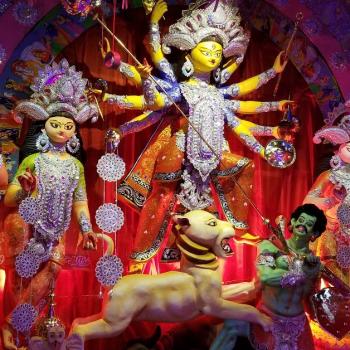
College Street, Kolkata. Photo by Brandy Williams
Arthur Avalon brought Tantra to the west. That is, westerners knew Tantra existed, but it was classified as a degenerate form of Hinduism involving black magick rituals and sex. The majestic Arthur Avalon books changed all that. They presented Tantra as a legitimate spiritual pursuit and established the whole field of Tantric studies in the western academy. That’s a tremendous accomplishment.
So who was Arthur Avalon?
For a century we’ve thought this was a pseudonym for John Woodroffe. The real story is a lot more interesting. Arthur Avalon is a pseudonym that protected an entire colony of Tantric adepts, both European and Indian, working in Calcutta at the turn of the century.
Let’s start with the most visible member. Who was John Woodroffe?
The Judge
Sir John George Woodroffe was a judge, politically active, a patron of the arts, and Catholic.
He was born in Calcutta in 1865 into a British Catholic family. He followed his father into the colonial judicial system and was eventually appointed chief justice. He married the concert pianist Ellen Elizabeth Grimson, and the couple was active in the vibrant cultural scene that mixed upper class British and Indian Brahman society. She was a Theosophist and the couple ran in that social circle too, hosting Annie Besant when she visited town. Woodroffe openly supported Indian self-rule, an unusually radical position for a high-ranking member of the judiciary. When he retired in 1915 the couple moved to England where they both recommitted to the Catholic faith. Woodroffe died in 1933.
If John Woodroffe was born and died Catholic, what was his involvement with Tantra?
I was touring College Street in Kolkata (Calcutta) when my guide turned to me and said “Did you know John Woodroffe was a Tantric initiate?” I said “No!” People in the magical communities sometimes assume he was but it hadn’t been documented.
Like me, Kathleen Taylor learned about Woodroffe’s initiation on the streets of Kolkata. She was doing research for her dissertation. When she was picking a doctoral topic she discovered that no biography had been written about him and set about to remedy this. Her book Sir John Woodroffe, Tantra and Bengal: “An Indian Soul in a European Body?” delves into the context of his work.
The Collaborator
Taylor was the first biographer to document Woodroffe’s Indian collaborators. She primarily focused on his lifelong colleague Atilal Bihari Ghose.
Ghose came from a Shakta (Goddess-centered) Indian family and received an English education. Woodroffe and Ghose met through their work in the Calcutta judiciary. Where Woodroffe served on the High Court, Ghose practiced law at the Court of Small Causes, one of the Indian clerks who made up the lower rungs of the colonial hierarchy.
Taylor tracked down Ghose’s life history. Reading the Ghose family correspondence, interviewing the descendants of Ghose and Woodroffe, and collecting oral history held in the judicial community, Taylor pieced together evidence for a circle of Indian and European Tantric practitioners in early twentieth century Kolkata.
Ghose provided much of the material for the Arthur Avalon books. Some of these are translations of Tantric texts from Sanskrit into English. Woodroffe himself was still just learning Sanskrit at the end of his life and relied on Ghose and other colleagues to provide the translations.
Ghose was also motivated to preserve the insights of his Tantric teacher. The Arthur Avalon book Principles of the Tantra Shasta was actually a translation of his teacher’s major work Tantrattatva.
The Teacher
Woodroffe and Ghose belonged to a circle of initiates around the Tantric saint Shivachandra Bhattacharya Vidyarnava. He was a Kaula, a practitioner of the left-hand path which includes sexual ritual. He was active politically and led groups which opposed western influences on Bengal.
Despite his anti-western stance he had friends who were interested in western science and philosophy. He initiated John and Ellen Woodroffe together, and he supported the Arthur Avalon project, allowing his Tantrattatva to be translated into English.
In this book Vidyarnava made a case for Tantra as a legitimate form of Hindu religion. He taught that Tantric practice was superior to western science and philosophy since it was proven by actual experience. He also noted that Tantra was a secret practice and required initiation by a guru.
When Vidyarnava died Ghose took over his circle of students. This group continued to meet at houses Ghose maintained in Calcutta and farther out of town in Ranchi. Several photographs capture Ghose with Woodroffe and other men, including one in which Woodroffe wore the robe of a Bramacharya or student. That photograph, along with Woodroffe’s support for Indian independence, eventually caused his rejection by Calcutta’s polite British society.
The Collective
Ghose was Woodroffe’s closest collaborator, but the two of them did not work alone. They had other close colleagues who made substantial contributions.
The Arthur Avalon project was actually part of a larger movement. Bengali Tantrics had been educating western audiences about their Tantric perspective for decades before the Arthur Avalon books. Some of them joined the Theosophical Society and leveraged their membership to challenge the appropriation of their religious ideas and speak to westerners on their own behalf directly.
The Elder
One of these was a man named Baradakanta Majumdar, also a student of Vidyarnava. He provided the first translation of a Tantric text in English in 1880 in The Theosophist in his two-part article “A Glimpse of Tantrik Occultism”. Decades later he joined the Avalon project and wrote the introduction to Principles of the Tantra Shasta which translated the work of his teacher.
The Friend
Another student of Vidyarnava became a close friend of Woodroffe and his second closest collaborator. Pramathanath Mukhopadhyay received a colonial education, then became an Indian nationalist, a regular theme in the collective. He was a teacher and writer in his own right. He taught that ancient Hindu teachings were confirmed by western science. He was particularly interested in mantra, the recitation of Sanskrit chants. He passed on his teacher’s insight that Tantric practice embraced living in the material world as the means toward a spiritual goal.
The Figurehead
To sum up, the Arthur Avalon books include translations of Sanskrit texts provided by Sanskrit scholars, translations of Tantric texts written by Tantric teachers, and insights into practice provided by South Asian practitioners. They were the collaborative work of a close-knit collective.
So why do the books bear Woodroffe’s name? Why are we only learning about this now?
Kathleen Taylor explains that “Arthur Avalon” was a pseudonym, but it was not intended to protect Woodroffe. It was to protect Ghose and the other contributors.
Woodroffe’s Tantric colleagues chose him as the face of the collective so their work would be taken seriously in the colonial world. They had the knowledge, Woodroffe had the respectability to present it. Western scholars before Woodroffe had labeled Tantra as disreputable, dangerous and not worthy of study. It was only when a prominent Englishman produced these serious works that Tantra entered the world stage as an ancient and profound spiritual practice.
So now we have a bit of soul searching to do. Why were we so willing to believe that a westerner who had just started studying Sanskrit could have translated so many texts? Why would we think that a British Catholic judge could provide the sophisticated perspective of an adept embedded in Indian culture and devoted to the Hindu religious tradition?
If we pointed to orientalist racism and western exceptionalism we wouldn’t be wrong. As a point of honor, as a matter of reparations, to set the record straight we need to acknowledge this. We are also obligated to immediately incorporate this knowledge into our conversations and relinquish the convenience of using “John Woodroffe” as shorthand for Arthur Avalon. Global religious studies has developed the phrase “the Avalon project” to describe the collective.
That’s a good start, but our soul-searching can go deeper than that. The west values intellect. We think we can understand something by reading about it. That’s me, I’ve read something every day for my entire adult life, and I write essays like this to pass on what I learn. Tantra insists that insight only comes through practice. Simply knowing the topic isn’t enough. We need to embody the teachings.
As western intellectuals explore the world to learn about it we also have a rather Ferengi-like tendency toward possessiveness. We like to acquire things and then use them to build something else. Theosophy is all about repurposing Indian spirituality, and there’s quite a bit of that in Thelema too. Kurt Leland’s book The Rainbow Body explores the ways the New Age appropriated ideas about the chakras in some detail. That’s also me, I sometimes learn a Tantric idea and think “I could use that!” It’s a tendency I confront in myself as part of my own Tantric practice.
In short, westerners accepted John Woodroffe as Arthur Avalon because he was a westerner like us. The collective made a good choice and it actually worked: we listened to them through him.
Global religious studies offer us the opportunity to do better. We can offer South Asian practitioners respect on their own terms. Also, we can read their writings directly instead of relying on second-hand pass-through from western esotericists and academics.
The Real John Woodroffe
John Woodroffe introduced Tantra to the west as a venerable and sophisticated religious tradition. For decades we admired his command of Sanskrit and his depth of insight. However global religious studies has brought us a re-evaluation of his contribution to the Avalon project. Now we know that the command of Sanskrit and the depth of insight belonged to his Bengali teachers and colleagues.
The image of Woodroffe as a solitary genius played to the colonial narrative of intellectually superior westerners. We’ve lost that Woodroffe, but we’ve gained a more nuanced and realistic image that is equally admirable and better suited for our times.
Woodroffe was born into the colonial ruling class and held a high office. He used his position to support India’s political independence and Bengali art. When he felt a call to study Tantra he joined a circle of students even at the expense of his reputation. In the Avalon project he dedicated his prestige and position to bring credibility to the work. He offers a role model for how to respectfully collaborate cross-culturally, how to contribute within a group, and how to use whatever power we have to benefit the community.
Further Reading
Kathleen Taylor. Sir John Woodroffe, Tantra and Bengal. Routledge, 2012.
Atal Bihari Ghose is the unseen presence behind Arthur Avalon.
Baradakanta Majumdar. A Glimpse of Tantrik Occultism and A Glimpse of Tantrik Occultism continued. The Theosophist, 1880.
…clairvoyance of the mind was known to the ancients many thousand years ago. During their trance state (samadhi), the Yogis, by means of inner vision, could see the mysterious agencies of nature underlying the universe.
Julian Strube. Global Tantra, Religion, Science and Nationalism in Colonial Modernity. Oxford University Press, 2022.
…the Avalon project was the outcome of a longer development that started before Woodroffe arrived in Calcutta; the pivotal moment in the emergence of “global Tantra” can be traced to the year 1880, when learned Bengalis began to articulate their understanding of Tantra to an English-speaking audience.
Moritz, Maria. Globalizing “Sacred Knowledge”: South Asians and the Theosophical Society, 1879-1930. Constructor University, 2017.
[In the Theosophical Society] South Asians were potentially awarded the prestigious position not only as interlocutors in an interreligious dialogue, as mediators between different cultures or as “brothers” in the utopian project, but as teachers of European members. The Theosophical Society thus provided them with the promising opportunity to affirm their authority and challenge, even invert, the colonial order.
Previous Post

March 4, 2024
Are we afraid of our gods?
Next Post

August 5, 2024 Weather Magic Review
Recent Comments
"Very intersting article, thank you for sharing this practice."
Magical Work with White Ancestors
"I think that your thoughts and observations offer a useful approach to a challenging circumstance ..."
Magical Work with White Ancestors
"You make a great point - an initiation crafted for the specific person is more ..."
Surprise and Consent in Initiation
"This is brilliant, thank you so much for this information."
Browse Our Archives
Select a Category Activism Book review Conferences Esotericism Golden Dawn Interfaith O.T.O. Personal magic Ritual Tantra Thelema Theurgy Uncategorized Witchcraft Women
Select a Month September 2025 May 2025 January 2025 December 2024 August 2024 June 2024 March 2024 December 2023 July 2023 May 2023 February 2023 December 2022 November 2022 October 2022 July 2022 May 2022 January 2022 November 2021 September 2021 July 2021 June 2021 December 2020 November 2020 October 2020 September 2020 August 2020 May 2020 April 2020 March 2020 February 2020 September 2019 July 2019 June 2019 May 2019 April 2019 March 2019 February 2019 July 2018 May 2018 March 2018 October 2017 January 2017 December 2016 November 2016 October 2016 August 2016 July 2016 June 2016 May 2016 April 2016 February 2016 November 2015 October 2015 April 2015 March 2015 September 2014 August 2014 July 2014 June 2014 May 2014 April 2014
Follow Us!
TAKE THE
Religious Wisdom Quiz
What Christian tradition refers to its pastors as "elders"?
Select your answer to see how you score.
Presbyterian Orthodox Anglican Catholic
Related posts from Star and Snake


The Blessing of Uncertainty in the New Year

Magical workings and prayers for peace
TRENDING AT PATHEOS Pagan

I was recently chatting with someone on Instagram. She asked me what...

While there are many people who share their results, the end of...

On July 23, I saw Christopher Nolan's The Odyssey which is Homer’s...

As I write this two big events have just finished up. One...

Restoring the Watershed of Divine Love
Perhaps cooperation is not something we manufacture through legislation, ideology, or moral...

Many UUs don’t pray because of bad experiences in a previous religion,...
view all Pagan blogs
Ad-Free & Subscriber Log-In Subscription Support
- About Us
- 2026 Calendar
- Videos
- Podcasts
- Library of World Religions
- Faith In Media Tracker
- Advertise With Us
- Write for Us
- Privacy Policy
- Terms of Service
- Do Not Sell My Data
- Contact Us
- Radiant Digital
- Manage Newsletter Subscriptions
- Unsubscribe From Notifications
- Sitemap
Copyright 2008-2026, Patheos. All rights reserved.
Subscription Support Ad-Free & Subscriber Log-In
Follow Patheos