
BuddhistCatholicContemplativeEvangelicalGeneral ChristianHinduJewishLatter-day SaintMuslimNew VisionsProgressive Christian
Beliefs
- Buddhist
- Catholic
- Contemplative
- Evangelical
- General Christian
- Hindu
- Jewish
- Latter-day Saint
- More Voices
- Muslim
- New Visions
- Pagan
- Progressive Christian
Topics
- Religion News
- Food and Religion
- Sports and Religion
- Religious Art
- Religious Music and Entertainment
- Religious Events
- History and Religion
- Style and Religion
- Politics and Religion
- Women in Religion
- Recreation Outdoors and Religion
- Business Finance and Religion
- Careers Workplace and Religion
- Education and Religion
- Family Parenting and Religion
- Health Fitness and Religion
- Home and Religion
- Relationships and Religion
- Technology and Religion
- Travel and Religion
Columnists
- Buddhist Columnists
- Business Finance and Religion Columnists
- Careers Workplace and Religion Columnists
- Catholic Columnists
- Contemplative Columnists
- Education and Religion Columnists
- Evangelists Columnists
- Family Parenting and Religion Columnists
- General Christian Columnists
- Health Fitness and Religion Columnists
- Hindu Columnists
- History and Religion Columnists
- Home and Religion Columnists
- Jewish Columnists
- More Voices Columnists
- Latter Day Columnists
- Muslim Columnists
- New Visions Columnists
- Nonreligious Columnists
- Pagan Columnists
- Politics and Religion Columnists
- Progressive Columnists
- Recreation Outdoors and Religion Columnists
- Relationships and Religion Columnists
- Religion News Columnists
- Religious Art Columnists
- Religious Events Columnists
- Religious Music and Entertainment Columnists
- Sports and Religion Columnists
- Style and Religion Columnists
- Technology and Religion Columnists
- Travel and Religion Columnists
- Women in Religion Columnists
Resource Library
- 2026 Calendar
- Library of World Religions
- The 100 Most Holy Places on Earth
- Patheos Answers
- Podcasts
- Videos
- Faith Leaders Database
- Anglican Episcopalian
- Bahai
- Baptist
- Buddhism
- Christianity
- Confucianism
- Eastern Orthodoxy
- Hinduism
- Holiness and Pentecostal
- ISKCON
- Islam
- Judaism
- Lutheran
- Methodist
- The Church of Jesus Christ of Latter-day Saints
- New Age
- Paganism
- Presbytarian and Reformed
- Protestantism
- Religion Behind the Scenes
- Roman Catholic
- Scientology
- Shia Islam
- Sikhism
- Sufism
- Sunni Islam
- Taoism
- Zen
- See all religions
Research Tools
 Ad-Free & Subscriber Log-In Subscription Support
Ad-Free & Subscriber Log-In Subscription Support
Follow Patheos 

- Trending:
- Forgiveness
- |
- Marriage
- |
- Consciousness
- |
- Death Penalty
- |
- Election
- |
- Halloween
 Fr. Dwight Longenecker
-
Archived Articles
- Everything Belongs to You
- Affirming All Things
- Home Away From Home
- The House of Mirrors
- Universal and Particular
- How Do We Know It's the True Church?
- Believing and Belonging
- Which Came First?
- Them and Us
- What is Truth?
- Authority of the First Popes
- The Authority of the Catholic Church
- Biblical Support for the Authority of the Pope
- What Do We Mean By the Real Presence?
- Baptism Now Saves You
- Mother of God – Defender of Orthodoxy
- Explaining Mary Redemptrix to an Evangelical
- Holy Mary Mother of God
- Distorted Devotions – Do Catholics Honor Mary Too Much?
- Why a Former Evangelical Loves the Rosary
- Do Catholics Pray to Mary?
- Purity is Power
- Woman and Serpent – Take 2
- Once A Virgin – Always a Virgin?
- Mary Mother of God or Mother Goddess?
- One Saving Action
- Left Behind
- Why Don't Catholics Read the Bible?
- Idol Speculation – Do Catholics Worship Idols?
- The Problem with Primitivism
- Weird Things Happen
- Paganism, Prophecies and Propaganda
- Utilitarianism – What is Good Works?
- Home
- Catholic
- The Magi: Liberal Myth and Midrash
The Magi: Liberal Myth and Midrash
Last updated on: January 8, 2018 at 3:33 pm by Fr. Dwight Longenecker
The Magi: Liberal Myth and Midrash 2018-01-08T15:33:51-05:00 Fr. Dwight Longenecker
Patheos Explore the world's faith through different perspectives on religion and spirituality! Patheos has the views of the prevalent religions and spiritualities of the world.
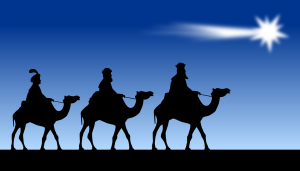 When I was researching my book Mystery of the Magi – The Quest to Identify the Three Wise Men I discovered the extraordinary amount of legendary and mythical material surrounding the magi story.
More than any other gospel story, the tale of the wise men who came to pay homage to the Christ child attracted elaboration and legendary and mythical accretions. From the early second century the Protoevangelium of James began to add levels of detail to the story, but from there the storytelling went into the stratosphere.
An apocryphal writing from the third century is The Legend of Aphroditianus. This fairy tale begins with the account of a miracle in the temple of a pagan goddess in Persia at the time of Christ’s birth. According to the myth, the statues in the temple dance and sing and announce that the goddess Hera has been made pregnant by Zeus.
Suddenly a star appears above the statue of the goddess Hera. A voice from heaven is heard and all the dancing statues fall on their faces. The wise men of the court take this to mean that a King is to be born in Judah. That evening the god Dionysus confirms their interpretation. Then the king sends the Magi to Judea with gifts, the star pointing them along their way. The story tells of the Magi’s journey to Bethlehem, and how they meet the Jewish leaders and finally Mary and Jesus. They return to Persia bringing a portrait of Jesus and Mary and put it in the temple where the star first appeared.
What a load of gnostic hogwash.
A few years ago New Testament scholar Brent Landau came out with The Revelation of the Magi in which he published a gnostic fantasy tale about the Magi that is probably no older than the third century.
This story pretends to be told by the magi themselves. The wise men are residents of a mythical land called Shir in the Far East. They are the descendants of Seth, the third son of Adam and Eve, who passed on to them a prophecy from his father that one day a star of amazing brightness would appear to announce the birth of God in human form.
The story continues as every year the mystical magi of Shir ascended their Holy Mountain where the Cave of Treasures is located. This cave contains the wisdom of Seth and the treasures of Adam and it is there that the super bright star—brighter than the sun appears to them as a tiny, radiant human. The star child tells them to go on a long journey to Bethlehem. After long preparations they set off only to find that the star child accompanies them removing all obstacles and miraculously providing them with food and protection.
Once they get to Bethlehem, Mary accuses them of wanting to steal the child, but they inform her that he is the savior of the world. Finally they go home provided with more miraculous food. At last they reach the land of Shir and tell their people what has happened and they all rejoice. Then many years later the Apostle Thomas appears and baptizes them, and they all live happily ever after.
Once again–a complete load of tripe.
Now what is amazing is that the liberal scholars just love these gnostic apocryphal writings. They argue passionately for the earliest possible date for them while at the same time arguing for the latest possible date for the canonical gospels. I smell a rat. There’s an agenda here.
What is interesting about the gnostic infancy narratives, however, is how much they influenced the magi tradition in the West. Chapter three of my book outlines how these early fantasy stories about the magi seeped into the Western tradition and continued to be elaborated and embroidered down through the Middle Ages so that even today the popular version of the magi story is highly colored by them.
All of us–liberals and conservatives–read Matthew’s account through the lens of these later traditions. So, if you asked an ordinary Christian to recount the magi story they would probably say, “Three mysterious kings named Balthasar, Caspar and Melchior who were also wizards travelled from an exotic Eastern land on a long journey across the desert. They rode camels in a caravan as they followed a miraculous star.”
But of course, none of that is in Matthew’s gospel. They magi are not named. He doesn’t say they were kings. He doesn’t say there were three. He doesn’t say they went on a long journey across the desert. He doesn’t mention camels and he doesn’t even say they followed a mystical magical star. All of that was read back into the story as people accepted the mythical gnostic infancy narratives.
Because of this it is understandable that liberal scholars pooh-poohed the idea that the magi story might be historical. They didn’t really look at Matthew’s account in detail. They simply dismissed it as impossible. But what they were really dismissing was the mystical, magical gnostic version which colored their reading of Matthew.
The other reason the liberal scholars dismiss the story is because they think Matthew made it up in order to fulfill prophecies. They say the story is a “midrash” or an embroidered tale added to illustrate or hammer home a preaching point.
The first prophecy that Christians have understood as foretelling the visitation of the magi is from the Book of Numbers. The story takes place during the time when Moses was leading the Israelites through the desert. A non-Jewish seer and shaman named Balaam, who comes “from the East” is asked to cast a spell against the Israelites by Balak, the king of Moab.
In the following oracles Balaam predicts victory for the Israelites saying specifically, “I see him, but not now; I behold him, but not near: a star shall come out of Jacob, and a scepter shall rise out of Israel.”
From antiquity students of Scripture have spent a good bit of time and effort seeing the parallels between the Balaam story and the story of the Magi. New Testament scholar Raymond Brown has connected the dots and thinks Balaam was a kind of “magus” from the East and that Matthew has constructed his story to show how the visit of the Magi fulfills the Balaam story.
The difficulty with Brown’s hypothesis is that there are as many dissimilarities between the magi story and the Balaam story as there are similarities. At best we can conclude that Matthew certainly knew of the story of Balaam and his prophecy that “a star shall come out of Jacob” but even in this mention of the star, Balaam is referring to a coming Israelite ruler who will vanquish their enemies, whereas the magi saw a celestial phenomenon in the night sky. If Matthew were constructing the magi story to match the Balaam story, he didn’t do a very good job.
Likewise with the prophecies from Isaiah 60. The prophet says, “Raise your eyes and look about; they all gather and come to you—Your sons from afar, your daughters in the arms of their nurses. Then you shall see and be radiant, your heart shall throb and overflow. For the riches of the sea shall be poured out before you, the wealth of nations shall come to you. Caravans of camels shall cover you, dromedaries of Midian and Ephah; All from Sheba shall come bearing gold and frankincense, and heralding the praises of the Lord.”
If Matthew wrote the story of the Magi in order to fulfill this prophecy, again, he didn’t do a very good job. He should have included camels in his story and he should have left out the detail about the myrrh. He should also have included perhaps a gift of pearls so that the “riches of the sea” line could have been fulfilled. Furthermore when Matthew wants to show a prophecy being fulfilled he usually prefaces it with the line, “so that the prophecy might be fulfilled”. He doesn’t do this with the magi story.
What if the liberal scholars had spent just as much time actually researching the historical facts of the magi story rather than doing everything possible to undermine and doubt the historical veracity?
In fact, ironically, the liberal scholars have created their own level of myth and midrash about the magi story. Myth because they actually trust in the gnostic fantasy tales and have allowed their own thinking to be colored by them and midrash because they have spun their own false preaching points out of the story.
All this, and much more is discussed in my book Mystery of the Magi – the Quest to Identify the Three Wise Men. What has been the response to my book? Some New Testament scholars have read it and appreciated it. The more typical response has been to ignore it or in closing I’ll share this amusing response:
Liberal Bible Scholar: You should not mislead people. There is no historical basis for the Magi story.
DL: My book establishes the historical basis for the magi story.
LBS: But there is no historical foundation for the magi story. We have established that.
DL: How? With what evidence?
LBS: Well, everyone says so. It is agreed that there is not historical foundation for the magi story.
DL: My book establishes the historical foundation. Have you read my book? I’ll send you a free copy
LBS: I have sooo many books to read! I’ll have to decline your kind offer.
This week only, for Epiphany signed copies of my book are on sale at discounted price of $19.99 at my website. Go here for more information.
Previous Post

December 23, 2017
Two Straight Guys Get Married to Avoid Inheritance Tax
Next Post

January 9, 2018 Still Standing on My Head
Browse Our Archives
Select a Category Anglican Matters Apologetics Architecture Blobble Study Book Reviews Brideshead Caitlin O'Rourke Catholic Art Catholic Culture Church Politics Chust for Nice Contemporary Culture Duane Mandible Ed Blanch Film Reviews Fr Harvey Nicolaitan Frank Viola Mantilla the Hon More Christianity Mrs Brady Catholic Old Lady Mystery of the Magi Norman Anderson Queen Hillary Saints and Supernatural Spirituality The Inklings The Vicar Theology Todd Unctuous Uncategorized
Select a Month October 2019 September 2019 August 2019 July 2019 June 2019 May 2019 April 2019 March 2019 December 2018 November 2018 October 2018 August 2018 July 2018 June 2018 May 2018 April 2018 March 2018 February 2018 January 2018 December 2017 November 2017 October 2017 September 2017 August 2017 July 2017 June 2017 May 2017 April 2017 March 2017 February 2017 January 2017 December 2016 November 2016 October 2016 September 2016 August 2016 July 2016 June 2016 May 2016 April 2016 March 2016 February 2016 January 2016 December 2015 November 2015 October 2015 September 2015 August 2015 July 2015 June 2015 May 2015 April 2015 March 2015 February 2015 January 2015 December 2014 November 2014 October 2014 September 2014 August 2014 July 2014 June 2014 May 2014 April 2014 March 2014 February 2014 January 2014 December 2013 November 2013 October 2013 September 2013 August 2013 July 2013 June 2013 May 2013 April 2013 March 2013 February 2013 January 2013 December 2012 November 2012 October 2012 September 2012 August 2012 July 2012 June 2012 May 2012 April 2012 March 2012 February 2012 January 2012 December 2011 November 2011 October 2011 September 2011 August 2011 July 2011 June 2011 May 2011 April 2011 March 2011 February 2011 January 2011 December 2010 November 2010 October 2010 September 2010 August 2010 July 2010 June 2010 May 2010 April 2010 March 2010 February 2010 January 2010 December 2009 November 2009 October 2009 September 2009 August 2009 July 2009 June 2009 May 2009 April 2009 March 2009 February 2009 January 2009 December 2008 November 2008 October 2008 September 2008 August 2008 July 2008 June 2008 May 2008 April 2008 March 2008 February 2008 January 2008 December 2007 November 2007 October 2007 September 2007 August 2007 July 2007 June 2007 May 2007 April 2007 March 2007 February 2007 January 2007 December 2006 November 2006 October 2006 September 2006
Follow Us!
TAKE THE
Religious Wisdom Quiz
Who did Jesus raise from the dead after four days?
Select your answer to see how you score.
Jairus’ daughter Lazarus Widow's son Himself
Related posts from Fr. Dwight Longenecker

Episcopal Woman Priest Says Abortionists are "Saints"

Pondering Slavery and Homosexual Actions


Pagans, Pantheism and Polytheism
TRENDING AT PATHEOS Catholic

Rejecting Doom: Christian Hope And Human Action
Christianity is a religion of hope. We are to have hope and...

It’s What Comes From Within Which Matters
One of the most difficult things for us to understand is why...

Why I Choose the Eucharist Over the Sermon
Choose the Eucharist, Not the Sermon What are we supposed to get...

5 Design Elements Found in Spiritually Rooted Homes
Putting Spirituality Into Home Decor Our homes are more than our living...

Credo: A Story of God Told with the...
About 10 years ago, I began to imagine a personal "Credo" that...

The Anatomy of Divine Revelation in Catholic Thought
The claim that God has made Himself known to human beings is...
view all Catholic blogs
Ad-Free & Subscriber Log-In Subscription Support
- About Us
- 2026 Calendar
- Videos
- Podcasts
- Library of World Religions
- Faith In Media Tracker
- Advertise With Us
- Write for Us
- Privacy Policy
- Terms of Service
- Do Not Sell My Data
- Contact Us
- Radiant Digital
- Manage Newsletter Subscriptions
- Unsubscribe From Notifications
- Sitemap
Copyright 2008-2026, Patheos. All rights reserved.
Subscription Support Ad-Free & Subscriber Log-In
Follow Patheos