
BuddhistCatholicContemplativeEvangelicalGeneral ChristianHinduJewishLatter-day SaintMuslimNew VisionsProgressive Christian
Beliefs
- Buddhist
- Catholic
- Contemplative
- Evangelical
- General Christian
- Hindu
- Jewish
- Latter-day Saint
- More Voices
- Muslim
- New Visions
- Pagan
- Progressive Christian
Topics
- Religion News
- Food and Religion
- Sports and Religion
- Religious Art
- Religious Music and Entertainment
- Religious Events
- History and Religion
- Style and Religion
- Politics and Religion
- Women in Religion
- Recreation Outdoors and Religion
- Business Finance and Religion
- Careers Workplace and Religion
- Education and Religion
- Family Parenting and Religion
- Health Fitness and Religion
- Home and Religion
- Relationships and Religion
- Technology and Religion
- Travel and Religion
Columnists
- Buddhist Columnists
- Business Finance and Religion Columnists
- Careers Workplace and Religion Columnists
- Catholic Columnists
- Contemplative Columnists
- Education and Religion Columnists
- Evangelists Columnists
- Family Parenting and Religion Columnists
- General Christian Columnists
- Health Fitness and Religion Columnists
- Hindu Columnists
- History and Religion Columnists
- Home and Religion Columnists
- Jewish Columnists
- More Voices Columnists
- Latter Day Columnists
- Muslim Columnists
- New Visions Columnists
- Nonreligious Columnists
- Pagan Columnists
- Politics and Religion Columnists
- Progressive Columnists
- Recreation Outdoors and Religion Columnists
- Relationships and Religion Columnists
- Religion News Columnists
- Religious Art Columnists
- Religious Events Columnists
- Religious Music and Entertainment Columnists
- Sports and Religion Columnists
- Style and Religion Columnists
- Technology and Religion Columnists
- Travel and Religion Columnists
- Women in Religion Columnists
Resource Library
- 2026 Calendar
- Library of World Religions
- The 100 Most Holy Places on Earth
- Patheos Answers
- Podcasts
- Videos
- Faith Leaders Database
- Anglican Episcopalian
- Bahai
- Baptist
- Buddhism
- Christianity
- Confucianism
- Eastern Orthodoxy
- Hinduism
- Holiness and Pentecostal
- ISKCON
- Islam
- Judaism
- Lutheran
- Methodist
- The Church of Jesus Christ of Latter-day Saints
- New Age
- Paganism
- Presbytarian and Reformed
- Protestantism
- Religion Behind the Scenes
- Roman Catholic
- Scientology
- Shia Islam
- Sikhism
- Sufism
- Sunni Islam
- Taoism
- Zen
- See all religions
Research Tools
 Ad-Free & Subscriber Log-In Subscription Support
Ad-Free & Subscriber Log-In Subscription Support
Follow Patheos 

- Trending:
- Forgiveness
- |
- Marriage
- |
- Consciousness
- |
- Death Penalty
- |
- Election
- |
- Halloween
 Fr. Dwight Longenecker
-
Archived Articles
- Everything Belongs to You
- Affirming All Things
- Home Away From Home
- The House of Mirrors
- Universal and Particular
- How Do We Know It's the True Church?
- Believing and Belonging
- Which Came First?
- Them and Us
- What is Truth?
- Authority of the First Popes
- The Authority of the Catholic Church
- Biblical Support for the Authority of the Pope
- What Do We Mean By the Real Presence?
- Baptism Now Saves You
- Mother of God – Defender of Orthodoxy
- Explaining Mary Redemptrix to an Evangelical
- Holy Mary Mother of God
- Distorted Devotions – Do Catholics Honor Mary Too Much?
- Why a Former Evangelical Loves the Rosary
- Do Catholics Pray to Mary?
- Purity is Power
- Woman and Serpent – Take 2
- Once A Virgin – Always a Virgin?
- Mary Mother of God or Mother Goddess?
- One Saving Action
- Left Behind
- Why Don't Catholics Read the Bible?
- Idol Speculation – Do Catholics Worship Idols?
- The Problem with Primitivism
- Weird Things Happen
- Paganism, Prophecies and Propaganda
- Utilitarianism – What is Good Works?
- Home
- Catholic
- Does Amoris Laetitia Encourage Communion of Divorced and Re-Married?
Does Amoris Laetitia Encourage Communion of Divorced and Re-Married?
Last updated on: April 14, 2016 at 2:41 pm by Fr. Dwight Longenecker
Does Amoris Laetitia Encourage Communion of Divorced and Re-Married? 2016-04-14T14:41:39-05:00 Fr. Dwight Longenecker
Patheos Explore the world's faith through different perspectives on religion and spirituality! Patheos has the views of the prevalent religions and spiritualities of the world.
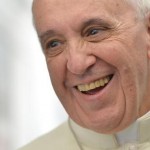
This article from Aleteia re-affirms two things about Pope Francis’ exhortation.
First of all Cardinal Schonborn affirms what Cardinal Burke said in his interview at National Catholic Register that the exhortation needs to be read in continuity with the whole of the magisterium. The magisterium of the church’s teaching is, as it were, the balance and check to the exhortation. The magisterium clears up any ambiguities and clarifies any confusion.
Secondly, in a very clear passage, Fr. José Granados – Vice President of the Pontifical Institute of John Paul II in Rome explains why the document does not change the church’s discipline on the divorced and remarried receiving communion.
“The Apostolic exhortation puts an end to a two year synodal path. There is much anticipation about one concrete question, not certainly the one most important pastorally: the eventual admission to the Eucharist of the divorced and civilly remarried. In fact, this is a marginal question if we think of the great pastoral challenges the Church faces regarding the family: the fact that young people do not want to get married; a lack of social significance of the family; the great task of bringing Christ to the families in the new evangelization…
Does the text allow for divorced and remarried catholic to receive holy communion, at least in some cases? After reading chapter eight (where the question is addressed) we need to conclude that this text does not change the discipline of the Church regarding the admission of divorced and civilly remarried Catholic to the Eucharist, a discipline based in doctrinal reasons, as affirmed by Familiaris Consortio 84 and Sacramentum Caritatis 29.
In fact, the text of chapter eight of the exhortation does not even mention the Eucharist. In this sense it is clear that Pope Francis, which has insisted on the importance of synodality in the Church, did not want to go beyond the Synod’s decisions. At no point in the text of the document do we find something like: “in some cases the divorced and civilly remarried can be admitted to receive the Eucharist”. This clarity would have been necessary in order to change a practice rooted in doctrinal grounds, firmly established by the constant Magisterium of the Church. Notice also that Cardinal Kasper’s proposal, who asked for clear canonical rules that help discern in which cases admission to the sacraments would be possible, has not been received in this document.
The only possible hint towards a change in discipline is found in footnote 351, where it is said that in certain cases the Church can give to people who live in irregular situations the help of the sacraments. But it would certainly be strange to suggest that the Pope has intended to make such an important change of Church discipline in a footnote of an apostolic exhortation. In addition, the note refers to irregular situations in general, and not directly to the case of the divorced and civilly remarried (an specific case, since a way of life in contradiction with a sacrament is implied). Further specifications would be needed, that the Pope did not want to make, thus not implying any change in discipline.
What the documents proposes, then, is to start a way of integration, that allows these baptized people to live according to the Gospel. Thus, Familiaris Consortio 84 and Sacramentum Caritatis 29 continue to indicate the pastoral way, without exception, because these norms are not a judgment on the subjective culpability of the person, but they show the goal every evangelization aims at: a way of life in accordance to the Gospel of Jesus.
All this means that those who expected a revolution from the document have to be greatly disappointed.”
When Fr Granados’ words are combined with Pope Francis’ own words on the flight back from Mexico, it is clear that not only is doctrine not being changed, but neither is the discipline. When asked whether the divorced and re-married could receive communion the pope replied:
“This is the last thing. Integrating in the Church doesn’t mean receiving Communion. I know married Catholics in a second union who go to church, who go to church once or twice a year and say I want Communion, as if joining in Communion were an award. It’s a work towards integration; all doors are open. But we cannot say from here on they can have Communion. This would be an injury also to marriage, to the couple, because it wouldn’t allow them to proceed on this path of integration.”
Those who jumped to conclusions and were worried and concerned may breathe easy. The sky is not falling.
Previous Post
April 13, 2016
Amoris Laetitia - Chapter 8 and That Footnote...
Next Post

April 25, 2016 Eucharistic Miracles and Protestants?
Browse Our Archives
Select a Category Anglican Matters Apologetics Architecture Blobble Study Book Reviews Brideshead Caitlin O'Rourke Catholic Art Catholic Culture Church Politics Chust for Nice Contemporary Culture Duane Mandible Ed Blanch Film Reviews Fr Harvey Nicolaitan Frank Viola Mantilla the Hon More Christianity Mrs Brady Catholic Old Lady Mystery of the Magi Norman Anderson Queen Hillary Saints and Supernatural Spirituality The Inklings The Vicar Theology Todd Unctuous Uncategorized
Select a Month October 2019 September 2019 August 2019 July 2019 June 2019 May 2019 April 2019 March 2019 December 2018 November 2018 October 2018 August 2018 July 2018 June 2018 May 2018 April 2018 March 2018 February 2018 January 2018 December 2017 November 2017 October 2017 September 2017 August 2017 July 2017 June 2017 May 2017 April 2017 March 2017 February 2017 January 2017 December 2016 November 2016 October 2016 September 2016 August 2016 July 2016 June 2016 May 2016 April 2016 March 2016 February 2016 January 2016 December 2015 November 2015 October 2015 September 2015 August 2015 July 2015 June 2015 May 2015 April 2015 March 2015 February 2015 January 2015 December 2014 November 2014 October 2014 September 2014 August 2014 July 2014 June 2014 May 2014 April 2014 March 2014 February 2014 January 2014 December 2013 November 2013 October 2013 September 2013 August 2013 July 2013 June 2013 May 2013 April 2013 March 2013 February 2013 January 2013 December 2012 November 2012 October 2012 September 2012 August 2012 July 2012 June 2012 May 2012 April 2012 March 2012 February 2012 January 2012 December 2011 November 2011 October 2011 September 2011 August 2011 July 2011 June 2011 May 2011 April 2011 March 2011 February 2011 January 2011 December 2010 November 2010 October 2010 September 2010 August 2010 July 2010 June 2010 May 2010 April 2010 March 2010 February 2010 January 2010 December 2009 November 2009 October 2009 September 2009 August 2009 July 2009 June 2009 May 2009 April 2009 March 2009 February 2009 January 2009 December 2008 November 2008 October 2008 September 2008 August 2008 July 2008 June 2008 May 2008 April 2008 March 2008 February 2008 January 2008 December 2007 November 2007 October 2007 September 2007 August 2007 July 2007 June 2007 May 2007 April 2007 March 2007 February 2007 January 2007 December 2006 November 2006 October 2006 September 2006
Follow Us!
TAKE THE
Religious Wisdom Quiz
What city was Paul heading to when he encountered Jesus?
Select your answer to see how you score.
Jerusalem Damascus Antioch Rome
Related posts from Fr. Dwight Longenecker

Episcopal Woman Priest Says Abortionists are "Saints"

Pondering Slavery and Homosexual Actions


Pagans, Pantheism and Polytheism
TRENDING AT PATHEOS Catholic

Creation, Preservation, and Teleology in Catholic Theology
As I write this, it is very early Monday morning. Like millions...

The Parable Of The Sower And The Word...
One of Christ’s most famous parables is that of the sower who...

Rejecting Doom: Christian Hope And Human Action
Christianity is a religion of hope. We are to have hope and...

Why I Choose the Eucharist Over the Sermon
Choose the Eucharist, Not the Sermon What are we supposed to get...

5 Design Elements Found in Spiritually Rooted Homes
Putting Spirituality Into Home Decor Our homes are more than our living...

Credo: A Story of God Told with the...
About 10 years ago, I began to imagine a personal "Credo" that...
view all Catholic blogs
Ad-Free & Subscriber Log-In Subscription Support
- About Us
- 2026 Calendar
- Videos
- Podcasts
- Library of World Religions
- Faith In Media Tracker
- Advertise With Us
- Write for Us
- Privacy Policy
- Terms of Service
- Do Not Sell My Data
- Contact Us
- Radiant Digital
- Manage Newsletter Subscriptions
- Unsubscribe From Notifications
- Sitemap
Copyright 2008-2026, Patheos. All rights reserved.
Subscription Support Ad-Free & Subscriber Log-In
Follow Patheos