
BuddhistCatholicContemplativeEvangelicalGeneral ChristianHinduJewishLatter-day SaintMuslimNew VisionsProgressive Christian
Beliefs
- Buddhist
- Catholic
- Contemplative
- Evangelical
- General Christian
- Hindu
- Jewish
- Latter-day Saint
- More Voices
- Muslim
- New Visions
- Pagan
- Progressive Christian
Topics
- Religion News
- Food and Religion
- Sports and Religion
- Religious Art
- Religious Music and Entertainment
- Religious Events
- History and Religion
- Style and Religion
- Politics and Religion
- Women in Religion
- Recreation Outdoors and Religion
- Business Finance and Religion
- Careers Workplace and Religion
- Education and Religion
- Family Parenting and Religion
- Health Fitness and Religion
- Home and Religion
- Relationships and Religion
- Technology and Religion
- Travel and Religion
Columnists
- Buddhist Columnists
- Business Finance and Religion Columnists
- Careers Workplace and Religion Columnists
- Catholic Columnists
- Contemplative Columnists
- Education and Religion Columnists
- Evangelists Columnists
- Family Parenting and Religion Columnists
- General Christian Columnists
- Health Fitness and Religion Columnists
- Hindu Columnists
- History and Religion Columnists
- Home and Religion Columnists
- Jewish Columnists
- More Voices Columnists
- Latter Day Columnists
- Muslim Columnists
- New Visions Columnists
- Nonreligious Columnists
- Pagan Columnists
- Politics and Religion Columnists
- Progressive Columnists
- Recreation Outdoors and Religion Columnists
- Relationships and Religion Columnists
- Religion News Columnists
- Religious Art Columnists
- Religious Events Columnists
- Religious Music and Entertainment Columnists
- Sports and Religion Columnists
- Style and Religion Columnists
- Technology and Religion Columnists
- Travel and Religion Columnists
- Women in Religion Columnists
Resource Library
- 2026 Calendar
- Library of World Religions
- The 100 Most Holy Places on Earth
- Patheos Answers
- Podcasts
- Videos
- Faith Leaders Database
- Anglican Episcopalian
- Bahai
- Baptist
- Buddhism
- Christianity
- Confucianism
- Eastern Orthodoxy
- Hinduism
- Holiness and Pentecostal
- ISKCON
- Islam
- Judaism
- Lutheran
- Methodist
- The Church of Jesus Christ of Latter-day Saints
- New Age
- Paganism
- Presbytarian and Reformed
- Protestantism
- Religion Behind the Scenes
- Roman Catholic
- Scientology
- Shia Islam
- Sikhism
- Sufism
- Sunni Islam
- Taoism
- Zen
- See all religions
Research Tools
 Ad-Free & Subscriber Log-In Subscription Support
Ad-Free & Subscriber Log-In Subscription Support
Follow Patheos 

- Trending:
- Forgiveness
- |
- Marriage
- |
- Consciousness
- |
- Death Penalty
- |
- Election
- |
- Halloween
 Fr. Dwight Longenecker
-
Archived Articles
- Everything Belongs to You
- Affirming All Things
- Home Away From Home
- The House of Mirrors
- Universal and Particular
- How Do We Know It's the True Church?
- Believing and Belonging
- Which Came First?
- Them and Us
- What is Truth?
- Authority of the First Popes
- The Authority of the Catholic Church
- Biblical Support for the Authority of the Pope
- What Do We Mean By the Real Presence?
- Baptism Now Saves You
- Mother of God – Defender of Orthodoxy
- Explaining Mary Redemptrix to an Evangelical
- Holy Mary Mother of God
- Distorted Devotions – Do Catholics Honor Mary Too Much?
- Why a Former Evangelical Loves the Rosary
- Do Catholics Pray to Mary?
- Purity is Power
- Woman and Serpent – Take 2
- Once A Virgin – Always a Virgin?
- Mary Mother of God or Mother Goddess?
- One Saving Action
- Left Behind
- Why Don't Catholics Read the Bible?
- Idol Speculation – Do Catholics Worship Idols?
- The Problem with Primitivism
- Weird Things Happen
- Paganism, Prophecies and Propaganda
- Utilitarianism – What is Good Works?
- Home
- Catholic
- Tradition: The Democracy of the Dead
Tradition: The Democracy of the Dead
Last updated on: March 18, 2016 at 10:36 am by Fr. Dwight Longenecker
Tradition: The Democracy of the Dead 2016-03-18T10:36:30-05:00 Fr. Dwight Longenecker
Patheos Explore the world's faith through different perspectives on religion and spirituality! Patheos has the views of the prevalent religions and spiritualities of the world.
 G.K. Chesterton wrote, “Tradition means giving a vote to most obscure of all classes, our ancestors. It is the democracy of the dead.”
I’ve been pondering this for some time from a couple of different perspectives. First of all, in the present political maelstrom, when all seems uncertain and insecure, where the old definitions are dissolving and new alliances are being forged one looks for a different kind of democracy. The “democracy of the dead.”
In other words, when we value tradition we value what has stood the test of time. We value what our ancestors also believed stood the test of time. This is one of the main reasons why I am a Catholic today–because I went to England looking for a historic church–the church that was not founded 50 years ago, but 500 years ago, and that quest led me further East from England to France, and from France to Italy and from Italy to Israel, and wherever I went I found a church that was not just five hundred years old, but two thousand years old, and that church not only reached back to its roots in the Roman Empire, but it was founded on the apostles and prophets who were God’s people the Hebrews, and their tradition stretched back another 2000 years.
I wanted to be part of that living tradition and to plant my roots deep. That’s why I am not only a Catholic, but a Catholic who treasures the traditions of the church. The traditions I treasure are the Sacred Scriptures, the Sacred Liturgy, the timeless teaching of the church in all its aspects and the lives of the saints–in which we see the traditions of the church enfleshed in history. Pope Benedict XVI said, “Scripture can only be interpreted in the lives of the saints”. It is also true that the teachings of the church in both morals and doctrine can only really be seen in their full glory in the lives of the saints.
Trying to live this tradition in modern America is not easy. One is besieged by a host of demonic “ism’s”–materialism, relativism, scientism, sentimentalism, utilitarianism and more. The church herself is swamped by the onslaught. So I do what I can to pray the tradition, live the tradition and worship in the tradition. I work to build a beautiful traditional church, observe the best I can a beautiful liturgy in a traditional fashion, attempt to keep alive the musical traditions of the church and to instill in the children of our school and parish the traditions of love, service, worship and joyful evangelization.
There can be a problem with valuing tradition however. It is possible to make tradition a kind of false religion or ideology and to cling to the tradition and imagine that it is unchanging and must be unchanging. It is true that there are certain, immutable and unchanging truths. These are the truths revealed by God in matters of faith and morals. These things cannot change, and even the Church herself does not have the authority to change these truths.
However, there are many things which can and do change according to different times and cultures, and it is the church authority which determines what can change and what cannot. Here is a good example: the sacrament of Christ’s body and blood is present when wheat bread and wine from grapes is transformed at Mass into the Body, Blood, Soul and Divinity of the Lord Jesus Christ. This cannot change. Even for good cultural reasons it cannot change. A priest ministering to tribal people in the jungle who have never heard of bread or wine (and who have manioc root and coconut wine as their staples) cannot use manioc root and coconut wine for the Eucharist. It must be bread and wine. This cannot change because the matter of the sacrament was revealed by Christ himself, neither can the words of consecration be changed. These too were given by Christ and confirmed by his church.
However, the form and language of the liturgy can change. Continue Reading
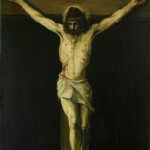
Image via Wikkimedia
Previous Post

March 17, 2016
Ben Hur Re-Visited
Next Post
March 19, 2016 Killing the Way, the Truth and the Life
Browse Our Archives
Select a Category Anglican Matters Apologetics Architecture Blobble Study Book Reviews Brideshead Caitlin O'Rourke Catholic Art Catholic Culture Church Politics Chust for Nice Contemporary Culture Duane Mandible Ed Blanch Film Reviews Fr Harvey Nicolaitan Frank Viola Mantilla the Hon More Christianity Mrs Brady Catholic Old Lady Mystery of the Magi Norman Anderson Queen Hillary Saints and Supernatural Spirituality The Inklings The Vicar Theology Todd Unctuous Uncategorized
Select a Month October 2019 September 2019 August 2019 July 2019 June 2019 May 2019 April 2019 March 2019 December 2018 November 2018 October 2018 August 2018 July 2018 June 2018 May 2018 April 2018 March 2018 February 2018 January 2018 December 2017 November 2017 October 2017 September 2017 August 2017 July 2017 June 2017 May 2017 April 2017 March 2017 February 2017 January 2017 December 2016 November 2016 October 2016 September 2016 August 2016 July 2016 June 2016 May 2016 April 2016 March 2016 February 2016 January 2016 December 2015 November 2015 October 2015 September 2015 August 2015 July 2015 June 2015 May 2015 April 2015 March 2015 February 2015 January 2015 December 2014 November 2014 October 2014 September 2014 August 2014 July 2014 June 2014 May 2014 April 2014 March 2014 February 2014 January 2014 December 2013 November 2013 October 2013 September 2013 August 2013 July 2013 June 2013 May 2013 April 2013 March 2013 February 2013 January 2013 December 2012 November 2012 October 2012 September 2012 August 2012 July 2012 June 2012 May 2012 April 2012 March 2012 February 2012 January 2012 December 2011 November 2011 October 2011 September 2011 August 2011 July 2011 June 2011 May 2011 April 2011 March 2011 February 2011 January 2011 December 2010 November 2010 October 2010 September 2010 August 2010 July 2010 June 2010 May 2010 April 2010 March 2010 February 2010 January 2010 December 2009 November 2009 October 2009 September 2009 August 2009 July 2009 June 2009 May 2009 April 2009 March 2009 February 2009 January 2009 December 2008 November 2008 October 2008 September 2008 August 2008 July 2008 June 2008 May 2008 April 2008 March 2008 February 2008 January 2008 December 2007 November 2007 October 2007 September 2007 August 2007 July 2007 June 2007 May 2007 April 2007 March 2007 February 2007 January 2007 December 2006 November 2006 October 2006 September 2006
Follow Us!
TAKE THE
Religious Wisdom Quiz
I was rejected by God as king for offering an unauthorized sacrifice instead of waiting. Who am I?
Select your answer to see how you score.
David Saul Solomon Rehoboam
Related posts from Fr. Dwight Longenecker

Episcopal Woman Priest Says Abortionists are "Saints"

Pondering Slavery and Homosexual Actions


Pagans, Pantheism and Polytheism
TRENDING AT PATHEOS Catholic

Rejecting Doom: Christian Hope And Human Action
Christianity is a religion of hope. We are to have hope and...

It’s What Comes From Within Which Matters
One of the most difficult things for us to understand is why...

Why I Choose the Eucharist Over the Sermon
Choose the Eucharist, Not the Sermon What are we supposed to get...

5 Design Elements Found in Spiritually Rooted Homes
Putting Spirituality Into Home Decor Our homes are more than our living...

Credo: A Story of God Told with the...
About 10 years ago, I began to imagine a personal "Credo" that...

The Anatomy of Divine Revelation in Catholic Thought
The claim that God has made Himself known to human beings is...
view all Catholic blogs
Ad-Free & Subscriber Log-In Subscription Support
- About Us
- 2026 Calendar
- Videos
- Podcasts
- Library of World Religions
- Faith In Media Tracker
- Advertise With Us
- Write for Us
- Privacy Policy
- Terms of Service
- Do Not Sell My Data
- Contact Us
- Radiant Digital
- Manage Newsletter Subscriptions
- Unsubscribe From Notifications
- Sitemap
Copyright 2008-2026, Patheos. All rights reserved.
Subscription Support Ad-Free & Subscriber Log-In
Follow Patheos