
BuddhistCatholicContemplativeEvangelicalGeneral ChristianHinduJewishLatter-day SaintMuslimNew VisionsProgressive Christian
Beliefs
- Buddhist
- Catholic
- Contemplative
- Evangelical
- General Christian
- Hindu
- Jewish
- Latter-day Saint
- More Voices
- Muslim
- New Visions
- Pagan
- Progressive Christian
Topics
- Religion News
- Food and Religion
- Sports and Religion
- Religious Art
- Religious Music and Entertainment
- Religious Events
- History and Religion
- Style and Religion
- Politics and Religion
- Women in Religion
- Recreation Outdoors and Religion
- Business Finance and Religion
- Careers Workplace and Religion
- Education and Religion
- Family Parenting and Religion
- Health Fitness and Religion
- Home and Religion
- Relationships and Religion
- Technology and Religion
- Travel and Religion
Columnists
- Buddhist Columnists
- Business Finance and Religion Columnists
- Careers Workplace and Religion Columnists
- Catholic Columnists
- Contemplative Columnists
- Education and Religion Columnists
- Evangelists Columnists
- Family Parenting and Religion Columnists
- General Christian Columnists
- Health Fitness and Religion Columnists
- Hindu Columnists
- History and Religion Columnists
- Home and Religion Columnists
- Jewish Columnists
- More Voices Columnists
- Latter Day Columnists
- Muslim Columnists
- New Visions Columnists
- Nonreligious Columnists
- Pagan Columnists
- Politics and Religion Columnists
- Progressive Columnists
- Recreation Outdoors and Religion Columnists
- Relationships and Religion Columnists
- Religion News Columnists
- Religious Art Columnists
- Religious Events Columnists
- Religious Music and Entertainment Columnists
- Sports and Religion Columnists
- Style and Religion Columnists
- Technology and Religion Columnists
- Travel and Religion Columnists
- Women in Religion Columnists
Resource Library
- 2026 Calendar
- Library of World Religions
- The 100 Most Holy Places on Earth
- Patheos Answers
- Podcasts
- Videos
- Faith Leaders Database
- Anglican Episcopalian
- Bahai
- Baptist
- Buddhism
- Christianity
- Confucianism
- Eastern Orthodoxy
- Hinduism
- Holiness and Pentecostal
- ISKCON
- Islam
- Judaism
- Lutheran
- Methodist
- The Church of Jesus Christ of Latter-day Saints
- New Age
- Paganism
- Presbytarian and Reformed
- Protestantism
- Religion Behind the Scenes
- Roman Catholic
- Scientology
- Shia Islam
- Sikhism
- Sufism
- Sunni Islam
- Taoism
- Zen
- See all religions
Research Tools
 Ad-Free & Subscriber Log-In Subscription Support
Ad-Free & Subscriber Log-In Subscription Support
Follow Patheos 

- Trending:
- Forgiveness
- |
- Marriage
- |
- Consciousness
- |
- Death Penalty
- |
- Election
- |
- Halloween
 Fr. Dwight Longenecker
-
Archived Articles
- Everything Belongs to You
- Affirming All Things
- Home Away From Home
- The House of Mirrors
- Universal and Particular
- How Do We Know It's the True Church?
- Believing and Belonging
- Which Came First?
- Them and Us
- What is Truth?
- Authority of the First Popes
- The Authority of the Catholic Church
- Biblical Support for the Authority of the Pope
- What Do We Mean By the Real Presence?
- Baptism Now Saves You
- Mother of God – Defender of Orthodoxy
- Explaining Mary Redemptrix to an Evangelical
- Holy Mary Mother of God
- Distorted Devotions – Do Catholics Honor Mary Too Much?
- Why a Former Evangelical Loves the Rosary
- Do Catholics Pray to Mary?
- Purity is Power
- Woman and Serpent – Take 2
- Once A Virgin – Always a Virgin?
- Mary Mother of God or Mother Goddess?
- One Saving Action
- Left Behind
- Why Don't Catholics Read the Bible?
- Idol Speculation – Do Catholics Worship Idols?
- The Problem with Primitivism
- Weird Things Happen
- Paganism, Prophecies and Propaganda
- Utilitarianism – What is Good Works?
- Home
- Catholic
- Why Am I Standing on My Head?
Why Am I Standing on My Head?
Last updated on: January 30, 2016 at 1:13 pm by Fr. Dwight Longenecker
Why Am I Standing on My Head? 2016-01-30T13:13:23-05:00 Fr. Dwight Longenecker
Patheos Explore the world's faith through different perspectives on religion and spirituality! Patheos has the views of the prevalent religions and spiritualities of the world.
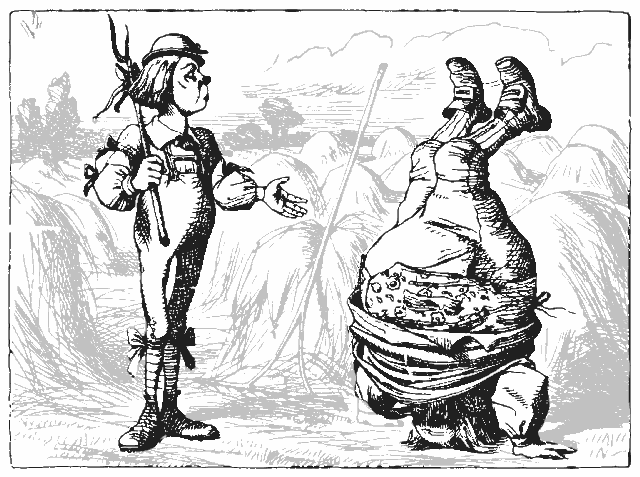 Some people wonder about the title of this blog. It comes from a Chesterton quote that “Very often a scene is best seen when it is seen upside down.” This excerpt from the foreword of my book The Quest for the Creed explains things a bit further.
There are some brave revolutionary souls who stand on their head every day. They are not acrobats but artists, poets, mystics, comedians and prophets. Like children, they have a fresh way of seeing and think it the most ordinary thing in the world to have a new idea, insight or enthusiasm. Furthermore, they think it most natural to share these insights and enthusiasms with others. It is their duty, their joy and their instinct to share their revolutionary insights, and they are always surprised when they are persecuted for their effort. If these acrobatic souls are like children, then there is one famous child who speaks for them all. He is the bright-eyed boy who appears in the story of the emperor’s new clothes. Everyone in the court gasped with delight at the emperor’s imaginary haute couture. Everyone in the crowd pretended to admire the emperor’s invisible satin suit. Only the boy in the front row had the temerity to cry, ‘But he isn’t wearing anything at all!’ That child stands for every prophet, poet, artist, comedian and mystic in the world. He sees clearly what everybody else has been blind to, and declares with unembarrassed delight his joy at the emperor’s nudity.
It is the boy’s job to stand the world on its head, and in a world that is already convoluted, this means putting things the right way around. In other tales the same task falls to the court jester. In Shakespeare’s plays the jester is the one who speaks the hard truth to a character who has gone soft in the head. Sometimes the jester shocks and offends with blunt but clear statements. More often he pops the balloon of pomposity with riddles, jokes, puns and poems. Like the boy who laughed at the naked fat emperor, the jester’s job is to stand on his head and then make people see themselves and the world in a fresh way. For his labors the jester is always laughed at, but never thanked. In fact, he is more often persecuted for his efforts. His clients may laugh at the clown’s red nose, but they will also tell him not to poke it into their affairs. If he pushes his prophecies and jokes too far the jester may be thrown into a well, mocked, beaten or simply ignored.
This role attracts me. By nature I am one of those lugubrious optimists— liturgical on the outside, but anarchical on the inside. As the fool longs to play Hamlet, so this Hamlet has always longed to play the fool. I want to wear the jester’s motley, dangle a little stick with a fool’s head and a feather on the end, and wear rings on my fingers and bells on my toes. I want to scurry around in pointy slippers and poke my nose into our holy places– both the secular ones and the sacred ones. I want to enter the holy of holies and stand on my head so I can see them from a totally new perspective. If I can manage the gymnastics, then the floor may become the ceiling and the ceiling the floor. What seemed sacrosanct may turn out to be mundane, and what was mundane may burn with meaning.
I want to stand on my head and see the world in a fresh way for two reasons. First of all, I am easily bored. I am sure this is a severe character fault, but I get tired of seeing the world the same way all the time. This is the same reason why I enjoy traveling; and once bought X-Ray vision glasses from the back of a comic book. The second reason I want to see the world in a fresh way is because it sometimes seems that the whole world is as mad as the crowd who oohed and aahed over the Emperor’s new clothes. If I can only catch a glimpse of the pink buttocks of reality I will not only be happy, but I might also get one or two others to enjoy the joke, and gasp with the freshness of everything.
One of the ways to do this is for us to see the whole thing with a fresh perspective. There are many ways to get a new perspective, but two ways work very well: laughter and anger. The reason jokes are funny is because they shock us with a surprising and subversive angle on reality. The things that make us angry also give us a fresh perspective. That’s why we get angry: because some new event or bit of news has upset the comfy chair. So in this book I hope to juggle with the truth, tell a few jokes, do some back flips and stand on my head. Like most clowns, I expect I will annoy some people, and frighten others. If you turn up your nose at my style or content, then I will make you even madder by suggesting that I have hit my target. If you think I am too big for my britches, then imagine saying such a thing to a circus clown. He wears big britches on purpose. If you think I am a poseur, an impostor or simply a pompous ass, then I confess. You’re right. But just remember that I am posing on purpose and playing the fool. I am strutting the stage as any jester does—knowing that true words are most often spoken in jest.
But have patience. Try to join in the spirit of the exercise. Don’t be a party pooper, and most of all don’t get me wrong. If I tickle you its because I want you to laugh not cry. Some people assume the jester’s hat because they are weary cynics who believe in nothing and mock everyone. Not me. I wear the jester’s hat because I believe in all things and wish to mock no one. I am a cheerful jester, not a churlish jester. If I criticize people its not because I believe they are bad they way they are, but because I think they can be better. If I suggest that people are hypocrites and fools it is only because I am recognizing them as my brothers and sisters. If I shoot holes in peoples’ pet theories it is to remind all of us that truth is leaky. People are leaky too. I’m leaky. You’re leaky. Everybody, like Liza’s bucket, has a hole, and it is only those who see how many holes they have who are holy.
Go here to learn more about The Quest for the Creed. 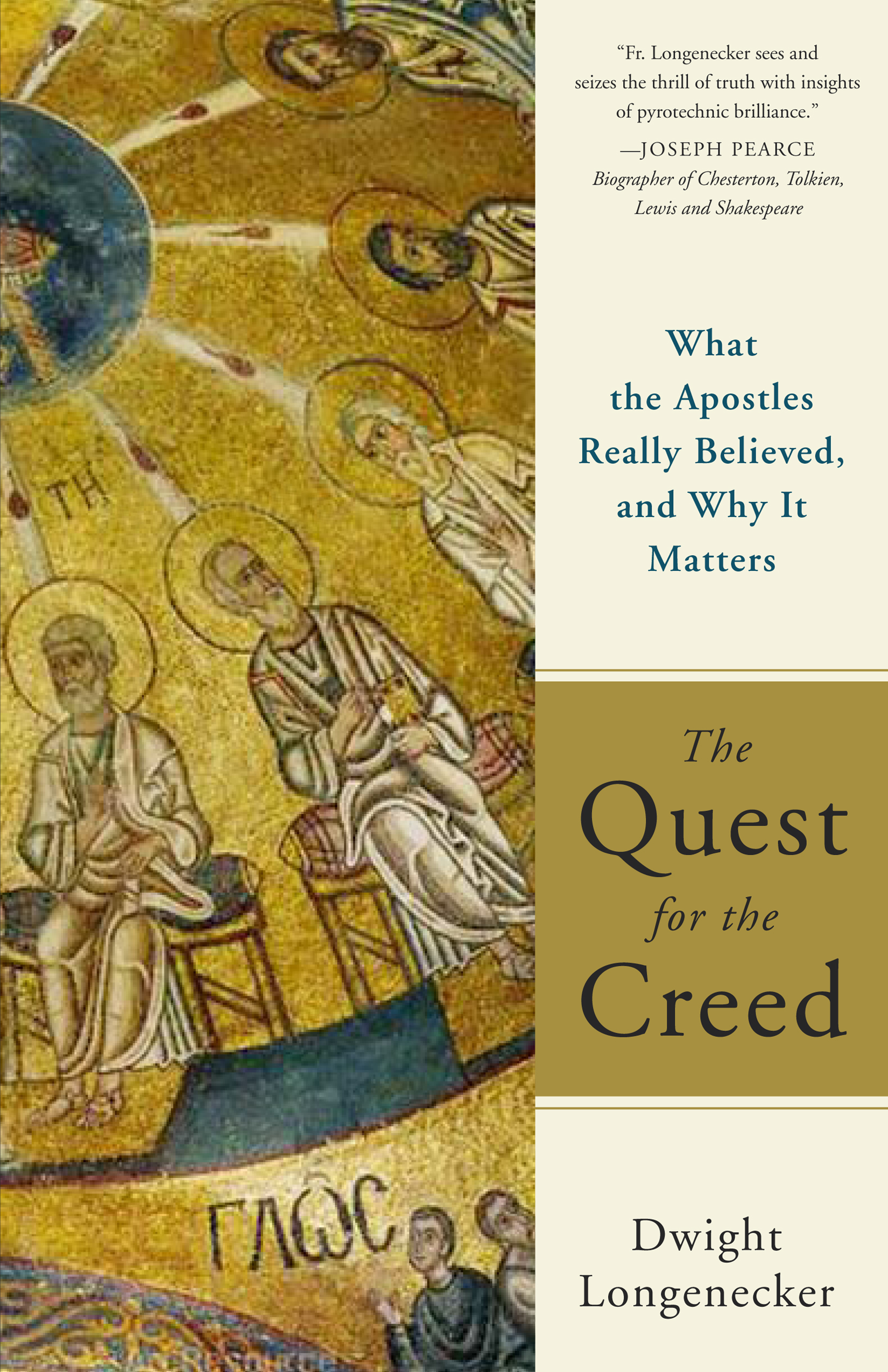
Previous Post

January 30, 2016
Why I Won't Argue Anymore
Next Post
January 31, 2016 Modernism and the Balrog's Whip
Browse Our Archives
Select a Category Anglican Matters Apologetics Architecture Blobble Study Book Reviews Brideshead Caitlin O'Rourke Catholic Art Catholic Culture Church Politics Chust for Nice Contemporary Culture Duane Mandible Ed Blanch Film Reviews Fr Harvey Nicolaitan Frank Viola Mantilla the Hon More Christianity Mrs Brady Catholic Old Lady Mystery of the Magi Norman Anderson Queen Hillary Saints and Supernatural Spirituality The Inklings The Vicar Theology Todd Unctuous Uncategorized
Select a Month October 2019 September 2019 August 2019 July 2019 June 2019 May 2019 April 2019 March 2019 December 2018 November 2018 October 2018 August 2018 July 2018 June 2018 May 2018 April 2018 March 2018 February 2018 January 2018 December 2017 November 2017 October 2017 September 2017 August 2017 July 2017 June 2017 May 2017 April 2017 March 2017 February 2017 January 2017 December 2016 November 2016 October 2016 September 2016 August 2016 July 2016 June 2016 May 2016 April 2016 March 2016 February 2016 January 2016 December 2015 November 2015 October 2015 September 2015 August 2015 July 2015 June 2015 May 2015 April 2015 March 2015 February 2015 January 2015 December 2014 November 2014 October 2014 September 2014 August 2014 July 2014 June 2014 May 2014 April 2014 March 2014 February 2014 January 2014 December 2013 November 2013 October 2013 September 2013 August 2013 July 2013 June 2013 May 2013 April 2013 March 2013 February 2013 January 2013 December 2012 November 2012 October 2012 September 2012 August 2012 July 2012 June 2012 May 2012 April 2012 March 2012 February 2012 January 2012 December 2011 November 2011 October 2011 September 2011 August 2011 July 2011 June 2011 May 2011 April 2011 March 2011 February 2011 January 2011 December 2010 November 2010 October 2010 September 2010 August 2010 July 2010 June 2010 May 2010 April 2010 March 2010 February 2010 January 2010 December 2009 November 2009 October 2009 September 2009 August 2009 July 2009 June 2009 May 2009 April 2009 March 2009 February 2009 January 2009 December 2008 November 2008 October 2008 September 2008 August 2008 July 2008 June 2008 May 2008 April 2008 March 2008 February 2008 January 2008 December 2007 November 2007 October 2007 September 2007 August 2007 July 2007 June 2007 May 2007 April 2007 March 2007 February 2007 January 2007 December 2006 November 2006 October 2006 September 2006
Follow Us!
TAKE THE
Religious Wisdom Quiz
True or False: Habakkuk complained to God about injustice and questioned why the wicked prosper.
Select your answer to see how you score.
TRUE FALSE
Related posts from Fr. Dwight Longenecker

Episcopal Woman Priest Says Abortionists are "Saints"

Pondering Slavery and Homosexual Actions


Pagans, Pantheism and Polytheism
TRENDING AT PATHEOS Catholic

The Parable Of The Sower And The Word...
One of Christ’s most famous parables is that of the sower who...

Rejecting Doom: Christian Hope And Human Action
Christianity is a religion of hope. We are to have hope and...

Why I Choose the Eucharist Over the Sermon
Choose the Eucharist, Not the Sermon What are we supposed to get...

5 Design Elements Found in Spiritually Rooted Homes
Putting Spirituality Into Home Decor Our homes are more than our living...

Credo: A Story of God Told with the...
About 10 years ago, I began to imagine a personal "Credo" that...

The Anatomy of Divine Revelation in Catholic Thought
The claim that God has made Himself known to human beings is...
view all Catholic blogs
Ad-Free & Subscriber Log-In Subscription Support
- About Us
- 2026 Calendar
- Videos
- Podcasts
- Library of World Religions
- Faith In Media Tracker
- Advertise With Us
- Write for Us
- Privacy Policy
- Terms of Service
- Do Not Sell My Data
- Contact Us
- Radiant Digital
- Manage Newsletter Subscriptions
- Unsubscribe From Notifications
- Sitemap
Copyright 2008-2026, Patheos. All rights reserved.
Subscription Support Ad-Free & Subscriber Log-In
Follow Patheos