
BuddhistCatholicContemplativeEvangelicalGeneral ChristianHinduJewishLatter-day SaintMuslimNew VisionsProgressive Christian
Beliefs
- Buddhist
- Catholic
- Contemplative
- Evangelical
- General Christian
- Hindu
- Jewish
- Latter-day Saint
- More Voices
- Muslim
- New Visions
- Pagan
- Progressive Christian
Topics
- Religion News
- Food and Religion
- Sports and Religion
- Religious Art
- Religious Music and Entertainment
- Religious Events
- History and Religion
- Style and Religion
- Politics and Religion
- Women in Religion
- Recreation Outdoors and Religion
- Business Finance and Religion
- Careers Workplace and Religion
- Education and Religion
- Family Parenting and Religion
- Health Fitness and Religion
- Home and Religion
- Relationships and Religion
- Technology and Religion
- Travel and Religion
Columnists
- Buddhist Columnists
- Business Finance and Religion Columnists
- Careers Workplace and Religion Columnists
- Catholic Columnists
- Contemplative Columnists
- Education and Religion Columnists
- Evangelists Columnists
- Family Parenting and Religion Columnists
- General Christian Columnists
- Health Fitness and Religion Columnists
- Hindu Columnists
- History and Religion Columnists
- Home and Religion Columnists
- Jewish Columnists
- More Voices Columnists
- Latter Day Columnists
- Muslim Columnists
- New Visions Columnists
- Nonreligious Columnists
- Pagan Columnists
- Politics and Religion Columnists
- Progressive Columnists
- Recreation Outdoors and Religion Columnists
- Relationships and Religion Columnists
- Religion News Columnists
- Religious Art Columnists
- Religious Events Columnists
- Religious Music and Entertainment Columnists
- Sports and Religion Columnists
- Style and Religion Columnists
- Technology and Religion Columnists
- Travel and Religion Columnists
- Women in Religion Columnists
Resource Library
- 2026 Calendar
- Library of World Religions
- The 100 Most Holy Places on Earth
- Patheos Answers
- Podcasts
- Videos
- Faith Leaders Database
- Anglican Episcopalian
- Bahai
- Baptist
- Buddhism
- Christianity
- Confucianism
- Eastern Orthodoxy
- Hinduism
- Holiness and Pentecostal
- ISKCON
- Islam
- Judaism
- Lutheran
- Methodist
- The Church of Jesus Christ of Latter-day Saints
- New Age
- Paganism
- Presbytarian and Reformed
- Protestantism
- Religion Behind the Scenes
- Roman Catholic
- Scientology
- Shia Islam
- Sikhism
- Sufism
- Sunni Islam
- Taoism
- Zen
- See all religions
Research Tools
 Ad-Free & Subscriber Log-In Subscription Support
Follow Patheos 

- Trending:
- Advent
- |
- Forgiveness
- |
- Thanksgiving
- |
- Election
- |
- Seasonal Holidays
- |
- Marriage
 Fr. Dwight Longenecker
-
Archived Articles
- Everything Belongs to You
- Affirming All Things
- Home Away From Home
- The House of Mirrors
- Universal and Particular
- How Do We Know It's the True Church?
- Believing and Belonging
- Which Came First?
- Them and Us
- What is Truth?
- Authority of the First Popes
- The Authority of the Catholic Church
- Biblical Support for the Authority of the Pope
- What Do We Mean By the Real Presence?
- Baptism Now Saves You
- Mother of God – Defender of Orthodoxy
- Explaining Mary Redemptrix to an Evangelical
- Holy Mary Mother of God
- Distorted Devotions – Do Catholics Honor Mary Too Much?
- Why a Former Evangelical Loves the Rosary
- Do Catholics Pray to Mary?
- Purity is Power
- Woman and Serpent – Take 2
- Once A Virgin – Always a Virgin?
- Mary Mother of God or Mother Goddess?
- One Saving Action
- Left Behind
- Why Don't Catholics Read the Bible?
- Idol Speculation – Do Catholics Worship Idols?
- The Problem with Primitivism
- Weird Things Happen
- Paganism, Prophecies and Propaganda
- Utilitarianism – What is Good Works?
- Home
- Catholic
- Engaging Fr Martin
Engaging Fr Martin
Last updated on: October 29, 2015 at 1:06 pm by Fr. Dwight Longenecker
Engaging Fr Martin 2015-10-29T13:06:46-05:00 Fr. Dwight Longenecker
Patheos Explore the world's faith through different perspectives on religion and spirituality! Patheos has the views of the prevalent religions and spiritualities of the world.
Fr James Martin SJ is an engaging priest. With helpful books on God’s sense of humor and practical spirituality he has helped make Catholicism approachable for many people.
However, he does seem to have some remarkable blind spots.
In an article published over at CNN he asks, Why are Catholics so Afraid of Change?
Fr Martin is good at expressing Catholic concepts to a wide audience in what seem to be simple and direct terms. So he explains,
The Synod on the Family, the gathering of bishops from around the world that just concluded, changed no Catholic doctrine. None.
But you wouldn’t know that from the fierce reactions the synod evoked. Even the possibility that the church might deal more openly with, for example, divorced and remarried Catholics or the LGBT community, sent some Catholics into a near frenzy.
It seemed out of proportion to the synod’s discussions as well as the final document, a rather workaday overview of issues related to the family. The final report did not, for example, say that divorced and remarried could return to Communion. Instead it talked about possible avenues of reconciliation that already existed. Nor did it approve same-sex marriage. Instead it spoke of respecting LGBT Catholics.
Overall, the document stressed two concepts: “accompaniment” and “discernment.” The church must accompany families in the complexity of their lives and use discernment, a form of prayerful decision-making, to help people arrive at good decisions based on church teaching.
Unfortunately, Fr Martin’s friendly and open style of writing masks the real situation about the synod. There were certainly a good number of Catholics from Cardinals down to folks in the pew who had proper concerns about the procedures of the synod. Some were worried that Pope Francis was stacking the synod with progressives like Archbishop Cupich and the Belgian Daneels. Because the synod operated behind closed doors, the suspicions were heightened. However, I don’t remember any Catholics who people take seriously who were “sent into a near frenzy” by the possibility that the church might “deal more openly with divorced and remarried Catholics and the LGBT community.”
Fr Martin has set up a straw man, and this is a typical tactic of the progressive propagandist. They portray those who oppose them as wild eyed, frenzied lunatics while they, of course, are the mild mannered, smiling and reasonable voice of common sense. Really?
Fr Martin seems very enthusiastic about “accompaniment” and “discernment” and I am certainly in favor of a wise and welcoming pastoral approach. However, I’m suspicious of this language of “accompaniment” and “discernment” because they are usually code words for gradualism. What is gradualism?
Gradualism is the concept in ethics and moral theology that suggests that certain individuals may be living at various points along a line extending from being in a state of serious sin, to being at least minimally in the “state of grace” and able to receive the Eucharist. The lives and relationships of people with morally unacceptable lifestyles may have some elements of good, even of great good, such as sacrificial love and consistent respect. It recognizes that virtues are not all-or-nothing propositions, and that elements of good may be found even in the context of morally unacceptable situations.
Is gradualism acceptable? We can certainly admit that in many moral situations the good and the bad are mixed together. However, this does not mean that the bad and the good cannot be distinguished very clearly, and this is where Catholicism comes into its own because (especially in sexual matters) we have always had some clear definitions.
Here’s an example: Let’s say Janet is in a difficult marriage. She falls in love with Harry and they start spending time together. They text one another and send loving messages back and forth. This is probably not smart, but it is not adultery. It only becomes adultery when they have sexual intercourse. Are there elements in their friendship which might be good, life giving, healing and helpful? Maybe. Are there elements in their friendship that are unwise and headed in the wrong direction? Probably.
At what level do they need to be “accompanied” and what level of “discernment” do they need? They need enough discernment for someone to tell them they are headed in a bad direction and if they have sex that they have committed a mortal sin. At that point they need to be accompanied to go to confession during which the priest will accompany them to make a good confession.
Here’s another example: Continue Reading
Previous Post

October 27, 2015
The Vicar on Lady Bishops
Next Post

October 27, 2015 Sanity, Sanctity and Sexuality
Browse Our Archives
Select a Category Anglican Matters Apologetics Architecture Blobble Study Book Reviews Brideshead Caitlin O'Rourke Catholic Art Catholic Culture Church Politics Chust for Nice Contemporary Culture Duane Mandible Ed Blanch Film Reviews Fr Harvey Nicolaitan Frank Viola Mantilla the Hon More Christianity Mrs Brady Catholic Old Lady Mystery of the Magi Norman Anderson Queen Hillary Saints and Supernatural Spirituality The Inklings The Vicar Theology Todd Unctuous Uncategorized
Select a Month October 2019 September 2019 August 2019 July 2019 June 2019 May 2019 April 2019 March 2019 December 2018 November 2018 October 2018 August 2018 July 2018 June 2018 May 2018 April 2018 March 2018 February 2018 January 2018 December 2017 November 2017 October 2017 September 2017 August 2017 July 2017 June 2017 May 2017 April 2017 March 2017 February 2017 January 2017 December 2016 November 2016 October 2016 September 2016 August 2016 July 2016 June 2016 May 2016 April 2016 March 2016 February 2016 January 2016 December 2015 November 2015 October 2015 September 2015 August 2015 July 2015 June 2015 May 2015 April 2015 March 2015 February 2015 January 2015 December 2014 November 2014 October 2014 September 2014 August 2014 July 2014 June 2014 May 2014 April 2014 March 2014 February 2014 January 2014 December 2013 November 2013 October 2013 September 2013 August 2013 July 2013 June 2013 May 2013 April 2013 March 2013 February 2013 January 2013 December 2012 November 2012 October 2012 September 2012 August 2012 July 2012 June 2012 May 2012 April 2012 March 2012 February 2012 January 2012 December 2011 November 2011 October 2011 September 2011 August 2011 July 2011 June 2011 May 2011 April 2011 March 2011 February 2011 January 2011 December 2010 November 2010 October 2010 September 2010 August 2010 July 2010 June 2010 May 2010 April 2010 March 2010 February 2010 January 2010 December 2009 November 2009 October 2009 September 2009 August 2009 July 2009 June 2009 May 2009 April 2009 March 2009 February 2009 January 2009 December 2008 November 2008 October 2008 September 2008 August 2008 July 2008 June 2008 May 2008 April 2008 March 2008 February 2008 January 2008 December 2007 November 2007 October 2007 September 2007 August 2007 July 2007 June 2007 May 2007 April 2007 March 2007 February 2007 January 2007 December 2006 November 2006 October 2006 September 2006
Follow Us!
TAKE THE
Religious Wisdom Quiz
What does "Gethsemane" mean in Aramaic?
Select your answer to see how you score.
House of God Olive press Holy ground Place of rest
Related posts from Fr. Dwight Longenecker
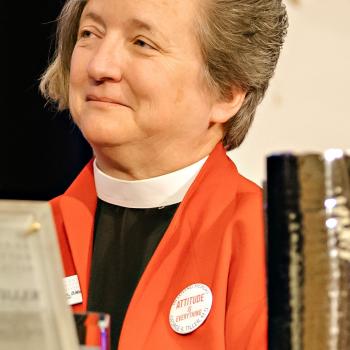
Episcopal Woman Priest Says Abortionists are "Saints"

Pondering Slavery and Homosexual Actions
Pagans, Pantheism and Polytheism
TRENDING AT PATHEOS Catholic
Faith, Reason, and Transubstantiation
“It would be easier for the world to survive without the sun...

When The Letter Of The Law Misses Its...
Jesus cared about people. He never ignored their needs, whether they were...

The Kingdom Of God In Ordinary Life And...
The kingdom of God is all around us; it is in us...

If Baptism Washes Away Sin, Why Do Catholics...
The seven sacraments stand as the foundation of Catholic ecclesial life. The...

The Power of Setting a Good Example
Remember last August when the Chicago White Sox hosted a "Pope Hat...

How Grandma Tourism Helps Grandparents Live Their Vocation
Grandma, The New Travel Influencer What started as a nostalgia-inspired social media...
view all Catholic blogs
Ad-Free & Subscriber Log-In Subscription Support
- About Us
- 2026 Calendar
- Videos
- Podcasts
- Library of World Religions
- Faith In Media Tracker
- Advertise With Us
- Write for Us
- Privacy Policy
- Terms of Service
- Do Not Sell My Data
- Contact Us
- Radiant Digital
- Manage Newsletter Subscriptions
- Unsubscribe From Notifications
- Sitemap
Copyright 2008-2026, Patheos, part of the Radiant Digital network of media brands. All rights reserved.
Subscription Support Ad-Free & Subscriber Log-In
Follow Patheos