
BuddhistCatholicContemplativeEvangelicalGeneral ChristianHinduJewishLatter-day SaintMuslimNew VisionsProgressive Christian
Beliefs
- Buddhist
- Catholic
- Contemplative
- Evangelical
- General Christian
- Hindu
- Jewish
- Latter-day Saint
- More Voices
- Muslim
- New Visions
- Pagan
- Progressive Christian
Topics
- Religion News
- Food and Religion
- Sports and Religion
- Religious Art
- Religious Music and Entertainment
- Religious Events
- History and Religion
- Style and Religion
- Politics and Religion
- Women in Religion
- Recreation Outdoors and Religion
- Business Finance and Religion
- Careers Workplace and Religion
- Education and Religion
- Family Parenting and Religion
- Health Fitness and Religion
- Home and Religion
- Relationships and Religion
- Technology and Religion
- Travel and Religion
Columnists
- Buddhist Columnists
- Business Finance and Religion Columnists
- Careers Workplace and Religion Columnists
- Catholic Columnists
- Contemplative Columnists
- Education and Religion Columnists
- Evangelists Columnists
- Family Parenting and Religion Columnists
- General Christian Columnists
- Health Fitness and Religion Columnists
- Hindu Columnists
- History and Religion Columnists
- Home and Religion Columnists
- Jewish Columnists
- More Voices Columnists
- Latter Day Columnists
- Muslim Columnists
- New Visions Columnists
- Nonreligious Columnists
- Pagan Columnists
- Politics and Religion Columnists
- Progressive Columnists
- Recreation Outdoors and Religion Columnists
- Relationships and Religion Columnists
- Religion News Columnists
- Religious Art Columnists
- Religious Events Columnists
- Religious Music and Entertainment Columnists
- Sports and Religion Columnists
- Style and Religion Columnists
- Technology and Religion Columnists
- Travel and Religion Columnists
- Women in Religion Columnists
Resource Library
- 2026 Calendar
- Library of World Religions
- The 100 Most Holy Places on Earth
- Patheos Answers
- Podcasts
- Videos
- Faith Leaders Database
- Anglican Episcopalian
- Bahai
- Baptist
- Buddhism
- Christianity
- Confucianism
- Eastern Orthodoxy
- Hinduism
- Holiness and Pentecostal
- ISKCON
- Islam
- Judaism
- Lutheran
- Methodist
- The Church of Jesus Christ of Latter-day Saints
- New Age
- Paganism
- Presbytarian and Reformed
- Protestantism
- Religion Behind the Scenes
- Roman Catholic
- Scientology
- Shia Islam
- Sikhism
- Sufism
- Sunni Islam
- Taoism
- Zen
- See all religions
Research Tools
 Ad-Free & Subscriber Log-In Subscription Support
Ad-Free & Subscriber Log-In Subscription Support
Follow Patheos 

- Trending:
- Forgiveness
- |
- Marriage
- |
- Consciousness
- |
- Death Penalty
- |
- Election
- |
- Halloween
 Fr. Dwight Longenecker
-
Archived Articles
- Everything Belongs to You
- Affirming All Things
- Home Away From Home
- The House of Mirrors
- Universal and Particular
- How Do We Know It's the True Church?
- Believing and Belonging
- Which Came First?
- Them and Us
- What is Truth?
- Authority of the First Popes
- The Authority of the Catholic Church
- Biblical Support for the Authority of the Pope
- What Do We Mean By the Real Presence?
- Baptism Now Saves You
- Mother of God – Defender of Orthodoxy
- Explaining Mary Redemptrix to an Evangelical
- Holy Mary Mother of God
- Distorted Devotions – Do Catholics Honor Mary Too Much?
- Why a Former Evangelical Loves the Rosary
- Do Catholics Pray to Mary?
- Purity is Power
- Woman and Serpent – Take 2
- Once A Virgin – Always a Virgin?
- Mary Mother of God or Mother Goddess?
- One Saving Action
- Left Behind
- Why Don't Catholics Read the Bible?
- Idol Speculation – Do Catholics Worship Idols?
- The Problem with Primitivism
- Weird Things Happen
- Paganism, Prophecies and Propaganda
- Utilitarianism – What is Good Works?
- Home
- Catholic
- Virginity and the Little Flower of the Mohawks
Virginity and the Little Flower of the Mohawks
Last updated on: July 14, 2014 at 12:55 pm by Fr. Dwight Longenecker
Virginity and the Little Flower of the Mohawks 2014-07-14T12:55:08-05:00 Fr. Dwight Longenecker
Patheos Explore the world's faith through different perspectives on religion and spirituality! Patheos has the views of the prevalent religions and spiritualities of the world.
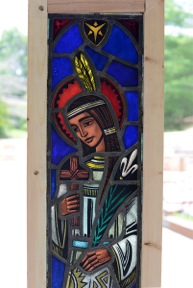
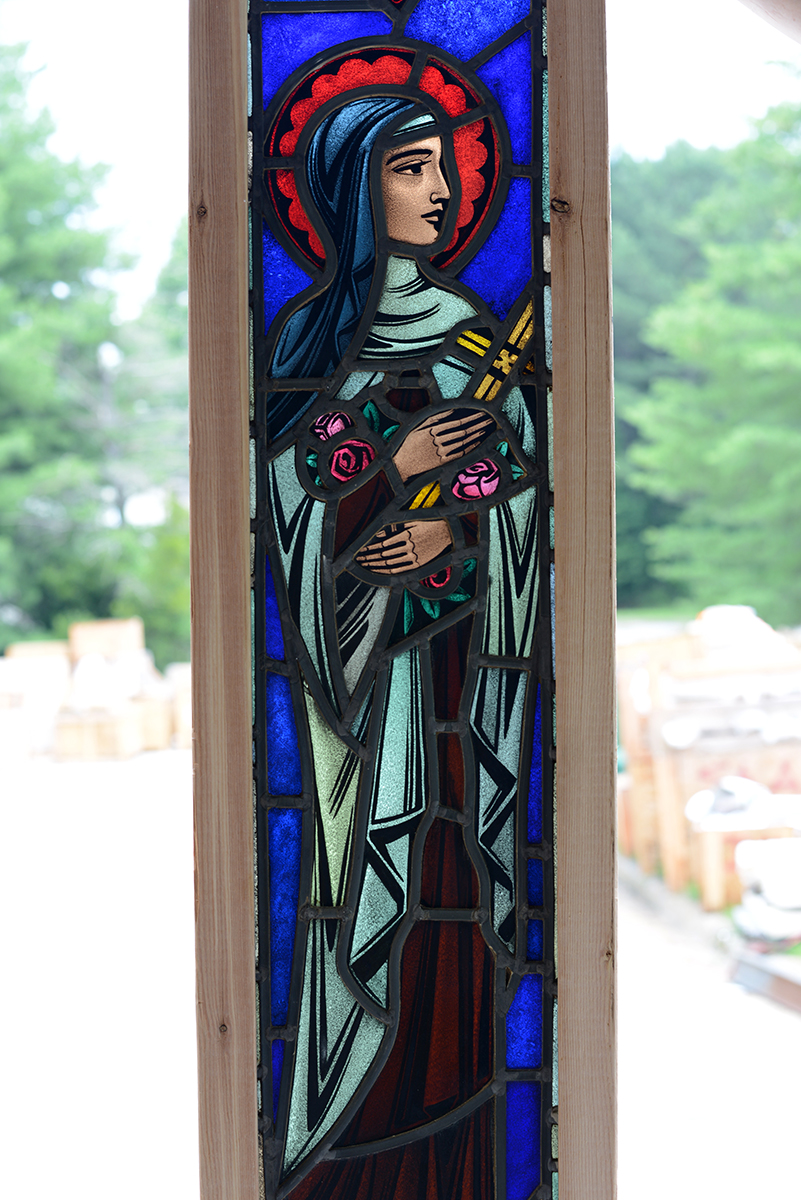 In learning more about St Kateri Tekakwitha I was struck by the connecting points between her and St Therese of Lisieux. Both were orphaned. Both suffered from a terrible disease. Both died at the age of just 24. Therese was called “the Little Flower”. Kateri was called “the Lily of the Mohawks”
Pictured are two antique stained glass windows of the two we hope to purchase for the new Our Lady of the Rosary Church in Greenville, SC. ( BTWAnyone out there interested n being the donor for these windows drop me an email.)
What is the point of virgins in the church? OK. We can understand that they illustrate the virtue of chastity and remind all by their extreme example, to follow the way of purity.
But that kind of hints that sexual relations are somehow dirty or bad in themselves, and that is not why the church values virginity. Furthermore, why does the church value virginity in women, but doesn’t much mention it in the lives of men saints?
Does it point to the Virgin Mary’s perpetual virginity? It echoes the Blessed Virgin’s perpetual virginity, but there is much more to it.
The church honors virgin saints because they picture the nuptial imagery which runs throughout the Scriptures.
Pope Benedict XVI said, “The Scriptures can only be interpreted through the lives of the saints.”
There is a profound mystery here. The Scriptures are somehow fulfilled and brought to life through the whole panoply of saints’ lives.
In the Old Testament stories of men finding their brides there is the hint of the bride-bridegroom symbolism. Then the OT prophets declare that God himself will be the bridegroom of his people Israel. Then Jesus speak repeatedly in parables about the bride and the bridegroom and speaks about the virgin bride being ready for the arrival of the bridegroom and he refers to himself repeatedly as the bridegroom. The liturgy for the day of resurrection refers back to the psalms and pictures the Lord rising from the tomb being like the sun which is like a “bridegroom emerging from his chamber.”
The St Paul refers to the church as “the bride of Christ” and says the church “is presented on day to the Lord as a glorious church without spot or wrinkle, as a bride adorned for her husband” Then in the Book of Revelation the life of heaven is likened to the “marriage supper of the Lamb”. In heaven the bride the Church is at last one with the bridegroom in the consummation of the feast.
Brant Pitre’s book Jesus the Bridegroom: The Greatest Love Story Ever Told
This is therefore why the church honors female virgins as she does: because they picture the whole church as the bride of Christ. They indicate a present and future reality and the reality that applies to each one of us as individuals and to the whole church: that we are called to be finally made pure and spotless and ready for the bridegroom.
How can this be when so many of us are so wrapped up in sin, lust, anger, violence and weakness?
This is the mysterious miracle: that through the working of grace and our co operation with grace we are actually called to achieve this perfection. The destiny of each one of us is to be finally purified and made just as pure and clean and sparkling again as the virgin saints were in their mortal lives.
By being who they are they show us what we shall be.
Each one of us will have our virginity restored and re-made. This leads to a contemplation of just what this virginity is.
It is not simply that a person never had sexual relations with anyone. It is not simply a biographical or biological fact. It is a state of mind, a state of soul and a state of the heart. The virginity of Kateri Tekakwitha and Therese and the other virgin saints is a sign of a fullness of goodness in their lives–being full of grace. Their lives were swamped with grace and they were made as complete in this life as it is our destiny to be one day in the life to come (if we do not complete the work of purification here)
Finally, it is no mistake that the virgin saints are inevitably virgin martyrs, and if not martyrs in fact, then martyrs to some great suffering. Their virginity is not some sort of Pollyanna piety. Their virginity, like the Virgin Mary’s is a sharing in the sufferings of Christ. They die for love if you like, and they show us that purity comes at a price.
Their tenderness is tough. If they are little flowers they are not drooping violets but steel magnolias, and as such they are examples of the little way that is the only way–a way that is strewn with flowers, but a way that also points to a crown of thorns.
Previous Post

July 14, 2014
Vatican Statement on Ordination of Women Bishops
Next Post
July 15, 2014 Ten Things to Remember if Pope Francis Upsets You
Browse Our Archives
Select a Category Anglican Matters Apologetics Architecture Blobble Study Book Reviews Brideshead Caitlin O'Rourke Catholic Art Catholic Culture Church Politics Chust for Nice Contemporary Culture Duane Mandible Ed Blanch Film Reviews Fr Harvey Nicolaitan Frank Viola Mantilla the Hon More Christianity Mrs Brady Catholic Old Lady Mystery of the Magi Norman Anderson Queen Hillary Saints and Supernatural Spirituality The Inklings The Vicar Theology Todd Unctuous Uncategorized
Select a Month October 2019 September 2019 August 2019 July 2019 June 2019 May 2019 April 2019 March 2019 December 2018 November 2018 October 2018 August 2018 July 2018 June 2018 May 2018 April 2018 March 2018 February 2018 January 2018 December 2017 November 2017 October 2017 September 2017 August 2017 July 2017 June 2017 May 2017 April 2017 March 2017 February 2017 January 2017 December 2016 November 2016 October 2016 September 2016 August 2016 July 2016 June 2016 May 2016 April 2016 March 2016 February 2016 January 2016 December 2015 November 2015 October 2015 September 2015 August 2015 July 2015 June 2015 May 2015 April 2015 March 2015 February 2015 January 2015 December 2014 November 2014 October 2014 September 2014 August 2014 July 2014 June 2014 May 2014 April 2014 March 2014 February 2014 January 2014 December 2013 November 2013 October 2013 September 2013 August 2013 July 2013 June 2013 May 2013 April 2013 March 2013 February 2013 January 2013 December 2012 November 2012 October 2012 September 2012 August 2012 July 2012 June 2012 May 2012 April 2012 March 2012 February 2012 January 2012 December 2011 November 2011 October 2011 September 2011 August 2011 July 2011 June 2011 May 2011 April 2011 March 2011 February 2011 January 2011 December 2010 November 2010 October 2010 September 2010 August 2010 July 2010 June 2010 May 2010 April 2010 March 2010 February 2010 January 2010 December 2009 November 2009 October 2009 September 2009 August 2009 July 2009 June 2009 May 2009 April 2009 March 2009 February 2009 January 2009 December 2008 November 2008 October 2008 September 2008 August 2008 July 2008 June 2008 May 2008 April 2008 March 2008 February 2008 January 2008 December 2007 November 2007 October 2007 September 2007 August 2007 July 2007 June 2007 May 2007 April 2007 March 2007 February 2007 January 2007 December 2006 November 2006 October 2006 September 2006
Follow Us!
TAKE THE
Religious Wisdom Quiz
Who was sold into slavery by his brothers?
Select your answer to see how you score.
Benjamin Joseph Dan Judah
Related posts from Fr. Dwight Longenecker
Is Communion With Lutherans on the Way?
Atheism or Catholicism - You Choose

TRENDING AT PATHEOS Catholic

The Parable Of The Sower And The Word...
One of Christ’s most famous parables is that of the sower who...

Rejecting Doom: Christian Hope And Human Action
Christianity is a religion of hope. We are to have hope and...

Why I Choose the Eucharist Over the Sermon
Choose the Eucharist, Not the Sermon What are we supposed to get...

5 Design Elements Found in Spiritually Rooted Homes
Putting Spirituality Into Home Decor Our homes are more than our living...

Credo: A Story of God Told with the...
About 10 years ago, I began to imagine a personal "Credo" that...

The Anatomy of Divine Revelation in Catholic Thought
The claim that God has made Himself known to human beings is...
view all Catholic blogs
Ad-Free & Subscriber Log-In Subscription Support
- About Us
- 2026 Calendar
- Videos
- Podcasts
- Library of World Religions
- Faith In Media Tracker
- Advertise With Us
- Write for Us
- Privacy Policy
- Terms of Service
- Do Not Sell My Data
- Contact Us
- Radiant Digital
- Manage Newsletter Subscriptions
- Unsubscribe From Notifications
- Sitemap
Copyright 2008-2026, Patheos. All rights reserved.
Subscription Support Ad-Free & Subscriber Log-In
Follow Patheos