
BuddhistCatholicContemplativeEvangelicalGeneral ChristianHinduJewishLatter-day SaintMuslimNew VisionsProgressive Christian
Beliefs
- Buddhist
- Catholic
- Contemplative
- Evangelical
- General Christian
- Hindu
- Jewish
- Latter-day Saint
- More Voices
- Muslim
- New Visions
- Pagan
- Progressive Christian
Topics
- Religion News
- Food and Religion
- Sports and Religion
- Religious Art
- Religious Music and Entertainment
- Religious Events
- History and Religion
- Style and Religion
- Politics and Religion
- Women in Religion
- Recreation Outdoors and Religion
- Business Finance and Religion
- Careers Workplace and Religion
- Education and Religion
- Family Parenting and Religion
- Health Fitness and Religion
- Home and Religion
- Relationships and Religion
- Technology and Religion
- Travel and Religion
Columnists
- Buddhist Columnists
- Business Finance and Religion Columnists
- Careers Workplace and Religion Columnists
- Catholic Columnists
- Contemplative Columnists
- Education and Religion Columnists
- Evangelists Columnists
- Family Parenting and Religion Columnists
- General Christian Columnists
- Health Fitness and Religion Columnists
- Hindu Columnists
- History and Religion Columnists
- Home and Religion Columnists
- Jewish Columnists
- More Voices Columnists
- Latter Day Columnists
- Muslim Columnists
- New Visions Columnists
- Nonreligious Columnists
- Pagan Columnists
- Politics and Religion Columnists
- Progressive Columnists
- Recreation Outdoors and Religion Columnists
- Relationships and Religion Columnists
- Religion News Columnists
- Religious Art Columnists
- Religious Events Columnists
- Religious Music and Entertainment Columnists
- Sports and Religion Columnists
- Style and Religion Columnists
- Technology and Religion Columnists
- Travel and Religion Columnists
- Women in Religion Columnists
Resource Library
- 2026 Calendar
- Library of World Religions
- The 100 Most Holy Places on Earth
- Patheos Answers
- Podcasts
- Videos
- Faith Leaders Database
- Anglican Episcopalian
- Bahai
- Baptist
- Buddhism
- Christianity
- Confucianism
- Eastern Orthodoxy
- Hinduism
- Holiness and Pentecostal
- ISKCON
- Islam
- Judaism
- Lutheran
- Methodist
- The Church of Jesus Christ of Latter-day Saints
- New Age
- Paganism
- Presbytarian and Reformed
- Protestantism
- Religion Behind the Scenes
- Roman Catholic
- Scientology
- Shia Islam
- Sikhism
- Sufism
- Sunni Islam
- Taoism
- Zen
- See all religions
Research Tools
 Ad-Free & Subscriber Log-In Subscription Support
Ad-Free & Subscriber Log-In Subscription Support
Follow Patheos 

- Trending:
- Forgiveness
- |
- Marriage
- |
- Consciousness
- |
- Death Penalty
- |
- Election
- |
- Halloween
 Fr. Dwight Longenecker
-
Archived Articles
- Everything Belongs to You
- Affirming All Things
- Home Away From Home
- The House of Mirrors
- Universal and Particular
- How Do We Know It's the True Church?
- Believing and Belonging
- Which Came First?
- Them and Us
- What is Truth?
- Authority of the First Popes
- The Authority of the Catholic Church
- Biblical Support for the Authority of the Pope
- What Do We Mean By the Real Presence?
- Baptism Now Saves You
- Mother of God – Defender of Orthodoxy
- Explaining Mary Redemptrix to an Evangelical
- Holy Mary Mother of God
- Distorted Devotions – Do Catholics Honor Mary Too Much?
- Why a Former Evangelical Loves the Rosary
- Do Catholics Pray to Mary?
- Purity is Power
- Woman and Serpent – Take 2
- Once A Virgin – Always a Virgin?
- Mary Mother of God or Mother Goddess?
- One Saving Action
- Left Behind
- Why Don't Catholics Read the Bible?
- Idol Speculation – Do Catholics Worship Idols?
- The Problem with Primitivism
- Weird Things Happen
- Paganism, Prophecies and Propaganda
- Utilitarianism – What is Good Works?
- Home
- Catholic
- Gospel Stories, Myths and Legends
Gospel Stories, Myths and Legends
Last updated on: September 9, 2025 at 1:28 pm by Fr. Dwight Longenecker
Gospel Stories, Myths and Legends 2025-09-09T13:28:50-05:00 Fr. Dwight Longenecker
Patheos Explore the world's faith through different perspectives on religion and spirituality! Patheos has the views of the prevalent religions and spiritualities of the world.
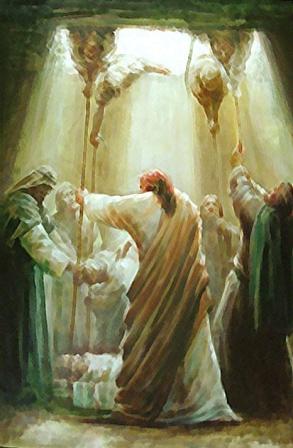 They’re So Beautiful!
On the week before Christmas in 1941 my grandfather was walking with his two sons to market in downtown Pottstown, Pennsylvania. It had snowed the night before and the roads were too icy to drive. That’s why they were walking. As they crossed the river bridge a coal truck turned on to the bridge. The bridge was icy and the driver lost control. The truck slid forward toward my grandfather and his sons. He saw what was happening, pushed the boys out of the way, but was himself crushed by the careening coal truck. Passers by folded his body into the back seat of a car and rushed him to hospital, but as they did his broken ribs punctured his internal organs and the doctors could do nothing for him. As he lay dying on Christmas Day my grandmother kept vigil by his bedside. Then he awoke for a moment from his unconscious state. He recognized his wife, squeezed her hand and they prayed together. Then he smiled and looked up into the corner of the hospital room. His face brightened and she said he looked young again. He said quietly, “Look! look! Don’t you see them? They’re so beautiful!” Then his head fell back on the pillow and he was gone.
After the Events
This is a true story, but on what level is it true? On one level it is a factual account of a historical event which took place seventy years ago. My mother still has the news clippings. My two uncles are still living and can tell the tale. In my re-telling I may have missed some details or got the words a bit wrong, but when I do my mother is quick to correct me.
If we compare this true story to the stories of the gospels we can assess in what way the gospels might also be true. The comparison is illuminating because of the passage of time. My story of my grandfather’s death seventy some years ago is being remembered and told today. The gospel stories were re-told and then recorded only thirty to forty years after the events.
Embroidered or Exaggerated
In treating the stories, there are facts to be recorded, and then there is interpretation of the facts. My mother and my uncles readily correct the details if I get them wrong because the details are important. For those for whom the stories are precious, the facts are precious because the people involved are precious. These are fragile and beloved events. Those who experienced them do not want them embroidered or exaggerated.
However, there is also the interpretation of the events. There is a redemptive theme to the true story. My grandfather laid down his life for his sons. My grandmother soldiered through the depression and war years as a young widow. Her courage and hard work and abiding love for her husband became an example of goodness, loyalty and faith in our family. These teaching elements are woven through the story and spring from the story and its aftermath. There is more. There is also a supernatural element to the story. For those who believe, my grandfather had a glimpse of heaven before he went there. He saw the angels who were ready to welcome him home.
Completely Myth?
This story “works on us as myth” because my grandfather (who I never knew) has become an iconic figure in our family history. The heroic story of his noble self sacrifice inspires us and encourages us to follow his example. We identify with him as the hero. As husbands and fathers we want to be as noble, courageous, good and true as we believe he was. This is the way myths work–the hero gets into us and we get into him. His story lives on in us.
For those who do not believe it might be suggested that this last part of the story was a “mythological element” that had intruded into the telling of the story by later generations who had come to venerate my grandfather as a saintly and self sacrificial hero. The true and tragic story, they would say, had become legend and legend had become myth. Others who are more doubtful might suggest (after the passing of a few more generations) that the story (because it had mythological elements) was completely myth. It was something made up by the family members to elevate my grandfather’s status.
In the Form of God
They suggest that this was the way the gospels evolved. Jesus of Nazareth did certain things that seemed miraculous. Before long those elements were exaggerated and the Gentile church made him into a divine figure like the other man-gods in their culture. It’s a plausible theory if you don’t know very much about the Jews and New Testament culture.
The problem is the Jews were a very hard headed and practical people. They had no time for the myths and legends of the pagans. In fact, the pagan religions were the chief enemy and it was blasphemy to imagine that a man could be God. This is why the witness of St Paul–whose remarkable writings are the earliest New Testament documents–is so astounding. Here is a well educated and thoroughly trained Jewish theologian who goes completely against his religion and says that “Christ Jesus was in the form of God” or “Christ is the image of the unseen God” or “Jesus Christ is Lord of Heaven and Earth.”
Within the Natural World
These claims are made before his death in the mid-60s. Just thirty years after the death of Christ. The “mythological elements” therefore were in place well within the memory of those who were witnesses to the events of Christ’s life. Furthermore, when the gospels are studied in depth it becomes clear that dozens of examples woven into the heart of the stories themselves reveal Jesus Christ as God. These are all the more believable because they are woven into the ordinary actions and words of Christ rather than something attached to the story later as an accretion.
One example is the story of the healing of the paralytic man: Jesus doesn’t just heal the man. He forgives his sins. The Pharisees say quite rightly, “Who does he think he is? Doesn’t he know that God alone can forgive sins?” Christ’s words and actions reveal his divinity rather than it being a later addition to a memorable story. This is like the supernatural element in the story of my grandfather’s death. It is part of the story and it really happened that way. The supernatural took place within the natural world.
Supernatural Occurrence
This is why any comparison of the Jesus stories to pagan myth simply doesn’t stand up. Those who say that the stories of Jesus are like the stories of Attis or Horus or Dionysius have clearly not read either the gospels or the ancient myths. Here’s an example: some would like to suggest that the birth of Horus (because it was a miraculous birth) was a “Virgin Birth” and therefore the Christians borrowed the story from the pagans. Stop and look at the Horus story: His mother Isis the river goddess gathered the dismembered parts of the body of her husband Osiris, but she couldn’t find his penis so she fashioned a golden penis and impregnated herself and conceived Horus–and this is typical of the outlandish nature of totally mythological stories.
The story of the conception of Jesus Christ is admittedly a supernatural story–an angel appears to a girl and she becomes pregnant by an act of God, but this is nothing like the pagan myths. It is much more like the story of my grandfather’s death–an ordinary situation is transformed by a supernatural occurrence. This world is interrupted by the other world, and so transformed.
Holy Spirit and the Graces
That such true stories can become legend and then work on us as myth is illustrated by the story of my grandfather’s death–and examples could be multiplied endlessly–and each one shows how the gospel stories work as well: that they work on us like myths, except that they really happened.
Finally, we mustn’t pretend that the gospel is limited to this natural “mythic way of working”. The Catholic religion is more than following a collection of inspiring stories. Because Jesus Christ was God incarnate his power and working in the world is constant and active. Added to the “inspiring stories” is the abiding presence of the Holy Spirit and the graces which come through faith and the sacraments of the church….but that is another story.
Previous Post

January 1, 2013
Holy Mary Mother of God and Mother of Me
Next Post
January 2, 2013 Judgement Day
Browse Our Archives
Select a Category Anglican Matters Apologetics Architecture Blobble Study Book Reviews Brideshead Caitlin O'Rourke Catholic Art Catholic Culture Church Politics Chust for Nice Contemporary Culture Duane Mandible Ed Blanch Film Reviews Fr Harvey Nicolaitan Frank Viola Mantilla the Hon More Christianity Mrs Brady Catholic Old Lady Mystery of the Magi Norman Anderson Queen Hillary Saints and Supernatural Spirituality The Inklings The Vicar Theology Todd Unctuous Uncategorized
Select a Month October 2019 September 2019 August 2019 July 2019 June 2019 May 2019 April 2019 March 2019 December 2018 November 2018 October 2018 August 2018 July 2018 June 2018 May 2018 April 2018 March 2018 February 2018 January 2018 December 2017 November 2017 October 2017 September 2017 August 2017 July 2017 June 2017 May 2017 April 2017 March 2017 February 2017 January 2017 December 2016 November 2016 October 2016 September 2016 August 2016 July 2016 June 2016 May 2016 April 2016 March 2016 February 2016 January 2016 December 2015 November 2015 October 2015 September 2015 August 2015 July 2015 June 2015 May 2015 April 2015 March 2015 February 2015 January 2015 December 2014 November 2014 October 2014 September 2014 August 2014 July 2014 June 2014 May 2014 April 2014 March 2014 February 2014 January 2014 December 2013 November 2013 October 2013 September 2013 August 2013 July 2013 June 2013 May 2013 April 2013 March 2013 February 2013 January 2013 December 2012 November 2012 October 2012 September 2012 August 2012 July 2012 June 2012 May 2012 April 2012 March 2012 February 2012 January 2012 December 2011 November 2011 October 2011 September 2011 August 2011 July 2011 June 2011 May 2011 April 2011 March 2011 February 2011 January 2011 December 2010 November 2010 October 2010 September 2010 August 2010 July 2010 June 2010 May 2010 April 2010 March 2010 February 2010 January 2010 December 2009 November 2009 October 2009 September 2009 August 2009 July 2009 June 2009 May 2009 April 2009 March 2009 February 2009 January 2009 December 2008 November 2008 October 2008 September 2008 August 2008 July 2008 June 2008 May 2008 April 2008 March 2008 February 2008 January 2008 December 2007 November 2007 October 2007 September 2007 August 2007 July 2007 June 2007 May 2007 April 2007 March 2007 February 2007 January 2007 December 2006 November 2006 October 2006 September 2006
Follow Us!
TAKE THE
Religious Wisdom Quiz
What does the Greek word "makarios", used in the Beatitudes, mean?
Select your answer to see how you score.
Blessed Peaceful Humble Holy
Related posts from Fr. Dwight Longenecker
Arians, Aliens and Body Snatchers
Is Communion With Lutherans on the Way?
Is This a Miraculous Image of the Divine...
TRENDING AT PATHEOS Catholic

Rejecting Doom: Christian Hope And Human Action
Christianity is a religion of hope. We are to have hope and...

It’s What Comes From Within Which Matters
One of the most difficult things for us to understand is why...

Why I Choose the Eucharist Over the Sermon
Choose the Eucharist, Not the Sermon What are we supposed to get...

5 Design Elements Found in Spiritually Rooted Homes
Putting Spirituality Into Home Decor Our homes are more than our living...

Credo: A Story of God Told with the...
About 10 years ago, I began to imagine a personal "Credo" that...

The Anatomy of Divine Revelation in Catholic Thought
The claim that God has made Himself known to human beings is...
view all Catholic blogs
Ad-Free & Subscriber Log-In Subscription Support
- About Us
- 2026 Calendar
- Videos
- Podcasts
- Library of World Religions
- Faith In Media Tracker
- Advertise With Us
- Write for Us
- Privacy Policy
- Terms of Service
- Do Not Sell My Data
- Contact Us
- Radiant Digital
- Manage Newsletter Subscriptions
- Unsubscribe From Notifications
- Sitemap
Copyright 2008-2026, Patheos. All rights reserved.
Subscription Support Ad-Free & Subscriber Log-In
Follow Patheos