
BuddhistCatholicContemplativeEvangelicalGeneral ChristianHinduJewishLatter-day SaintMuslimNew VisionsProgressive Christian
Beliefs
- Buddhist
- Catholic
- Contemplative
- Evangelical
- General Christian
- Hindu
- Jewish
- Latter-day Saint
- More Voices
- Muslim
- New Visions
- Pagan
- Progressive Christian
Topics
- Religion News
- Food and Religion
- Sports and Religion
- Religious Art
- Religious Music and Entertainment
- Religious Events
- History and Religion
- Style and Religion
- Politics and Religion
- Women in Religion
- Recreation Outdoors and Religion
- Business Finance and Religion
- Careers Workplace and Religion
- Education and Religion
- Family Parenting and Religion
- Health Fitness and Religion
- Home and Religion
- Relationships and Religion
- Technology and Religion
- Travel and Religion
Columnists
- Buddhist Columnists
- Business Finance and Religion Columnists
- Careers Workplace and Religion Columnists
- Catholic Columnists
- Contemplative Columnists
- Education and Religion Columnists
- Evangelists Columnists
- Family Parenting and Religion Columnists
- General Christian Columnists
- Health Fitness and Religion Columnists
- Hindu Columnists
- History and Religion Columnists
- Home and Religion Columnists
- Jewish Columnists
- More Voices Columnists
- Latter Day Columnists
- Muslim Columnists
- New Visions Columnists
- Nonreligious Columnists
- Pagan Columnists
- Politics and Religion Columnists
- Progressive Columnists
- Recreation Outdoors and Religion Columnists
- Relationships and Religion Columnists
- Religion News Columnists
- Religious Art Columnists
- Religious Events Columnists
- Religious Music and Entertainment Columnists
- Sports and Religion Columnists
- Style and Religion Columnists
- Technology and Religion Columnists
- Travel and Religion Columnists
- Women in Religion Columnists
Resource Library
- 2026 Calendar
- Library of World Religions
- The 100 Most Holy Places on Earth
- Patheos Answers
- Podcasts
- Videos
- Faith Leaders Database
- Anglican Episcopalian
- Bahai
- Baptist
- Buddhism
- Christianity
- Confucianism
- Eastern Orthodoxy
- Hinduism
- Holiness and Pentecostal
- ISKCON
- Islam
- Judaism
- Lutheran
- Methodist
- The Church of Jesus Christ of Latter-day Saints
- New Age
- Paganism
- Presbytarian and Reformed
- Protestantism
- Religion Behind the Scenes
- Roman Catholic
- Scientology
- Shia Islam
- Sikhism
- Sufism
- Sunni Islam
- Taoism
- Zen
- See all religions
Research Tools
 Ad-Free & Subscriber Log-In Subscription Support
Ad-Free & Subscriber Log-In Subscription Support
Follow Patheos 

- Trending:
- Forgiveness
- |
- Marriage
- |
- Consciousness
- |
- Death Penalty
- |
- Election
- |
- Halloween
 Fr. Dwight Longenecker
-
Archived Articles
- Everything Belongs to You
- Affirming All Things
- Home Away From Home
- The House of Mirrors
- Universal and Particular
- How Do We Know It's the True Church?
- Believing and Belonging
- Which Came First?
- Them and Us
- What is Truth?
- Authority of the First Popes
- The Authority of the Catholic Church
- Biblical Support for the Authority of the Pope
- What Do We Mean By the Real Presence?
- Baptism Now Saves You
- Mother of God – Defender of Orthodoxy
- Explaining Mary Redemptrix to an Evangelical
- Holy Mary Mother of God
- Distorted Devotions – Do Catholics Honor Mary Too Much?
- Why a Former Evangelical Loves the Rosary
- Do Catholics Pray to Mary?
- Purity is Power
- Woman and Serpent – Take 2
- Once A Virgin – Always a Virgin?
- Mary Mother of God or Mother Goddess?
- One Saving Action
- Left Behind
- Why Don't Catholics Read the Bible?
- Idol Speculation – Do Catholics Worship Idols?
- The Problem with Primitivism
- Weird Things Happen
- Paganism, Prophecies and Propaganda
- Utilitarianism – What is Good Works?
- Home
- Catholic
- Are Catholics Born Again Christians?
Are Catholics Born Again Christians?
Last updated on: August 3, 2017 at 8:24 pm by Fr. Dwight Longenecker
Are Catholics Born Again Christians? 2017-08-03T20:24:35-05:00 Fr. Dwight Longenecker
Patheos Explore the world's faith through different perspectives on religion and spirituality! Patheos has the views of the prevalent religions and spiritualities of the world.
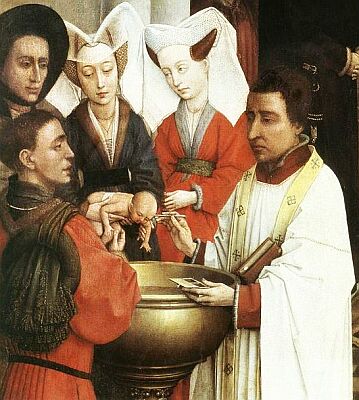 My godly Evangelical mother used to “witness” when we were out shopping. She’d ask the store keeper, “Have you been born again?” If the conversation got going she’d relate the story of the conversation between Nicodemus and Jesus in the third chapter of John’s gospel. I don’t know if she ever succeeded in making convert, but she succeeded in embarrassing me somewhat. I’m now embarrassed that I was embarrassed and, in hindsight, admire her courage, faith and zeal.
The question remains, however, “Just what is a ‘born again Christian'”? Most Evangelicals would say that being ‘born again’ or ‘getting saved’ consists of a personal conversion experience. In some way the individual has a prodigal son moment and ‘comes to himself’. He repents of his sin and turns to Jesus Christ for salvation. He does this by saying ‘the sinner’s prayer’ which is very simply, “Lord Jesus, I’m sorry for my sins and I want to accept your gift of forgiveness and salvation. Come into my life and make me your disciple forever.”
That’s all well and good I suppose, and if this is all that is required to be “born again” then every Catholic is a “born again Christian” because at every Mass we confess our sins and accept Jesus. At every baptism we confess our sins and accept Jesus. At every celebration of the sacrament of confession we confess our sins and accept the forgiveness of Jesus.
The problem between Evangelicals and Catholics does not come with this core definition and basic experience. The difficulty comes in what comes next. Essentially the Evangelical (and I know I’m making generalizations and that there is a spectrum of theological opinions within Evangelicalism) doesn’t think there is anything next–at least not anything that is necessary. Once the person says the sinner’s prayer he’s got his ticket to heaven, and nothing else is required. This is a consequence of the Evangelical Protestant’s loathing of anything that smacks of “salvation by works”. He wants salvation to have no strings attached. Nothing else is necessary–not even the sacrament of baptism.
The Catholic, on the other hand, quotes the New Testament and says, “Repent and be baptized.” The simple action of faith has to be combined with the sacrament of baptism. Evangelicals should understand that we do not regard baptism (or any of the sacraments) as something we do as some kind of good work. Instead, baptism is God’s action towards us. It is a completely unmerited outflowing of God’s grace towards us. This is why we emphasize baptism as the “born again” experience rather than the “sinner’s prayer” which definitely is something a person does.
This is the irony from our point of view: Evangelicals say we believe in a salvation by works because we insist on sacraments. Yet our true belief is that the sacraments are the actions of Christ through his church pouring out his grace on us unmerited sinners. He sends out the invitations. He sets the table for the feast. He cooks the meal and serves at table. All we do is turn up. The irony is deepened because Evangelicals claim not to have a religion based on works, but they ask their converts to say the sinner’s prayer which is a kind of work of salvation.
Furthermore, for the Catholic, the action of faith is a continuing action.All our ‘good works’ are ‘works of faith’. They are filled with faith and are faith in action. Instead of a once and done decision of ‘getting saved’ for Catholics faith is a commitment and continuance in a newly graced way of life. Being born again is all well and good, but if that’s all there is we’re concerned at the alarming rate of infant mortality.
Lest any Evangelicals think I’m throwing stones, I’m alarmed at the high rate of spiritual infant mortality amongst the Catholics as well as among the Evangelicals. A Baptist pastor friend of mine once asked me how many of the children I baptized grew up to be active and committed church members. I guessed maybe one in ten. He smiled and said he had about the same drop off rate amongst adult converts who he baptized.
I mentioned that Evangelicals don’t want there to be any sniff of salvation by works. However, it would be wrong to suppose that they don’t care about spiritual maturity, keeping the converts committed and living the life of faith. They do, and they work hard to make sure the faith sticks. What Evangelicals need to realize is that Catholics are also “born again Christians”. We’ve repented and accepted Jesus. It’s just that we’ve done so in a different context and with some different basic assumptions–ones if you stopped to understand them–actually complement and complete what you already believe.
Previous Post

April 15, 2012
Married Priests and Women Priests
Next Post
April 16, 2012 The Day I Met St Bernadette
Browse Our Archives
Select a Category Anglican Matters Apologetics Architecture Blobble Study Book Reviews Brideshead Caitlin O'Rourke Catholic Art Catholic Culture Church Politics Chust for Nice Contemporary Culture Duane Mandible Ed Blanch Film Reviews Fr Harvey Nicolaitan Frank Viola Mantilla the Hon More Christianity Mrs Brady Catholic Old Lady Mystery of the Magi Norman Anderson Queen Hillary Saints and Supernatural Spirituality The Inklings The Vicar Theology Todd Unctuous Uncategorized
Select a Month October 2019 September 2019 August 2019 July 2019 June 2019 May 2019 April 2019 March 2019 December 2018 November 2018 October 2018 August 2018 July 2018 June 2018 May 2018 April 2018 March 2018 February 2018 January 2018 December 2017 November 2017 October 2017 September 2017 August 2017 July 2017 June 2017 May 2017 April 2017 March 2017 February 2017 January 2017 December 2016 November 2016 October 2016 September 2016 August 2016 July 2016 June 2016 May 2016 April 2016 March 2016 February 2016 January 2016 December 2015 November 2015 October 2015 September 2015 August 2015 July 2015 June 2015 May 2015 April 2015 March 2015 February 2015 January 2015 December 2014 November 2014 October 2014 September 2014 August 2014 July 2014 June 2014 May 2014 April 2014 March 2014 February 2014 January 2014 December 2013 November 2013 October 2013 September 2013 August 2013 July 2013 June 2013 May 2013 April 2013 March 2013 February 2013 January 2013 December 2012 November 2012 October 2012 September 2012 August 2012 July 2012 June 2012 May 2012 April 2012 March 2012 February 2012 January 2012 December 2011 November 2011 October 2011 September 2011 August 2011 July 2011 June 2011 May 2011 April 2011 March 2011 February 2011 January 2011 December 2010 November 2010 October 2010 September 2010 August 2010 July 2010 June 2010 May 2010 April 2010 March 2010 February 2010 January 2010 December 2009 November 2009 October 2009 September 2009 August 2009 July 2009 June 2009 May 2009 April 2009 March 2009 February 2009 January 2009 December 2008 November 2008 October 2008 September 2008 August 2008 July 2008 June 2008 May 2008 April 2008 March 2008 February 2008 January 2008 December 2007 November 2007 October 2007 September 2007 August 2007 July 2007 June 2007 May 2007 April 2007 March 2007 February 2007 January 2007 December 2006 November 2006 October 2006 September 2006
Follow Us!
TAKE THE
Religious Wisdom Quiz
What is the lesson of the Parable of the Wheat and the Weeds?
Select your answer to see how you score.
Water the crops often Sow only good seed Judgment will separate good and evil Never trust a stranger
Related posts from Fr. Dwight Longenecker
Arians, Aliens and Body Snatchers
Is Communion With Lutherans on the Way?
Atheism or Catholicism - You Choose
TRENDING AT PATHEOS Catholic

Rejecting Doom: Christian Hope And Human Action
Christianity is a religion of hope. We are to have hope and...

It’s What Comes From Within Which Matters
One of the most difficult things for us to understand is why...

Why I Choose the Eucharist Over the Sermon
Choose the Eucharist, Not the Sermon What are we supposed to get...

5 Design Elements Found in Spiritually Rooted Homes
Putting Spirituality Into Home Decor Our homes are more than our living...

Credo: A Story of God Told with the...
About 10 years ago, I began to imagine a personal "Credo" that...

The Anatomy of Divine Revelation in Catholic Thought
The claim that God has made Himself known to human beings is...
view all Catholic blogs
Ad-Free & Subscriber Log-In Subscription Support
- About Us
- 2026 Calendar
- Videos
- Podcasts
- Library of World Religions
- Faith In Media Tracker
- Advertise With Us
- Write for Us
- Privacy Policy
- Terms of Service
- Do Not Sell My Data
- Contact Us
- Radiant Digital
- Manage Newsletter Subscriptions
- Unsubscribe From Notifications
- Sitemap
Copyright 2008-2026, Patheos. All rights reserved.
Subscription Support Ad-Free & Subscriber Log-In
Follow Patheos