
BuddhistCatholicContemplativeEvangelicalGeneral ChristianHinduJewishLatter-day SaintMuslimNew VisionsProgressive Christian
Beliefs
- Buddhist
- Catholic
- Contemplative
- Evangelical
- General Christian
- Hindu
- Jewish
- Latter-day Saint
- More Voices
- Muslim
- New Visions
- Pagan
- Progressive Christian
Topics
- Religion News
- Food and Religion
- Sports and Religion
- Religious Art
- Religious Music and Entertainment
- Religious Events
- History and Religion
- Style and Religion
- Politics and Religion
- Women in Religion
- Recreation Outdoors and Religion
- Business Finance and Religion
- Careers Workplace and Religion
- Education and Religion
- Family Parenting and Religion
- Health Fitness and Religion
- Home and Religion
- Relationships and Religion
- Technology and Religion
- Travel and Religion
Columnists
- Buddhist Columnists
- Business Finance and Religion Columnists
- Careers Workplace and Religion Columnists
- Catholic Columnists
- Contemplative Columnists
- Education and Religion Columnists
- Evangelists Columnists
- Family Parenting and Religion Columnists
- General Christian Columnists
- Health Fitness and Religion Columnists
- Hindu Columnists
- History and Religion Columnists
- Home and Religion Columnists
- Jewish Columnists
- More Voices Columnists
- Latter Day Columnists
- Muslim Columnists
- New Visions Columnists
- Nonreligious Columnists
- Pagan Columnists
- Politics and Religion Columnists
- Progressive Columnists
- Recreation Outdoors and Religion Columnists
- Relationships and Religion Columnists
- Religion News Columnists
- Religious Art Columnists
- Religious Events Columnists
- Religious Music and Entertainment Columnists
- Sports and Religion Columnists
- Style and Religion Columnists
- Technology and Religion Columnists
- Travel and Religion Columnists
- Women in Religion Columnists
Resource Library
- 2026 Calendar
- Library of World Religions
- The 100 Most Holy Places on Earth
- Patheos Answers
- Podcasts
- Videos
- Faith Leaders Database
- Anglican Episcopalian
- Bahai
- Baptist
- Buddhism
- Christianity
- Confucianism
- Eastern Orthodoxy
- Hinduism
- Holiness and Pentecostal
- ISKCON
- Islam
- Judaism
- Lutheran
- Methodist
- The Church of Jesus Christ of Latter-day Saints
- New Age
- Paganism
- Presbytarian and Reformed
- Protestantism
- Religion Behind the Scenes
- Roman Catholic
- Scientology
- Shia Islam
- Sikhism
- Sufism
- Sunni Islam
- Taoism
- Zen
- See all religions
Research Tools
 Ad-Free & Subscriber Log-In Subscription Support
Ad-Free & Subscriber Log-In Subscription Support
Follow Patheos 

- Trending:
- Forgiveness
- |
- Marriage
- |
- Consciousness
- |
- Death Penalty
- |
- Election
- |
- Halloween
 Split the Moon
- Home
- Muslim
- Unmosqued By The Prophet
Unmosqued By The Prophet
Last updated on: August 28, 2014 at 10:50 am by Rabia Chaudry
Unmosqued By The Prophet 2014-08-28T10:50:14-05:00 Rabia Chaudry
Patheos Explore the world's faith through different perspectives on religion and spirituality! Patheos has the views of the prevalent religions and spiritualities of the world.
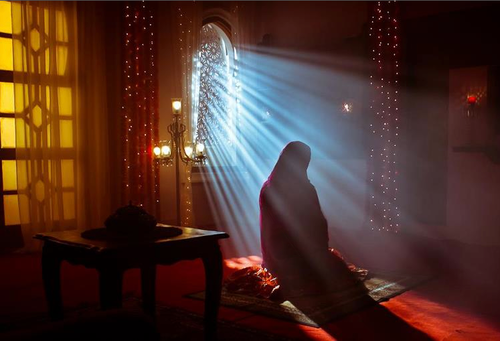
Good girls pray in seclusion
Editors’ Note: This article is part of the Public Square 2014 Summer Series: Conversations on Religious Trends. Read other perspectives from the Muslim community here.
The Prophet Muhammad (pbuh) was not a misogynist*. Now hold that thought for a bit and I’ll get back to it.
To be honest, I’m not sure exactly when I started becoming “unmosqued”. But it was certainly long before I became unattached from any masjid, which is my current state. It began in my heart, where little twinges told me something wasn’t right, then traveled to my head, which sought out why those twinges were happening. In that pursuit I focused mostly why I and other women were separated from the actual congregation that gathered to pray behind the imam. Permanent walls, rolling partitions, tarp draped over bars, curtains, balcony screens, one way mirrors, basements, hallways, trailers, I’ve seen it all.
On one hand I appreciated a separate space for women, we had kids, we had diaper bags, we had catching up to do. In the masjid I attended regularly a few years ago, women with children were asked to go to the basement, in order to not disturb women in the segregated balcony area. A further removal from communal worship and the community itself. But even in the women’s area above ground it didn’t take long to realize how inadequate that space was and how little I actually gained from being at the masjid. I could catch up to the ladies anytime and in any other place, but in what space was my spiritual elevation going to take place? This was followed by many other questions in my heart over the years as I masjid hopped and faced a variety of barriers.
What did the Imam just say? Why is the speaker system from 1977? Why do I feel like a persona non grata? Why does this separation feel like an aggression towards the women? Why is our space so much smaller and uglier than the mens? Were we an afterthought? Does our presence bring shame? Do the men realize we are fully covered? Do they know that one point of being covered is so you can interact with the opposite sex comfortably? Does the Imam know or care about the women in the community? Does he understand that we have no opportunity to interact with him? Does he know that we have no other place or time where we can be part of a Muslim community and build our iman? Why are there no barriers in Masjid al Aqsa, or the Dome of the Rock, or in the haram in Makkah? Do the men realize what our experience is like? Why don’t they burst into flames of temptation when they encounter us in the parking lot? Or at work? Or at the supermarket or school or sidewalk or every other facet of life outside the masjid?
Suffice it to say I had many questions and still do. So I started asking these questions to the men I had access to. Invariably the same answer** in different forms popped up – women shouldn’t have any expectations from a masjid because the Prophet Muhammad said that it was better for women to pray in their homes. Not just their homes but concealed places in their homes. The full text of the hadith is this:
It was narrated that Umm Humayd the wife of Abu Humayd al-Saa’idi came to the Prophet (peace and blessings of Allaah be upon him) and said, “O Messenger of Allaah, I like to pray with you.” He said, “I know that you like to pray with me, but your prayer in your room is better for you than your prayer in your courtyard and your prayer in your courtyard is better for you than your praying in your house, and your prayer in your house is better for you than your prayer in the mosque of your people, and your prayer in the mosque of your people is better for you than your prayer in my mosque.” So she issued orders that a prayer-place be prepared for her in the furthest and darkest part of her house, and she used to pray there until she met Allaah (i.e., died).” (Narrated by Ahmad, 26550).
Google the hadith and you’ll find it on hundreds of sites and it’s one many Muslim men are pretty well versed in, or must be considering I heard it as a response dozens of times. I found this hadith fascinating in light of the fact that the Prophet (pbuh) was approached by men of his time who asked that he prohibit women from coming to the masjid, and he did not. He (pbuh) refused to issue such a prohibition and continued to allow women to pray in the same space as men at his masjid.
So what was really going on in this hadith? The Prophet (pbuh) must have known that his statement would effectively operate as a prohibition to Umm Humayd (RA), given that she approached him for advice. I think I know, which takes me back to my opening sentence.
I’ve developed a lens over the years with which to look at hadith***. I know I’m not a scholar, or even a student, but I make sure when drawing conclusions that those conclusions fall within the realm of possibility and are not insulting or antithetical to Islam, God, or the Prophet Muhammad (pbuh). That lens is this: I internalize the premise that the Prophet Muhammad (pbuh) was the gentlest, kindest, loving, caring, compassionate, and understanding human being to ever walk the earth. He was not just a mercy for the people of his time, but a mercy for the people of all time. For all people, men and women. It is therefore impossible for him to have been a misogynist in his time, or for any time. In terms of perspective on the Prophet (pbuh), this is no stretch. This is in fact the exact perspective that any observant Muslim should have of him.
So that is my starting point anytime I come across a hadith that seems less than equitable, towards women or anyone else. Reminding myself of the nature of the Prophet (pbuh), I revisit the hadith.
We know Umm Humayd, a married woman, came to the Prophet (pbuh) with a question. Why do you suppose she had such a question? If she loved praying with him and knew it was not prohibited, why was she even asking? Knowing some of the men at the time wanted such a prohibition, is it possible her husband was one of them? Or that he preferred his wife to pray at home and told her so? It’s not only possible, but probable given there was some reason for her to make this not-random inquiry of the Prophet (pbuh).
And now we have the Prophet (pbuh) considering this. Knowing her, and why she came to him. Knowing he could not make an outright prohibition but wanting to keep peace in their family. And remember that this is the Prophet (pbuh) who turned his face away from the few people who came to him wanting to be punished for adultery. This is the Prophet (pbuh) who is the kindest, gentlest man ever created. So what did he do from that place of kindness? He didn’t stop her but instead consoled her with a promise that would probably keep peace in her family and satisfy her spiritually.
He did not say “the prayer of women is better in their rooms”, he said to Umm Humayd specifically “your prayer in your room is better for you”. He didn’t say that God would reward women more who prayed in their rooms, or even that God would reward Umm Humayd more for praying in her room. He just said it was better for her. That may mean many different things, possibly that she will be rewarded for obliging her spouse. It certainly doesn’t mean that for me, a woman 14 centuries later, a random masjid man can tell me my prayers at home are rewarded more. If I was married to the kind of man who preferred I prayed at home, and just to be nice to him I did so, then certainly I’d be rewarded in the same way anyone is rewarded for making their spouse happy.
And that, my friends, is how I dispense with the men who offer me this hadith. By deconstructing it in a way that reflects the nature and character of the Prophet (pbuh) and by remembering that these other gentlemen are not prophets and cannot come close to the disposition of our Prophet (pbuh).
So there you have it. I’ve become unmosqued because of who the Prophet (pbuh) was and what he taught. Because I’m seeking a worship space that will reflect the love and compassion of my Prophet (pbuh). Because the men who often run our masaajid don’t seem to really know the Prophet (pbuh). And ultimately because I won’t accept less than what the Prophet (pbuh) told me was my right.
Author’s note: Because I cannot apparently even suggest that it’s appropriate to have the best and most positive perspective when encountering a hadith or Quran without Muslims getting pissed off (because that’s what we do best!), let me be REALLY CLEAR. I am not advocating a new hadith “methodology” and thereby circumventing circumventing scholars and scholarship. I am implementing a way to counteract the immediate negative reaction I and others sometimes have when encountering a hadith that seems inequitable on the surface, and happens to be a hadith that is used to summarily dismiss many concerns, AND happens to be a hadith that if you were to do cursory research on the internet you’d find very little exposition on such as here: http://islamqa.info/en/90071. Please take a deep breath and understand that is not a “methodology” to think positively of the Prophet pbuh as a starting point on engaging hadith. It’s a way to correct your own immediate negative reaction to a hadith and do a further examination even in the absence of access to scholarly sources. AND I was told use this approach specifically by Sh. Abdullah Adhami, a respected muhaddith.
*For the record he (pbuh) was also not a racist, a xenophobe, a war-monger, etc. All the bad things a person can be, like a misogynist, he was not.
**There are some other answers I’ve been given, the lamest being that we are nowhere close to the character of the people of the time of the Prophet (pbuh) and therefore do not have the level of piety that would allow us to safely pray in the same space. I will first snort my indignation and then respond by saying that this is a load of baloney. We know that the sahabah karaam (RA) had all manner of issues, struggles with their souls, and struggles with their sins. They were human beings just like us. Beyond this, the bottom line of this argument is “you can’t be like them ever, so don’t even try”. Well, that’s the end of faith then I guess, let’s all pack up and go home.
***This works just as well with Quran. If I truly accept that Allah (swt) has created men and women as spiritual equals, that He is equitable towards both genders, that His love is greater by immeasurable leaps than even a mother’s love, then I have to read His words with the same lens. With the lens that this is a loving and compassionate prescription for my soul from the Creator of my soul. How do I understand these words in a way that reflect His love.
Previous Post

August 14, 2014
Summer of Our Discontent
Next Post
September 9, 2014 Are Returning ISIS Fighters a Threat to the U.S.?
Browse Our Archives
Select a Category Adnan Syed Muslim Women Uncategorized
Select a Month November 2014 October 2014 September 2014 August 2014 June 2014 May 2014 April 2014 March 2014 February 2014 January 2014
TAKE THE
Religious Wisdom Quiz
Which Christian group believes in the doctrine of purgatory?
Select your answer to see how you score.
Baptists Catholics Methodists Pentecostals
Related posts from Split the Moon

Why They Stay: Battered and Immigrant

Serial Episode 8: Confirmation Bias FTW

Serial Episode 7: In Which I Exhale
TRENDING AT PATHEOS Muslim

25 Years Later: How Much Has Changed for...
As we approach the 25th anniversary of September 11th, I’ve found myself...

Podcast: Third Spaces & The Rise of Yemeni...
In the latest episode of The Artistic Foodies Podcast, hosts Abbas...

HalalFest Picks: Best 60 Halal Spots for Super...
Back in 2016, I came up with a list of 29...

Unity Is America’s Strength — Division Is Its...
by Hidayatullah Ahsan When Valentina Gomez, a Republican candidate for Congress in...

Zohran Mamdani and New York’s Fight Against Islamophobia
This past June, against all odds, Zohran Mamdani won the Democratic primary...

What the Fourth of July Means to a...
As we mark another Fourth of July, millions of Americans will celebrate...
view all Muslim blogs
Ad-Free & Subscriber Log-In Subscription Support
- About Us
- 2026 Calendar
- Videos
- Podcasts
- Library of World Religions
- Faith In Media Tracker
- Advertise With Us
- Write for Us
- Privacy Policy
- Terms of Service
- Do Not Sell My Data
- Contact Us
- Radiant Digital
- Manage Newsletter Subscriptions
- Unsubscribe From Notifications
- Sitemap
Copyright 2008-2026, Patheos. All rights reserved.
Subscription Support Ad-Free & Subscriber Log-In
Follow Patheos