
BuddhistCatholicContemplativeEvangelicalGeneral ChristianHinduJewishLatter-day SaintMuslimNew VisionsProgressive Christian
Beliefs
- Buddhist
- Catholic
- Contemplative
- Evangelical
- General Christian
- Hindu
- Jewish
- Latter-day Saint
- More Voices
- Muslim
- New Visions
- Pagan
- Progressive Christian
Topics
- Religion News
- Food and Religion
- Sports and Religion
- Religious Art
- Religious Music and Entertainment
- Religious Events
- History and Religion
- Style and Religion
- Politics and Religion
- Women in Religion
- Recreation Outdoors and Religion
- Business Finance and Religion
- Careers Workplace and Religion
- Education and Religion
- Family Parenting and Religion
- Health Fitness and Religion
- Home and Religion
- Relationships and Religion
- Technology and Religion
- Travel and Religion
Columnists
- Buddhist Columnists
- Business Finance and Religion Columnists
- Careers Workplace and Religion Columnists
- Catholic Columnists
- Contemplative Columnists
- Education and Religion Columnists
- Evangelists Columnists
- Family Parenting and Religion Columnists
- General Christian Columnists
- Health Fitness and Religion Columnists
- Hindu Columnists
- History and Religion Columnists
- Home and Religion Columnists
- Jewish Columnists
- More Voices Columnists
- Latter Day Columnists
- Muslim Columnists
- New Visions Columnists
- Nonreligious Columnists
- Pagan Columnists
- Politics and Religion Columnists
- Progressive Columnists
- Recreation Outdoors and Religion Columnists
- Relationships and Religion Columnists
- Religion News Columnists
- Religious Art Columnists
- Religious Events Columnists
- Religious Music and Entertainment Columnists
- Sports and Religion Columnists
- Style and Religion Columnists
- Technology and Religion Columnists
- Travel and Religion Columnists
- Women in Religion Columnists
Resource Library
- 2026 Calendar
- Library of World Religions
- The 100 Most Holy Places on Earth
- Patheos Answers
- Podcasts
- Videos
- Faith Leaders Database
- Anglican Episcopalian
- Bahai
- Baptist
- Buddhism
- Christianity
- Confucianism
- Eastern Orthodoxy
- Hinduism
- Holiness and Pentecostal
- ISKCON
- Islam
- Judaism
- Lutheran
- Methodist
- The Church of Jesus Christ of Latter-day Saints
- New Age
- Paganism
- Presbytarian and Reformed
- Protestantism
- Religion Behind the Scenes
- Roman Catholic
- Scientology
- Shia Islam
- Sikhism
- Sufism
- Sunni Islam
- Taoism
- Zen
- See all religions
Research Tools
 Ad-Free & Subscriber Log-In Subscription Support
Ad-Free & Subscriber Log-In Subscription Support
Follow Patheos 

- Trending:
- Forgiveness
- |
- Marriage
- |
- Consciousness
- |
- Death Penalty
- |
- Election
- |
- Halloween

- Home
- New Visions
- Spiritual Practices
Spiritual Practices
Last updated on: April 6, 2021 at 3:04 pm by Spiritual Naturalist Society
Spiritual Practices 2021-04-06T15:04:01-04:00 Spiritual Naturalist Society
Patheos Explore the world's faith through different perspectives on religion and spirituality! Patheos has the views of the prevalent religions and spiritualities of the world.
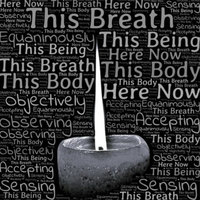
Today’s article written by Jay N. Forrest … Let’s say I invited you over for a cup of tea. Is the act of making tea a spiritual practice? If you are familiar with the Japanese tea ceremony, also known as the Way of Tea, you would answer with a maybe.
Or let’s say that I am going for a walk in the forest. Is this walk in the forest a spiritual practice? If you are familiar with walking meditation, again you would answer it could be.
So what makes an activity a spiritual practice? It can’t be the activity itself. I can sit down and close my eyes, it doesn’t mean that I am meditating. Just as with making tea or walking, the activity alone does not make it spiritual. There is something more.
And it is not that it is a practice. We can practice violin or football, but they are not spiritual practices. The key is that these practices are “spiritual.”
The Difficulty with the Word Spiritual
We have little difficulty understanding the word practice. Our problem is understanding what makes a practice or activity spiritual. And this is because the word spiritual is hard to define. “What fascinates me about this delightfully versatile craving for ‘spirituality’,” writes Daniel Dennett, “is that people think they know what they are talking about, even though – or perhaps because – nobody bothers to explain just what they mean” (2006, 302).
In fact neither the original Stoics or Buddhists called their activities spiritual practices. The Stoics called them askeseis, which is a Greek word literally translated as “exercises.” And the Buddhists called their exercises bhavana, which is both the Pali and Sanskrit word literally meaning, “calling into existence, producing.” It is usually translated as “mental development.”
So why do modern Stoics and Buddhist prefer the term spiritual practices? I think John Sellars explains it well, “The phrase ‘mental exercise’ might be seen to be more appropriate. The term ‘spiritual’ does indeed have a number of unhelpful connotations but so does the term ‘mental’. Alternative phrases such as ‘mental exercise’ or ‘mental training’ suggest to a modern reader something akin to psychotherapy” (2009, 115).
Pierre Hadot was the pioneer of the use of spiritual exercises to refer to Stoic practice. “It is nevertheless necessary to use this term,” he explains, “because none of the other adjectives we could use… cover all the aspects of the reality we want to describe” (1995, 81). The problem is, in my opinion, is that nobody gives an adequate definition of the word spiritual.
And the unhelpful connotations are seen in the very first entry in the Webster’s New World College Dictionary. It defines spiritual as “of the spirit or the soul as distinguished from the body or material matters.” As Naturalists we reject this false dichotomy. As I have explain before, “Naturalism is the conclusion, based on the evidence, that the natural world is a closed system and that all phenomena can be explained in terms of natural causes and laws. Therefore there is no support for supernatural explanations.” We therefore need a naturalistic explanation of the word spiritual.
Definition of Spiritual
I think Pierre Hadot gets close to the right idea when he says, “Attention to the present moment is, in a sense, the key to spiritual exercises” (1995, 84). But we can pay attention in Math class and it is still not a spiritual practice. I would argue that it is not paying attention that is important, but doing something with our awareness.
In another article, I have defined spirit as consciousness or awareness. This is not the usually meaning of the term, but it sometimes has that meaning. The word spiritualthen, as the suffix “-al” indicates, relates to consciousness or awareness. In other words, spiritual means the modification of consciousness.
I define spiritual as the expansion or deepening of awareness of union and communion with reality. For a Christian, this reality would be God. For Hindus it would be Brahman. For Naturalists and Pantheists it would be Nature or the Universe. The definition, then, fits it use in all major religions. It also fits in the ways we use the word. A spiritual experience would be the actual experience of the expansion or deepening of awareness of union and communion with reality.
So a spiritual practice refers to an activity that expands or deepens one’s awareness of union and communion with reality. By saying that it expands our awareness, I mean that it add scope, that it broadens our view of reality. And by saying that it deepens our awareness, I mean that it details to our view of reality.
Walking becomes a spiritual practice when we undertake it with the intent to expand or deepen our awareness of our own union and communion with reality. The same goes for making tea, sitting in silence, or drumming. Any activity, including sex, can become a spiritual practice if we undertake it with the intent of expanding or deepening our awareness.
Practice versus Practices
There is a difference between one’s spiritual practice and spiritual practices. One’s spiritual practice refers to the collective things that one is doing to develop one’s spirituality. Spiritual practices are the individual things themselves, like meditating, journaling, walking, etc.
Start with Meditation
I always recommend to people interested in developing a spiritual practice to start with meditation. The reason is that you need to strengthen your ability to pay attention if you ever want to expand and deepen your awareness. Meditation is the fastest and best way to work with both attention and awareness. I will not going into detail here, since I covered meditation in my article entitled, “Introduction to Insight Meditation” and “Loving-kindness as a Spiritual Practice.”
However, if you have problems beginning to meditate. I am going to give you a one minute meditation exercise to help you get started. It is also helpful throughout the day, especially in those stressful situations we sometimes find ourselves in.
This meditation is easy. It involves breathing in with awareness, and breathing out with awareness. The key is adding a word to each. So when you breathe in, say in your mind “open.” And when you breathe out, say in your mind “relax.” As you breathe in, open yourself to the now. The way it is, without value judgments. And as you breathe out, let your body and brain relax. Let the tension go. Do this for three to five breaths.
This will instantly put you into a better frame of mind. It will help you relax and bring you back into your body and into the present moment. It is not a substitute for regular meditation, but it helps.
Naturalistic Spiritual Practices
For Spiritual Naturalists, all spiritual practices are concerned with this world. We don’t believe in a supernatural realm with supernatural beings. That means that some spiritual practices are not appropriate for a true Naturalist, for example, petitionary prayer. Other spiritual practices can be naturalized, that is, the supernatural element can be dropped.
Since Naturalists don’t believe in the supernatural, we don’t believe in a supernatural Being who answers prayer. But we can still “pray” in the form of an affirmation. For example, my family’s mealtime prayer is, “We give thanks to all beings who brought this food to our table, and vow to respond to those in need with wisdom and compassion. Let us eat mindfully.” Our bedtime prayer is, “May I sleep peacefully and have no fear, may my heart seek wisdom and my mind be clear. May I be filled with love and compassion for all beings, and may I live a good and loving life filled with happiness.”
I have already mentioned meditation, which is found in both Buddhism and Stoicism. Buddhism has the richest and deepest meditation tradition of all religions. Its meditation practices have been studied by cognitive science for years and its benefits have been scientifically substantiated. Some of the principles of stoicism have also undergone extensive study. In fact, “The philosophical origins of cognitive therapy can be traced back to the Stoic philosophers” (Beck 1979, 8). Cognitive Behavioral Therapy is one of the most successful forms of psychotherapy.
We can also find spiritual practices in Taoism, such as the practice of wu-wei and simplicity. We can learn from Paganism to be in harmony with the rhythms of the seasons. We can celebrate the Winter and Summer Solstice, and the Spring and Fall Equinox. There is such a rich tapestry of practices in the world’s traditions, it would be impossible for me to list them all here. The important thing is to experiment with those that you believe will help you expand and deepen your awareness of your oneness with Nature.
Observe the Results
Don’t just do a spiritual practice and then forget about it. Pay attention to how it affects you. This is where keeping a spiritual journal can help. Keeping a journal or practice diary can help you notice changes. Is the spiritual practice helping expand and deepen your awareness of reality? If not, it may be time to revisit the use of the practice. Does it need to be modified, expanded, or dropped?
Maintaining a spiritual practice is not easy. That is why they are sometimes called spiritual disciplines. Take it from me, you will never find time for spiritual practices. You must make time. You must stay alert to the creeping sense of aversion that may enter after the newness wears off. Many times this takes the form of boredom or frustration. Beware of rationalizations that tell you you don’t have time, or that it makes no difference, or “I will do it tomorrow. There are all forms of aversion and will kill your spiritual growth.
Subscribe to The Spiritual Naturalist Society
Learn about Membership in the Spiritual Naturalist Society
__________
The Spiritual Naturalist Society works to spread awareness of spiritual naturalism as a way of life, develop its thought and practice, and help bring together like-minded practitioners in fellowship.
Endnotes
• Beck, A. T., A. J. Rush, B. F. Shaw, and G. Emery. (1979) Cognitive Therapy of Depression. New York: Guilford Press.
• Dennett, Daniel C. (2006). Breaking the Spell: Religion as a Natural Phenomenon. New York: Penguin Books.
• Forrest, Jay N. (2015) “Loving-kindness as a Spiritual Practice.” Spiritual Naturalist Society. Nov 5, 2015. http://spiritualnaturalistsociety.org/loving-kindness-as-a-spiritual-practice/
• Forrest, Jay N. (2016) “Introduction to Insight Meditation.” Spiritual Naturalist Society. May 5, 2016. http://spiritualnaturalistsociety.org/introduction-to-insight-meditation/
• Forrest, Jay N. (2016) “Spirit as Consciousness.” Spiritual Naturalist Society. Jul 7, 2016. http://spiritualnaturalistsociety.org/spirit-as-consciousness/
• Forrest, Jay N. (2016) “What is Buddhist Naturalism?” Spiritual Naturalist Society. Nov 3, 2016. http://spiritualnaturalistsociety.org/what-is-buddhist-naturalism/
• Hadot, Pierre. (1995) Philosophy as a Way of Life: Spiritual Exercises from Socrates to Foucault. Malden, MA: Blackwell Publishing.
• Robertson, Donald. (2013) Stoicism and the Art of Happiness. New York: McGraw-Hill.
• Sellars, John. (2009) The Art of Living: The Stoics on the Nature and Function of Philosophy. London: Bristol Classical Press.
Previous Post

August 18, 2016
The Spirituality of “Home”
Next Post
July 15, 2017 SNS Seeking Writers
Browse Our Archives
Select a Category Spiritual Naturalism Uncategorized
Select a Month August 2024 July 2024 June 2024 May 2024 April 2024 March 2024 February 2024 January 2024 December 2023 November 2023 October 2023 September 2023 August 2023 July 2023 June 2023 May 2023 April 2023 March 2023 February 2023 January 2023 December 2022 November 2022 October 2022 September 2022 August 2022 July 2022 June 2022 May 2022 April 2022 March 2022 February 2022 January 2022 December 2021 November 2021 October 2021 September 2021 August 2021 July 2021 June 2021 May 2021 April 2021 March 2021 August 2017 July 2017 August 2016 July 2016 June 2016 May 2016 April 2016 March 2016 February 2016 January 2016 December 2015 November 2015 October 2015 September 2015 August 2015 January 2015 December 2014 August 2014 July 2014 June 2014 March 2014 February 2014 January 2014 December 2013 November 2013 October 2013 September 2013 August 2013 July 2013 April 2013 February 2013 January 2013 December 2012 November 2012 October 2012 September 2012 August 2012
Follow Us!
TAKE THE
Religious Wisdom Quiz
What does "Jordan" (as in Jordan River) mean?
Select your answer to see how you score.
To heal To open To anoint To descend
Related posts from The Spiritual Naturalist

Reflections on Awareness of Who Am I?

The Difference Between Stillness and Silence in Meditation
Meditation That Doesn’t Feel Like Meditation At All

Natural Soundscapes and Meditation
TRENDING AT PATHEOS New Visions

Did Prayer Cure His Cancer? Or Was It...
At 4 AM one morning, Joshua W. Brown’s wife awoke to a...

8 Ways a Near-Death Experience Rewires the Soul
Does Consciousness Survive Physical Death? After 50 Years of Research, Dr. Raymond...

Holy Longing: What Our Restlessness Is Telling Us
“One can find so many pains when the rain is falling.” -John...

What this is NOT about. This blog is definitely not about...

Who said the Israelites were God’s chosen? That’s right, they did. Who...

The Spirit World Is the Real World: God...
A Monk’s Wisdom on Body and Spirit I sit with Brother Martin...
view all New Visions blogs
Ad-Free & Subscriber Log-In Subscription Support
- About Us
- 2026 Calendar
- Videos
- Podcasts
- Library of World Religions
- Faith In Media Tracker
- Advertise With Us
- Write for Us
- Privacy Policy
- Terms of Service
- Do Not Sell My Data
- Contact Us
- Radiant Digital
- Manage Newsletter Subscriptions
- Unsubscribe From Notifications
- Sitemap
Copyright 2008-2026, Patheos. All rights reserved.
Subscription Support Ad-Free & Subscriber Log-In
Follow Patheos