
BuddhistCatholicContemplativeEvangelicalGeneral ChristianHinduJewishLatter-day SaintMuslimNew VisionsProgressive Christian
Beliefs
- Buddhist
- Catholic
- Contemplative
- Evangelical
- General Christian
- Hindu
- Jewish
- Latter-day Saint
- More Voices
- Muslim
- New Visions
- Pagan
- Progressive Christian
Topics
- Religion News
- Food and Religion
- Sports and Religion
- Religious Art
- Religious Music and Entertainment
- Religious Events
- History and Religion
- Style and Religion
- Politics and Religion
- Women in Religion
- Recreation Outdoors and Religion
- Business Finance and Religion
- Careers Workplace and Religion
- Education and Religion
- Family Parenting and Religion
- Health Fitness and Religion
- Home and Religion
- Relationships and Religion
- Technology and Religion
- Travel and Religion
Columnists
- Buddhist Columnists
- Business Finance and Religion Columnists
- Careers Workplace and Religion Columnists
- Catholic Columnists
- Contemplative Columnists
- Education and Religion Columnists
- Evangelists Columnists
- Family Parenting and Religion Columnists
- General Christian Columnists
- Health Fitness and Religion Columnists
- Hindu Columnists
- History and Religion Columnists
- Home and Religion Columnists
- Jewish Columnists
- More Voices Columnists
- Latter Day Columnists
- Muslim Columnists
- New Visions Columnists
- Nonreligious Columnists
- Pagan Columnists
- Politics and Religion Columnists
- Progressive Columnists
- Recreation Outdoors and Religion Columnists
- Relationships and Religion Columnists
- Religion News Columnists
- Religious Art Columnists
- Religious Events Columnists
- Religious Music and Entertainment Columnists
- Sports and Religion Columnists
- Style and Religion Columnists
- Technology and Religion Columnists
- Travel and Religion Columnists
- Women in Religion Columnists
Resource Library
- 2026 Calendar
- Library of World Religions
- The 100 Most Holy Places on Earth
- Patheos Answers
- Podcasts
- Videos
- Faith Leaders Database
- Anglican Episcopalian
- Bahai
- Baptist
- Buddhism
- Christianity
- Confucianism
- Eastern Orthodoxy
- Hinduism
- Holiness and Pentecostal
- ISKCON
- Islam
- Judaism
- Lutheran
- Methodist
- The Church of Jesus Christ of Latter-day Saints
- New Age
- Paganism
- Presbytarian and Reformed
- Protestantism
- Religion Behind the Scenes
- Roman Catholic
- Scientology
- Shia Islam
- Sikhism
- Sufism
- Sunni Islam
- Taoism
- Zen
- See all religions
Research Tools
 Ad-Free & Subscriber Log-In Subscription Support
Ad-Free & Subscriber Log-In Subscription Support
Follow Patheos 

- Trending:
- Forgiveness
- |
- Marriage
- |
- Consciousness
- |
- Death Penalty
- |
- Election
- |
- Halloween

- Home
- New Visions
- The Ancient Gnostics and the Revelations of The Urantia Book
The Ancient Gnostics and the Revelations of The Urantia Book
Last updated on: December 29, 2016 at 9:00 am by Byron Belitsos
The Ancient Gnostics and the Revelations of The Urantia Book 2016-12-27T15:21:21-05:00 Byron Belitsos
Patheos Explore the world's faith through different perspectives on religion and spirituality! Patheos has the views of the prevalent religions and spiritualities of the world.
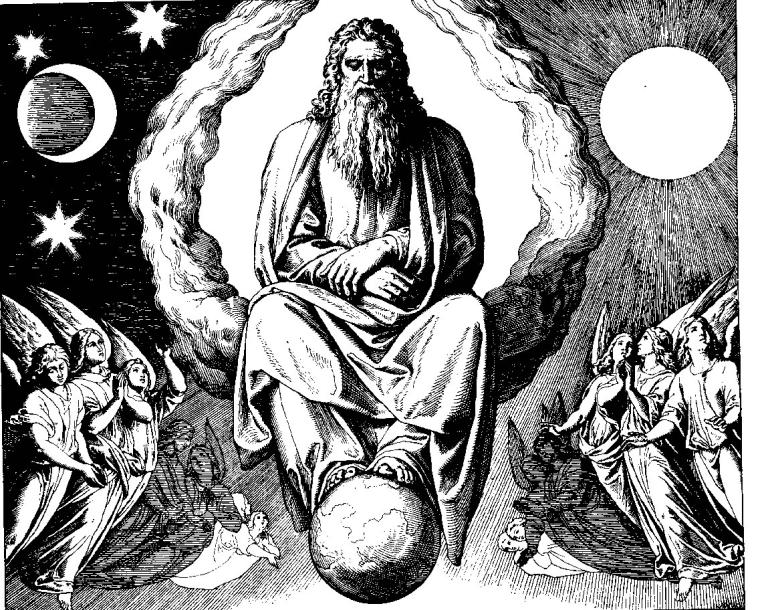 The most important sources for our understanding of Gnosticism are the famed Nag Hammadi texts, thirteen leather-bound papyrus codices containing over 50 texts, that were found buried in a sealed jar by a peasant in upper Egypt in 1945. The accidental discovery of these lost Gnostic Gospels happens to be the very year (by some accounts) that the finishing touches were put on the Urantia Papers, which purport to contain the definitive modern restatement of the gospel of Jesus. Curiously, certain ideas of the ancient Gnostics prefigure, at least in mythopoetic form, some of the core teachings of The Urantia Book. It is not entirely unfair when fundamentalist Christians denounce the Urantia Revelation as being “gnostic.”
The ancient Gnostic movement developed a powerful counter-narrative[1] to the emerging orthodox Christian myth; and it must be remembered that Christianity in all of its forms was a counter-myth to the reigning Roman gods of the time. It offered a wide range of alternative views of the meaning of Christ’s life, his teachings, the role of humankind, and the nature of the cosmos. In particular, for our purposes, Gnosticism highlighted the indwelling spirit—the emerging Christian myth highlighted the fact of Jesus’s life and directed adherents away from the divine indwelling and its implications for spiritual life. The cultural context for these ideas is important, including the angelic hierarchy, the role of Adam and Eve, the importance of Judaism, the pre-history, etc.
Of course, most of these ideas went by the wayside soon after the Christian doctrines we know today were fixed by the First Council of Nicea in 325 A.D. with the direct political support of Emperor Constantine, who had convened and even funded the Council in the creation of orthodoxy.
But in the previous three centuries before that time, “heterodoxy” was the rule. Inspired by the story of Jesus, innumerable teachers, visionaries, and prophets arose throughout the Roman Empire—and we know this because of their orthodox critics, most notably Iraneus; the great variety of interpretations becomes even more evident upon exposure to the Nag Hammadi codices.
It must be remembered that a midst this great flowering also was a “common core.” From the beginning, the narratives and letters attributed directly to the Apostles, or their immediate students, were the central texts of the Christian community. What later became the four canonical gospels of the New Testament, plus the epistles of Paul, Peter, and John, were in wide circulation by the first century. But so were other well-regarded texts. The most important among those discovered in Egypt in 1945, such as the Gospel of Thomas, the Secret Book of John, the Gospel of Philip, and the Gospel of Truth, were also well known around the Mediterranean world before they were later banned and destroyed. Many of these were known only because they were quoted in the attacks on the Gnostic “heretics” by the rising orthodoxy.
The Nag Hammadi codices (and scrolls discovered in the previous two centuries) reveal that Gnostics were concerned with creating an all-encompassing psycho-cosmic myth, with Jesus as its central figure. And it is a remarkable fact that their cosmological framework comports with the general structure of the Urantian ascension cosmology, inclusive of its teaching of the Indwelling Spirit.[2] In general, Gnostics depicted a multileveled cosmos with our own world subsisting at its lowest level. Humankind was presently trapped on Earth, isolated at the furthest distance possible from the world of pure spirit, languishing in a slumbering or unconscious state. Further, at least according to my own interpretation, they intuited the deeper meaning of the effects of the Lucifer Rebellion.
But there was a hopeful aspect to this vision. The benign forces of the world of spirit were engaged in a constant effort to awaken and liberate us from our fallen state. If we turned toward the divine light within, the pneuma, it would lead us on a step-by-step ascension through increasingly rarefied levels of the cosmos all the way back to our true home—which was conceived by some Gnostics as the original “mother” universe.
Among these early teachers who were later declared heretics was Valentinus, who was likely born in Carthage around 100 A.D. and educated in Alexandria. Valentinus was a poet, teacher, and visionary who must have possessed outstanding leadership abilities. A staunch follower in particular of the teachings of Apostle Paul, he became a resident of Rome where he achieved high prominence in the Christian community, missing by a narrow margin in being elected the bishop of Rome. In other words, Valentinus almost became the Pope! Although this position was far less prestigious and powerful than what it became a few centuries later, we can only wonder how different things might have become if he had been elected.
According to teachers like Valentinus, why had humanity arrived at its fallen and apparently hopeless state at the bottom of the celestial hierarchy? Why was the world pervaded by such outrageous suffering, violence, and ignorance? In answer to such questions, the Gnostic masters devised an original myth. This story arose both from their novel interpretation of the story of the fall of Adam and Eve and their rejection of the merger of Judaism and Christian belief.
It must be remembered that Christian orthodoxy, arising in part from the conversion of many Jewish communities and groupings around the Mediterranean, had strong Jewish roots. Judaism attributed our fallen state to the primeval sin of Adam, teaching that the parents of all humankind had turned against the divine order and had been banished from the Garden.
It is amazing fact that the Gnostics responded by entirely rejecting the notion of Original Sin (the later phrase coined by St. Augustine). Neither Adam and Eve or any other human being were the source of our trouble; instead, intermediate celestial beings—and not the mother and father of humanity—were the cause of our rupture with the higher worlds. And here is a key instance in which we find an affinity with the Urantia Revelation. The UB provides an astonishing and detailed account of the default over 200,000 years ago of an intermediary spiritual being, Lucifer—the chief celestial administrator of the local system of inhabited planets, a relatively small unit of just over 600 planets. With his lieutenant, one Satan, he launched a rebellion that negated the very idea of the existence of the Creator, denied the reality of the evolving soul and the “God fragment,” and propounded the Lucifer doctrine of the liberty of self-will as their creed, rather than love and compassion. A total of 37 planets had swung over to the rebellion, and our chief planetary administrator, name Caligastia, had himself became a fervent Luciferian. The majority of the angelic host of our world followed him into perdition.
Lucifer and Satan’s deeds are alluded to in the Bible in a few cryptic passages, but the UB account runs toward 50 pages of material. Very briefly, we read in these papers that Lucifer’s followers on Earth had usurped the benign celestial governance of our world; they precipitated the unwitting default of Adam and Eve and wrecked other divine missions, and had plunged our world into darkness and quarantine. These demonic beings had ruled the earth since then, but were deposed only upon the advent of Jesus. Some Urantians may take offense, but at first glance the *UB’*s fantastic story of Lucifer itself almost sounds like an ancient Gnostic myth. Of course, the difference is that the Urantian account is woven into a scientifically sound evolutionary cosmological worldview and is embedded in a coherent philosophical and theological system that satisfies modern minds.
 But compare the outlines of this story with the old Gnostic myth: Our world had somehow been created by an evil, deceptive, and secondary spirit being. This subsidiary creator of Earth was not the high God, but only a “half-maker” or Demiurge. This secondary being had interposed itself in our world. Thus, both the world and the human beings in it were in an absurd situation, and the only remedy was gnosis. But here’s the Gnostic punchline: For the most part, this subordinate deity revealed itself in the Old Testament as Jahweh, depicted by the Gnostics as the tyrannical, quixotic, and often heartless deity of the Hebrews.
Gnostics were the first in a long line of critics who pointed to the incompatibility of the Torah and key Hebrew traditions with the teachings of Jesus. Perhaps chief along this line was Marcion, a leading early teacher whose influence is said to match that of Valentinus. Although once a bishop and a famous Christian preacher in Rome (circe 150 A.D.), he broke with the emerging mainstream church and formed a breakaway sect of his own, developing a network of churches throughout the Roman world, many of which lasted into the fifth century. His chief contribution was a critique of the canonical gospels as impure—various sections being later fabrications (as it is now believed by some biblical scholars). It was especially his view that the Hebrew God was not the loving Father of all that had been proclaimed by Jesus. Jahweh was the God of the Law, who mingled with matter to create our fallen world. At his best he was a God of justice—but a God who could in no way be allied with the high Father, the Good God.
Gnosticism had many variations and no central authority that fixed its doctrines. Gnostics were great mythmakers, and they were not shy about creating their own liturgies, rites, symbols, sacraments, and even priesthoods. But in general, Marcion, Valentinus, and other leading teachers such as Simon Magus and Basilides of Alexandria, taught that Adam and Eve’s purported “sin” against the false Hebrew God was not the cause of our suffering and of the tragic quality of our life on earth. In truth, Adam and Eve had hoped to recover their divinity, their imago dei, by eating from the Tree of Knowledge. This act had angered Jahweh, who then cast them out of the Garden of Eden. According to one of the Nag Hammadi texts, the Testimony of Truth, the Demiurge was envious of Adam and Eve. He did not want them to have access to gnosis once their “eyes were opened” (Genesis 3:7). In particular, says this text, Eve had been inspired by the Divine Mother (known as “Sophia” to the Gnostics) to uncover the real truth, which was that she and Adam were not children of the Demiurge, but instead of the ultimate Godhead that existed beyond this world.
And further, to the Gnostic, the original Garden was not a Paradise. The world was not first created pristine and perfect, after which there was a great fall into sin that must now be passed on to each generation. Instead, the world was radically fallen from the beginning. It must be remember that the Demiurge was also a creator. Our world had been created by a lesser God, an imposter, in its own flawed image. The universe we see was impaired from the start and designed to deceive; the material world was a “matrix” in which we were caught.
Humanity was a cosmic victim. It had not chosen and then inherited some sort of collective guilt. Consequently, there was no need for God’s only son to be sacrificed to save humanity from its sinful nature. Once again, we find agreement with the Urantia Revelation, which teaches that the doctrine of the Atonement was a travesty.
Thus, our general condition was the result of the works of the Demiurge and its other malicious agents on earth, known as archons (or “petty rulers”). Could this depiction have been a glimmer of a perception of the continuing presence of Caligastia and of his dark minions?[3]
The story continues: There were intermediate worlds or heavens and at their highest point was an “upper world”—an utterly transcendent source-universe of light, sometimes known as the pleroma or “Fullness.” This was the abode of the high God of transcendent unity, the place from which Jesus himself had come.
And this benign force of the highest heaven was engaged in a constant effort to awaken and liberate us from our fallen state. This true God was trying to “rescue” us from our imprisonment in a material world where we lived under the aegis of the Demiurge. This compassionate deity was trying to reach us in two ways: by sending divine teachers, chief of which was Jesus, from the upper world directly into ours, and also by sending us a gift, a pure and literal part of itself, pure spirit. And this was a core teaching; Gnostics uniformly taught that each of us is indwelled with a “fallen spark” gifted upon us from the highest cosmic level. Valentinus in particular, like today’s existentialists, taught that the world was absurd—but unlike most of them, also taught that this world was rendered meaningful only by a return to gnosis, or knowledge of the inner spark.
In his comprehensive study of Gnosticism, Stephen A. Hoellner summarizes this teaching about the inner light in this way: “[Gnostics believed that] a human being consists of physical and psychic components, which are perishable, as well as a spiritual component, which is a fragment of the divine essence, sometime called the divine spark [emphasis mine].”[4] The UB uses similar language as we’ve seen, calling the divine gift a “God fragment.” We are also told in the Urantia text that this divine fragment is “imprisoned”—the same metaphor used by the early Gnostics, who according to Hoellner preached that these “sparks of transcendental holiness slumber in their material and mental prison.” But we are called to awaken the inner spark.
[1] Gnosticism: New Light on the Ancient Tradition of Inner Knowing (Quest Books: 2002)
[2] But of course excluding the modern idea of cosmic evolution that makes possible the ancillary idea of an evolving soul
[3] The UB indicates that Caligastia was not technically removed by Jesus, but only shorn of his powers pending his adjudication; but his followers, the “rebel angels,” were removed from the planet on the occasion of Pentecost.
[4] Gnosticism: New Light on the Ancient Tradition of Inner Knowing (Quest Books: 2002), p. 18.
Previous Post

December 27, 2016
Beyond All Dualities Lies Oneness
Next Post

December 30, 2016 How Awe Cultivates Kindness
Browse Our Archives
Select a Category Uncategorized
Select a Month January 2022 December 2021 October 2021 September 2018 October 2017 August 2017 April 2017 February 2017 January 2017 December 2016 November 2016 October 2016 September 2016 August 2016 July 2016 June 2016 May 2016 April 2016 March 2016 February 2016 January 2016 December 2015 April 2013 September 2012
TAKE THE
Religious Wisdom Quiz
Which sea did Moses part during the Exodus?
Select your answer to see how you score.
Sea of Galilee Mediterranean Sea Red Sea Dead Sea
Related posts from Spirituality Itself



Your God Spot: The Starting Spot for Energy...

TRENDING AT PATHEOS New Visions

Did Prayer Cure His Cancer? Or Was It...
At 4 AM one morning, Joshua W. Brown’s wife awoke to a...

8 Ways a Near-Death Experience Rewires the Soul
Does Consciousness Survive Physical Death? After 50 Years of Research, Dr. Raymond...

Holy Longing: What Our Restlessness Is Telling Us
“One can find so many pains when the rain is falling.” -John...

What this is NOT about. This blog is definitely not about...

Who said the Israelites were God’s chosen? That’s right, they did. Who...

The Spirit World Is the Real World: God...
A Monk’s Wisdom on Body and Spirit I sit with Brother Martin...
view all New Visions blogs
Ad-Free & Subscriber Log-In Subscription Support
- About Us
- 2026 Calendar
- Videos
- Podcasts
- Library of World Religions
- Faith In Media Tracker
- Advertise With Us
- Write for Us
- Privacy Policy
- Terms of Service
- Do Not Sell My Data
- Contact Us
- Radiant Digital
- Manage Newsletter Subscriptions
- Unsubscribe From Notifications
- Sitemap
Copyright 2008-2026, Patheos. All rights reserved.
Subscription Support Ad-Free & Subscriber Log-In
Follow Patheos