
BuddhistCatholicContemplativeEvangelicalGeneral ChristianHinduJewishLatter-day SaintMuslimNew VisionsProgressive Christian
Beliefs
- Buddhist
- Catholic
- Contemplative
- Evangelical
- General Christian
- Hindu
- Jewish
- Latter-day Saint
- More Voices
- Muslim
- New Visions
- Pagan
- Progressive Christian
Topics
- Religion News
- Food and Religion
- Sports and Religion
- Religious Art
- Religious Music and Entertainment
- Religious Events
- History and Religion
- Style and Religion
- Politics and Religion
- Women in Religion
- Recreation Outdoors and Religion
- Business Finance and Religion
- Careers Workplace and Religion
- Education and Religion
- Family Parenting and Religion
- Health Fitness and Religion
- Home and Religion
- Relationships and Religion
- Technology and Religion
- Travel and Religion
Columnists
- Buddhist Columnists
- Business Finance and Religion Columnists
- Careers Workplace and Religion Columnists
- Catholic Columnists
- Contemplative Columnists
- Education and Religion Columnists
- Evangelists Columnists
- Family Parenting and Religion Columnists
- General Christian Columnists
- Health Fitness and Religion Columnists
- Hindu Columnists
- History and Religion Columnists
- Home and Religion Columnists
- Jewish Columnists
- More Voices Columnists
- Latter Day Columnists
- Muslim Columnists
- New Visions Columnists
- Nonreligious Columnists
- Pagan Columnists
- Politics and Religion Columnists
- Progressive Columnists
- Recreation Outdoors and Religion Columnists
- Relationships and Religion Columnists
- Religion News Columnists
- Religious Art Columnists
- Religious Events Columnists
- Religious Music and Entertainment Columnists
- Sports and Religion Columnists
- Style and Religion Columnists
- Technology and Religion Columnists
- Travel and Religion Columnists
- Women in Religion Columnists
Resource Library
- 2026 Calendar
- Library of World Religions
- The 100 Most Holy Places on Earth
- Patheos Answers
- Podcasts
- Videos
- Faith Leaders Database
- Anglican Episcopalian
- Bahai
- Baptist
- Buddhism
- Christianity
- Confucianism
- Eastern Orthodoxy
- Hinduism
- Holiness and Pentecostal
- ISKCON
- Islam
- Judaism
- Lutheran
- Methodist
- The Church of Jesus Christ of Latter-day Saints
- New Age
- Paganism
- Presbytarian and Reformed
- Protestantism
- Religion Behind the Scenes
- Roman Catholic
- Scientology
- Shia Islam
- Sikhism
- Sufism
- Sunni Islam
- Taoism
- Zen
- See all religions
Research Tools
 Ad-Free & Subscriber Log-In Subscription Support
Ad-Free & Subscriber Log-In Subscription Support
Follow Patheos 

- Trending:
- Forgiveness
- |
- Marriage
- |
- Consciousness
- |
- Death Penalty
- |
- Election
- |
- Halloween

- Home
- New Visions
- How learning about children’s brains could save a life
How learning about children’s brains could save a life
Last updated on: June 30, 2016 at 10:00 am by Sarah Lawrence Hinson
How learning about children’s brains could save a life 2016-06-28T22:05:06-04:00 Sarah Lawrence Hinson
Patheos Explore the world's faith through different perspectives on religion and spirituality! Patheos has the views of the prevalent religions and spiritualities of the world.
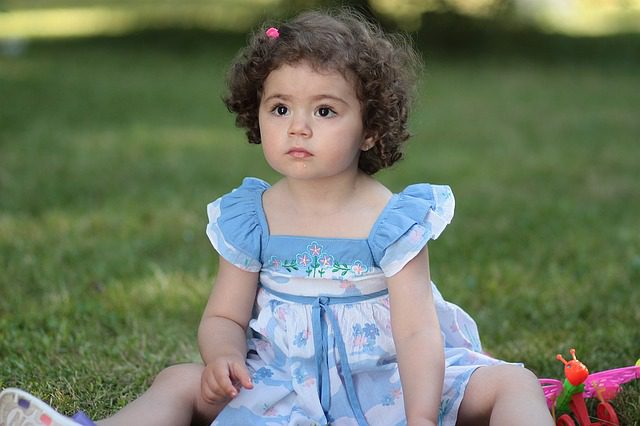
Learn about your child’s brain – maybe save a life
Young children wander off. Fact.
Older children kick balls and run out into the road after them. Fact.
And yes, telling a young boy to hold the back of your pocket while you take pictures of gorillas is not going to stop him wandering off if he gets an amazing idea in his head. It’s just not. And there is a scientific reason for this.
Expecting any young child to behave a certain way just because we told them so is totally unrealistic and potentially dangerous. It means that we believe a child can take on a certain level of responsibility when in fact they are not capable…their brains are just not wired that way.
From ages 1-9 (approx) your child is in a different brain state than you are
At a recent New Thought conference (Kryon Summerlight 2016) I had the opportunity to hear from three amazing speakers who are researching the latest regarding the human brain and its behavior.
During this conference one of the speakers –Dr Joe Dispenza– talked about states of mind, or emotional states, if you like.
I’ve learned this fact from other sources…but the fact is, as he reported we are neurologically wired from about age 1-9 to be in a highly suggestible, highly hypnotic state. Our nervous systems are not fully formed because something called the myelin sheath is growing to cover our nerves but has not fully sealed up yet.
We are still speculating on the reasons for this, one reason perhaps is that it helps us to socialize our children at a very young age through the power of suggestion. It may also help accelerate learning when a child needs to learn to walk, talk and manage tribal interaction with other humans.
Fantasy is a critical part of healthy brain development. It fosters creative problem solving and self entertainment, both of which have been shown to be a part of healthy and successful adults. The more original this fantasy is and not constrained by parents or tv rules, the more brain expansion that is possible.
The young brain and nervous system is unsealed, literally
Up until ages 7-9, babies and young children lack an aspect of brain development called the myelin sheath, a form of protein which encases their brain and nervous system.
Why is it so important to know about this as a parent?
I first learned about the myelin sheath from another teacher who explained that this is why young children are so open to fantasy, stories and scare so easily when small – for example the traditional monster under the bed or in the cupboard.
In a state of mind and body where their nervous system is not yet fully myelinated, young children are highly suggestible, open to games, fantasies, wonders and horrors that older humans understand are more imaginary than anything else.
So to a child in this age range, a monster is really a monster.
Parents, put that in your thinking cap next time you think you should tell your child they are too imaginative or scare too easily. They are not even in the same brain state as you – an adult human – so how can you be the judge of that?
Just a hunch, but most people reading this article will be an older human, probably age 10 or over. Older human, your myelin sheath has fully enclosed your nervous system and as a result you are less suggestible to flights of fantasy, wild imaginings and the urge to be carried away by a game or two and lose track of time.
(Or not, as the case may be – we all have the Internet – but the fact remains you have proteins and lipids surrounding your nervous system that a young child does not). You are continually in a different state of mind than your children and that is a scientific fact.
Your young child is not in the same permanent brain state as you!
Assuming the above statement to be true, how can you expect a young child to consistently carry out a command such as “Stay with me and stay away from the fence”?
It may stay in a child’s brain pan for a few moments…before their own neurology kicks back in and off they go. This is why we need to keep repeating commands to children in this age range.
Don’t expect them to act in an adult manner or lose your patience when they don’t behave as you asked, they are incapable of the command retention and of understanding the full importance of the command. They just don’t have the equipment.
The young boy who ended up in the gorilla pit may have had a wonderful fantasy of interacting with the gorillas – and acted on it, whatever he was thinking.
The end result however was disastrous for both him and the gorilla. His mother thought that one command would be enough. Sometimes it maybe, sometimes not.
We just can’t afford to take that gamble on behalf of our children at this young age.
Would you like to be ‘that kid’ who fell into the pit?
When he’s older and more adult he will be able to look back on this experience and realize that he needed more support and adult supervision to avoid being “that kid” for the rest of his life.
I’m sure the memories won’t make him happy or have him feel good about what happened. How would you feel if that was one of your childhood memories?
So where does this knowledge leave us as parents?
I know in our busy working-parent modern world we are short of bandwidth. Fact is though, when we have younger children we need to employ the majority of that bandwidth in following and checking on our children when we are out and about in the world, whether we want to or not.
I’ll repeat that. Whether we want to or not. We are an adult and it’s our job to provide adult supervision. That’s what those two words really mean.
As a mom of two girls I often found myself in charge of half of the park. Keeping an eye on my two girls on the swings, catching other kids running into the swings or falling off slides, tripping up, no parent within 10 yards — or zoning out with their friends or on a device.
I cannot tell you how many times I have asked other parents to pay attention to their kids. Another definition of adult supervision.
No-one ever said parenting was easy
And when we are tired or just want a break, it gets harder and harder. But we are adults and as adults it’s up to us to provide adult supervision. Another meaning for those two words.
Yes it means sometimes you won’t have as much fun as you’d like. Yes it means sometimes you won’t get to chat with your friends and catch a break. Suck it up. You’re a parent now.
Parents, I’ll make this very clear
Under the age of 10, hold your kids’ hand in public. Keep them close in parking lots. I see so many parents allowing their children to run out in front of them as they exit a car.
HOLD THEIR HANDS! THEY ARE IN A DIFFERENT BRAIN STATE THAN YOU.
Pay attention, keep an eye on them, it’s your job because the kid will flip that switch in their brains and be off. The world isn’t as real to them as it is to you. And it might be your turn not to be able to catch them before they fall. It’s a wild world out there and your children need your adult supervision.
I for one would rather not have that experience in my memories, or my child’s memories. It’s only a for a few years and then they will become more careful because you will teach them how to be self-aware and how to demonstrate good adult supervision towards others.
You will teach them, won’t you? After all, you have the adult brain.
Picture by AdinaVoicu at Pixabay
References:
Psychologydictionary.org – cognitive development in 3 year olds
Pubmed.gov – age-related myelin breakdown – decline and Alzheimer’s disease
Previous Post

June 28, 2016
Talking about Gun Control

Browse Our Archives
Select a Category Uncategorized
Select a Month January 2022 December 2021 October 2021 September 2018 October 2017 August 2017 April 2017 February 2017 January 2017 December 2016 November 2016 October 2016 September 2016 August 2016 July 2016 June 2016 May 2016 April 2016 March 2016 February 2016 January 2016 December 2015 April 2013 September 2012
TAKE THE
Religious Wisdom Quiz
Which giant Philistine did David defeat with a sling and a stone?
Select your answer to see how you score.
Ishbi-Benob Goliath Agag Og
Related posts from Spirituality Itself


Autumn, 2017 Message from the 12 Archangels

How the Quaker Religion Teaches Contentment in a...

The August Lunar and Solar Eclipses - A...
TRENDING AT PATHEOS New Visions

Did Prayer Cure His Cancer? Or Was It...
At 4 AM one morning, Joshua W. Brown’s wife awoke to a...

8 Ways a Near-Death Experience Rewires the Soul
Does Consciousness Survive Physical Death? After 50 Years of Research, Dr. Raymond...

Holy Longing: What Our Restlessness Is Telling Us
“One can find so many pains when the rain is falling.” -John...

What this is NOT about. This blog is definitely not about...

Who said the Israelites were God’s chosen? That’s right, they did. Who...

The Spirit World Is the Real World: God...
A Monk’s Wisdom on Body and Spirit I sit with Brother Martin...
view all New Visions blogs
Ad-Free & Subscriber Log-In Subscription Support
- About Us
- 2026 Calendar
- Videos
- Podcasts
- Library of World Religions
- Faith In Media Tracker
- Advertise With Us
- Write for Us
- Privacy Policy
- Terms of Service
- Do Not Sell My Data
- Contact Us
- Radiant Digital
- Manage Newsletter Subscriptions
- Unsubscribe From Notifications
- Sitemap
Copyright 2008-2026, Patheos. All rights reserved.
Subscription Support Ad-Free & Subscriber Log-In
Follow Patheos