
BuddhistCatholicContemplativeEvangelicalGeneral ChristianHinduJewishLatter-day SaintMuslimNew VisionsProgressive Christian
Beliefs
- Buddhist
- Catholic
- Contemplative
- Evangelical
- General Christian
- Hindu
- Jewish
- Latter-day Saint
- More Voices
- Muslim
- New Visions
- Pagan
- Progressive Christian
Topics
- Religion News
- Food and Religion
- Sports and Religion
- Religious Art
- Religious Music and Entertainment
- Religious Events
- History and Religion
- Style and Religion
- Politics and Religion
- Women in Religion
- Recreation Outdoors and Religion
- Business Finance and Religion
- Careers Workplace and Religion
- Education and Religion
- Family Parenting and Religion
- Health Fitness and Religion
- Home and Religion
- Relationships and Religion
- Technology and Religion
- Travel and Religion
Columnists
- Buddhist Columnists
- Business Finance and Religion Columnists
- Careers Workplace and Religion Columnists
- Catholic Columnists
- Contemplative Columnists
- Education and Religion Columnists
- Evangelists Columnists
- Family Parenting and Religion Columnists
- General Christian Columnists
- Health Fitness and Religion Columnists
- Hindu Columnists
- History and Religion Columnists
- Home and Religion Columnists
- Jewish Columnists
- More Voices Columnists
- Latter Day Columnists
- Muslim Columnists
- New Visions Columnists
- Nonreligious Columnists
- Pagan Columnists
- Politics and Religion Columnists
- Progressive Columnists
- Recreation Outdoors and Religion Columnists
- Relationships and Religion Columnists
- Religion News Columnists
- Religious Art Columnists
- Religious Events Columnists
- Religious Music and Entertainment Columnists
- Sports and Religion Columnists
- Style and Religion Columnists
- Technology and Religion Columnists
- Travel and Religion Columnists
- Women in Religion Columnists
Resource Library
- 2026 Calendar
- Library of World Religions
- The 100 Most Holy Places on Earth
- Patheos Answers
- Podcasts
- Videos
- Faith Leaders Database
- Anglican Episcopalian
- Bahai
- Baptist
- Buddhism
- Christianity
- Confucianism
- Eastern Orthodoxy
- Hinduism
- Holiness and Pentecostal
- ISKCON
- Islam
- Judaism
- Lutheran
- Methodist
- The Church of Jesus Christ of Latter-day Saints
- New Age
- Paganism
- Presbytarian and Reformed
- Protestantism
- Religion Behind the Scenes
- Roman Catholic
- Scientology
- Shia Islam
- Sikhism
- Sufism
- Sunni Islam
- Taoism
- Zen
- See all religions
Research Tools
 Ad-Free & Subscriber Log-In Subscription Support
Ad-Free & Subscriber Log-In Subscription Support
Follow Patheos 

- Trending:
- Forgiveness
- |
- Marriage
- |
- Consciousness
- |
- Death Penalty
- |
- Election
- |
- Halloween

- Home
- New Visions
- We’re Made of Love—Uniquely So
We’re Made of Love—Uniquely So
Last updated on: May 28, 2016 at 12:00 pm by Byron Belitsos
We’re Made of Love—Uniquely So 2016-05-28T11:00:49-04:00 Byron Belitsos
Patheos Explore the world's faith through different perspectives on religion and spirituality! Patheos has the views of the prevalent religions and spiritualities of the world.
Conventional society is organized around the apparent solidity of our “egoic self”—how we have to show up in “polite” society in order to get the things we want and eventually make our way into normal adulthood. But with the growth of spiritual insight, our immature egotism gradually dissolves. We awaken to the fact that our supposed separate identity and our choice of our particular role in society is a mere construct, although it can be a very serviceable tool. We recognize that our stance of “ontological” separateness was just a convenient belief that we can now release. We in fact realize that we are all made of love—and that there is no separate self. This perception of our true spiritual identity might be called “True Self” as opposed to our egoic identity. But there is an additional and a rather profound step beyond this stage—which I like to call “uniqueness beyond ego.”
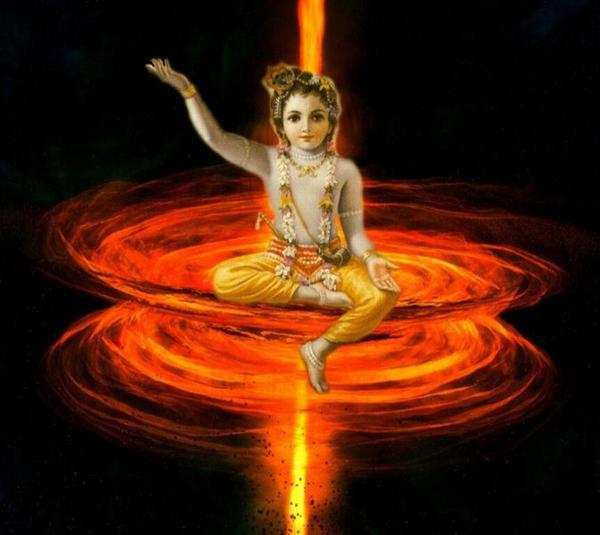 Getting beyond ego is the general goal of the nondual enlightenment practices of the East. But this is far from the end of the story, according to the “Unique Self” theories like those found in the writings of philosopher Marc Gafni and also in the Urantia Revelation, both of which teach that each person is in reality an existentially unique person—an incredibly precious being in God’s eyes, and unique in eternity.
The first step, then, is our full recognition of the insubstantiality of the egoic self; it’s just a set of choices that makes us functional and sociable. It doesn’t have to become an all-consuming belief system. This realization makes possible a second awakening: the dawn of a unique selfhood beyond the egoic belief in a separate self. In this higher phase of living, we recognize that we each have singular position in the cosmos as a discretely aware individual, and we are able to engage with realities that far transcend the identifications of the conventional self. We now see that we are are all identical fragments of Spirit, so to speak, but we also know that each of us also has a unique perspective on the evolving cosmos and a unique mission in the world that goes far beyond our earlier belief in our limitations. We are all one, but we are also all incredibly diverse as individual children of the Creator.
Seen in this way, the goal of our spiritual practice is uniqueness beyond ego. For most of us, discovering our Unique Self in this way is a development of late adulthood, if it is ever achieved. It can require a lifetime of psycho-spiritual practice and life experience to see through one’s egoic personality and awaken to our True Self—which paradoxically shows up in each of us in essentially different ways as our Unique Self.
Ego pathology is the greatest obstacle to discovering this intrinsic uniqueness. The danger of youth (and otherwise normal adults) is not so much that they sense themselves as separate from their parents, society, or community, but that they fall into a “false separate self.” This can lead to the perception of a false uniqueness as well! These cases are the unhealthy manifestations of an insecure, traumatized, or distorted ego that, for example, harbors neurotic beliefs about being “not enough” or “unlovable.” But if the ego finds a path to becoming balanced and functional—in an environment of loving relationships with parents, siblings, and friends—it will naturally evolve to more advanced structures of awareness. It will become increasingly able to manage the complex features of everyday reality, interacting with them with knowledge, skill, and wisdom.
The upshot is that we maintain and improve these adult ego structures all the way up to the highest stages of our personal growth; we never leave our healthy ego behind, as Carl Jung made clear in his theory of individuation. But we don’t believe in our ego in the sense of egotism. We simply “transcend and include” previous ego states as we go.
We should always endeavor to improve the functionality of our ego structures throughout adult life. But if we are growing spiritually, we move beyond ego’s exclusive attachments to self, family, profession, community, race, gender, religion, and nation. The mature ego operates with increasing competence in all of these realms, but it is also increasingly free of limiting identifications with any of them. Far from being merely ego-centered, we now become world-centric; eventually we become universe-centric; and ultimately we emerge as God-centered. As we become free of partial identifications, we no longer block our intrinsic awareness of the limitless and unqualified consciousness that dwells within. Some degree of God consciousness now abides within us as the ever-present background of our healthy ego awareness, and our awareness of uniqueness beyond ego. We abide in true-self-awareness, now free of limiting self-concepts! This is when our uniqueness can really show up.
Previous Post
May 18, 2016
How to get more from the spiritual journey
Next Post

May 30, 2016 The Archetype Most Essential To Conscious Evolution
Browse Our Archives
Select a Category Uncategorized
Select a Month January 2022 December 2021 October 2021 September 2018 October 2017 August 2017 April 2017 February 2017 January 2017 December 2016 November 2016 October 2016 September 2016 August 2016 July 2016 June 2016 May 2016 April 2016 March 2016 February 2016 January 2016 December 2015 April 2013 September 2012
TAKE THE
Religious Wisdom Quiz
Which prophet was taken up to heaven in a whirlwind?
Select your answer to see how you score.
Elisha Isaiah Elijah Jeremiah
Related posts from Spirituality Itself



Your God Spot: The Starting Spot for Energy...

TRENDING AT PATHEOS New Visions

Did Prayer Cure His Cancer? Or Was It...
At 4 AM one morning, Joshua W. Brown’s wife awoke to a...

8 Ways a Near-Death Experience Rewires the Soul
Does Consciousness Survive Physical Death? After 50 Years of Research, Dr. Raymond...

Holy Longing: What Our Restlessness Is Telling Us
“One can find so many pains when the rain is falling.” -John...

What this is NOT about. This blog is definitely not about...

Who said the Israelites were God’s chosen? That’s right, they did. Who...

The Spirit World Is the Real World: God...
A Monk’s Wisdom on Body and Spirit I sit with Brother Martin...
view all New Visions blogs
Ad-Free & Subscriber Log-In Subscription Support
- About Us
- 2026 Calendar
- Videos
- Podcasts
- Library of World Religions
- Faith In Media Tracker
- Advertise With Us
- Write for Us
- Privacy Policy
- Terms of Service
- Do Not Sell My Data
- Contact Us
- Radiant Digital
- Manage Newsletter Subscriptions
- Unsubscribe From Notifications
- Sitemap
Copyright 2008-2026, Patheos. All rights reserved.
Subscription Support Ad-Free & Subscriber Log-In
Follow Patheos