
BuddhistCatholicContemplativeEvangelicalGeneral ChristianHinduJewishLatter-day SaintMuslimNew VisionsProgressive Christian
Beliefs
- Buddhist
- Catholic
- Contemplative
- Evangelical
- General Christian
- Hindu
- Jewish
- Latter-day Saint
- More Voices
- Muslim
- New Visions
- Pagan
- Progressive Christian
Topics
- Religion News
- Food and Religion
- Sports and Religion
- Religious Art
- Religious Music and Entertainment
- Religious Events
- History and Religion
- Style and Religion
- Politics and Religion
- Women in Religion
- Recreation Outdoors and Religion
- Business Finance and Religion
- Careers Workplace and Religion
- Education and Religion
- Family Parenting and Religion
- Health Fitness and Religion
- Home and Religion
- Relationships and Religion
- Technology and Religion
- Travel and Religion
Columnists
- Buddhist Columnists
- Business Finance and Religion Columnists
- Careers Workplace and Religion Columnists
- Catholic Columnists
- Contemplative Columnists
- Education and Religion Columnists
- Evangelists Columnists
- Family Parenting and Religion Columnists
- General Christian Columnists
- Health Fitness and Religion Columnists
- Hindu Columnists
- History and Religion Columnists
- Home and Religion Columnists
- Jewish Columnists
- More Voices Columnists
- Latter Day Columnists
- Muslim Columnists
- New Visions Columnists
- Nonreligious Columnists
- Pagan Columnists
- Politics and Religion Columnists
- Progressive Columnists
- Recreation Outdoors and Religion Columnists
- Relationships and Religion Columnists
- Religion News Columnists
- Religious Art Columnists
- Religious Events Columnists
- Religious Music and Entertainment Columnists
- Sports and Religion Columnists
- Style and Religion Columnists
- Technology and Religion Columnists
- Travel and Religion Columnists
- Women in Religion Columnists
Resource Library
- 2026 Calendar
- Library of World Religions
- The 100 Most Holy Places on Earth
- Patheos Answers
- Podcasts
- Videos
- Faith Leaders Database
- Anglican Episcopalian
- Bahai
- Baptist
- Buddhism
- Christianity
- Confucianism
- Eastern Orthodoxy
- Hinduism
- Holiness and Pentecostal
- ISKCON
- Islam
- Judaism
- Lutheran
- Methodist
- The Church of Jesus Christ of Latter-day Saints
- New Age
- Paganism
- Presbytarian and Reformed
- Protestantism
- Religion Behind the Scenes
- Roman Catholic
- Scientology
- Shia Islam
- Sikhism
- Sufism
- Sunni Islam
- Taoism
- Zen
- See all religions
Research Tools
 Ad-Free & Subscriber Log-In Subscription Support
Ad-Free & Subscriber Log-In Subscription Support
Follow Patheos 

- Trending:
- Forgiveness
- |
- Marriage
- |
- Consciousness
- |
- Death Penalty
- |
- Election
- |
- Halloween

- Home
- New Visions
- Indigenous Peoples, Climate Change, and Beyond Paris COP21
Indigenous Peoples, Climate Change, and Beyond Paris COP21
Last updated on: December 7, 2015 at 7:32 am by Guest Contributor
Indigenous Peoples, Climate Change, and Beyond Paris COP21 2015-12-07T07:32:47-05:00 Guest Contributor
Patheos Explore the world's faith through different perspectives on religion and spirituality! Patheos has the views of the prevalent religions and spiritualities of the world.
Written by Mindahi Bastida Muñoz.

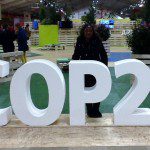
photo by Mindahi Bastida Muñoz
In this era of globalization and climate change, the wisdom and knowledge of individual ancient cultures is beginning to cross-pollinate in inter-cultural dialogue. This dialogue, which is happening this week in Paris, may represent our only chance of facing the escalating all-encompassing crisis that threatens to overwhelm individuals and nations alike and possibly destroy all. As it progresses, it is also important for Native peoples to come together in unity so that they may share the vital ancestral knowledge they hold in common.
Nowadays, humanity is experiencing the end result of a different kind of knowledge. Since its inception over 4,000 years ago – and increasing dominance for more than 500 years in the Americas, this other kind of knowledge has culminated in a disharmonious, fragmented, and highly destructive way of interaction and relationship with both people and nature. Climate Change is a result. It is in the return to the sacred origins of the ancestral wisdom, principles and values, that we all may recover balance and sustainability. In this way, indigenous knowledge plays an important role for adaptation and mitigation of climate change.
EVENTS RIGHT BEFORE COP 21
Immediately Preceding the U.N. Conference in Paris, also known as COP 21,there were 2 important events where indigenous peoples participated:
First, the Conference on Resilience in a Time of Uncertainty: Indigenous Peoples and Climate Change, which took place on November 26-27, 2015 in U.N.E.SC.O. General Headquarters. There it was stated that, based on ancestral knowledge, principles and values, Indigenous Peoples are among the most resilient people on Earth. Also, it was said that indigenous peoples offer important experiences to the world regarding resilience and adaptation to climate change.
The other event followed the Assembly of the Guardians of Mother Nature, which occurred on November 28th, 2015 in Paris. Indigenous representatives, personalities and organizations, from around the world reminded us that indigenous populations represent more than 370 million people, in more than 70 countries and 5 continents. Here surged a document: Proposals and Recommendations of the Alliance of the Guardians of Mother Nature to the States and to the international community for the preservation of climate and future generations.
Among the most important proposals in this document are: (6.) Preserve fossil fuels in the soil by ending exploration and all forms of extraction to protect Mother Nature, as recommended by indigenous knowledge and scientifically supported by climatic constraints. (14.) Recognize through the UN and UNESCO the biocultural sacred sites of tribal and indigenous peoples and local communities, along with their land and governance rights on these sites.
It was signed by many organizations, among them was the Center for Earth Ethics. This document represents the willingness to take care about Mother Nature. These two preliminary events made clear that at COP21–and all ongoing and future negotiations–the voice of ancestral peoples should be present at all times.
DURING COP 21
During the UNFCC 21st Conference of the Parties, Paris COP21, there is an intense participation of Indigenous peoples, not just in the Indigenous Pavilion but also in other places, including the official conference spaces, such as in the Peruvian Pavilion. For example, there was a round table on “Building indigenous resilience for biocultural responses to climate change² which is part of the Indigenous Peoples¹ Biocultural Climate Change Assessment (IPCCA), creating connections between indigenous biocultural realities and complex global systems”.
Here it was argued that as indigenous peoples continue to articulate and negotiate alternative responses to the many dimensions of climate change, including forest conservation, mitigation and adaptation, creating living laboratories of climate change and adaptation. These living laboratories have emerged as a sustainable mechanism through which traditional knowledge and conventional western science can engage equitably in dialogic and mutual learning aimed toward the benefit of communities affected by the impacts of climate change.
BEYOND PARIS: INDIGENOUS PEOPLES BIOCULTURAL CLIMATE CHANGE ASSESSMENTS
This initiative uses the Living Lab approach of the Indigenous Peoples¹ Biocultural Climate Change Assessments and the “biocultural territory” concept. It is a collaborative effort to combat climate change, providing indigenous and traditional peoples with a powerful tool to cooperatively test, learn, discover, teach, apply and share the outcomes of our inquiries on climate change and advance sustainability and resilience of their nations.
Native peoples are key actors in order to support sustainability of our Mother. Traditional knowledge is key for the conservation of biocultural diversity. For example, almost all our traditions have rituals to orient people to place and acknowledge the presence of the elements and other living beings. We also know that Water like other three elements of life -fire, earth and air, is not a resource but a sacred element. The water is needed for all living creatures and for the all the spaces where she interacts. We should treat water with deep respect, love and reciprocity.
But most native peoples do not have contacts with other native peoples or are being ignored by other societies. So it is necessary today for native peoples to come together, not only for their own benefit, but also for the sake of our Mother and other societies. In the long term, the unification process will support the self-determination of peoples, will safeguard Mother Earth, and will help maintain a permanent dialogue with other cultures for the sake of all.
Mindahi Bastida Muñoz is General Coordinator of the Otomi-Hñahñu Regional Council in Mexico and a researcher and guardian of the ancestral sacred Otomi knowledge and original peoples of Mesoamerica. He is currently scholar in residence at The Center for Earth Ethics at Union Theological Seminary in New York City.

Next Post
December 10, 2015 Beyond COP 21: Articulating Climate Realities and Solutions
Browse Our Archives
Select a Category Uncategorized
Select a Month January 2022 December 2021 October 2021 September 2018 October 2017 August 2017 April 2017 February 2017 January 2017 December 2016 November 2016 October 2016 September 2016 August 2016 July 2016 June 2016 May 2016 April 2016 March 2016 February 2016 January 2016 December 2015 April 2013 September 2012
TAKE THE
Religious Wisdom Quiz
What was the most common staple grain in ancient Israel?
Select your answer to see how you score.
Barley Rice Oats Wheat
Related posts from Spirituality Itself



Your God Spot: The Starting Spot for Energy...

TRENDING AT PATHEOS New Visions

Did Prayer Cure His Cancer? Or Was It...
At 4 AM one morning, Joshua W. Brown’s wife awoke to a...

8 Ways a Near-Death Experience Rewires the Soul
Does Consciousness Survive Physical Death? After 50 Years of Research, Dr. Raymond...

Holy Longing: What Our Restlessness Is Telling Us
“One can find so many pains when the rain is falling.” -John...

What this is NOT about. This blog is definitely not about...

Who said the Israelites were God’s chosen? That’s right, they did. Who...

The Spirit World Is the Real World: God...
A Monk’s Wisdom on Body and Spirit I sit with Brother Martin...
view all New Visions blogs
Ad-Free & Subscriber Log-In Subscription Support
- About Us
- 2026 Calendar
- Videos
- Podcasts
- Library of World Religions
- Faith In Media Tracker
- Advertise With Us
- Write for Us
- Privacy Policy
- Terms of Service
- Do Not Sell My Data
- Contact Us
- Radiant Digital
- Manage Newsletter Subscriptions
- Unsubscribe From Notifications
- Sitemap
Copyright 2008-2026, Patheos. All rights reserved.
Subscription Support Ad-Free & Subscriber Log-In
Follow Patheos