
BuddhistCatholicContemplativeEvangelicalGeneral ChristianHinduJewishLatter-day SaintMuslimNew VisionsProgressive Christian
Beliefs
- Buddhist
- Catholic
- Contemplative
- Evangelical
- General Christian
- Hindu
- Jewish
- Latter-day Saint
- More Voices
- Muslim
- New Visions
- Pagan
- Progressive Christian
Topics
- Religion News
- Food and Religion
- Sports and Religion
- Religious Art
- Religious Music and Entertainment
- Religious Events
- History and Religion
- Style and Religion
- Politics and Religion
- Women in Religion
- Recreation Outdoors and Religion
- Business Finance and Religion
- Careers Workplace and Religion
- Education and Religion
- Family Parenting and Religion
- Health Fitness and Religion
- Home and Religion
- Relationships and Religion
- Technology and Religion
- Travel and Religion
Columnists
- Buddhist Columnists
- Business Finance and Religion Columnists
- Careers Workplace and Religion Columnists
- Catholic Columnists
- Contemplative Columnists
- Education and Religion Columnists
- Evangelists Columnists
- Family Parenting and Religion Columnists
- General Christian Columnists
- Health Fitness and Religion Columnists
- Hindu Columnists
- History and Religion Columnists
- Home and Religion Columnists
- Jewish Columnists
- More Voices Columnists
- Latter Day Columnists
- Muslim Columnists
- New Visions Columnists
- Nonreligious Columnists
- Pagan Columnists
- Politics and Religion Columnists
- Progressive Columnists
- Recreation Outdoors and Religion Columnists
- Relationships and Religion Columnists
- Religion News Columnists
- Religious Art Columnists
- Religious Events Columnists
- Religious Music and Entertainment Columnists
- Sports and Religion Columnists
- Style and Religion Columnists
- Technology and Religion Columnists
- Travel and Religion Columnists
- Women in Religion Columnists
Resource Library
- 2026 Calendar
- Library of World Religions
- The 100 Most Holy Places on Earth
- Patheos Answers
- Podcasts
- Videos
- Faith Leaders Database
- Anglican Episcopalian
- Bahai
- Baptist
- Buddhism
- Christianity
- Confucianism
- Eastern Orthodoxy
- Hinduism
- Holiness and Pentecostal
- ISKCON
- Islam
- Judaism
- Lutheran
- Methodist
- The Church of Jesus Christ of Latter-day Saints
- New Age
- Paganism
- Presbytarian and Reformed
- Protestantism
- Religion Behind the Scenes
- Roman Catholic
- Scientology
- Shia Islam
- Sikhism
- Sufism
- Sunni Islam
- Taoism
- Zen
- See all religions
Research Tools
 Ad-Free & Subscriber Log-In Subscription Support
Ad-Free & Subscriber Log-In Subscription Support
Follow Patheos 

- Trending:
- Forgiveness
- |
- Marriage
- |
- Consciousness
- |
- Death Penalty
- |
- Election
- |
- Halloween
 spiritchatter
- Home
- Progressive Christian
- Refugees: The Great Reversal
Refugees: The Great Reversal
Last updated on: February 14, 2017 at 2:04 pm by Jack Levison
Refugees: The Great Reversal 2017-02-14T14:04:10-08:00 Jack Levison
Patheos Explore the world's faith through different perspectives on religion and spirituality! Patheos has the views of the prevalent religions and spiritualities of the world.
 What’s the most cherished verse of the Bible? For many Christians, it has to be John 3:16: “For God so loved the world, that he gave his only begotten Son, that whosoever believeth in him should not perish, but have everlasting life.” It’s so popular that it has season tickets to sporting events. If you watch football, you’ll see it, with its own placard, right there behind the goal post: JOHN 3:16. (I didn’t happen to see it at the Super Bowl, but I bet it was there, in one heck of an expensive seat.)
Today I’ll recommend that Christians memorize another 3:16 verse of the Bible: Exodus 3:16.
Why Exodus 3:16? Because it speaks to the heart of American politics. More important, it shows us the heart of God.
Here’s the background.
God and Moses are in an intense conversation about the plight of ancient Israel, in the course of which God confesses, “I have heard them crying out because of their slave drivers, and I am concerned about their suffering. So I have come down to rescue them from the hand of the Egyptians and to bring them up out of that land into a good and spacious land, a land flowing with milk and honey” (Exodus 3:6-9).
As if Moses might have missed it, God says a second time, “And now the cry of the Israelites has reached me … and I have seen the way the Egyptians are oppressing them. So now, go. I am sending you to Pharaoh to bring my people the Israelites out of Egypt” (Exodus 3:9-10).
Then a third time, in Exodus 3:16-17, God says it again: “Go … I have watched over you and have seen what has been done to you in Egypt. And I have promised to bring you up out of your misery in Egypt into … a land flowing with milk and honey.'”
If repetition is a clue to commitment, then we see deep into God’s heart here.
God sees their misery. God hears their cry. God pays attention!
Third time’s a charm, isn’t it?
Not for everyone. Here’s the kicker–and what’s got me worried.
About 8 chapters and 10 plagues later, it’s not the Israelites who cry out–but the Egyptians. There is “loud wailing throughout Egypt–worse than there has ever been or ever will be again” (Exodus 11:6). That word, wailing, is the same Hebrew word as cry in Exodus 3:7. Only now it’s the Egyptians rather than the Israelites, the powerful rather than the poor, who cry out.
Here’s a transfer of power from the rich to the poor, and a transfer of wailing from the poor to the rich. Let’s call it the great reversal.
The story continues: “Pharaoh and all his officials and all the Egyptians got up during the night, and there was loud wailing in Egypt, for there was not a house without someone dead” (Exodus 12:30). Wailing? You guessed it. The same Hebrew word as cry in chapter 3.
Again, here’s a transfer of power from the rich to the poor, and a transfer of wailing from the poor to the rich. It’s nothing short of a great reversal.
So what’s got me worried? The state of the refugees, of course. I want God to rescue them and lead them to a land flowing with milk and honey.
But I’m worried about us, too, because I know, biblically speaking, what happens to nations on the wrong side of the equation. Nations that fail to pay attention to the miserable, to “your tired, your poor, your huddled masses yearning to breathe free, the wretched refuse of your teeming shore,” end up, in the biblical economy, as tired and poor themselves.
You see why Exodus 3:16 has me worried? If there is a God–and I am a Christian who believes there is a God–then it may be that America’s refusal to allow even a modest flow of refugees on our shores will prompt a transfer of wailing, a resettlement of misery from the refugees to citizens of the most powerful nation on the face of the earth.
I worry about a great reversal.
This thought is even more unsettling if you believe, as many Christians who oppose refugee resettlement do, that we are God’s chosen nation. The only model for how to act as God’s chosen nation is ancient Israel, God’s original chosen nation. And the main source for knowing about ancient Israel is the Bible.
And the Bible is pretty clear on this point. God heard the cry of slaves who yearned to breathe free. And Egypt? Powerful, wealthy, invincible Egypt? According to the story, according to Exodus, according to the Bible, they learned how to cry.
But while God paid attention to the cry of the miserable, God refuses now to hear the cry of the powerful.
So I’m not at all opposed to John 3:16. I’ve got it memorized. But there are other verses, other parts of the story, other chapters of the Bible worth memorizing.
And Exodus 3:16 is one of them. Exodus 3:16 reminds us that God watches out for the wretched, tempest-tossed. And it cautions us about being on the wrong side of things when God pays attention to the cry of the miserable.
So I worry. What Bible-reading Christian wouldn’t?
__________________________________________________________________________
Quotations of the Bible are from the King James Version (John 3:16) and the New International Version (Exodus).
The quotation about huddled masses is from the base of the Statue of Liberty.
Previous Post

February 13, 2016
Is Christian Higher Education Dead? The Debate Continues
Next Post
February 17, 2017 The Cross and the Old Testament (with a little help from NT Wright)
Browse Our Archives
Select a Category Uncategorized
Select a Month August 2017 July 2017 June 2017 March 2017 February 2017 February 2016 December 2015 September 2015 August 2015 June 2015 May 2015 February 2015 January 2015 December 2014 November 2014 October 2014 September 2014 August 2014 July 2014 June 2014 May 2014 April 2014 March 2014 February 2014 January 2014 December 2013 November 2013 October 2013 September 2013 August 2013 July 2013 June 2013 May 2013
Follow Us!
TAKE THE
Religious Wisdom Quiz
Which prophet predicted an outpouring of God's Spirit in the last days?
Select your answer to see how you score.
Joel Daniel Micah Ezekiel
Related posts from spiritchatter

Hurricane Heroes and the Book of Exodus

Beneath the Headlines: Another Presidential Committee Ups and...

The Summer of '17: Jacob's Ladder and Esau's...
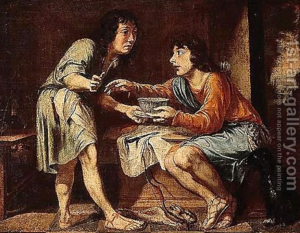
Summer of '17: Sibling Rivalry on Steroids
TRENDING AT PATHEOS Progressive Christian

Why Christians Have a Sacred Duty to Vote:...
The Bible offers strong support for the sacred duty to vote. Here...

What Being a Modern-Day Apostle Means to Me
In my last column, I discussed the ins and outs of modern-day...

Did Ancient China Once Worship the God of...
Across human history, a common thread weaves through the origins of the...

Love Your Neighbor – Including Earth-Kin: Lev. 19,...
God’s command to love your neighbor means acting in an ethical and...

Lead a Church Study of “Jesus and Lao...
Guest writer Jack Thomas (The Irreverent Reverend) reflects on leading his church...

Principles for Understanding the Apostolic Ministry Today
Whenever people discover that my formal ministry title is "apostle," as in...
view all Progressive Christian blogs
Ad-Free & Subscriber Log-In Subscription Support
- About Us
- 2026 Calendar
- Videos
- Podcasts
- Library of World Religions
- Faith In Media Tracker
- Advertise With Us
- Write for Us
- Privacy Policy
- Terms of Service
- Do Not Sell My Data
- Contact Us
- Radiant Digital
- Manage Newsletter Subscriptions
- Unsubscribe From Notifications
- Sitemap
Copyright 2008-2026, Patheos. All rights reserved.
Subscription Support Ad-Free & Subscriber Log-In
Follow Patheos