
BuddhistCatholicContemplativeEvangelicalGeneral ChristianHinduJewishLatter-day SaintMuslimNew VisionsProgressive Christian
Beliefs
- Buddhist
- Catholic
- Contemplative
- Evangelical
- General Christian
- Hindu
- Jewish
- Latter-day Saint
- More Voices
- Muslim
- New Visions
- Pagan
- Progressive Christian
Topics
- Religion News
- Food and Religion
- Sports and Religion
- Religious Art
- Religious Music and Entertainment
- Religious Events
- History and Religion
- Style and Religion
- Politics and Religion
- Women in Religion
- Recreation Outdoors and Religion
- Business Finance and Religion
- Careers Workplace and Religion
- Education and Religion
- Family Parenting and Religion
- Health Fitness and Religion
- Home and Religion
- Relationships and Religion
- Technology and Religion
- Travel and Religion
Columnists
- Buddhist Columnists
- Business Finance and Religion Columnists
- Careers Workplace and Religion Columnists
- Catholic Columnists
- Contemplative Columnists
- Education and Religion Columnists
- Evangelists Columnists
- Family Parenting and Religion Columnists
- General Christian Columnists
- Health Fitness and Religion Columnists
- Hindu Columnists
- History and Religion Columnists
- Home and Religion Columnists
- Jewish Columnists
- More Voices Columnists
- Latter Day Columnists
- Muslim Columnists
- New Visions Columnists
- Nonreligious Columnists
- Pagan Columnists
- Politics and Religion Columnists
- Progressive Columnists
- Recreation Outdoors and Religion Columnists
- Relationships and Religion Columnists
- Religion News Columnists
- Religious Art Columnists
- Religious Events Columnists
- Religious Music and Entertainment Columnists
- Sports and Religion Columnists
- Style and Religion Columnists
- Technology and Religion Columnists
- Travel and Religion Columnists
- Women in Religion Columnists
Resource Library
- 2026 Calendar
- Library of World Religions
- The 100 Most Holy Places on Earth
- Patheos Answers
- Podcasts
- Videos
- Faith Leaders Database
- Anglican Episcopalian
- Bahai
- Baptist
- Buddhism
- Christianity
- Confucianism
- Eastern Orthodoxy
- Hinduism
- Holiness and Pentecostal
- ISKCON
- Islam
- Judaism
- Lutheran
- Methodist
- The Church of Jesus Christ of Latter-day Saints
- New Age
- Paganism
- Presbytarian and Reformed
- Protestantism
- Religion Behind the Scenes
- Roman Catholic
- Scientology
- Shia Islam
- Sikhism
- Sufism
- Sunni Islam
- Taoism
- Zen
- See all religions
Research Tools
 Ad-Free & Subscriber Log-In Subscription Support
Ad-Free & Subscriber Log-In Subscription Support
Follow Patheos 

- Trending:
- Forgiveness
- |
- Marriage
- |
- Consciousness
- |
- Death Penalty
- |
- Election
- |
- Halloween
 spiritchatter
- Home
- Progressive Christian
- Pope Francis on How to Prepare a Sermon
Pope Francis on How to Prepare a Sermon
Last updated on: June 1, 2015 at 9:10 am by Jack Levison
Pope Francis on How to Prepare a Sermon 2015-06-01T09:10:47-07:00 Jack Levison
Patheos Explore the world's faith through different perspectives on religion and spirituality! Patheos has the views of the prevalent religions and spiritualities of the world.
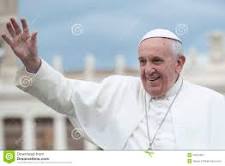 The pope and I agree. He’s in very good company! (Okay, I’ll admit, it goes the other way, too.)
What do we agree about? How to prepare a sermon.
Here’s the backstory to how I know Pope Francis and I agree.
I wrote this week to Susan Stabile, a law professor and Faculty Fellow of Spiritual Life at the University of St. Thomas. Susan had written an endorsement for Forty Days with the Holy Spirit followed by a fine blog post. I wrote to her about my first term at Perkins School of Theology–how I cajoled, screamed at, and urged my students never, ever, ever to begin sermon preparation by heading to the commentaries or, worse still, the internet. Never, ever, ever.
What then? What to do? How to start?
Start the way we started class this term: with lectio divina. We turned the lights out, put meditative music on, and gathered groups of four around plastic tea candles. (For the record, I’m a docile, obedient soul who would never sneak contraband candles into the classroom.) Then we read a passage of scripture three times.
The first time, we listened for a word that struck us.
The second time, we listened for an emotion that grabbed us.
The third time, we listened for an invitation that God extended to us.
We then took the word that struck us in the first reading (okay, so I pre-selected the word) and did a word study on it using Blue Letter Bible, a handy online tool for word studies. We asked about how that word is used elsewhere. We looked at associated words. We discovered related passages in scripture by tracing the occurrence of the word.
And that, I told my Perkins students, is how to begin preparing a sermon.
With meditation.
With word studies based upon the word that grabbed our attention during lectio divina.
Sam, a student who poked and prodded and raised dynamite questions during term, asked, “You pick the words, so you know they work! What if we pick the wrong words?”
Fair question, to which I had an inspired response: “An hour of failed word studies in scripture is worth more than ten hours on the internet!”
Back now to my email exchange with Susan. After I told her about the exercise of lectio divina coupled with word studies, she quipped that she wished priests, and not just Protestant pastors-to-be, would follow my advice. Then, a day later, she sent me this remarkable quote from Pope Francis’s Apostolic Exhortation Evangelii Gaudium. The words are powerful, the challenge imposing.
And the result, if we followed it? Stunning. Sermons would not be a litany of stories and personal illustrations or, worse yet, impersonal filler culled from the internet, but a reflection rooted in meditation, a sermon suffused with depth.
This is the pope talking–not me. (Turns out the pope feels the same way I do about how priests and pastors should prepare sermons.) After talking for a bit about lectio divina, he says:
Whoever wants to preach must be the first to let the word of God move him deeply and become incarnate in his daily life. In this way preaching will consist in that activity, so intense and fruitful, which is “communicating to others what one has contemplated.” For all these reasons, before preparing what we will actually say when preaching, we need to let ourselves be penetrated by that word which will also penetrate others, for it is a living and active word, like a sword “which pierces to the division of soul and spirit, of joints and marrow, and discerns the thoughts and intentions of the heart” (Heb 4:12). This has great pastoral importance. Today too, people prefer to listen to witnesses: they “thirst for authenticity” and “call for evangelizers to speak of a God whom they themselves know and are familiar with, as if they were seeing him.”
Do me a favor–yourself, too.
Don’t get up quite yet. Don’t scroll to another screen.
Imagine instead what it means to “communicate to others what one has contemplated.”
Imagine a sermon described with these words: incarnate, intense, fruitful, contemplate, penetrate, living, active, pierce, importance, authenticity, know, see.
Imagine if communication—from tweets to sermons to student papers—arose from contemplation.
Imagine that!
Previous Post

May 19, 2015
The Promise of Pentecost You May Not Know
Next Post
June 9, 2015 5 Reasons Why We Need More Guns on Campus
Browse Our Archives
Select a Category Uncategorized
Select a Month August 2017 July 2017 June 2017 March 2017 February 2017 February 2016 December 2015 September 2015 August 2015 June 2015 May 2015 February 2015 January 2015 December 2014 November 2014 October 2014 September 2014 August 2014 July 2014 June 2014 May 2014 April 2014 March 2014 February 2014 January 2014 December 2013 November 2013 October 2013 September 2013 August 2013 July 2013 June 2013 May 2013
Follow Us!
TAKE THE
Religious Wisdom Quiz
Who found baby Moses in the river?
Select your answer to see how you score.
Pharaoh’s daughter Pharaoh himself An Egyptian priest Miriam
Related posts from spiritchatter

Hurricane Heroes and the Book of Exodus

The Summer of '17: Jacob's Ladder and Esau's...

The Summer of '17: a Summer of Trysts...

TRENDING AT PATHEOS Progressive Christian

Why Christians Have a Sacred Duty to Vote:...
The Bible offers strong support for the sacred duty to vote. Here...

What Being a Modern-Day Apostle Means to Me
In my last column, I discussed the ins and outs of modern-day...

Did Ancient China Once Worship the God of...
Across human history, a common thread weaves through the origins of the...

Love Your Neighbor – Including Earth-Kin: Lev. 19,...
God’s command to love your neighbor means acting in an ethical and...

Lead a Church Study of “Jesus and Lao...
Guest writer Jack Thomas (The Irreverent Reverend) reflects on leading his church...

Principles for Understanding the Apostolic Ministry Today
Whenever people discover that my formal ministry title is "apostle," as in...
view all Progressive Christian blogs
Ad-Free & Subscriber Log-In Subscription Support
- About Us
- 2026 Calendar
- Videos
- Podcasts
- Library of World Religions
- Faith In Media Tracker
- Advertise With Us
- Write for Us
- Privacy Policy
- Terms of Service
- Do Not Sell My Data
- Contact Us
- Radiant Digital
- Manage Newsletter Subscriptions
- Unsubscribe From Notifications
- Sitemap
Copyright 2008-2026, Patheos. All rights reserved.
Subscription Support Ad-Free & Subscriber Log-In
Follow Patheos