
BuddhistCatholicContemplativeEvangelicalGeneral ChristianHinduJewishLatter-day SaintMuslimNew VisionsProgressive Christian
Beliefs
- Buddhist
- Catholic
- Contemplative
- Evangelical
- General Christian
- Hindu
- Jewish
- Latter-day Saint
- More Voices
- Muslim
- New Visions
- Pagan
- Progressive Christian
Topics
- Religion News
- Food and Religion
- Sports and Religion
- Religious Art
- Religious Music and Entertainment
- Religious Events
- History and Religion
- Style and Religion
- Politics and Religion
- Women in Religion
- Recreation Outdoors and Religion
- Business Finance and Religion
- Careers Workplace and Religion
- Education and Religion
- Family Parenting and Religion
- Health Fitness and Religion
- Home and Religion
- Relationships and Religion
- Technology and Religion
- Travel and Religion
Columnists
- Buddhist Columnists
- Business Finance and Religion Columnists
- Careers Workplace and Religion Columnists
- Catholic Columnists
- Contemplative Columnists
- Education and Religion Columnists
- Evangelists Columnists
- Family Parenting and Religion Columnists
- General Christian Columnists
- Health Fitness and Religion Columnists
- Hindu Columnists
- History and Religion Columnists
- Home and Religion Columnists
- Jewish Columnists
- More Voices Columnists
- Latter Day Columnists
- Muslim Columnists
- New Visions Columnists
- Nonreligious Columnists
- Pagan Columnists
- Politics and Religion Columnists
- Progressive Columnists
- Recreation Outdoors and Religion Columnists
- Relationships and Religion Columnists
- Religion News Columnists
- Religious Art Columnists
- Religious Events Columnists
- Religious Music and Entertainment Columnists
- Sports and Religion Columnists
- Style and Religion Columnists
- Technology and Religion Columnists
- Travel and Religion Columnists
- Women in Religion Columnists
Resource Library
- 2026 Calendar
- Library of World Religions
- The 100 Most Holy Places on Earth
- Patheos Answers
- Podcasts
- Videos
- Faith Leaders Database
- Anglican Episcopalian
- Bahai
- Baptist
- Buddhism
- Christianity
- Confucianism
- Eastern Orthodoxy
- Hinduism
- Holiness and Pentecostal
- ISKCON
- Islam
- Judaism
- Lutheran
- Methodist
- The Church of Jesus Christ of Latter-day Saints
- New Age
- Paganism
- Presbytarian and Reformed
- Protestantism
- Religion Behind the Scenes
- Roman Catholic
- Scientology
- Shia Islam
- Sikhism
- Sufism
- Sunni Islam
- Taoism
- Zen
- See all religions
Research Tools
 Ad-Free & Subscriber Log-In Subscription Support
Ad-Free & Subscriber Log-In Subscription Support
Follow Patheos 

- Trending:
- Forgiveness
- |
- Marriage
- |
- Consciousness
- |
- Death Penalty
- |
- Election
- |
- Halloween
 spiritchatter
- Home
- Progressive Christian
- When Will the Untold Stories End? Another Entry for Black History Month
When Will the Untold Stories End? Another Entry for Black History Month
Last updated on: February 25, 2015 at 1:35 pm by Jack Levison
When Will the Untold Stories End? Another Entry for Black History Month 2015-02-25T13:35:15-08:00 Jack Levison
Patheos Explore the world's faith through different perspectives on religion and spirituality! Patheos has the views of the prevalent religions and spiritualities of the world.
Guest essay by Priscilla Pope-Levison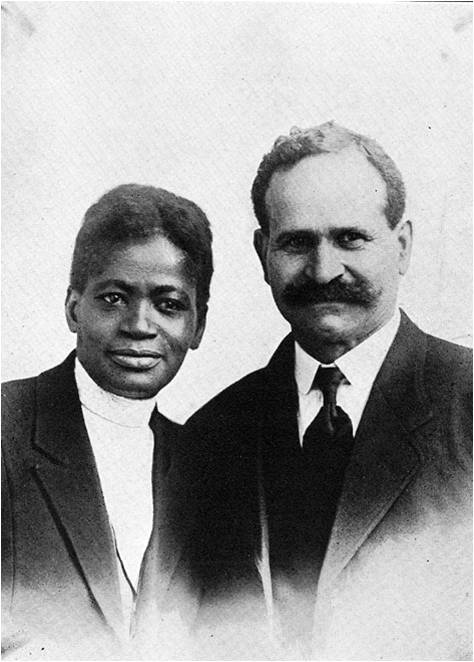
Around the turn of the nineteenth century, Emma Ray and her husband L.P. experienced conversion to the Christian faith at an African Methodist Episcopal church in Seattle, Washington.
Not long after, they experienced that distinctive, instantaneous experience of the holiness movement called sanctification. In her autobiography, Twice Sold, Twice Ransomed, Emma describes a jolt like a lightning bolt that struck her head and coursed through her body “from head to foot like liquid fire.”
As my strength began to return, I felt a passion, such a love for souls as I had never felt before. I saw a lost world. My heart became hot. A fire of holy, abiding love for God and souls was kindled at that hour.*
It would have been easy for Emma the evangelist to preach to disembodied souls, to conjure for them the glories of heaven, to woo them with the opiate of peace in the age to come.
She didn’t.
Instead, Emma and her husband L.P. left Seattle and headed in 1902 to Hick’s Hollow, in Kansas City’s North End. Why there? Because Hick’s Hollow had the highest density of African American residents in the city. And streetcars, too, in which most of them commuted to their jobs as day laborers and domestic servants for the affluent white population in Kansas City’s increasingly mansion-filled northeast section, poised on an impressive bluff overlooking the river.
Meager incomes spelled slim pickings for African American children in Hick’s Hollow. So Emma and L.P., a childless couple themselves, launched a mission aimed at caring for the poverty-prone children of Hick’s Hollow. Emma describes the children:
Some of these children would come, a half dozen at a time, to our place. … Their mothers would leave them without fuel, early in the morning, to go to work, and then they would come into the Mission, poor naked little tots, with their shoes untied and their hair unkempt and ofttimes they would be holding their ragged clothes together with their hands.**
The mission also sponsored nightly evangelistic meetings on neighborhood street corners. Emma and L. P. sang and played instruments outside a number of gathering places. One night it might be a rooming house. Another night it was a loan office, where desperate souls borrowed money to survive for another week. Still other nights found L.P. and Emma singing outside a saloon in the hopes of drawing a crowd. Once crowds gathered, whether large or small, scant or sizeable, they preached a brief gospel message, followed by a time of prayer. Emboldened on one occasion, they deliberately interrupted a crap game by forming their song circle at the exact spot where players threw the dice. Emma recalled later, “We had a splendid audience. The Lord helped us to tell them of their sinfulness and how badly they were bringing up their children, and that it was no wonder they were having so much trouble as a people. They believed us.”***
Keeping their heads above water and their spirits high was no mean task for Emma and L. P., who didn’t commute to Hicks Hollow from some middle-class enclave. They chose instead to live at their mission, which they founded on the most disreputable corner of Hick’s Hollow. The result was inevitable: they shared the same difficult conditions as their destitute neighbors.
There was no respite for the Rays. They walked through slush in winter and mud in summer on streets without sidewalks. They lost sleep thanks to the clamor of all-night gambling games nearby. Though they could have escaped it, they lived in poverty in Hick’s Hollow, where landlords jammed flimsy frame structures onto unpaved streets and alleyways, where flush toilets were nearly non-existent, and where only one out of five buildings–a mere 20%–was connected to city water.
Emma and L.P. had the resources to leave, but they didn’t. Instead, they labored day and night in obscurity to keep the poorest African Americans in Kansas City from slipping into the oblivion of hopelessness and despair. Emma knew what poverty meant. Born in 1859 into slavery, she was raised among poor African Americans in the South. The advent of emancipation led her family, shoulder to shoulder with other freed slaves, to build a Missouri shanty town out of scrap lumber and discarded building materials. She had to quit school after the fourth grade to work as a live-in domestic for a white family. Her mulatto husband, L. P.–the child of a white master and a slave woman–became an alcoholic at a young age and could not keep a steady job despite his training as a stonemason. Only the tragedy of a devastating fire in Seattle in 1889 gave him a new lease on life and a way to restore their troubled marriage. But that’s another story, an earlier one than this, still another page in the largely unwritten annals of African American history.
________________________________________________________________________________
*Emma Ray, Twice Sold, Twice Ransomed: Autobiography of Mr. and Mrs. L. P. Ray (Chicago: Free Methodist Publishing House, 1926) 63
**Emma Ray, Twice Sold, Twice Ransomed, 118
***Emma Ray, Twice Sold, Twice Ransomed, 144
For a denser analysis of Emma Ray and other African American women evangelists, see Priscilla Pope-Levison’s award-winning Building the Old Time Religion: Women Evangelists in the Progressive Era (New York: NYU Press, 2014) and Turn the Pulpit Loose: Two Centuries of American Women Evangelists (New York: Palgrave Macmillan, 2014).
Photo from Emma Ray’s autobiography.
Previous Post

February 17, 2015
Can o' Corn! A Simple Practice for a Significant Lent
Next Post
May 7, 2015 Scot McKnight's A Fellowship Of Differents
Browse Our Archives
Select a Category Uncategorized
Select a Month August 2017 July 2017 June 2017 March 2017 February 2017 February 2016 December 2015 September 2015 August 2015 June 2015 May 2015 February 2015 January 2015 December 2014 November 2014 October 2014 September 2014 August 2014 July 2014 June 2014 May 2014 April 2014 March 2014 February 2014 January 2014 December 2013 November 2013 October 2013 September 2013 August 2013 July 2013 June 2013 May 2013
Follow Us!
TAKE THE
Religious Wisdom Quiz
I am a large sheet that came down from heaven, filled with animals both clean and unclean. I changed Peter's understanding forever. What am I?
Select your answer to see how you score.
Peter's vision A heavenly message A sign from God A dream
Related posts from spiritchatter

Hurricane Heroes and the Book of Exodus

The Summer of '17: Jacob's Ladder and Esau's...

The Summer of '17: a Summer of Trysts...

Is Christian Higher Education Dead? The Debate Continues
TRENDING AT PATHEOS Progressive Christian

Why Christians Have a Sacred Duty to Vote:...
The Bible offers strong support for the sacred duty to vote. Here...

What Being a Modern-Day Apostle Means to Me
In my last column, I discussed the ins and outs of modern-day...

Did Ancient China Once Worship the God of...
Across human history, a common thread weaves through the origins of the...

Love Your Neighbor – Including Earth-Kin: Lev. 19,...
God’s command to love your neighbor means acting in an ethical and...

Lead a Church Study of “Jesus and Lao...
Guest writer Jack Thomas (The Irreverent Reverend) reflects on leading his church...

Principles for Understanding the Apostolic Ministry Today
Whenever people discover that my formal ministry title is "apostle," as in...
view all Progressive Christian blogs
Ad-Free & Subscriber Log-In Subscription Support
- About Us
- 2026 Calendar
- Videos
- Podcasts
- Library of World Religions
- Faith In Media Tracker
- Advertise With Us
- Write for Us
- Privacy Policy
- Terms of Service
- Do Not Sell My Data
- Contact Us
- Radiant Digital
- Manage Newsletter Subscriptions
- Unsubscribe From Notifications
- Sitemap
Copyright 2008-2026, Patheos. All rights reserved.
Subscription Support Ad-Free & Subscriber Log-In
Follow Patheos