
BuddhistCatholicContemplativeEvangelicalGeneral ChristianHinduJewishLatter-day SaintMuslimNew VisionsProgressive Christian
Beliefs
- Buddhist
- Catholic
- Contemplative
- Evangelical
- General Christian
- Hindu
- Jewish
- Latter-day Saint
- More Voices
- Muslim
- New Visions
- Pagan
- Progressive Christian
Topics
- Religion News
- Food and Religion
- Sports and Religion
- Religious Art
- Religious Music and Entertainment
- Religious Events
- History and Religion
- Style and Religion
- Politics and Religion
- Women in Religion
- Recreation Outdoors and Religion
- Business Finance and Religion
- Careers Workplace and Religion
- Education and Religion
- Family Parenting and Religion
- Health Fitness and Religion
- Home and Religion
- Relationships and Religion
- Technology and Religion
- Travel and Religion
Columnists
- Buddhist Columnists
- Business Finance and Religion Columnists
- Careers Workplace and Religion Columnists
- Catholic Columnists
- Contemplative Columnists
- Education and Religion Columnists
- Evangelists Columnists
- Family Parenting and Religion Columnists
- General Christian Columnists
- Health Fitness and Religion Columnists
- Hindu Columnists
- History and Religion Columnists
- Home and Religion Columnists
- Jewish Columnists
- More Voices Columnists
- Latter Day Columnists
- Muslim Columnists
- New Visions Columnists
- Nonreligious Columnists
- Pagan Columnists
- Politics and Religion Columnists
- Progressive Columnists
- Recreation Outdoors and Religion Columnists
- Relationships and Religion Columnists
- Religion News Columnists
- Religious Art Columnists
- Religious Events Columnists
- Religious Music and Entertainment Columnists
- Sports and Religion Columnists
- Style and Religion Columnists
- Technology and Religion Columnists
- Travel and Religion Columnists
- Women in Religion Columnists
Resource Library
- 2026 Calendar
- Library of World Religions
- The 100 Most Holy Places on Earth
- Patheos Answers
- Podcasts
- Videos
- Faith Leaders Database
- Anglican Episcopalian
- Bahai
- Baptist
- Buddhism
- Christianity
- Confucianism
- Eastern Orthodoxy
- Hinduism
- Holiness and Pentecostal
- ISKCON
- Islam
- Judaism
- Lutheran
- Methodist
- The Church of Jesus Christ of Latter-day Saints
- New Age
- Paganism
- Presbytarian and Reformed
- Protestantism
- Religion Behind the Scenes
- Roman Catholic
- Scientology
- Shia Islam
- Sikhism
- Sufism
- Sunni Islam
- Taoism
- Zen
- See all religions
Research Tools
 Ad-Free & Subscriber Log-In Subscription Support
Ad-Free & Subscriber Log-In Subscription Support
Follow Patheos 

- Trending:
- Forgiveness
- |
- Marriage
- |
- Consciousness
- |
- Death Penalty
- |
- Election
- |
- Halloween
 spiritchatter
- Home
- Progressive Christian
- Jottings from Assisi on Jon Sweeney’s When Saint Francis Saved the Church
Jottings from Assisi on Jon Sweeney’s When Saint Francis Saved the Church
Last updated on: October 13, 2014 at 2:16 pm by Jack Levison
Jottings from Assisi on Jon Sweeney’s When Saint Francis Saved the Church 2014-10-13T14:16:41-07:00 Jack Levison
Patheos Explore the world's faith through different perspectives on religion and spirituality! Patheos has the views of the prevalent religions and spiritualities of the world.
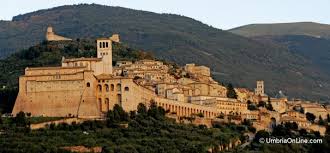 I read this book about St. Francis of Assisi all wrong.
I should have read chapter five, Through Personal Poverty, in the Piazza del Vescovado, where St. Francis stripped himself naked and defiantly returned the clothes he had taken (read: stolen) from his father’s shop to distribute them to the poor. Instead, I read chapter five–on poverty–in the basilica of St. Francis, whose grandeur might have embarrassed him, according to Sweeney.
I should have read chapter six, By Developing a New Spirituality, at the Eremo delle Carceri, a few scattered buildings that lie a stiff hike up Monte Subasio, where St. Francis spent stretches of time alone in the silence, steeling his resolve to live differently, to live like Jesus. Instead, I read chapter six–on spirituality–in the bustle of tourists on a late Saturday afternoon.
I should have read chapter eight, By Embracing Death, at Portunculo, “the small church he loved,” as Jon Sweeney phrases it, “in the valley below Assisi” (x). Instead, I read chapter eight–on death–in the Piazza del Vescovado, where, as I’ve just said, I should have read chapter five, on poverty.
It’s hopeless! I’ve made a muck of this book. I’ve read the book all wrong—though there’s really no way to read this lovely little book wrong, thank goodness. Part biography, part devotional, it is a rare combination of history and inspiration. That’s why Barbara Brown Taylor, on the jacket cover, writes, “Jon Sweeney is good at many things, but he is a master at retrieving the treasure of the Christian past and restoring it to currency for the Christian present. In this book, he transcends even those categories.” I prefer to say it this way, taking a page from Car Talk: “When Saint Francis Saved the Church is half scholarship (though never brandished like a Crusader’s sword), half theology (though never stilted), and half an expression of hope for a church under the leadership of today’s pope, the first in eight hundred years to take the daunting name of Francis.
Why would a biblical scholar like me agree to review a book on St. Francis of Assisi? Let me give you three reasons—reasons why you, too, whatever your faith, whatever your church, whatever your vocation, should read this book.
First, I knew that Jon Sweeney is an extraordinary writer. I was confident I’d learn from a sane, intelligent writer about this legend-encrusted figure of history. And I have. Immeasurably, and without the pain of academic prose.
Second, I knew that St. Francis is important, though I really only knew about him from the Franco Zeffirelli movie, “Brother Sun, Sister Moon.” I knew I needed to know more. Who better to guide me than Jon Sweeney, who’s already written noteworthy books on medieval popes and paupers—and Francis himself?
Third, I knew I was travelling to Assisi exactly when Patheos wanted the review. Yep, you heard me right. My wife Priscilla, a theologian and historian, is part of an ecumenical dialogue between Roman Catholics and Methodists that’s gone on since Vatican II in the mid-sixties; this year the discussion is taking place right now, at this very moment, at the Citadella Ospitalita, on the edge of the medieval city of Assisi. How better could the stars align, I wondered, than by giving me the opportunity to read a fine book by an exceptional author in an unforgettable hill town in Umbria, Italy?
Not just any hill town, but Francis’ home. I’ve visited San Rufino, the medieval cathedral where Francis was baptized. (Interestingly, Rufino, not Francis, is the patron saint of Assisi.) I’ve wandered the narrow alleyways of his home town (very few of which are level, explaining perhaps why Francis remained a whisp of a boy even as a wealthy merchant’s son—though I’m afraid too much pasta and gelato has led me to a different fate). I’ve sat quietly in the morning light and slight chill of the Piazza del Vescovado, this wonderful book in my hands, with pigeons drinking from a small fountain. I’ve read When Saint Francis Saved the Church in the basilica, surrounded by swarms of tourists. And I’m sitting now, in the late morning sunshine, with a decaf cappuccino on my café table, in the Piazza del Comune, the town center, which is abuzz with construction workers, tourists, delivery vans and still more pigeons bathing in a grandiose fountain flanked by small marble lions. In fact, apart from us tourists, it’s a hive of activity, very much like it was in St. Francis’ day eight centuries ago.
Who could ask for more?
A good book.
An inspired setting.
A cappuccino at my elbow.
And a gourmet lunch at the Franciscan Friars of the Atonement house in half an hour—which is why I won’t say another word about this delightful, informed, and inspiring book, at least not just now.
Ciao!
Previous Post

September 17, 2014
Three Nuns
Browse Our Archives
Select a Category Uncategorized
Select a Month August 2017 July 2017 June 2017 March 2017 February 2017 February 2016 December 2015 September 2015 August 2015 June 2015 May 2015 February 2015 January 2015 December 2014 November 2014 October 2014 September 2014 August 2014 July 2014 June 2014 May 2014 April 2014 March 2014 February 2014 January 2014 December 2013 November 2013 October 2013 September 2013 August 2013 July 2013 June 2013 May 2013
Follow Us!
TAKE THE
Religious Wisdom Quiz
True or False: Hebrews states that without faith it is impossible to please God.
Select your answer to see how you score.
FALSE TRUE
Related posts from spiritchatter

Hurricane Heroes and the Book of Exodus

The Summer of '17: Jacob's Ladder and Esau's...

The Summer of '17: a Summer of Trysts...

Is Christian Higher Education Dead? The Debate Continues
TRENDING AT PATHEOS Progressive Christian

Why Christians Have a Sacred Duty to Vote:...
The Bible offers strong support for the sacred duty to vote. Here...

What Being a Modern-Day Apostle Means to Me
In my last column, I discussed the ins and outs of modern-day...

Did Ancient China Once Worship the God of...
Across human history, a common thread weaves through the origins of the...

Love Your Neighbor – Including Earth-Kin: Lev. 19,...
God’s command to love your neighbor means acting in an ethical and...

Lead a Church Study of “Jesus and Lao...
Guest writer Jack Thomas (The Irreverent Reverend) reflects on leading his church...

Principles for Understanding the Apostolic Ministry Today
Whenever people discover that my formal ministry title is "apostle," as in...
view all Progressive Christian blogs
Ad-Free & Subscriber Log-In Subscription Support
- About Us
- 2026 Calendar
- Videos
- Podcasts
- Library of World Religions
- Faith In Media Tracker
- Advertise With Us
- Write for Us
- Privacy Policy
- Terms of Service
- Do Not Sell My Data
- Contact Us
- Radiant Digital
- Manage Newsletter Subscriptions
- Unsubscribe From Notifications
- Sitemap
Copyright 2008-2026, Patheos. All rights reserved.
Subscription Support Ad-Free & Subscriber Log-In
Follow Patheos