
BuddhistCatholicContemplativeEvangelicalGeneral ChristianHinduJewishLatter-day SaintMuslimNew VisionsProgressive Christian
Beliefs
- Buddhist
- Catholic
- Contemplative
- Evangelical
- General Christian
- Hindu
- Jewish
- Latter-day Saint
- More Voices
- Muslim
- New Visions
- Pagan
- Progressive Christian
Topics
- Religion News
- Food and Religion
- Sports and Religion
- Religious Art
- Religious Music and Entertainment
- Religious Events
- History and Religion
- Style and Religion
- Politics and Religion
- Women in Religion
- Recreation Outdoors and Religion
- Business Finance and Religion
- Careers Workplace and Religion
- Education and Religion
- Family Parenting and Religion
- Health Fitness and Religion
- Home and Religion
- Relationships and Religion
- Technology and Religion
- Travel and Religion
Columnists
- Buddhist Columnists
- Business Finance and Religion Columnists
- Careers Workplace and Religion Columnists
- Catholic Columnists
- Contemplative Columnists
- Education and Religion Columnists
- Evangelists Columnists
- Family Parenting and Religion Columnists
- General Christian Columnists
- Health Fitness and Religion Columnists
- Hindu Columnists
- History and Religion Columnists
- Home and Religion Columnists
- Jewish Columnists
- More Voices Columnists
- Latter Day Columnists
- Muslim Columnists
- New Visions Columnists
- Nonreligious Columnists
- Pagan Columnists
- Politics and Religion Columnists
- Progressive Columnists
- Recreation Outdoors and Religion Columnists
- Relationships and Religion Columnists
- Religion News Columnists
- Religious Art Columnists
- Religious Events Columnists
- Religious Music and Entertainment Columnists
- Sports and Religion Columnists
- Style and Religion Columnists
- Technology and Religion Columnists
- Travel and Religion Columnists
- Women in Religion Columnists
Resource Library
- 2026 Calendar
- Library of World Religions
- The 100 Most Holy Places on Earth
- Patheos Answers
- Podcasts
- Videos
- Faith Leaders Database
- Anglican Episcopalian
- Bahai
- Baptist
- Buddhism
- Christianity
- Confucianism
- Eastern Orthodoxy
- Hinduism
- Holiness and Pentecostal
- ISKCON
- Islam
- Judaism
- Lutheran
- Methodist
- The Church of Jesus Christ of Latter-day Saints
- New Age
- Paganism
- Presbytarian and Reformed
- Protestantism
- Religion Behind the Scenes
- Roman Catholic
- Scientology
- Shia Islam
- Sikhism
- Sufism
- Sunni Islam
- Taoism
- Zen
- See all religions
Research Tools
 Ad-Free & Subscriber Log-In Subscription Support
Ad-Free & Subscriber Log-In Subscription Support
Follow Patheos 

- Trending:
- Forgiveness
- |
- Marriage
- |
- Consciousness
- |
- Death Penalty
- |
- Election
- |
- Halloween
 spiritchatter
- Home
- Progressive Christian
- Double Vision, Saint Francis Style
Double Vision, Saint Francis Style
Last updated on: October 24, 2014 at 7:17 am by Jack Levison
Double Vision, Saint Francis Style 2014-10-24T07:17:59-07:00 Jack Levison
Patheos Explore the world's faith through different perspectives on religion and spirituality! Patheos has the views of the prevalent religions and spiritualities of the world.
Two Books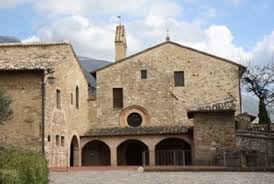
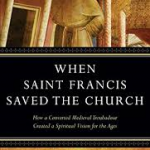
I came to Assisi with two books, or parts of books in hand: pages 559-594, torn out of Rick Steves’ Italy, and Jon Sweeney’s When Saint Francis Saved the Church: How a Converted Medieval Troubadour Created a Spiritual Vision for the Ages. Both have served me well. Rick Steves got me around this spectacular hill town in Umbria—the right tickets to buy, cafés with wi fi, viewpoints, basilica tours.
Jon Sweeney’s book led me in another direction—an unexpected one—on a sort of pilgrimage, more internal than external. I’ve discovered a few things about Saint Francis and a good deal more about myself. Let’s see if I can put this into words.
Two Churches
I walked past the basilica of St. Clare out the Porta Nuova through the parking lot and down through olive groves to San Damiano, the small church in which Saint Francis is thought to have heard Jesus speak to him from the crucifix, telling him to build the church. Ever the literalist—he actually took Jesus’ words to the rich young ruler seriously, “You lack one thing; go, sell what you own, and give the money to the poor, and you will have treasure in heaven; then come, follow me”—Francis thought Jesus wanted him to rebuild the ruins of San Damiano. So he did.
Later, however, Francis came to realize that Jesus’ words were more expansive. His job was not to build this church but to build the church. He did that, too.
Two Goals
I wonder if I’ve operated in life with Francis’ first perspective: find a task at hand and get it done. I’m a good Methodist (more or less) who prays, “Put me to use, oh God.”
I’m pretty good at getting the job done. Whether at a seminary or college, I’ve thrown myself into my work, not so much in terms of endless hours as endless energy. I’ve never cowered from hard work, from teaching classes and getting grants and writing books.
The problem is that, like Francis, at least at first, I sometimes limit my vision to the task at hand. “Build my church, Francis,” so Francis set out to rebuild San Damiano. So I write syllabi, grade essays, and prepare classes.
Francis wasn’t wrong, exactly, but he missed, at first, the larger point. I think I sometimes miss the larger point, too. I see God’s will as a series of San Damianos—specific tasks in specific times and specific places—rather than a mobile, malleable, occasionally magnificent movement in the Spirit.
Had Francis continued to understand Jesus’ words as a mandate to rebuild San Damiano, we would have a very different Christian history. Francis would never, in Jon Sweeney’s words, have “saved the church.” We would have instead a very nice little stone church known as San Damiano.
Two Legacies
I hope the legacy of my life is not just a series of very nice little churches, a succession of pretty little San Damianos settled sweetly in olive groves. I hope my legacy is more expansive, carved out of my character rather than my jobs, out of my integrity rather than my books, out of my vision rather than my committee assignments.
I realize there shouldn’t be a tidy distinction between these: a good person should do a good job, an author with faith should write thoughtful books, a Christian professor should teach carefully and serve attentively on committees.
But I hope my attention to the smaller picture won’t efface the larger one: San Damiano got rebuilt, yes, but so did the church universal because Francis put the same energy it took to rebuild this church into living with abandon and attention to the words of Jesus and, in that way, rebuilding the church.
Two Sides of the Same Coin
What then did I learn as I left the bustling cobblestoned streets of Assisi and descended to the olive groves around San Damiano? This, I think.
Sometimes, the particular should be preeminent. Sometimes the small task proves significant. San Damiano—and not the church universal—became for Francis and Clare, the girl who had abandoned all because of Francis’ charisma, a place of respite. Clare spent her life as the mother superior of the Poor Clares at San Damiano. When Francis aged, he returned there and lived in a reed hut which Clare built for him and where, the story goes, she made shoes and stockings for his tired, bare feet and legs. It was there, too, that Francis composed his famed poem, “Canticle of the Sun.”
Yet the particular should always reflect God’s greater vision. We have to attend to the particular—to the tasks at hand as if they are charisms rather than chores.
Truth be told, the small and the large, the task-at-hand and God’s eternal vision, are two sides of the same coin. The grand vision into which God is inviting us progresses when we set stone upon stone, when we repair the small, apparently insignificant, ruins we inhabit day to day.

Browse Our Archives
Select a Category Uncategorized
Select a Month August 2017 July 2017 June 2017 March 2017 February 2017 February 2016 December 2015 September 2015 August 2015 June 2015 May 2015 February 2015 January 2015 December 2014 November 2014 October 2014 September 2014 August 2014 July 2014 June 2014 May 2014 April 2014 March 2014 February 2014 January 2014 December 2013 November 2013 October 2013 September 2013 August 2013 July 2013 June 2013 May 2013
Follow Us!
TAKE THE
Religious Wisdom Quiz
Which of their sons did Adam and Eve lose first?
Select your answer to see how you score.
Cain Seth Japheth Abel
Related posts from spiritchatter

Hurricane Heroes and the Book of Exodus
Beneath the Headlines: Another Presidential Committee Ups and...

The Summer of '17: Jacob's Ladder and Esau's...
Summer of '17: Sibling Rivalry on Steroids
TRENDING AT PATHEOS Progressive Christian

Why Christians Have a Sacred Duty to Vote:...
The Bible offers strong support for the sacred duty to vote. Here...

What Being a Modern-Day Apostle Means to Me
In my last column, I discussed the ins and outs of modern-day...

Did Ancient China Once Worship the God of...
Across human history, a common thread weaves through the origins of the...

Love Your Neighbor – Including Earth-Kin: Lev. 19,...
God’s command to love your neighbor means acting in an ethical and...

Lead a Church Study of “Jesus and Lao...
Guest writer Jack Thomas (The Irreverent Reverend) reflects on leading his church...

Principles for Understanding the Apostolic Ministry Today
Whenever people discover that my formal ministry title is "apostle," as in...
view all Progressive Christian blogs
Ad-Free & Subscriber Log-In Subscription Support
- About Us
- 2026 Calendar
- Videos
- Podcasts
- Library of World Religions
- Faith In Media Tracker
- Advertise With Us
- Write for Us
- Privacy Policy
- Terms of Service
- Do Not Sell My Data
- Contact Us
- Radiant Digital
- Manage Newsletter Subscriptions
- Unsubscribe From Notifications
- Sitemap
Copyright 2008-2026, Patheos. All rights reserved.
Subscription Support Ad-Free & Subscriber Log-In
Follow Patheos