
BuddhistCatholicContemplativeEvangelicalGeneral ChristianHinduJewishLatter-day SaintMuslimNew VisionsProgressive Christian
Beliefs
- Buddhist
- Catholic
- Contemplative
- Evangelical
- General Christian
- Hindu
- Jewish
- Latter-day Saint
- More Voices
- Muslim
- New Visions
- Pagan
- Progressive Christian
Topics
- Religion News
- Food and Religion
- Sports and Religion
- Religious Art
- Religious Music and Entertainment
- Religious Events
- History and Religion
- Style and Religion
- Politics and Religion
- Women in Religion
- Recreation Outdoors and Religion
- Business Finance and Religion
- Careers Workplace and Religion
- Education and Religion
- Family Parenting and Religion
- Health Fitness and Religion
- Home and Religion
- Relationships and Religion
- Technology and Religion
- Travel and Religion
Columnists
- Buddhist Columnists
- Business Finance and Religion Columnists
- Careers Workplace and Religion Columnists
- Catholic Columnists
- Contemplative Columnists
- Education and Religion Columnists
- Evangelists Columnists
- Family Parenting and Religion Columnists
- General Christian Columnists
- Health Fitness and Religion Columnists
- Hindu Columnists
- History and Religion Columnists
- Home and Religion Columnists
- Jewish Columnists
- More Voices Columnists
- Latter Day Columnists
- Muslim Columnists
- New Visions Columnists
- Nonreligious Columnists
- Pagan Columnists
- Politics and Religion Columnists
- Progressive Columnists
- Recreation Outdoors and Religion Columnists
- Relationships and Religion Columnists
- Religion News Columnists
- Religious Art Columnists
- Religious Events Columnists
- Religious Music and Entertainment Columnists
- Sports and Religion Columnists
- Style and Religion Columnists
- Technology and Religion Columnists
- Travel and Religion Columnists
- Women in Religion Columnists
Resource Library
- 2026 Calendar
- Library of World Religions
- The 100 Most Holy Places on Earth
- Patheos Answers
- Podcasts
- Videos
- Faith Leaders Database
- Anglican Episcopalian
- Bahai
- Baptist
- Buddhism
- Christianity
- Confucianism
- Eastern Orthodoxy
- Hinduism
- Holiness and Pentecostal
- ISKCON
- Islam
- Judaism
- Lutheran
- Methodist
- The Church of Jesus Christ of Latter-day Saints
- New Age
- Paganism
- Presbytarian and Reformed
- Protestantism
- Religion Behind the Scenes
- Roman Catholic
- Scientology
- Shia Islam
- Sikhism
- Sufism
- Sunni Islam
- Taoism
- Zen
- See all religions
Research Tools
 Ad-Free & Subscriber Log-In Subscription Support
Ad-Free & Subscriber Log-In Subscription Support
Follow Patheos 

- Trending:
- Forgiveness
- |
- Marriage
- |
- Consciousness
- |
- Death Penalty
- |
- Election
- |
- Halloween
 spiritchatter
- Home
- Progressive Christian
- Intimacy with God and a Blindfolded Boy
Intimacy with God and a Blindfolded Boy
Last updated on: April 10, 2014 at 10:01 am by Jack Levison
Intimacy with God and a Blindfolded Boy 2014-04-10T10:01:40-07:00 Jack Levison
Patheos Explore the world's faith through different perspectives on religion and spirituality! Patheos has the views of the prevalent religions and spiritualities of the world.
 After the evening’s lecture, I trundled off to the men’s room. When I returned, not five minutes later, nearly everyone had gathered at the front of the room. People were praying for each other, laying hands on each other, talking quietly with each other, while a pianist played riffs lightly in the background.
This is the quintessence of the Vineyard movement, which began under the leadership of John Wimber in the 1970s. It’s a strange—and inviting—mixture of Pentecostal and Quaker elements. There’s not a lot of revving up of spiritual engines. There’s not a surfeit of frenzy.
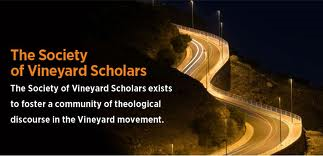
At least not in this corner of the Vineyard movement: the Society of Vineyard Scholars, the brain child of a couple of doctoral students from Princeton and Yale Universities. About five years ago they began an annual meeting, and they invited me this year to discuss my book*, Inspired: the Holy Spirit and the Mind of Faith*.
I was happy to attend because of the influence the Vineyard movement has had on me. During my first stint as a seminary professor, in Kansas City in the mid-eighties, I taught a course on the holy spirit in the letters of Paul with a pastor named Paul Smith, who mentored me in the ways of the spirit. Paul, who had been influenced by John Wimber, emphasized prophecy over speaking in tongues, listening to God over talking. I describe a typical experience in Fresh Air:
About three or four students tended to hang around after class, so we prayed together in a way that was new to me. We laid hands on each other. We listened to God for words and images. We tried to discern together whether words we heard or images we saw while praying had resonated with something in the past or something going on in the present. One of the students, a regular after-class participant, lay back on the ground, as if asleep—what Pentecostals call being “slain in the spirit”—while we prayed. She is now probably a standard-issue Methodist minister in rural Missouri, and I imagine the people in her church would be shocked by this blip of charismatic activity during her seminary days. But it was a part of her life, as it was of mine. (pages 2-3)
What I find so compelling about the Vineyard is the deep desire for intimacy it cultivates—intimacy both with God and with each other. There’s touching—lots of hands on shoulders—quiet questions to learn what might be needed. There’s whispered prayer, with a real effort to listen for words and images that touch a memory, hit a nerve, generate healing deep down.
The Vineyard isn’t perfect, in my opinion. With local church autonomy, some churches still don’t allow women in leadership. I find this baffling in a movement that is not supposed to be rigid, doctrinaire, boundary-oriented. There are still pockets that promote the erratic—the famed barking and twitching of the fringes of American revivalism. I find this unnerving in a movement that prizes discernment and the quiet listening of the Quakers. Then, of course, there is the possibility that the movement will harden on the right wing with respect to homosexuality. This, I am afraid, wouldn’t surprise me, though it would disappoint me in a movement that makes ample room for those on the fringes—the homeless, the derelict.
Still, at its core, this is a movement about intimacy. In an interview years back on KUOW (the Seattle NPR affiliate), I compared the relationship many of us have with God to a couple that climbs into bed together but faces in the opposite direction, away from one another.
Then on Thursday night, in a nondescript room in the Columbus Ohio convention center, I had a vision of my own relationship with God. Picture a blindfolded ten year old boy being led by a friend or sister or father toward his birthday cake. Notice the jagged steps. Notice the hands held out tentatively in front. Notice the slant of the body—shoulders back and feet probing the floor in front, heels slightly dug in or toes tapping the air. The boy wants to move ahead but is afraid. He doesn’t quite trust where he is heading, so he sticks his toe out but only cautiously, inches at a time.
I’m not quite ready, I realize as I watch the blindfolded boy, to be entirely intimate with God. I’m bruised by life and cautious, wary even. Yet I want a piece of that cake. I want to trust. I want to walk by faith, not by sight. I want that deep-seated intimacy that only God, who knows every hair on my head, every bone in my body, every motive in my heart, is still willing to cede to this battered old soul.
Previous Post

March 31, 2014
Asses to Ashes: How to Rescue the Rest of Lent
Next Post
April 16, 2014 Doves and Kisses--A Reading on Betrayal
Browse Our Archives
Select a Category Uncategorized
Select a Month August 2017 July 2017 June 2017 March 2017 February 2017 February 2016 December 2015 September 2015 August 2015 June 2015 May 2015 February 2015 January 2015 December 2014 November 2014 October 2014 September 2014 August 2014 July 2014 June 2014 May 2014 April 2014 March 2014 February 2014 January 2014 December 2013 November 2013 October 2013 September 2013 August 2013 July 2013 June 2013 May 2013
Follow Us!
TAKE THE
Religious Wisdom Quiz
Who was it that allowed the Israelites to return to Jerusalem from exile?
Select your answer to see how you score.
Artaxerxes Darius Nebuchadnezzar Cyrus the Great
Related posts from spiritchatter

Hurricane Heroes and the Book of Exodus

The Summer of '17: Jacob's Ladder and Esau's...

The Summer of '17: a Summer of Trysts...

Is Christian Higher Education Dead? The Debate Continues
TRENDING AT PATHEOS Progressive Christian

Why Christians Have a Sacred Duty to Vote:...
The Bible offers strong support for the sacred duty to vote. Here...

What Being a Modern-Day Apostle Means to Me
In my last column, I discussed the ins and outs of modern-day...

Did Ancient China Once Worship the God of...
Across human history, a common thread weaves through the origins of the...

Love Your Neighbor – Including Earth-Kin: Lev. 19,...
God’s command to love your neighbor means acting in an ethical and...

Lead a Church Study of “Jesus and Lao...
Guest writer Jack Thomas (The Irreverent Reverend) reflects on leading his church...

Principles for Understanding the Apostolic Ministry Today
Whenever people discover that my formal ministry title is "apostle," as in...
view all Progressive Christian blogs
Ad-Free & Subscriber Log-In Subscription Support
- About Us
- 2026 Calendar
- Videos
- Podcasts
- Library of World Religions
- Faith In Media Tracker
- Advertise With Us
- Write for Us
- Privacy Policy
- Terms of Service
- Do Not Sell My Data
- Contact Us
- Radiant Digital
- Manage Newsletter Subscriptions
- Unsubscribe From Notifications
- Sitemap
Copyright 2008-2026, Patheos. All rights reserved.
Subscription Support Ad-Free & Subscriber Log-In
Follow Patheos