
BuddhistCatholicContemplativeEvangelicalGeneral ChristianHinduJewishLatter-day SaintMuslimNew VisionsProgressive Christian
Beliefs
- Buddhist
- Catholic
- Contemplative
- Evangelical
- General Christian
- Hindu
- Jewish
- Latter-day Saint
- More Voices
- Muslim
- New Visions
- Pagan
- Progressive Christian
Topics
- Religion News
- Food and Religion
- Sports and Religion
- Religious Art
- Religious Music and Entertainment
- Religious Events
- History and Religion
- Style and Religion
- Politics and Religion
- Women in Religion
- Recreation Outdoors and Religion
- Business Finance and Religion
- Careers Workplace and Religion
- Education and Religion
- Family Parenting and Religion
- Health Fitness and Religion
- Home and Religion
- Relationships and Religion
- Technology and Religion
- Travel and Religion
Columnists
- Buddhist Columnists
- Business Finance and Religion Columnists
- Careers Workplace and Religion Columnists
- Catholic Columnists
- Contemplative Columnists
- Education and Religion Columnists
- Evangelists Columnists
- Family Parenting and Religion Columnists
- General Christian Columnists
- Health Fitness and Religion Columnists
- Hindu Columnists
- History and Religion Columnists
- Home and Religion Columnists
- Jewish Columnists
- More Voices Columnists
- Latter Day Columnists
- Muslim Columnists
- New Visions Columnists
- Nonreligious Columnists
- Pagan Columnists
- Politics and Religion Columnists
- Progressive Columnists
- Recreation Outdoors and Religion Columnists
- Relationships and Religion Columnists
- Religion News Columnists
- Religious Art Columnists
- Religious Events Columnists
- Religious Music and Entertainment Columnists
- Sports and Religion Columnists
- Style and Religion Columnists
- Technology and Religion Columnists
- Travel and Religion Columnists
- Women in Religion Columnists
Resource Library
- 2026 Calendar
- Library of World Religions
- The 100 Most Holy Places on Earth
- Patheos Answers
- Podcasts
- Videos
- Faith Leaders Database
- Anglican Episcopalian
- Bahai
- Baptist
- Buddhism
- Christianity
- Confucianism
- Eastern Orthodoxy
- Hinduism
- Holiness and Pentecostal
- ISKCON
- Islam
- Judaism
- Lutheran
- Methodist
- The Church of Jesus Christ of Latter-day Saints
- New Age
- Paganism
- Presbytarian and Reformed
- Protestantism
- Religion Behind the Scenes
- Roman Catholic
- Scientology
- Shia Islam
- Sikhism
- Sufism
- Sunni Islam
- Taoism
- Zen
- See all religions
Research Tools
 Ad-Free & Subscriber Log-In Subscription Support
Ad-Free & Subscriber Log-In Subscription Support
Follow Patheos 

- Trending:
- Forgiveness
- |
- Marriage
- |
- Consciousness
- |
- Death Penalty
- |
- Election
- |
- Halloween
 The Soul and the City
- Home
- Latter-day Saint
- The Darkest Hour: Review
The Darkest Hour: Review
Last updated on: March 12, 2018 at 2:51 pm by Savannah Johnston
The Darkest Hour: Review 2018-03-12T14:51:19-06:00 Savannah Johnston
Patheos Explore the world's faith through different perspectives on religion and spirituality! Patheos has the views of the prevalent religions and spiritualities of the world.
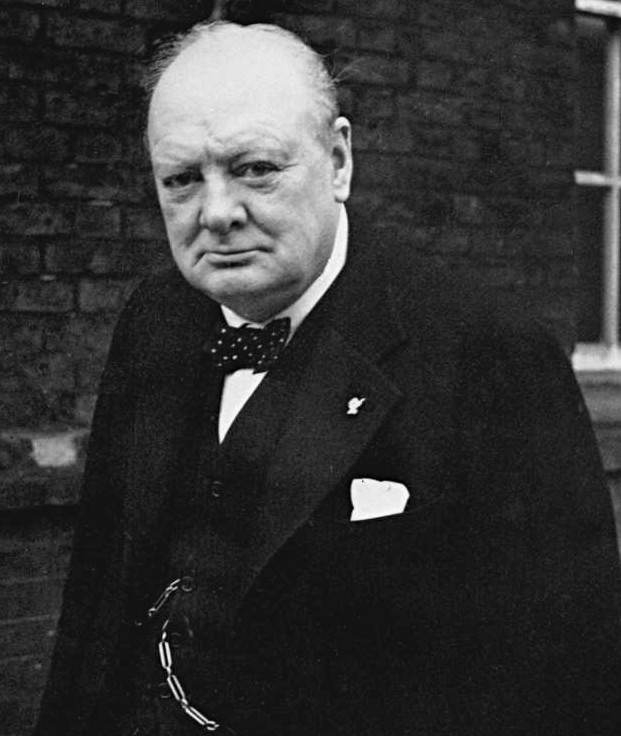
Credit to Wikipedia Commons.
by Ted Richards
The Darkest Hour depicts the controversial and brilliant statesmanship of Winston Churchill amid the crisis at Dunkirk. It should be noted, although this article is not a film review, it will contain spoilers, although I wonder if one can actually spoil a film based on historical events. While the whole film was excellent (and highly recommended), a specific exchange between Churchill and the King gave me pause and led to some thoughts on the question of government by the people.
Churchill was installed as prime minister after Neville Chamberlain stepped down at the insistence of the public, and particularly the parliamentary opposition party. Churchill was given his position by King George VI. The King was not initially a fan of Churchill, his style, and particularly of his “victory at all costs” policy. As events progressed, and things at Dunkirk looked more desperate, the King became Churchill’s ally, recognizing the significance and thoughtfulness behind Churchill’s approach.
After their alignment, Churchill was asked by the King what he would do to rally support in parliament for his aggressive, but necessary strategy to victoriously end the conflict at Dunkirk. Churchill admitted that he did not have the support and could not gain it on the strength of his position alone. The King gave him the advice to listen to the people of England. Churchill, now bolstered by the royal support, took the advice to heart. He jumped out of his limo at a stoplight, and ran to the underground transportation system to ask the advice of the people of England. His train car meeting gave him the resolve and the support needed to carry out the ingenious strategy that eventually saved almost all the soldiers stranded at Dunkirk. This meeting and the advice that preceded it are what caught my attention.
Churchill was not democratically elected any more than King George was. Yet, the advice of the bloodline monarch, subsequently followed by the definitively unpopular (both electively and socially) political leader, was to “look to the people.” There is nothing in the governance of these two men that suggests democratic principles, yet it is their connection to the people that yields a support worthy of Churchill’s lofty statesmanship.
As stated in the Declaration of Independence, governments derive “their just powers from the consent of the governed.” The question set forth here is how far this extends. Is it that each aspect of government ought to be based in the principle of democratic consent? While England is not America, the example of Churchill and King George does not suggest this. Rather, it is the durable consent of participation in a society founded on the concept of consent by the members of that society that gives a government legitimacy.
Abraham Lincoln is an example of this concept in the American context. Elected by 40% of the popular vote due to a split vote in a contentious election, Lincoln went on to govern tactically, prudently, and aggressively (not unlike Churchill). Lincoln, however, in subverting the principles of democratic process of governance, was doing so to uphold the indispensable concept of democratic government. The principle of the declaration is not that each aspect of government is controlled by the direct consent of the governed, but that good governments of all stripes derive “their just powers from the consent of the governed.”
Previous Post

February 23, 2018
Exploring the limits of nurture, nature, and feminism
Next Post

March 14, 2018 Vulgar Elitism & Empty Populism
Browse Our Archives
Select a Category Uncategorized
Select a Month May 2018 March 2018 February 2018 January 2018 December 2017 September 2016 August 2016 June 2016 May 2016 March 2016 February 2016 January 2016 December 2015 May 2015 March 2015 February 2015 January 2015 December 2014 November 2014 October 2014 September 2014
Follow Us!
TAKE THE
Religious Wisdom Quiz
What animal did Peter see in vision?
Select your answer to see how you score.
Sheep Lions Goats Clean and unclean animals
Related posts from The Soul and the City

Vulgar Elitism & Empty Populism
Exploring the limits of nurture, nature, and feminism
TRENDING AT PATHEOS Latter-day Saint

Did Prayer Cure His Cancer? Or Was It...
At 4 AM one morning, Joshua W. Brown’s wife awoke to a...

8 Ways a Near-Death Experience Rewires the Soul
Does Consciousness Survive Physical Death? After 50 Years of Research, Dr. Raymond...

Holy Longing: What Our Restlessness Is Telling Us
“One can find so many pains when the rain is falling.” -John...

What this is NOT about. This blog is definitely not about...

Who said the Israelites were God’s chosen? That’s right, they did. Who...

The Spirit World Is the Real World: God...
A Monk’s Wisdom on Body and Spirit I sit with Brother Martin...
view all Latter-day Saint blogs
Ad-Free & Subscriber Log-In Subscription Support
- About Us
- 2026 Calendar
- Videos
- Podcasts
- Library of World Religions
- Faith In Media Tracker
- Advertise With Us
- Write for Us
- Privacy Policy
- Terms of Service
- Do Not Sell My Data
- Contact Us
- Radiant Digital
- Manage Newsletter Subscriptions
- Unsubscribe From Notifications
- Sitemap
Copyright 2008-2026, Patheos. All rights reserved.
Subscription Support Ad-Free & Subscriber Log-In
Follow Patheos