
BuddhistCatholicContemplativeEvangelicalGeneral ChristianHinduJewishLatter-day SaintMuslimNew VisionsProgressive Christian
Beliefs
- Buddhist
- Catholic
- Contemplative
- Evangelical
- General Christian
- Hindu
- Jewish
- Latter-day Saint
- More Voices
- Muslim
- New Visions
- Pagan
- Progressive Christian
Topics
- Religion News
- Food and Religion
- Sports and Religion
- Religious Art
- Religious Music and Entertainment
- Religious Events
- History and Religion
- Style and Religion
- Politics and Religion
- Women in Religion
- Recreation Outdoors and Religion
- Business Finance and Religion
- Careers Workplace and Religion
- Education and Religion
- Family Parenting and Religion
- Health Fitness and Religion
- Home and Religion
- Relationships and Religion
- Technology and Religion
- Travel and Religion
Columnists
- Buddhist Columnists
- Business Finance and Religion Columnists
- Careers Workplace and Religion Columnists
- Catholic Columnists
- Contemplative Columnists
- Education and Religion Columnists
- Evangelists Columnists
- Family Parenting and Religion Columnists
- General Christian Columnists
- Health Fitness and Religion Columnists
- Hindu Columnists
- History and Religion Columnists
- Home and Religion Columnists
- Jewish Columnists
- More Voices Columnists
- Latter Day Columnists
- Muslim Columnists
- New Visions Columnists
- Nonreligious Columnists
- Pagan Columnists
- Politics and Religion Columnists
- Progressive Columnists
- Recreation Outdoors and Religion Columnists
- Relationships and Religion Columnists
- Religion News Columnists
- Religious Art Columnists
- Religious Events Columnists
- Religious Music and Entertainment Columnists
- Sports and Religion Columnists
- Style and Religion Columnists
- Technology and Religion Columnists
- Travel and Religion Columnists
- Women in Religion Columnists
Resource Library
- 2026 Calendar
- Library of World Religions
- The 100 Most Holy Places on Earth
- Patheos Answers
- Podcasts
- Videos
- Faith Leaders Database
- Anglican Episcopalian
- Bahai
- Baptist
- Buddhism
- Christianity
- Confucianism
- Eastern Orthodoxy
- Hinduism
- Holiness and Pentecostal
- ISKCON
- Islam
- Judaism
- Lutheran
- Methodist
- The Church of Jesus Christ of Latter-day Saints
- New Age
- Paganism
- Presbytarian and Reformed
- Protestantism
- Religion Behind the Scenes
- Roman Catholic
- Scientology
- Shia Islam
- Sikhism
- Sufism
- Sunni Islam
- Taoism
- Zen
- See all religions
Research Tools
 Ad-Free & Subscriber Log-In Subscription Support
Ad-Free & Subscriber Log-In Subscription Support
Follow Patheos 

- Trending:
- Forgiveness
- |
- Marriage
- |
- Consciousness
- |
- Death Penalty
- |
- Election
- |
- Halloween
 The Soul and the City
- Home
- Latter-day Saint
- Mormonism & The Apostles’ Creed Part 1
Mormonism & The Apostles’ Creed Part 1
Last updated on: December 21, 2017 at 11:49 am by Savannah Johnston
Mormonism & The Apostles’ Creed Part 1 2017-12-21T11:49:27-06:00 Savannah Johnston
Patheos Explore the world's faith through different perspectives on religion and spirituality! Patheos has the views of the prevalent religions and spiritualities of the world.
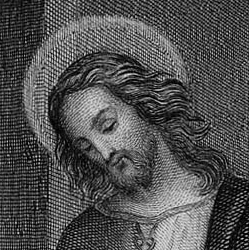
Credit to Wikipedia Commons.
For the past two-thousand years, Christians have engaged with the routine process of policing the boundaries of Christianity—defining heresy and orthodoxy and determining who belongs to the Christian ‘club’. Formal definitions tend to coalesce on adherence to certain core Christian tenets, texts, and understandings of the relationship between man and the divine. The Church of Jesus Christ of Latter-day Saints claim to Christian fellowship is problematic to mainstream Christians because Latter-day Saint assertions seem to challenge every fundamental orthodoxy which defines the traditional Christian. Latter-day Saints reject the Trinity and have a tense relationship with the discipline of theology and the various developments of Christian thought and dispute the finality of the Bible and the closed canon determined by ecumenical councils in the early Christian era. Furthermore, Latter-day Saints tend to be distrustful of the defining statements of Christian belief—the Apostles’ and Nicene Creeds. While this article is too brief to fully engage with every discrepancy between the Latter-day Saints and mainstream Christianity, it will be part of a series which demonstrate that the Apostles’ Creed and the Latter-day Saint movement are compatible and deconstruct the alleged supremacy of the Nicene Creed within the Christian tradition.
The Apostles’ Creed begins with the foundational statement of Christian belief, the acknowledgement of the individual confessor’s belief and acceptance in ‘God the Father, the maker of heaven and earth, and in Jesus Christ, His only Son, our Lord’.1 A simplistic reading of Latter-day Saint doctrine might suggest that Latter-day Saints dispute the identification of God the Father with the role of Creator and claim that role for the Christ. However, such a misapplication of Latter-day Saint doctrine ignores the Latter-day Saint understanding of the way in which the Godhead, functions. Latter-day Saints claim, through divine revelation, to understand that God the Father, God the Son, and the Holy Spirit are united—not as the Nicene Creed claims in consubstantiality but through a unity of purpose and the supremacy of the Father’s will and assert that Christ’s intercessory prayer in the New Testament, whereby Christ petitioned the Father to unite the eleven remaining apostles even as Jesus and the Father are united, confirmed that the unity of the Godhead, which includes three distinct and separate beings—two of whom are individually corporeal, is a unity of purpose and allegiance to the Father’s will and supremacy. The implication for this doctrine on Latter-day Saint understandings of the Creation is that although Latter-day Saints understand Christ as the primary agent of Creation, he did so under the direction, guidance, and organization of the Father.
The second paragraph of the Apostles’ Creed focuses on the nature and mission of Christ. It begins by affirming His conception by the Holy Ghost, virgin birth through Mary, His suffering and death under Pontius Pilate and ends by proclaiming Christ’s post-mortal ministry. As this paragraph is rooted in biblical narrative, the only phrase Latter-day Saints might object to refers to Christ’s conception ‘by the Holy Ghost’. However, this objection is frivolous as Latter-day Saints recognize the role of the Holy Ghost in Mary’s conception and in any case the Latin text, ‘qui conceptus est de Spiritu Sancto’ employs the ablative of means and can also be rendered ‘who was conceived by means of the Holy Spirit’, a statement no orthodox Latter-day Saint can deny.2
Thus far, the Apostles’ Creed is entirely compatible with Latter-day Saint doctrine. The two first paragraphs of the Apostles’ Creed affirm Christian belief in God the Father and in the biblical Jesus Christ. In the following article, I will walk through the final stanza of the Apostles’ Creed and address perceived discrepancies.
Ryan Blank
1 Historical Theology: An Introduction to the History of Christian Thought., 2nd ed., (Chicester: John Wiley & Sons, Incorporated, 2012), p. 30.
2 Prima morum & pietatis praecepta: Viz. I. Dicta septem sapientum e Graecis. II. Gulielmi Lilii Monita paedagogica. III. Dion. Catonis Disticha moralia. IV. Joan. Sulpitii Verulani de moribus & civilitate puerorum carmen. V. Rudimenta pietatis, sive, oratio dominica, symbolum apostolicum & Decalogus, Early American imprints. First series (Philadelphia: Apud R. Aitken, 1776), pp. 23-4.
Previous Post

December 16, 2017
Neil Longo, In Memoriam
Next Post
December 20, 2017 Mormonism & The Apostles' Creed Part 2
Browse Our Archives
Select a Category Uncategorized
Select a Month May 2018 March 2018 February 2018 January 2018 December 2017 September 2016 August 2016 June 2016 May 2016 March 2016 February 2016 January 2016 December 2015 May 2015 March 2015 February 2015 January 2015 December 2014 November 2014 October 2014 September 2014
Follow Us!
TAKE THE
Religious Wisdom Quiz
What was the primary marriage arrangement type?
Select your answer to see how you score.
Divine intervention Love marriage Bride selection Arranged by families
Related posts from The Soul and the City
Mormonism & The Apostles' Creed Part 2


Vulgar Elitism & Empty Populism
TRENDING AT PATHEOS Latter-day Saint

Did Prayer Cure His Cancer? Or Was It...
At 4 AM one morning, Joshua W. Brown’s wife awoke to a...

8 Ways a Near-Death Experience Rewires the Soul
Does Consciousness Survive Physical Death? After 50 Years of Research, Dr. Raymond...

Holy Longing: What Our Restlessness Is Telling Us
“One can find so many pains when the rain is falling.” -John...

What this is NOT about. This blog is definitely not about...

Who said the Israelites were God’s chosen? That’s right, they did. Who...

The Spirit World Is the Real World: God...
A Monk’s Wisdom on Body and Spirit I sit with Brother Martin...
view all Latter-day Saint blogs
Ad-Free & Subscriber Log-In Subscription Support
- About Us
- 2026 Calendar
- Videos
- Podcasts
- Library of World Religions
- Faith In Media Tracker
- Advertise With Us
- Write for Us
- Privacy Policy
- Terms of Service
- Do Not Sell My Data
- Contact Us
- Radiant Digital
- Manage Newsletter Subscriptions
- Unsubscribe From Notifications
- Sitemap
Copyright 2008-2026, Patheos. All rights reserved.
Subscription Support Ad-Free & Subscriber Log-In
Follow Patheos