
BuddhistCatholicContemplativeEvangelicalGeneral ChristianHinduJewishLatter-day SaintMuslimNew VisionsProgressive Christian
Beliefs
- Buddhist
- Catholic
- Contemplative
- Evangelical
- General Christian
- Hindu
- Jewish
- Latter-day Saint
- More Voices
- Muslim
- New Visions
- Pagan
- Progressive Christian
Topics
- Religion News
- Food and Religion
- Sports and Religion
- Religious Art
- Religious Music and Entertainment
- Religious Events
- History and Religion
- Style and Religion
- Politics and Religion
- Women in Religion
- Recreation Outdoors and Religion
- Business Finance and Religion
- Careers Workplace and Religion
- Education and Religion
- Family Parenting and Religion
- Health Fitness and Religion
- Home and Religion
- Relationships and Religion
- Technology and Religion
- Travel and Religion
Columnists
- Buddhist Columnists
- Business Finance and Religion Columnists
- Careers Workplace and Religion Columnists
- Catholic Columnists
- Contemplative Columnists
- Education and Religion Columnists
- Evangelists Columnists
- Family Parenting and Religion Columnists
- General Christian Columnists
- Health Fitness and Religion Columnists
- Hindu Columnists
- History and Religion Columnists
- Home and Religion Columnists
- Jewish Columnists
- More Voices Columnists
- Latter Day Columnists
- Muslim Columnists
- New Visions Columnists
- Nonreligious Columnists
- Pagan Columnists
- Politics and Religion Columnists
- Progressive Columnists
- Recreation Outdoors and Religion Columnists
- Relationships and Religion Columnists
- Religion News Columnists
- Religious Art Columnists
- Religious Events Columnists
- Religious Music and Entertainment Columnists
- Sports and Religion Columnists
- Style and Religion Columnists
- Technology and Religion Columnists
- Travel and Religion Columnists
- Women in Religion Columnists
Resource Library
- 2026 Calendar
- Library of World Religions
- The 100 Most Holy Places on Earth
- Patheos Answers
- Podcasts
- Videos
- Faith Leaders Database
- Anglican Episcopalian
- Bahai
- Baptist
- Buddhism
- Christianity
- Confucianism
- Eastern Orthodoxy
- Hinduism
- Holiness and Pentecostal
- ISKCON
- Islam
- Judaism
- Lutheran
- Methodist
- The Church of Jesus Christ of Latter-day Saints
- New Age
- Paganism
- Presbytarian and Reformed
- Protestantism
- Religion Behind the Scenes
- Roman Catholic
- Scientology
- Shia Islam
- Sikhism
- Sufism
- Sunni Islam
- Taoism
- Zen
- See all religions
Research Tools
 Ad-Free & Subscriber Log-In Subscription Support
Follow Patheos 

- Trending:
- Advent
- |
- Forgiveness
- |
- Thanksgiving
- |
- Election
- |
- Seasonal Holidays
- |
- Marriage
 The Soul and the City
- Home
- Latter-day Saint
- BYU Prof FEARS SECULARISM (2): Why I am so Simple
BYU Prof FEARS SECULARISM (2): Why I am so Simple
Last updated on: December 4, 2014 at 4:43 pm by rhancock
BYU Prof FEARS SECULARISM (2): Why I am so Simple 2014-12-04T16:43:25-06:00 rhancock
Patheos Explore the world's faith through different perspectives on religion and spirituality! Patheos has the views of the prevalent religions and spiritualities of the world.
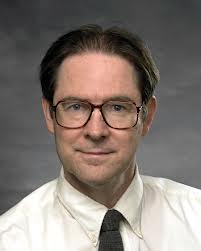 Before proceeding to a deft and devastating disarming of my critics, let me repeat my thanks to Peggy Fletcher Stack for her respectful attention to the Meridian/Expand project and more generally to my concerns about LDS scholars and intellectuals, at BYU and elsewhere. When I noted that she was presenting my concerns from a standpoint different from my own, I was not accusing her of some specific bias, but only noting that she is unlikely to present my ideas in just the way that I would present them, which is almost always the way I find best. I have to admit up front that it is hard for another to please me in presenting my ideas, especially in such a short space. But Peggy has provided me the occasion to further explain myself, which is another reason to be grateful to her.
The one specific complaint I had allowed myself to express, or to imply, earlier, was that, of the three very respected and reasonable scholars she had consulted for opinions on my project, she had not found one who was willing to be on the record as a fan of what I am up to. Well, this is in some way an unfair complaint, not because I don’t have fans, but because it might be harder to find them than it is to find LDS scholars willing to criticize me. I have no idea what the relevant numbers are on the one side and on the other of the question whether there is a problem with “secularism” among LDS intellectuals. Most have not taken a side and prefer not to and are not particularly concerned with my concerns or with critiques of my concerns. That is to be expected and that is fine. Nevertheless, I could no doubt be justly accused of trying to make salient a certain issue or cluster of issues so as to induce more LDS scholars to see what side they are on of this question concerning “secularism.”
Most, understandably, prefer not to take a side; we scholars are not in the business of and would prefer not to be in the business of taking a side on “secularism.” Indeed, as can be inferred already from the brief comments quoted in the SLT article, the most graceful and persuasive or attractive response to the fearful Hancock is precisely to say that there are really no “sides” because there is no such thing as “secularism.” Who wants “sides,” after all? Let’s not have sides.
Naturally, it is hard to find scholars who take my “side.” It is easy to find people to take the side against taking sides.
But then the important (urgent?) question is: are there sides, or not? There are, I say, whether we like it, and whether we find it professionally decorous, or not.
Here, by the way, is an example of my attacking and condemning style:
First, from my First Things article, “Keeping Faith in Provo” (March 2014):
Obviously it is much easier to find scholars who will say, “let’s not have sides,” than to find any who will say, “I’m on Hancock’s side.” All of us would rather not have sides. (Even though, I see, Stack reports that “several Mormon scholars share Hancock’s fears about the insidious nature of secularism.” They just “worry about overreacting and condemning colleagues.”
In a word: BYU is a massively, intensely, and, notwithstanding inevitable human lapses, sincerely Latter-day Saint institution of higher learning, and the broad and deep religious commitment of students and faculty is by far the greatest asset the university possesses, and the chief source of the deep gratitude I feel for the privilege of serving on its faculty for the past twenty-seven years. It is a genuinely and pervasively Mormon institution, and this must be kept in mind as we attempt to weigh its promise against the daunting challenges it now faces.
And here is a bitter sample of my notorious attacking style, from the introduction to Meridian/Expand:
The stakes involved in contemporary debates on morality and the family are very high, and the risk of reasonable discussion and argument being overwhelmed by fervent emotions is accordingly great. Bringing edification while questioning passionately held ideological views is an intellectual and rhetorical challenge of the highest order; to generate more light than heat is very difficult in these circumstances. To be appropriately “courageous and bold” without being contentious or overbearing will require of us rare qualities of intellect and of character. Readiness to repent and to forgive must accompany all our efforts to see clearly and to reason cogently and courageously. We must open ourselves to the genuine concerns of others, even when we are inclined to think they are mistaken, and constantly strive to rid ourselves of self-serving motives such as intellectual vanity as we seek to articulate a perspective in which true fellowship in the common pursuit of life-giving truth can prosper.
And here is a good example of my root-and-branch attack on all mainstream academic norms:
For some decades, BYU had managed a compromise between the academic mainstream and its own aspiration to a distinctive mission. It must be said that there have been reasonable arguments for this “mainstream” strategy, which so far has served us well, and that those who promote it do so with the sincere interests of BYU as a Mormon institution at heart.
Nothing could be better for our students, and for the reputation of the church as whole, than for us to prove our excellence in the scholarly communities in which we participate. The strategy has helped protect us against the inevitable temptation to use our distinctive religious commitments as an excuse for sloppy or idiosyncratic thinking: The only way to show we’ve got the right stuff is to compete vigorously in the existing academic marketplace. The policy of increasing alignment with the academic mainstream thus reflects legitimate concerns.
Thanks for indulging this bit of self-quotation. In reading my critics, I began to wonder just how narrow and nasty I must have been in my various “mission statements,” so I went back to actually read what I had said. And I quite liked much of it! In fact, I dare recommend to my critics the reading of my statements – it would be fun to talk about the arguments I have actually made.
Of course Bushman, Miller and Davis are only quoted briefly by Stack, so it would be unfair to hold them responsible for the overall impression left by these quotations. I’m sure the four of us could discuss the matter reasonably and fruitfully, and I hope we will. Again, I invite them to read what I have written and to respond to the arguments. I stand ready to publish them here and/or at Meridian/Expand.
But let’s take a few of my critic’s statements, admittedly severed from any larger context they might have been in, for brief consideration:
Bushman, author of “Rough Stone Rolling,” an acclaimed biography of Mormon founder Joseph Smith, says he is more inclined than Hancock to “trust the sincerity of these intellectuals who are good and faithful members who believe that the positions they are taking are sound and consistent with the gospel.”
The historian doesn’t believe these members should be considered in error or halfway apostate, as Hancock seems to suggest, but Bushman would like to see a real debate about the question of moral relativity among LDS scholars.

My reply: There was never any question in my articles of the sincerity of others. Of course they believe their positions are sound and consistent with the gospel. But a “real debate about the question of moral relativity” would in some cases at least be about whether they are right about the soundness and consistency of their positions. But it is just too impolite to trouble the peace of our professional guild by actually engaging the “real debate.”
The issue between me and my BYU Colleague Richard Davis is perhaps clearer:
Still, Davis opposes any “blanket condemnation” of Mormons who differ from church leaders on certain issues.
“The church has taken a policy position [against] same-sex marriage, for instance, and that’s pretty clear,” he says. “But the church is not saying you cannot be a good Mormon and support same-sex marriage.”
My reply: (1) I am condemned here for imposing a “blanket condemnation.” But where is this condemnation I have pronounced? And who is really doing the condemning here?
(2) Can one be a good Mormon and support same-sex marriage? Ah, now there’s a good question. I wonder what our Mormon readers think? Can BYU perform its educative duty for young LDS if most of those willing to speak of the matter take Davis’s position? And what is his position? That same-sex marriage is perfectly fine? Or just that, politically, there’s nothing we can do about it? These are two quite different positions. Would this question fit within the debate about “moral relativism” that Bushman encourages? Or would actually discussing the question – which is my whole program — involve questioning people’s sincerity, considering them half-apostate, condemning people, etc.?
In fact, a kind of mild, implicit relativism is a protective shell for people who do not want grave issues to be discussed in the light of day. Can’t we all just respect each other’s views – which is much easier, and professionally more advantageous, than really discussing them.

Finally, Adam Miller’s quoted comments are perhaps the best example of the graceful dismissal of my arguments:
“To do well in your profession, you have to accept its framework — the shared framework of the academy is secular,” he says. “There are problems with that, but also advantages.”
Hancock overgeneralizes the problem and “poses false choices,” Miller says. “He thinks the work can be conducted in a straightforward way that will vindicate what we already think.”
The philosophy professor is a lot less confident of that approach.
To engage honestly in a public dialogue about these issues is “messy,” Miller says, “and will involve mutual transformations of both positions.”
My reply: This is indeed a very deft way of dealing with the Hancock problem: There are problems with secularism, and also advantages. Hancock is charmingly simple, but reality is complicated. Hancock thinks he knows the answers already, but we must be open to “mutual transformation.”
Miller’s approach is akin to the critique of Hancock proffered by Matthew Wickman, Director of the BYU Humanities Center…
[To be continued.]
Previous Post

November 30, 2014
"BYU prof FEARS SECULARISM"
Browse Our Archives
Select a Category Uncategorized
Select a Month May 2018 March 2018 February 2018 January 2018 December 2017 September 2016 August 2016 June 2016 May 2016 March 2016 February 2016 January 2016 December 2015 May 2015 March 2015 February 2015 January 2015 December 2014 November 2014 October 2014 September 2014
Follow Us!
TAKE THE
Religious Wisdom Quiz
What does the Greek word 'Christos' mean?
Select your answer to see how you score.
Lord Savior Anointed One Redeemer
Related posts from The Soul and the City


Vulgar Elitism & Empty Populism
TRENDING AT PATHEOS Latter-day Saint

Did Prayer Cure His Cancer? Or Was It...
At 4 AM one morning, Joshua W. Brown’s wife awoke to a...

8 Ways a Near-Death Experience Rewires the Soul
Does Consciousness Survive Physical Death? After 50 Years of Research, Dr. Raymond...

Holy Longing: What Our Restlessness Is Telling Us
“One can find so many pains when the rain is falling.” -John...

What this is NOT about. This blog is definitely not about...

Who said the Israelites were God’s chosen? That’s right, they did. Who...

The Spirit World Is the Real World: God...
A Monk’s Wisdom on Body and Spirit I sit with Brother Martin...
view all Latter-day Saint blogs
Ad-Free & Subscriber Log-In Subscription Support
- About Us
- 2026 Calendar
- Videos
- Podcasts
- Library of World Religions
- Faith In Media Tracker
- Advertise With Us
- Write for Us
- Privacy Policy
- Terms of Service
- Do Not Sell My Data
- Contact Us
- Radiant Digital
- Manage Newsletter Subscriptions
- Unsubscribe From Notifications
- Sitemap
Copyright 2008-2026, Patheos, part of the Radiant Digital network of media brands. All rights reserved.
Subscription Support Ad-Free & Subscriber Log-In
Follow Patheos