
BuddhistCatholicContemplativeEvangelicalGeneral ChristianHinduJewishLatter-day SaintMuslimNew VisionsProgressive Christian
Beliefs
- Buddhist
- Catholic
- Contemplative
- Evangelical
- General Christian
- Hindu
- Jewish
- Latter-day Saint
- More Voices
- Muslim
- New Visions
- Pagan
- Progressive Christian
Topics
- Religion News
- Food and Religion
- Sports and Religion
- Religious Art
- Religious Music and Entertainment
- Religious Events
- History and Religion
- Style and Religion
- Politics and Religion
- Women in Religion
- Recreation Outdoors and Religion
- Business Finance and Religion
- Careers Workplace and Religion
- Education and Religion
- Family Parenting and Religion
- Health Fitness and Religion
- Home and Religion
- Relationships and Religion
- Technology and Religion
- Travel and Religion
Columnists
- Buddhist Columnists
- Business Finance and Religion Columnists
- Careers Workplace and Religion Columnists
- Catholic Columnists
- Contemplative Columnists
- Education and Religion Columnists
- Evangelists Columnists
- Family Parenting and Religion Columnists
- General Christian Columnists
- Health Fitness and Religion Columnists
- Hindu Columnists
- History and Religion Columnists
- Home and Religion Columnists
- Jewish Columnists
- More Voices Columnists
- Latter Day Columnists
- Muslim Columnists
- New Visions Columnists
- Nonreligious Columnists
- Pagan Columnists
- Politics and Religion Columnists
- Progressive Columnists
- Recreation Outdoors and Religion Columnists
- Relationships and Religion Columnists
- Religion News Columnists
- Religious Art Columnists
- Religious Events Columnists
- Religious Music and Entertainment Columnists
- Sports and Religion Columnists
- Style and Religion Columnists
- Technology and Religion Columnists
- Travel and Religion Columnists
- Women in Religion Columnists
Resource Library
- 2026 Calendar
- Library of World Religions
- The 100 Most Holy Places on Earth
- Patheos Answers
- Podcasts
- Videos
- Faith Leaders Database
- Anglican Episcopalian
- Bahai
- Baptist
- Buddhism
- Christianity
- Confucianism
- Eastern Orthodoxy
- Hinduism
- Holiness and Pentecostal
- ISKCON
- Islam
- Judaism
- Lutheran
- Methodist
- The Church of Jesus Christ of Latter-day Saints
- New Age
- Paganism
- Presbytarian and Reformed
- Protestantism
- Religion Behind the Scenes
- Roman Catholic
- Scientology
- Shia Islam
- Sikhism
- Sufism
- Sunni Islam
- Taoism
- Zen
- See all religions
Research Tools
 Ad-Free & Subscriber Log-In Subscription Support
Follow Patheos 

- Trending:
- Advent
- |
- Forgiveness
- |
- Thanksgiving
- |
- Election
- |
- Seasonal Holidays
- |
- Marriage
 The Soul and the City
- Home
- Latter-day Saint
- Terryl Givens’ Foundations: Wrestling with History and Theology
Terryl Givens’ Foundations: Wrestling with History and Theology
Last updated on: October 22, 2014 at 9:57 am by rhancock
Terryl Givens’ Foundations: Wrestling with History and Theology 2014-10-22T09:57:08-06:00 rhancock
Patheos Explore the world's faith through different perspectives on religion and spirituality! Patheos has the views of the prevalent religions and spiritualities of the world.
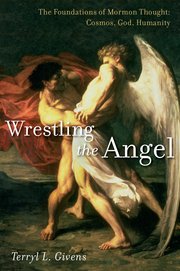
I could be annoyed by Terryl Givens. His new Wrestling the Angel: The Foundations of Mormon Thought: Cosmos, God, Humanity has been keeping me up at night, throwing off my biological clock, further complicating my thinking and interfering with my already compromised “productivity.” But I am not annoyed, I am profoundly grateful, as all advised readers will be. This book is a monumental contribution that it will take us some time to digest. And it promises to meet a very distinct need in modern society and in contemporary LDS thought, though just the way it might help to define and meet that intellectual and spiritual, that moral and theological need – well, that is part of what we will have to begin to digest.
Herewith my attempt at a beginning in this task of thinking, a task that Givens has helped to make at once more urgent and more possible.
For those with a very tidy and finalized view of LDS doctrine, this book can only be unsettling. Our beliefs have a history, and that history includes many puzzles, aporias, and fissures. This might be a good reason to let history be history and even to leave it to historians, thus allowing today’s Saints to live by our own best doctrinal lights (according to authoritative present teaching), as well as by individual and ecclesial revelation. In fact I think this is generally a wise practice, since puzzles, aporias and fissures are not exactly the stuff (certainly not the whole stuff) of faithful religious practice. This is one reason to respect the argument of the “atheological” school of thought, best championed (with due caution and much nuance, to be sure) by my BYU and Patheos colleague James Faulconer. There is no reason to assume that a complete and airtight theological system is possible or even desirable; this seems true in general, and even more true of LDS belief and practice (with its commitments to personal and to ongoing institutional revelation) than of other Christian traditions. But Givens reasonably answers that “it is obvious that a body of teachings and propositions and beliefs have arisen in the Mormon faith tradition, and the question is how to establish general grounds for relative authority.” Givens could not be more aware that this “how” raises a very difficult question, and modestly proposes a presentation of doctrines that is “primarily descriptive,” while admitted that his “judgments are obviously selective and subjective.”
Now I am not overly fond of this self-description as “subjective,” because it seems to throw the door wide open to relativism, since it would seem anyone can be a “subject.” But there is no doubt selective judgments are in order, and Terryl Givens makes a bunch of them very judiciously. What most interests me is the grounds on which these are made. These grounds are often historical and ecclesial – what came earlier, what was most official, what is now official, etc. – but they are also significantly … how shall I say: substantive, philosophical, and practical. Givens’ “selective” judgments confront us with the necessity to consider, not only what is continuous with our history (for this is not always an adequate guide), but what is on balance sound, coherent, and, well, good. And the question what is sound, coherent and good itself has a historical dimension (albeit one most often slighted by historians), that is: what challenges are faced in our contemporary world that call forth certain strengths of our theological history and tradition? I will argue that it is in view of certain distinct challenges that Givens is justified in imposing some theology on the relatively atheological practice of Mormonism.
If Givens’ remarkably rich historical and comparative treatise on Mormon belief is finally edifying and faith-promoting (as well as challenging, perplexing, even unsettling), it is because he begins to show us how to appreciate on the most critical philosophical grounds, and despite the inevitable failure of any attempt at a whole, complete and uncontested system, the goodness of our tradition as it has been appropriated by living prophets and apostles.
COMING SOON (GOD WILLING, AS ALWAYS): “TERRYL GIVENS’ ROMANTIC MORMON THEOLOGY”
Previous Post

October 21, 2014
Celebrating BYU III: The Glory of God and the Purpose of Reason
Browse Our Archives
Select a Category Uncategorized
Select a Month May 2018 March 2018 February 2018 January 2018 December 2017 September 2016 August 2016 June 2016 May 2016 March 2016 February 2016 January 2016 December 2015 May 2015 March 2015 February 2015 January 2015 December 2014 November 2014 October 2014 September 2014
Follow Us!
TAKE THE
Religious Wisdom Quiz
Who had a dream about a statue made of various metals?
Select your answer to see how you score.
Nebuchadnezzar Joseph Daniel David
Related posts from The Soul and the City
Intellect and Affection – How to Be a...
To Whom Shall We Go: From Apologetics to...
From Apologetics to Mormon Studies: The Case of...
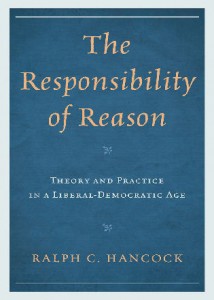
Joseph Spencer on The Responsibility of Reason
TRENDING AT PATHEOS Latter-day Saint

Did Prayer Cure His Cancer? Or Was It...
At 4 AM one morning, Joshua W. Brown’s wife awoke to a...

8 Ways a Near-Death Experience Rewires the Soul
Does Consciousness Survive Physical Death? After 50 Years of Research, Dr. Raymond...

Holy Longing: What Our Restlessness Is Telling Us
“One can find so many pains when the rain is falling.” -John...

What this is NOT about. This blog is definitely not about...

Who said the Israelites were God’s chosen? That’s right, they did. Who...

The Spirit World Is the Real World: God...
A Monk’s Wisdom on Body and Spirit I sit with Brother Martin...
view all Latter-day Saint blogs
Ad-Free & Subscriber Log-In Subscription Support
- About Us
- 2026 Calendar
- Videos
- Podcasts
- Library of World Religions
- Faith In Media Tracker
- Advertise With Us
- Write for Us
- Privacy Policy
- Terms of Service
- Do Not Sell My Data
- Contact Us
- Radiant Digital
- Manage Newsletter Subscriptions
- Unsubscribe From Notifications
- Sitemap
Copyright 2008-2026, Patheos, part of the Radiant Digital network of media brands. All rights reserved.
Subscription Support Ad-Free & Subscriber Log-In
Follow Patheos