
BuddhistCatholicContemplativeEvangelicalGeneral ChristianHinduJewishLatter-day SaintMuslimNew VisionsProgressive Christian
Beliefs
- Buddhist
- Catholic
- Contemplative
- Evangelical
- General Christian
- Hindu
- Jewish
- Latter-day Saint
- More Voices
- Muslim
- New Visions
- Pagan
- Progressive Christian
Topics
- Religion News
- Food and Religion
- Sports and Religion
- Religious Art
- Religious Music and Entertainment
- Religious Events
- History and Religion
- Style and Religion
- Politics and Religion
- Women in Religion
- Recreation Outdoors and Religion
- Business Finance and Religion
- Careers Workplace and Religion
- Education and Religion
- Family Parenting and Religion
- Health Fitness and Religion
- Home and Religion
- Relationships and Religion
- Technology and Religion
- Travel and Religion
Columnists
- Buddhist Columnists
- Business Finance and Religion Columnists
- Careers Workplace and Religion Columnists
- Catholic Columnists
- Contemplative Columnists
- Education and Religion Columnists
- Evangelists Columnists
- Family Parenting and Religion Columnists
- General Christian Columnists
- Health Fitness and Religion Columnists
- Hindu Columnists
- History and Religion Columnists
- Home and Religion Columnists
- Jewish Columnists
- More Voices Columnists
- Latter Day Columnists
- Muslim Columnists
- New Visions Columnists
- Nonreligious Columnists
- Pagan Columnists
- Politics and Religion Columnists
- Progressive Columnists
- Recreation Outdoors and Religion Columnists
- Relationships and Religion Columnists
- Religion News Columnists
- Religious Art Columnists
- Religious Events Columnists
- Religious Music and Entertainment Columnists
- Sports and Religion Columnists
- Style and Religion Columnists
- Technology and Religion Columnists
- Travel and Religion Columnists
- Women in Religion Columnists
Resource Library
- 2026 Calendar
- Library of World Religions
- The 100 Most Holy Places on Earth
- Patheos Answers
- Podcasts
- Videos
- Faith Leaders Database
- Anglican Episcopalian
- Bahai
- Baptist
- Buddhism
- Christianity
- Confucianism
- Eastern Orthodoxy
- Hinduism
- Holiness and Pentecostal
- ISKCON
- Islam
- Judaism
- Lutheran
- Methodist
- The Church of Jesus Christ of Latter-day Saints
- New Age
- Paganism
- Presbytarian and Reformed
- Protestantism
- Religion Behind the Scenes
- Roman Catholic
- Scientology
- Shia Islam
- Sikhism
- Sufism
- Sunni Islam
- Taoism
- Zen
- See all religions
Research Tools
 Ad-Free & Subscriber Log-In Subscription Support
Follow Patheos 

- Trending:
- Advent
- |
- Forgiveness
- |
- Thanksgiving
- |
- Election
- |
- Seasonal Holidays
- |
- Marriage

- Home
- Progressive Christian
- Politics and Religion
- The Darkening of the Sun, Moon, and Stars
The Darkening of the Sun, Moon, and Stars
Last updated on: November 26, 2026 at 8:00 am by Herb Montgomery
The Darkening of the Sun, Moon, and Stars 2026-11-24T15:30:38-04:00 Herb Montgomery
Patheos Explore the world's faith through different perspectives on religion and spirituality! Patheos has the views of the prevalent religions and spiritualities of the world.
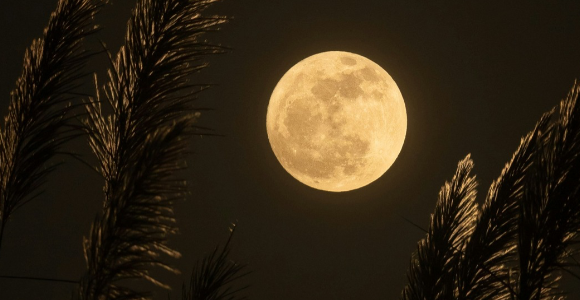
Photo by Alexis Antonio
Our reading for this first weekend of Advent is from the Gospel of Mark:
But in those days, following that distress,
‘the sun will be darkened,
and the moon will not give its light;
the stars will fall from the sky,
and the heavenly bodies will be shaken.’
At that time people will see the Son of Man coming in clouds with great power and glory. And he will send his angels and gather his elect from the four winds, from the ends of the earth to the ends of the heavens.
Welcome Readers
Subscribe -> Please subscribe to Social Jesus Here.
This is Part 1 of the series Advent
Now learn this lesson from the fig tree: As soon as its twigs get tender and its leaves come out, you know that summer is near. Even so, when you see these things happening, you know that it is near, right at the door. Truly I tell you, this generation will certainly not pass away until all these things have happened. Heaven and earth will pass away, but my words will never pass away.
But about that day or hour no one knows, not even the angels in heaven, nor the Son, but only the Father. Be on guard! Be alert! You do not know when that time will come. It’s like a man going away: He leaves his house and puts his servants in charge, each with their assigned task, and tells the one at the door to keep watch.
Therefore keep watch because you do not know when the owner of the house will come back—whether in the evening, or at midnight, or when the rooster crows, or at dawn. If he comes suddenly, do not let him find you sleeping. What I say to you, I say to everyone: ‘Watch!’ (Mark 13:24-37)
Our reading this week begins with language that draws on the Hebrew prophetic tradition of apocalypse. The Hebrew prophets used cosmic disturbances to describe the collapse of political powers and established social orders. Remember at the time Mark was written, many desperately longed to be liberated from the Roman occupation. In these prophecies, the darkening of the sun and moon, the falling of stars, and the shaking of heavenly bodies are not necessarily predictions of the physical destruction of the universe. Rather, they are symbolic descriptions of the upheaval of a social world.
In the Hebrew prophetic tradition, similar imagery appears in Isaiah 13, Isaiah 34, Ezekiel 32, and Joel 2. These passages employ cosmic language to announce the downfall of powerful nations, oppressive rulers, and imperial systems. The heavens themselves seem to tremble because the world as people have known it is coming apart.
In our reading this week, this imagery takes on historical significance. Jesus is announcing the Temple State’s coming destruction and the devastating consequences of collusion and complicity with Roman imperial power. The familiar religious, political, and economic order is facing profound disruption, and what appears permanent and untouchable is not beyond collapse. Apocalyptic language, then, is not simply about the end of the planet but about the end of a world organized around oppressive power that seems as if it could never be changed. It announces that no empire or unjust social order is eternal.
Next in our reading, Jesus’ language draws on the imagery of Daniel 7 (especially verses 13-14), where “one like a son of man” comes with the clouds of heaven and receives authority, glory, and an everlasting kingdom. Historically, Daniel 7 presents this figure in contrast to the violent beasts representing oppressive Gentile empires. These beasts in Daniel 7 dominate and devour peoples, and build their power through violence. The humanlike figure, by contrast, represents a different kind of kingdom and a different vision for humanity. In Daniel’s original context, this imagery offers hope to a people suffering under imperial oppression: the violent empires will not have the final word.
When Mark applies this imagery to Jesus, the Son of Man becomes a powerful symbol of God’s alternative to the imperial domination of the empire of Rome. The son of man’s coming is not simply a spectacle of supernatural power but an announcement that the violent arrangements of the world are being overturned. The gathering of the elect from the four winds is especially significant: those scattered, displaced, and fragmented by oppressive powers are brought together again. The times are changing, and people whom empire has divided, displaced, marginalized, and treated as disposable are gathered into a new community. This community in Matthew’s and Luke’s gospels are referred to as “Blessed” (Matthew 5; cf. Luke 6).
Our reading this week is about the advent of liberation. This advent marks the end of domination, the restoration of community, and the emergence of a human society no longer organized around violence, exclusion, and exploitation.
We must understand the illustration of the fig tree in our reading this week within the historical, political, and apocalyptic context of first-century Judaism and the Roman occupation of Judea. Rather than treating this passage as a prediction of the distant end of the world, it is important to recognize how it’s connected to the events surrounding the destruction of Jerusalem and the Temple by Roman forces in 70 CE.
The reading’s immediate context is Mark 13, often called the Olivet Discourse. Jesus has been describing the coming destruction of the Temple State due to its collusion and complicity with Rome, and the political upheaval, persecution, and the suffering that would accompany these events.
For first-century Jewish people, the Temple was the heart and capitol of the Temple State and represented far more than a religious building. It was central to their national identity, economic life, political leadership, and understanding of their relationship with their God. Its destruction would represent the collapse of an entire world.
Jesus’ fig tree illustration provides a way of interpreting these unfolding historical circumstances and lesson for us today, as well. We’ll pick up here in Part 2.
Begin each day being inspired toward love, compassion, justice and action. Free.
Sign up at HERE.
General Christian
Politics and Religion

About Herb Montgomery
Herb Montgomery, director of Renewed Heart Ministries, is an author and adult religious educator helping Christians explore the intersection of their faith with love, compassion, action, and societal justice. You can read more about the author here.
Previous Post

November 20, 2026
The Danger of Dividing the Sheep and the Goats
Browse Our Archives
Select a Category Ableism Abolition Advent Anti Semitism Christianity Christmas Climate Justice Criminal Justice Democracy Disability Justice Distributive Justice Easter Economic Justice Environmental Justice Equity Feminism Government Immigration Justice Indigenous Justice Interfaith Law and Order LGBTQ Affirmation Liberation Theology Migrant Justice Myth of Redemptive Suffering Nonviolence Prayer Racial Justice Reparation Resistance Resurrection Social Gospel Social Justice Survival Uncategorized Womanism
Select a Month November 2026 October 2026 September 2026 August 2026 July 2026 June 2026 May 2026 April 2026 March 2026 February 2026 January 2026 December 2025 November 2025 October 2025 September 2025 August 2025 July 2025 June 2025 May 2025 April 2025 March 2025 February 2025 January 2025 December 2024 November 2024 October 2024 September 2024 August 2024 July 2024 June 2024 May 2024 April 2024 March 2024 February 2024 January 2024 December 2023 November 2023 October 2023 September 2023 August 2023 July 2023 June 2023 May 2023 April 2023 March 2023 February 2023 January 2023 December 2022 November 2022 October 2022 September 2022 August 2022 July 2022 June 2022 May 2022 April 2022 March 2022 February 2022 January 2022 December 2021 November 2021 October 2021 September 2021 August 2021 July 2021 June 2021 May 2021 April 2021 March 2021 February 2021 January 2021 December 2020 November 2020 October 2020 September 2020 August 2020 July 2020 June 2020 May 2020 April 2020 March 2020 February 2020 January 2020 December 2019 November 2019 October 2019 September 2019 August 2019 July 2019 June 2019 May 2019 April 2019
Follow Us!
TAKE THE
Religious Wisdom Quiz
Which Christian group follows the Five Points of Calvinism?
Select your answer to see how you score.
Baptists Methodists Pentecostals Reformed
Related posts from Social Jesus

The Danger of Dividing the Sheep and the...


The Talents and Multiplying Resources for the Common...

Parable of the Talents: A Call to Justice,...
TRENDING AT PATHEOS Progressive Christian

Gratitude as the Parent of All Virtues
Giving thanks stems from gratitude. Cicero said that gratitude is the parent...

Make Thanksgiving Bring Family Closer
Written by Dr. David K. Ewen from Eternal Truth Bible College Start...

Ghosts, Spirits, and Wizards in Post-Puritan New England
As it is Thanksgiving, I have a seasonal post concerned with New...

Here are two Thanksgiving columns that I originally wrote for the...

Book III, Chapter 3: Christ "Classic" (Matt. 9:9-34)
Book III, Chapter 3: Christ "Classic" (Matt. 9:9-34) In honor of tomorrow's...

Jesus explicitly mentions the book of Jonah twice, but he retells the...
view all Progressive Christian blogs
Ad-Free & Subscriber Log-In Subscription Support
- About Us
- 2026 Calendar
- Videos
- Podcasts
- Library of World Religions
- Faith In Media Tracker
- Advertise With Us
- Write for Us
- Privacy Policy
- Terms of Service
- Do Not Sell My Data
- Contact Us
- Radiant Digital
- Manage Newsletter Subscriptions
- Unsubscribe From Notifications
- Sitemap
Copyright 2008-2026, Patheos, part of the Radiant Digital network of media brands. All rights reserved.
Subscription Support Ad-Free & Subscriber Log-In
Follow Patheos