
BuddhistCatholicContemplativeEvangelicalGeneral ChristianHinduJewishLatter-day SaintMuslimNew VisionsProgressive Christian
Beliefs
- Buddhist
- Catholic
- Contemplative
- Evangelical
- General Christian
- Hindu
- Jewish
- Latter-day Saint
- More Voices
- Muslim
- New Visions
- Pagan
- Progressive Christian
Topics
- Religion News
- Food and Religion
- Sports and Religion
- Religious Art
- Religious Music and Entertainment
- Religious Events
- History and Religion
- Style and Religion
- Politics and Religion
- Women in Religion
- Recreation Outdoors and Religion
- Business Finance and Religion
- Careers Workplace and Religion
- Education and Religion
- Family Parenting and Religion
- Health Fitness and Religion
- Home and Religion
- Relationships and Religion
- Technology and Religion
- Travel and Religion
Columnists
- Buddhist Columnists
- Business Finance and Religion Columnists
- Careers Workplace and Religion Columnists
- Catholic Columnists
- Contemplative Columnists
- Education and Religion Columnists
- Evangelists Columnists
- Family Parenting and Religion Columnists
- General Christian Columnists
- Health Fitness and Religion Columnists
- Hindu Columnists
- History and Religion Columnists
- Home and Religion Columnists
- Jewish Columnists
- More Voices Columnists
- Latter Day Columnists
- Muslim Columnists
- New Visions Columnists
- Nonreligious Columnists
- Pagan Columnists
- Politics and Religion Columnists
- Progressive Columnists
- Recreation Outdoors and Religion Columnists
- Relationships and Religion Columnists
- Religion News Columnists
- Religious Art Columnists
- Religious Events Columnists
- Religious Music and Entertainment Columnists
- Sports and Religion Columnists
- Style and Religion Columnists
- Technology and Religion Columnists
- Travel and Religion Columnists
- Women in Religion Columnists
Resource Library
- 2026 Calendar
- Library of World Religions
- The 100 Most Holy Places on Earth
- Patheos Answers
- Podcasts
- Videos
- Faith Leaders Database
- Anglican Episcopalian
- Bahai
- Baptist
- Buddhism
- Christianity
- Confucianism
- Eastern Orthodoxy
- Hinduism
- Holiness and Pentecostal
- ISKCON
- Islam
- Judaism
- Lutheran
- Methodist
- The Church of Jesus Christ of Latter-day Saints
- New Age
- Paganism
- Presbytarian and Reformed
- Protestantism
- Religion Behind the Scenes
- Roman Catholic
- Scientology
- Shia Islam
- Sikhism
- Sufism
- Sunni Islam
- Taoism
- Zen
- See all religions
Research Tools
 Ad-Free & Subscriber Log-In Subscription Support
Follow Patheos 

- Trending:
- Advent
- |
- Forgiveness
- |
- Thanksgiving
- |
- Election
- |
- Seasonal Holidays
- |
- Marriage

- Home
- Progressive Christian
- Politics and Religion
- People Are Not Weeds
People Are Not Weeds
Last updated on: July 16, 2026 at 12:20 pm by Herb Montgomery
People Are Not Weeds 2026-07-16T12:20:48-04:00 Herb Montgomery
Patheos Explore the world's faith through different perspectives on religion and spirituality! Patheos has the views of the prevalent religions and spiritualities of the world.
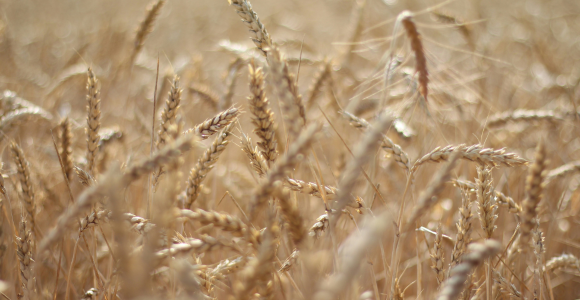
Photo Credit: Zura Narimanishvili
Our reading this week is from the Gospel of Matthew:
Jesus told them another parable: “The kingdom of heaven is like a man who sowed good seed in his field. But while everyone was sleeping, his enemy came and sowed weeds among the wheat, and went away. When the wheat sprouted and formed heads, then the weeds also appeared.
“The owner’s servants came to him and said, ‘Sir, didn’t you sow good seed in your field? Where then did the weeds come from?’
“‘An enemy did this,’ he replied.
“The servants asked him, ‘Do you want us to go and pull them up?’
“‘No,’ he answered, ‘because while you are pulling the weeds, you may uproot the wheat with them. Let both grow together until the harvest. At that time I will tell the harvesters: First collect the weeds and tie them in bundles to be burned; then gather the wheat and bring it into my barn.’ ”
Then he left the crowd and went into the house. His disciples came to him and said, “Explain to us the parable of the weeds in the field.”
Welcome Readers
Subscribe -> Please subscribe to Social Jesus Here.
This is Part 1 of the series Parables That Harm
He answered, “The one who sowed the good seed is the Son of Man. The field is the world, and the good seed stands for the people of the kingdom. The weeds are the people of the evil one, and the enemy who sows them is the devil. The harvest is the end of the age, and the harvesters are angels.
“As the weeds are pulled up and burned in the fire, so it will be at the end of the age. The Son of Man will send out his angels, and they will weed out of his kingdom everything that causes sin and all who do evil. They will throw them into the blazing furnace, where there will be weeping and gnashing of teeth. Then the righteous will shine like the sun in the kingdom of their Father. Whoever has ears, let them hear. (Matthew 13:24-30, 36-43)
Jesus’ parable of the wheat and the weeds in our reading this week has often been interpreted as a story about separating the righteous from the wicked. Yet one of the most important ethical lessons of the parable is frequently overlooked: human beings are explicitly forbidden from deciding who the “bad seeds” are and attempting to eliminate them. The servants immediately want to pull up the weeds, but the landowner refuses. The servants’ certainty about who belongs and who does not is precisely what Jesus challenges.
Throughout history, societies have repeatedly identified groups of people as “weeds” that threaten the health of the whole community. Ethnic minorities, immigrants, religious dissenters, political opponents, LGBTQ people, people with disabilities, and countless others have all been portrayed as dangerous contaminants that must be removed for society to flourish. But once people are classified as inherently bad, every form of exclusion becomes easier to justify. Discrimination, segregation, incarceration, deportation, economic exploitation, and violence can all be defended as necessary acts of preserving the “good crop.”
The danger of this is not limited to physical destruction. Even when people postpone judgment until a future divine reckoning, they may still treat others as though they have already been condemned. The belief that certain people are destined for destruction can produce social practices that isolate, dehumanize, or neglect them in the present. One need not literally burn the weeds today to start treating them as less worthy of compassion, justice, or dignity than those deemed “good.”
Jesus’ response resists this entire framework. The servants in the story assume they can distinguish between wheat and weeds perfectly, but the landowner recognizes the limitations of human judgment. Pulling up the weeds prematurely also risks destroying the wheat. This warning extends beyond agriculture into every community where people’s certainty about others’ moral worth becomes the justification for exclusion. History repeatedly demonstrates that campaigns to eliminate perceived threats almost always harm innocent people alongside those being targeted.
So the parable attempts to call communities away from systems that sort humanity into fixed categories of “worthy” and “unworthy.” Instead, it encourages patience, humility, and a recognition that every person bears immeasurable value. Justice is not achieved by identifying expendable people but by cultivating conditions in which everyone has the opportunity to flourish.
The parable of the wheat and the weeds is less a guide for identifying the “wicked” than a warning against assuming that role ourselves. But there is more, here, too. And will begin with that in Part 2.
Begin each day being inspired toward love, compassion, justice and action. Free.
Sign up at HERE.
General Christian
Politics and Religion

About Herb Montgomery
Herb Montgomery, director of Renewed Heart Ministries, is an author and adult religious educator helping Christians explore the intersection of their faith with love, compassion, action, and societal justice. You can read more about the author here.
Previous Post
July 8, 2026
A Harvest of Compassion, Safety and Justice for All
Next Post

July 16, 2026 Harmful Parable
Browse Our Archives
Select a Category Ableism Abolition Advent Anti Semitism Christianity Christmas Climate Justice Criminal Justice Democracy Disability Justice Distributive Justice Easter Economic Justice Environmental Justice Equity Feminism Government Immigration Justice Indigenous Justice Interfaith Law and Order LGBTQ Affirmation Liberation Theology Migrant Justice Myth of Redemptive Suffering Nonviolence Prayer Racial Justice Reparation Resistance Resurrection Social Gospel Social Justice Survival Uncategorized Womanism
Select a Month November 2026 October 2026 September 2026 August 2026 July 2026 June 2026 May 2026 April 2026 March 2026 February 2026 January 2026 December 2025 November 2025 October 2025 September 2025 August 2025 July 2025 June 2025 May 2025 April 2025 March 2025 February 2025 January 2025 December 2024 November 2024 October 2024 September 2024 August 2024 July 2024 June 2024 May 2024 April 2024 March 2024 February 2024 January 2024 December 2023 November 2023 October 2023 September 2023 August 2023 July 2023 June 2023 May 2023 April 2023 March 2023 February 2023 January 2023 December 2022 November 2022 October 2022 September 2022 August 2022 July 2022 June 2022 May 2022 April 2022 March 2022 February 2022 January 2022 December 2021 November 2021 October 2021 September 2021 August 2021 July 2021 June 2021 May 2021 April 2021 March 2021 February 2021 January 2021 December 2020 November 2020 October 2020 September 2020 August 2020 July 2020 June 2020 May 2020 April 2020 March 2020 February 2020 January 2020 December 2019 November 2019 October 2019 September 2019 August 2019 July 2019 June 2019 May 2019 April 2019
Follow Us!
TAKE THE
Religious Wisdom Quiz
Who played cymbals in Temple worship?
Select your answer to see how you score.
Asaph Moses Solomon David
Related posts from Social Jesus

The Danger of Dividing the Sheep and the...


The Talents and Multiplying Resources for the Common...

Parable of the Talents: A Call to Justice,...
TRENDING AT PATHEOS Progressive Christian

For many years, Catholicism has been caught up in division over the...

'Statements of Faith' never get shorter
Nothing demonstrates a conservative commitment to faith and faithfulness like a "statement...

Michele's Reviews - Future Grace by John Piper
In God's Place, at God's Pace, by Future Grace Impatience is...

Bama Gramma's Blackout Christmas: the Power of Light...
Another Christmas Skit: I have an alter ego: Bama Gramma. She shows...

Thanksgiving as a Way of Life: A Christian...
Each year, Thanksgiving brings families and friends together to share meals, stories,...

Two Women Doctors Who Went Against the Current
Women physicians who transformed healthcare for "Indians" “I shall have an advantage...
view all Progressive Christian blogs
Ad-Free & Subscriber Log-In Subscription Support
- About Us
- 2026 Calendar
- Videos
- Podcasts
- Library of World Religions
- Faith In Media Tracker
- Advertise With Us
- Write for Us
- Privacy Policy
- Terms of Service
- Do Not Sell My Data
- Contact Us
- Radiant Digital
- Manage Newsletter Subscriptions
- Unsubscribe From Notifications
- Sitemap
Copyright 2008-2026, Patheos, part of the Radiant Digital network of media brands. All rights reserved.
Subscription Support Ad-Free & Subscriber Log-In
Follow Patheos