
BuddhistCatholicContemplativeEvangelicalGeneral ChristianHinduJewishLatter-day SaintMuslimNew VisionsProgressive Christian
Beliefs
- Buddhist
- Catholic
- Contemplative
- Evangelical
- General Christian
- Hindu
- Jewish
- Latter-day Saint
- More Voices
- Muslim
- New Visions
- Pagan
- Progressive Christian
Topics
- Religion News
- Food and Religion
- Sports and Religion
- Religious Art
- Religious Music and Entertainment
- Religious Events
- History and Religion
- Style and Religion
- Politics and Religion
- Women in Religion
- Recreation Outdoors and Religion
- Business Finance and Religion
- Careers Workplace and Religion
- Education and Religion
- Family Parenting and Religion
- Health Fitness and Religion
- Home and Religion
- Relationships and Religion
- Technology and Religion
- Travel and Religion
Columnists
- Buddhist Columnists
- Business Finance and Religion Columnists
- Careers Workplace and Religion Columnists
- Catholic Columnists
- Contemplative Columnists
- Education and Religion Columnists
- Evangelists Columnists
- Family Parenting and Religion Columnists
- General Christian Columnists
- Health Fitness and Religion Columnists
- Hindu Columnists
- History and Religion Columnists
- Home and Religion Columnists
- Jewish Columnists
- More Voices Columnists
- Latter Day Columnists
- Muslim Columnists
- New Visions Columnists
- Nonreligious Columnists
- Pagan Columnists
- Politics and Religion Columnists
- Progressive Columnists
- Recreation Outdoors and Religion Columnists
- Relationships and Religion Columnists
- Religion News Columnists
- Religious Art Columnists
- Religious Events Columnists
- Religious Music and Entertainment Columnists
- Sports and Religion Columnists
- Style and Religion Columnists
- Technology and Religion Columnists
- Travel and Religion Columnists
- Women in Religion Columnists
Resource Library
- 2026 Calendar
- Library of World Religions
- The 100 Most Holy Places on Earth
- Patheos Answers
- Podcasts
- Videos
- Faith Leaders Database
- Anglican Episcopalian
- Bahai
- Baptist
- Buddhism
- Christianity
- Confucianism
- Eastern Orthodoxy
- Hinduism
- Holiness and Pentecostal
- ISKCON
- Islam
- Judaism
- Lutheran
- Methodist
- The Church of Jesus Christ of Latter-day Saints
- New Age
- Paganism
- Presbytarian and Reformed
- Protestantism
- Religion Behind the Scenes
- Roman Catholic
- Scientology
- Shia Islam
- Sikhism
- Sufism
- Sunni Islam
- Taoism
- Zen
- See all religions
Research Tools
 Ad-Free & Subscriber Log-In Subscription Support
Follow Patheos 

- Trending:
- Advent
- |
- Forgiveness
- |
- Thanksgiving
- |
- Election
- |
- Seasonal Holidays
- |
- Marriage

- Home
- Progressive Christian
- Politics and Religion
- One Stone Not Left Upon Another of our Growing Disparity
One Stone Not Left Upon Another of our Growing Disparity
Last updated on: November 13, 2025 at 11:52 am by Herb Montgomery
One Stone Not Left Upon Another of our Growing Disparity 2025-11-13T11:52:47-04:00 Herb Montgomery
Patheos Explore the world's faith through different perspectives on religion and spirituality! Patheos has the views of the prevalent religions and spiritualities of the world.
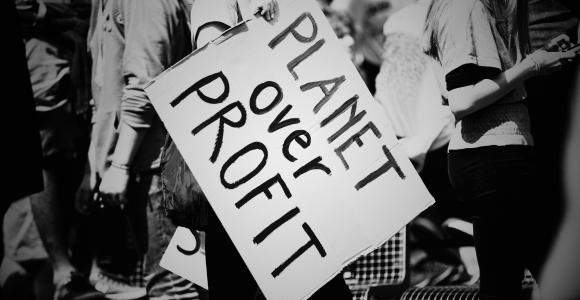
Photo by Markus Spiske on Unsplash
This ever-increasing wealth disparity is not merely an economic issue but a moral, theological and political one as well. Wealth disparity means that political power and social influence also becomes concentrated in the hands of a few. It harms democracy. Wealthy individuals and corporations shape policy, media narratives, and public priorities, often in ways that reinforce their own advantage and to the disadvantage of the masses. This concentration of power undermines democratic accountability and makes it harder to enact reforms that could redistribute resources or regulate environmentally harmful industries. The wealth disparity and environmental degradation created by our present system are intertwined. Both stem from the same structural imbalances that privileges profit over collective well-being of the masses.
Welcome Readers! Please subscribe to Social Jesus Here.
This is Part 3 of the series A World that is Just, Safe, and Compassionate for All
(Read this series from its beginning here.)
As we consider the unsustainablity of this system for most people, we need to consider its unsustainability for our planet, too. The environmental costs of our present economic system are becoming increasingly undeniable. Our system’s dependence on continuous growth and consumption exerts unsustainable pressure on our finite ecosystem. Fossil-fuel dependence, industrial agriculture, deforestation, and mass production all contribute to climate change and biodiversity loss. These are the intrinsic side effects of a system that depends on continual growth, profit, and accumulation. Every stage of our system’s production cycle, whether extraction, manufacturing, distribution, consumption, or disposal, involves the conversion of natural resources into products to produce profit or waste after those profits have been realized.
Environmental economist Herman Daly has argued that a system based on infinite growth is fundamentally incompatible with a finite planet. This is the contradiction now visible in our accelerating climate emergency, and inequality only compounds the problem. The wealthy contribute disproportionately to waste and resource use. Meanwhile, the poor bear the brunt of climate disasters, pollution, and resource depletion. Low-income communities often live near toxic waste sites or in regions vulnerable to flooding and drought. Jesus’ call to care about the poor thus is inseparably connected to caring about environmentalism. Globally, less developed countries suffer the consequences of the environmental damage richer nations produce. Again, environmental justice is inseparable from economic justice.
If our present system has led to wealth disparity and ecological damage, what does that mean for the future? Some argue for a fundamental transformation, a post-capitalist system rooted in ecological and social priorities rather than profit. Others advocate for “green capitalism” or market reforms that internalize environmental costs through things like carbon pricing, circular economies, and corporate accountability. I believe that even these reforms cannot solve the problem. So long as economic success is measured by GDP and shareholder returns, sustainability for the people who are wage earners and the planet who supplies natural resources will always be a secondary priority.
A more equitable and sustainable future requires reimagining what we mean by prosperity. Instead of endless growth, societies might pursue well-being, balance, and the common good. The kind of redistribution of wealth that we encounter in the gospels, that Jesus called his audiences to, could be achieved today through such things as progressive taxation, public investment, and labor empowerment. This month’s recommended reading for Renewed Heart Ministries is Ingrid Robeyns’ Limitarianism: The Case Against Extreme Wealth. Whatever course we chose, it must be a path toward correcting our iniquity of widening inequity.
Our future depends on policies that prioritize renewable energy, conservation, and sustainable production for both people and the planet. Grassroots movements, Indigenous perspectives, and cooperative models today offer alternatives that center community and stewardship rather than the demand for nonstop growth ing our present system.
Our present crises of growing inequality and the coming environmental collapse are both intrinsic symptoms of how we are choosing to shape our economic system. The relentless pursuit of profit, if left unchecked, will continue to erode both social cohesion and our planet’s foundations for life.
Just like in the 1st Century, life-giving change requires of us today a profound moral and political shift away from a system that values growth above all to one that values justice, sustainability, and collective flourishing. The gospels call us, just as they called to those in the 1st Century, to the work of shaping our world into a safe, compassionate, just home for all.
If the Galilean prophet of the poor named Jesus lived and taught in our society today, what would he say is our coming crisis of one stone not being left on another?
Begin each day being inspired toward love, compassion, justice and action. Free.
Sign up at HERE.
General Christian
Politics and Religion

About Herb Montgomery
Herb Montgomery, director of Renewed Heart Ministries, is an author and adult religious educator helping Christians explore the intersection of their faith with love, compassion, action, and societal justice. You can read more about the author here.
Previous Post

November 12, 2025
The Widening Gap: Can Equity Outpace Inequality?
Next Post

November 18, 2025 Calvary as Political Execution
Browse Our Archives
Select a Category Ableism Abolition Advent Anti Semitism Christianity Christmas Climate Justice Criminal Justice Democracy Disability Justice Distributive Justice Easter Economic Justice Environmental Justice Equity Feminism Government Immigration Justice Indigenous Justice Interfaith Law and Order LGBTQ Affirmation Liberation Theology Migrant Justice Myth of Redemptive Suffering Nonviolence Prayer Racial Justice Reparation Resistance Resurrection Social Gospel Social Justice Survival Uncategorized Womanism
Select a Month November 2026 October 2026 September 2026 August 2026 July 2026 June 2026 May 2026 April 2026 March 2026 February 2026 January 2026 December 2025 November 2025 October 2025 September 2025 August 2025 July 2025 June 2025 May 2025 April 2025 March 2025 February 2025 January 2025 December 2024 November 2024 October 2024 September 2024 August 2024 July 2024 June 2024 May 2024 April 2024 March 2024 February 2024 January 2024 December 2023 November 2023 October 2023 September 2023 August 2023 July 2023 June 2023 May 2023 April 2023 March 2023 February 2023 January 2023 December 2022 November 2022 October 2022 September 2022 August 2022 July 2022 June 2022 May 2022 April 2022 March 2022 February 2022 January 2022 December 2021 November 2021 October 2021 September 2021 August 2021 July 2021 June 2021 May 2021 April 2021 March 2021 February 2021 January 2021 December 2020 November 2020 October 2020 September 2020 August 2020 July 2020 June 2020 May 2020 April 2020 March 2020 February 2020 January 2020 December 2019 November 2019 October 2019 September 2019 August 2019 July 2019 June 2019 May 2019 April 2019
Follow Us!
TAKE THE
Religious Wisdom Quiz
What Christian group is known for using the term "General Conference"?
Select your answer to see how you score.
Baptists Presbyterians Seventh-day Adventists Lutherans
Related posts from Social Jesus

The Danger of Dividing the Sheep and the...


The Talents and Multiplying Resources for the Common...

Parable of the Talents: A Call to Justice,...
TRENDING AT PATHEOS Progressive Christian

'Statements of Faith' never get shorter
Nothing demonstrates a conservative commitment to faith and faithfulness like a "statement...

Michele's Reviews - Future Grace by John Piper
In God's Place, at God's Pace, by Future Grace Impatience is...

Bama Gramma's Blackout Christmas: the Power of Light...
Another Christmas Skit: I have an alter ego: Bama Gramma. She shows...

Thanksgiving as a Way of Life: A Christian...
Each year, Thanksgiving brings families and friends together to share meals, stories,...

Two Women Doctors Who Went Against the Current
Women physicians who transformed healthcare for "Indians" “I shall have an advantage...

Reading Culture Through Scripture, Not the Other Way...
A Radix Teleology and Faith Before Seeing: Essentialism “For we also have...
view all Progressive Christian blogs
Ad-Free & Subscriber Log-In Subscription Support
- About Us
- 2026 Calendar
- Videos
- Podcasts
- Library of World Religions
- Faith In Media Tracker
- Advertise With Us
- Write for Us
- Privacy Policy
- Terms of Service
- Do Not Sell My Data
- Contact Us
- Radiant Digital
- Manage Newsletter Subscriptions
- Unsubscribe From Notifications
- Sitemap
Copyright 2008-2026, Patheos, part of the Radiant Digital network of media brands. All rights reserved.
Subscription Support Ad-Free & Subscriber Log-In
Follow Patheos