
BuddhistCatholicContemplativeEvangelicalGeneral ChristianHinduJewishLatter-day SaintMuslimNew VisionsProgressive Christian
Beliefs
- Buddhist
- Catholic
- Contemplative
- Evangelical
- General Christian
- Hindu
- Jewish
- Latter-day Saint
- More Voices
- Muslim
- New Visions
- Pagan
- Progressive Christian
Topics
- Religion News
- Food and Religion
- Sports and Religion
- Religious Art
- Religious Music and Entertainment
- Religious Events
- History and Religion
- Style and Religion
- Politics and Religion
- Women in Religion
- Recreation Outdoors and Religion
- Business Finance and Religion
- Careers Workplace and Religion
- Education and Religion
- Family Parenting and Religion
- Health Fitness and Religion
- Home and Religion
- Relationships and Religion
- Technology and Religion
- Travel and Religion
Columnists
- Buddhist Columnists
- Business Finance and Religion Columnists
- Careers Workplace and Religion Columnists
- Catholic Columnists
- Contemplative Columnists
- Education and Religion Columnists
- Evangelists Columnists
- Family Parenting and Religion Columnists
- General Christian Columnists
- Health Fitness and Religion Columnists
- Hindu Columnists
- History and Religion Columnists
- Home and Religion Columnists
- Jewish Columnists
- More Voices Columnists
- Latter Day Columnists
- Muslim Columnists
- New Visions Columnists
- Nonreligious Columnists
- Pagan Columnists
- Politics and Religion Columnists
- Progressive Columnists
- Recreation Outdoors and Religion Columnists
- Relationships and Religion Columnists
- Religion News Columnists
- Religious Art Columnists
- Religious Events Columnists
- Religious Music and Entertainment Columnists
- Sports and Religion Columnists
- Style and Religion Columnists
- Technology and Religion Columnists
- Travel and Religion Columnists
- Women in Religion Columnists
Resource Library
- 2026 Calendar
- Library of World Religions
- The 100 Most Holy Places on Earth
- Patheos Answers
- Podcasts
- Videos
- Faith Leaders Database
- Anglican Episcopalian
- Bahai
- Baptist
- Buddhism
- Christianity
- Confucianism
- Eastern Orthodoxy
- Hinduism
- Holiness and Pentecostal
- ISKCON
- Islam
- Judaism
- Lutheran
- Methodist
- The Church of Jesus Christ of Latter-day Saints
- New Age
- Paganism
- Presbytarian and Reformed
- Protestantism
- Religion Behind the Scenes
- Roman Catholic
- Scientology
- Shia Islam
- Sikhism
- Sufism
- Sunni Islam
- Taoism
- Zen
- See all religions
Research Tools
 Ad-Free & Subscriber Log-In Subscription Support
Ad-Free & Subscriber Log-In Subscription Support
Follow Patheos 

- Trending:
- Forgiveness
- |
- Marriage
- |
- Consciousness
- |
- Death Penalty
- |
- Election
- |
- Halloween

- Home
- Progressive Christian
- Politics and Religion
- Mary Magdalene Was Not a Prostitute
Mary Magdalene Was Not a Prostitute
Last updated on: April 3, 2025 at 5:36 pm by Herb Montgomery
Mary Magdalene Was Not a Prostitute 2025-04-03T17:36:30-04:00 Herb Montgomery
Patheos Explore the world's faith through different perspectives on religion and spirituality! Patheos has the views of the prevalent religions and spiritualities of the world.
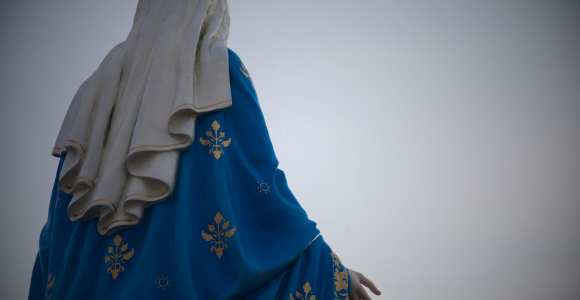
Image by Canva
Again, in the early Jesus movement, Mary Magdalene was both an influential leader in the early movement and a symbol of support for women in leadership in the early church. Beginning in the 4th Century, though, we witness a shift to disparage women leaders, and Christianity moved toward a purely patriarchal form. The different versions of this story played a part in this history.
Part 2 of Mary, Christian Patriachy and the Existence of Poverty
Welcome Readers! Please subscribe to Social Jesus Here.
(Read this series from its beginning here.)
By the close of the 6th Century, Pope Gregory’s sermon conflates all these women to disparage Mary Magdalene. It calls Mary Magdalene a “sinful” prostitute, furthering the patriarchy’s accusation that women are innately morally inferior to men, and it forever changed Mary Magdalene’s reputation: she is never referred to as a prostitute in the gospels. It is interesting that the Eastern Orthodox Church never made Pope Gregory’s error of conflating Mary of Magdala with Mary of Bethany but kept them as separate and distinct figures. Thus, Mary Magdalene in the Eastern tradition was also never conflated with Luke’s “sinful” woman and never believed to have been a prostitute.
I want to say here that women whose work is prostitution should be valued in the same way as any other human being. Work is work. At the same time, prostitution today is very dangerous work due to its legal status and other social stigmas. We need to move away from using “prostitute” as a derogatory or disparaging slur.
The transition in the 4th to 6th Centuries that took Mary Magdalene from an influential early church leader to a “sinful” prostitute advanced the goals by the patriarchy of disparaging women as leaders in the Western Christian church.
One more note about Luke’s gospel. Mary Magdalene and Mary of Bethany and the woman who anoints Jesus are always portrayed as distinct and separate women in Luke’s narratives.
In Luke 7 we have the woman who with the alabaster box. This story ends with Jesus blessing this woman.
Jesus said to the woman, “Your faith has saved you; go in peace.” (Luke 7:50)
In the very next chapter (Luke 8), we read:
After this, Jesus traveled about from one town and village to another, proclaiming the good news of the kingdom of God. The Twelve were with him, and also some women who had been cured of evil spirits and diseases: Mary (called Magdalene) from whom seven demons had come out; Joanna the wife of Chuza, the manager of Herod’s household; Susanna; and many others. These women were helping to support them out of their own means. (Luke 8:1-3)
Luke refers to Mary here as “called Magdalene” (from Magdala in Galilee) “out of whom seven demons were cast out.” Luke could have easily said this was Mary, the same sinful woman I was just writing about! But no, this Mary is a new woman added to the story, and she financially supported Jesus in his work.
In addition, Luke also mentions Mary of Bethany. In Luke 10, she and Martha are still sisters, but they have no brother named Lazarus in Luke’s gospel. Mary of Bethany is an additional woman in the story.
As Jesus and his disciples were on their way, he came to a village where a woman named Martha opened her home to him. She had a sister called Mary, who sat at the Lord’s feet listening to what he said. (Luke 10:38-19)
So, in Luke, we have the woman in Luke 7, Mary of Magdala (Galilee) in Luke 8, and Mary, Martha’s sister, of Bethany (Judea, outside Jerusalem) in Luke 10. Never does Luke even remotely hint that these three are all the same women.
By the time we get to the last gospel in our canon, John has now lifted this story from being about a sinful woman to being about Mary of Bethany, Martha’s sister. In John’s version she has a brother named Lazarus whom Jesus raises from the dead.
“Now a man named Lazarus was sick. He was from Bethany, the village of Mary and her sister Martha. (This Mary, whose brother Lazarus now lay sick, was the same one who poured perfume on the Lord and wiped his feet with her hair.) (John 11:1-2)
It’s curious that Luke never mentions Lazarus as the brother of Mary and Martha of Bethany. Stop and ponder that. Luke never mentions something so significant in John’s gospel as to be the cause of Jesus’ crucifixion. In Luke, Jesus is crucified not because he raises Lazarus but because of his protest in the temple courtyard with the money changers. Why is this significant? It has to do with the existence of poverty. And we’ll begin there in Part 3.
Are you receiving all of RHM’s free resources each week?
Begin each day being inspired toward love, compassion, justice and action. Free.
Sign up at HERE.
General Christian
Politics and Religion

About Herb Montgomery
Herb Montgomery, director of Renewed Heart Ministries, is an author and adult religious re-educator helping Christians explore the intersection of their faith with love, compassion, action, and societal justice. You can read more about the author here.
Previous Post
April 1, 2025
Mary, Patriarchy and the War on Women in Leadership
Next Post
April 3, 2025 Poverty is a By-product of the System
Browse Our Archives
Select a Category Ableism Abolition Advent Anti Semitism Christianity Christmas Climate Justice Criminal Justice Democracy Disability Justice Distributive Justice Easter Economic Justice Environmental Justice Equity Feminism Government Immigration Justice Indigenous Justice Interfaith Law and Order LGBTQ Affirmation Liberation Theology Migrant Justice Myth of Redemptive Suffering Nonviolence Prayer Racial Justice Reparation Resistance Resurrection Social Gospel Social Justice Survival Uncategorized Womanism
Select a Month October 2026 September 2026 August 2026 July 2026 June 2026 May 2026 April 2026 March 2026 February 2026 January 2026 December 2025 November 2025 October 2025 September 2025 August 2025 July 2025 June 2025 May 2025 April 2025 March 2025 February 2025 January 2025 December 2024 November 2024 October 2024 September 2024 August 2024 July 2024 June 2024 May 2024 April 2024 March 2024 February 2024 January 2024 December 2023 November 2023 October 2023 September 2023 August 2023 July 2023 June 2023 May 2023 April 2023 March 2023 February 2023 January 2023 December 2022 November 2022 October 2022 September 2022 August 2022 July 2022 June 2022 May 2022 April 2022 March 2022 February 2022 January 2022 December 2021 November 2021 October 2021 September 2021 August 2021 July 2021 June 2021 May 2021 April 2021 March 2021 February 2021 January 2021 December 2020 November 2020 October 2020 September 2020 August 2020 July 2020 June 2020 May 2020 April 2020 March 2020 February 2020 January 2020 December 2019 November 2019 October 2019 September 2019 August 2019 July 2019 June 2019 May 2019 April 2019
Follow Us!
TAKE THE
Religious Wisdom Quiz
According to 1 Peter, Jesus bore our sins in his body where?
Select your answer to see how you score.
In the tomb On the tree (cross) In the garden On the mountain
Related posts from Social Jesus



A Wedding Banquet and Participating in Justice

A Wedding Banquet and An Invitation to Justice
TRENDING AT PATHEOS Progressive Christian

Methodist Central Hall and Westminster Abbey
Situated on the same square is Methodist Central Hall and Westminster Abbey. ...

57th Dove Awards Honor Dolly Parton, Crown New...
On gospel music’s biggest night, the 57th annual GMA Dove Awards honored...

The First Eucharistic Controversy: Christ’s Real Presence
For Catholics, the Eucharist is the source and summit of the Christian...

What a Stop Sign Can Teach Us About...
How to Make a Decision When You Can't Hear God Main point:...

Archdiocese Hosts Military Marriage Retreat in Germany
RASTATT, Germany — The transient military lifestyle, with its frequent deployments and...

Nearly every morning, I make the drive to Detroit with my high-school-age...
view all Progressive Christian blogs
Ad-Free & Subscriber Log-In Subscription Support
- About Us
- 2026 Calendar
- Videos
- Podcasts
- Library of World Religions
- Faith In Media Tracker
- Advertise With Us
- Write for Us
- Privacy Policy
- Terms of Service
- Do Not Sell My Data
- Contact Us
- Radiant Digital
- Manage Newsletter Subscriptions
- Unsubscribe From Notifications
- Sitemap
Copyright 2008-2026, Patheos. All rights reserved.
Subscription Support Ad-Free & Subscriber Log-In
Follow Patheos