
BuddhistCatholicContemplativeEvangelicalGeneral ChristianHinduJewishLatter-day SaintMuslimNew VisionsProgressive Christian
Beliefs
- Buddhist
- Catholic
- Contemplative
- Evangelical
- General Christian
- Hindu
- Jewish
- Latter-day Saint
- More Voices
- Muslim
- New Visions
- Pagan
- Progressive Christian
Topics
- Religion News
- Food and Religion
- Sports and Religion
- Religious Art
- Religious Music and Entertainment
- Religious Events
- History and Religion
- Style and Religion
- Politics and Religion
- Women in Religion
- Recreation Outdoors and Religion
- Business Finance and Religion
- Careers Workplace and Religion
- Education and Religion
- Family Parenting and Religion
- Health Fitness and Religion
- Home and Religion
- Relationships and Religion
- Technology and Religion
- Travel and Religion
Columnists
- Buddhist Columnists
- Business Finance and Religion Columnists
- Careers Workplace and Religion Columnists
- Catholic Columnists
- Contemplative Columnists
- Education and Religion Columnists
- Evangelists Columnists
- Family Parenting and Religion Columnists
- General Christian Columnists
- Health Fitness and Religion Columnists
- Hindu Columnists
- History and Religion Columnists
- Home and Religion Columnists
- Jewish Columnists
- More Voices Columnists
- Latter Day Columnists
- Muslim Columnists
- New Visions Columnists
- Nonreligious Columnists
- Pagan Columnists
- Politics and Religion Columnists
- Progressive Columnists
- Recreation Outdoors and Religion Columnists
- Relationships and Religion Columnists
- Religion News Columnists
- Religious Art Columnists
- Religious Events Columnists
- Religious Music and Entertainment Columnists
- Sports and Religion Columnists
- Style and Religion Columnists
- Technology and Religion Columnists
- Travel and Religion Columnists
- Women in Religion Columnists
Resource Library
- 2026 Calendar
- Library of World Religions
- The 100 Most Holy Places on Earth
- Patheos Answers
- Podcasts
- Videos
- Faith Leaders Database
- Anglican Episcopalian
- Bahai
- Baptist
- Buddhism
- Christianity
- Confucianism
- Eastern Orthodoxy
- Hinduism
- Holiness and Pentecostal
- ISKCON
- Islam
- Judaism
- Lutheran
- Methodist
- The Church of Jesus Christ of Latter-day Saints
- New Age
- Paganism
- Presbytarian and Reformed
- Protestantism
- Religion Behind the Scenes
- Roman Catholic
- Scientology
- Shia Islam
- Sikhism
- Sufism
- Sunni Islam
- Taoism
- Zen
- See all religions
Research Tools
 Ad-Free & Subscriber Log-In Subscription Support
Ad-Free & Subscriber Log-In Subscription Support
Follow Patheos 

- Trending:
- Forgiveness
- |
- Marriage
- |
- Consciousness
- |
- Death Penalty
- |
- Election
- |
- Halloween

- Home
- Progressive Christian
- Politics and Religion
- Subversive Narratives of Advent, Part 2
Subversive Narratives of Advent, Part 2
Last updated on: January 2, 2024 at 8:11 pm by Herb Montgomery
Subversive Narratives of Advent, Part 2 2024-01-02T20:11:08-04:00 Herb Montgomery
Patheos Explore the world's faith through different perspectives on religion and spirituality! Patheos has the views of the prevalent religions and spiritualities of the world.
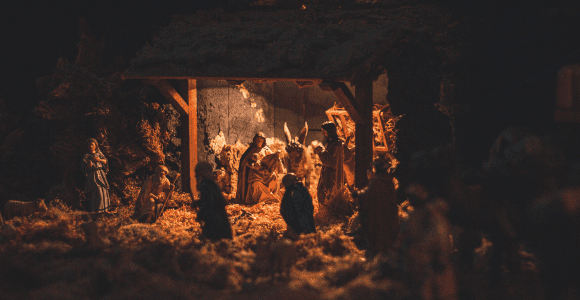
We’ll continue our Advent reading here by considering the social, economic and political context in which the gospel of Luke was written. And this is why in Luke’s gospel we meet Zacchaeus, a tax collector. Tax collectors were an integral part of this exploitative system, and they become wealthy themselves as a result. Luke introduces a few tax collectors (e.g. Luke 3:12, 5:27–30, 7:29, 34, 15:1, 18:10–13), but the most infamous of them is Zacchaeus. When Zacchaeus encounters Jesus’ teachings, he chooses to reject the system that made him wealthy and embraces a path of restoration and reparations instead (see Luke 19-10).
Welcome Readers! Please subscribe to Social Jesus Here.
(Read this series from its beginning here.)
In Luke’s gospel we learn what moved Zacchaeus to change. It was Jesus’ teaching of “the Kingdom” as contrasted with the Roman Empire. Though the language of Kingdom is complicated and challenges readers today, its original audience would have understood it as a contrast to Rome’s system of imperial predation.
After all, Jesus’ ministry in Luke begins with him calling for all debts to be cancelled in the year of Jubilee, the year of the Lord’s favor (see Luke 4:18-19). Jesus’ gospel of the kingdom (and Advent, too) called for debts to be cancelled and for the Torah practices of land being given back to its original owner, indentured slaves being set free, and debt cancellation. This debt was how the system kept the masses permanently dependent and the few elites as continual recipients of funneled wealth. Jesus’ solution was simply to cancel all the debts as the Torah had taught. His “kingdom” wasn’t about saying a special prayer so you could go to heaven when you died. It was a life-giving system in the here and now as an alternative to Rome’s system of economic extraction.
In Luke’s gospel, we also encounter what we call today Mary’s Magnificat:
He has brought down rulers from their thrones
but has lifted up the humble.
He has filled the hungry with good things
but has sent the rich away empty. (Luke 1:52-53)
The words of Simeon are similar:
“This child is destined to cause the falling (elite, rich rulers) and rising (poor and hungry) of many in Israel.” (Luke 2:34)
Repeatedly in Luke, Jesus calls his listeners to reject Rome’s predatory system and embrace the Kingdom instead (see Luke 12:13-31). Jesus says things to those benefitting from Rome’s system like, “Watch out! Be on your guard against all kinds of greed; life does not consist in an abundance of possessions.” (Luke 12:15)
The word for greed here is pleonexia. Thayer defines this as the covetousness or the desire to have more specifically what others have. It is the insatiable desire for what belongs to another. This is exactly what was happening at that time. The wealthy elite were insatiable, extracting everything the masses had to enrich themselves. The Roman power brokers ran after such things too, but Jesus announced the Advent of a different “kingdom” and tells his listeners, “Seek first the kingdom, and all that you need will be given to you” (Luke 12:31). Today we here in the U.S. live in a debt economy with many experiencing only subsistence living. I wonder how Luke’s gospel would read if it was written for us?
We’ll explore that, last, as we wrap up our final series this year for Advent.
(Read Part 3)
General Christian
Politics and Religion

About Herb Montgomery
Herb Montgomery, director of Renewed Heart Ministries, is an author and adult religious re-educator helping Christians explore the intersection of their faith with love, compassion, action, and societal justice. You can read more about the author here.
Previous Post
December 19, 2023
Subversive Narratives of Advent, Part 1
Next Post
December 21, 2023 Subversive Narratives of Advent, Part 3
Browse Our Archives
Select a Category Ableism Abolition Advent Anti Semitism Christianity Christmas Climate Justice Criminal Justice Democracy Disability Justice Distributive Justice Easter Economic Justice Environmental Justice Equity Feminism Government Immigration Justice Indigenous Justice Interfaith Law and Order LGBTQ Affirmation Liberation Theology Migrant Justice Myth of Redemptive Suffering Nonviolence Prayer Racial Justice Reparation Resistance Resurrection Social Gospel Social Justice Survival Uncategorized Womanism
Select a Month October 2026 September 2026 August 2026 July 2026 June 2026 May 2026 April 2026 March 2026 February 2026 January 2026 December 2025 November 2025 October 2025 September 2025 August 2025 July 2025 June 2025 May 2025 April 2025 March 2025 February 2025 January 2025 December 2024 November 2024 October 2024 September 2024 August 2024 July 2024 June 2024 May 2024 April 2024 March 2024 February 2024 January 2024 December 2023 November 2023 October 2023 September 2023 August 2023 July 2023 June 2023 May 2023 April 2023 March 2023 February 2023 January 2023 December 2022 November 2022 October 2022 September 2022 August 2022 July 2022 June 2022 May 2022 April 2022 March 2022 February 2022 January 2022 December 2021 November 2021 October 2021 September 2021 August 2021 July 2021 June 2021 May 2021 April 2021 March 2021 February 2021 January 2021 December 2020 November 2020 October 2020 September 2020 August 2020 July 2020 June 2020 May 2020 April 2020 March 2020 February 2020 January 2020 December 2019 November 2019 October 2019 September 2019 August 2019 July 2019 June 2019 May 2019 April 2019
Follow Us!
TAKE THE
Religious Wisdom Quiz
What year was the Council of Nicea?
Select your answer to see how you score.
500 AD 325 AD 1054 AD 1517 AD
Related posts from Social Jesus



A Wedding Banquet and Participating in Justice

A Wedding Banquet and An Invitation to Justice
TRENDING AT PATHEOS Progressive Christian

The First Eucharistic Controversy: Christ’s Real Presence
For Catholics, the Eucharist is the source and summit of the Christian...

How to Make a Decision When You Can't...
Main point: It’s much more valuable to stay close to God so...

Archdiocese Hosts Military Marriage Retreat in Germany
RASTATT, Germany — The transient military lifestyle, with its frequent deployments and...

Nearly every morning, I make the drive to Detroit with my high-school-age...

The Real AI Story Is Adoption Without Trust
Artificial intelligence has crossed a political threshold. It is no longer a...

A new article, written by Jeff Lindsay and Gale L. Pooley,...
view all Progressive Christian blogs
Ad-Free & Subscriber Log-In Subscription Support
- About Us
- 2026 Calendar
- Videos
- Podcasts
- Library of World Religions
- Faith In Media Tracker
- Advertise With Us
- Write for Us
- Privacy Policy
- Terms of Service
- Do Not Sell My Data
- Contact Us
- Radiant Digital
- Manage Newsletter Subscriptions
- Unsubscribe From Notifications
- Sitemap
Copyright 2008-2026, Patheos. All rights reserved.
Subscription Support Ad-Free & Subscriber Log-In
Follow Patheos