
BuddhistCatholicContemplativeEvangelicalGeneral ChristianHinduJewishLatter-day SaintMuslimNew VisionsProgressive Christian
Beliefs
- Buddhist
- Catholic
- Contemplative
- Evangelical
- General Christian
- Hindu
- Jewish
- Latter-day Saint
- More Voices
- Muslim
- New Visions
- Pagan
- Progressive Christian
Topics
- Religion News
- Food and Religion
- Sports and Religion
- Religious Art
- Religious Music and Entertainment
- Religious Events
- History and Religion
- Style and Religion
- Politics and Religion
- Women in Religion
- Recreation Outdoors and Religion
- Business Finance and Religion
- Careers Workplace and Religion
- Education and Religion
- Family Parenting and Religion
- Health Fitness and Religion
- Home and Religion
- Relationships and Religion
- Technology and Religion
- Travel and Religion
Columnists
- Buddhist Columnists
- Business Finance and Religion Columnists
- Careers Workplace and Religion Columnists
- Catholic Columnists
- Contemplative Columnists
- Education and Religion Columnists
- Evangelists Columnists
- Family Parenting and Religion Columnists
- General Christian Columnists
- Health Fitness and Religion Columnists
- Hindu Columnists
- History and Religion Columnists
- Home and Religion Columnists
- Jewish Columnists
- More Voices Columnists
- Latter Day Columnists
- Muslim Columnists
- New Visions Columnists
- Nonreligious Columnists
- Pagan Columnists
- Politics and Religion Columnists
- Progressive Columnists
- Recreation Outdoors and Religion Columnists
- Relationships and Religion Columnists
- Religion News Columnists
- Religious Art Columnists
- Religious Events Columnists
- Religious Music and Entertainment Columnists
- Sports and Religion Columnists
- Style and Religion Columnists
- Technology and Religion Columnists
- Travel and Religion Columnists
- Women in Religion Columnists
Resource Library
- 2026 Calendar
- Library of World Religions
- The 100 Most Holy Places on Earth
- Patheos Answers
- Podcasts
- Videos
- Faith Leaders Database
- Anglican Episcopalian
- Bahai
- Baptist
- Buddhism
- Christianity
- Confucianism
- Eastern Orthodoxy
- Hinduism
- Holiness and Pentecostal
- ISKCON
- Islam
- Judaism
- Lutheran
- Methodist
- The Church of Jesus Christ of Latter-day Saints
- New Age
- Paganism
- Presbytarian and Reformed
- Protestantism
- Religion Behind the Scenes
- Roman Catholic
- Scientology
- Shia Islam
- Sikhism
- Sufism
- Sunni Islam
- Taoism
- Zen
- See all religions
Research Tools
 Ad-Free & Subscriber Log-In Subscription Support
Ad-Free & Subscriber Log-In Subscription Support
Follow Patheos 

- Trending:
- Forgiveness
- |
- Marriage
- |
- Consciousness
- |
- Death Penalty
- |
- Election
- |
- Halloween

- Home
- Progressive Christian
- Politics and Religion
- The Bodies We Inhabit (Part 3 of 3)
The Bodies We Inhabit (Part 3 of 3)
Last updated on: August 26, 2022 at 11:10 am by Herb Montgomery
The Bodies We Inhabit (Part 3 of 3) 2022-08-26T11:10:56-04:00 Herb Montgomery
Patheos Explore the world's faith through different perspectives on religion and spirituality! Patheos has the views of the prevalent religions and spiritualities of the world.
Welcome readers! Please subscribe through the button on the right.
(Read this series from the beginning at Part 1 and Part 2.)
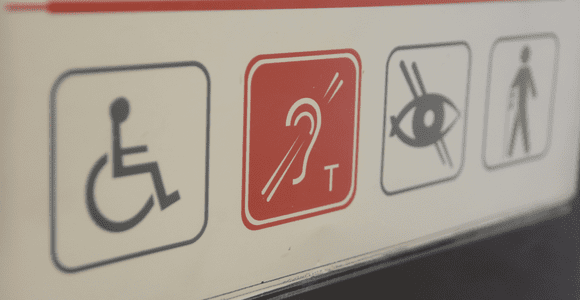
When people conflate sin and disability, they make disabilities a synonym for sinfulness or shortcomings. In all four of the canonical gospels, the gospel authors both subvert and strengthen that connection (i.e. blindness, Matthew 15:5; inability to be mobile, John 5; deafness, Matthew 13:15). As we’ve discussed, there are also elements in the gospels that can be interpreted as teaching inherent virtue in suffering, and when applied to people with disabilities, that means teaching they were chosen for disability to fulfill some heroic, good, divine purpose (see John 9:3). Finally, what Eiesland names as “segregationist charity” means keeping people with disabilities at arms’ length while calling for charity and withholding full inclusion and accessible justice from them (see John 19:36; Exodus 12:46; and Leviticus 21:16-23). Some faith traditions prevent disabled people from participating in fully ordained ministry.
It cannot be denied that the biblical record and Christian theology have often been dangerous for persons with disabilities. Nor can the prejudice, hostility, and suspicion toward people with disabilities be dismissed as relics of an unenlightened past. Today many interpretations of biblical passages and Christian theologies continue to reinforce negative stereotypes, support social and environmental segregation, and mask the lived realities of people with disabilities. In recent decades, while the problematic nature of the bible record with regard to women has become generally acknowledged, the degrading depictions of people with disabilities are often ignored or, worse, seen as fundamentally accurate to our experience. An uncritical use of the Bible to address the concerns of people with disabilities perpetuates marginalization and discrimination in the name of religion.” (The Disabled God, p. 74-75)
As Jesus followers, we can and must do better.
I include myself in this. I, too, have conflated disability and sin, promoted the virtues of suffering, and withheld full inclusion in the past.
Our reading this week gives us the opportunity to interpret a gospel story in a life-giving way, one that calls for full accessibility and inclusion.
“When you give a luncheon or dinner, do not invite your friends, your brothers or sisters, your relatives, or your rich neighbors; if you do, they may invite you back and so you will be repaid. But when you give a banquet, invite the poor, the crippled, the lame, the blind, and you will be blessed.”
I love the emphasis in the end of this passage. It’s not that “they” will be blessed. It’s that “you” will be blessed. The text defines that blessing as an extrinsic, extra bestowal of blessing at what Luke’s readers understood in their worldview as a future “resurrection of the righteous.”
What I would rather have us understand is that there is an intrinsic blessing and value that people of varying experiences can bring to a community. When a person has a body that is in some way different or disabled in some way in their society, their inclusion and accessibility would bring an inherent blessing to their community. I do not romanticize a person’s disability. Their disability doesn’t mysteriously infuse them with value, but it doesn’t negate or lessen their value either.
Not all bodies are the same. Not all bodies develop the same way. And no body escapes those events that change our bodies. But every body is valuable; every person has something to bring to the table. When we exclude certain people because of their bodies, our communities are the worse off for it. Not only do those excluded suffer loss from being excluded, but the communities that exclude them also suffer loss because of their absence.
This week, rather than focusing on a future extrinsic “repayment” or reward for including those society often labels as “less than” today, may we all begin so see the value of people, regardless of our differences, and especially when those differences relate to the kinds of bodies we’re each living in. There should be a place at the table for all for all of us, where all of us can bring to our communities what we have to offer, where every one of us gains the blessing of both giving and receiving. The intrinsic value of every person calls us as Jesus followers, especially, to ensure an attitude of inclusion and concrete means of accessibility as well.
I believe this is possible and the spirit of our most cherished Jesus stories calls us to it. To the degree that our communities are accessible to people whose bodies are different or disabled, to that same degree we will intrinsically experience either blessing or loss.
Politics and Religion

About Herb Montgomery
Herb Montgomery, director of Renewed Heart Ministries, is an author and adult religious re-educator helping Christians explore the intersection of their faith with love, compassion, action, and societal justice. You can read more about the author here.
Previous Post

August 25, 2022
The Bodies We Inhabit (Part 2 of 3)
Next Post

August 30, 2022 Rejection For Doing What Is Right (Part 1 of 3)
Browse Our Archives
Select a Category Ableism Abolition Advent Anti Semitism Christianity Christmas Climate Justice Criminal Justice Democracy Disability Justice Distributive Justice Easter Economic Justice Environmental Justice Equity Feminism Government Immigration Justice Indigenous Justice Interfaith Law and Order LGBTQ Affirmation Liberation Theology Migrant Justice Myth of Redemptive Suffering Nonviolence Prayer Racial Justice Reparation Resistance Resurrection Social Gospel Social Justice Survival Uncategorized Womanism
Select a Month October 2026 September 2026 August 2026 July 2026 June 2026 May 2026 April 2026 March 2026 February 2026 January 2026 December 2025 November 2025 October 2025 September 2025 August 2025 July 2025 June 2025 May 2025 April 2025 March 2025 February 2025 January 2025 December 2024 November 2024 October 2024 September 2024 August 2024 July 2024 June 2024 May 2024 April 2024 March 2024 February 2024 January 2024 December 2023 November 2023 October 2023 September 2023 August 2023 July 2023 June 2023 May 2023 April 2023 March 2023 February 2023 January 2023 December 2022 November 2022 October 2022 September 2022 August 2022 July 2022 June 2022 May 2022 April 2022 March 2022 February 2022 January 2022 December 2021 November 2021 October 2021 September 2021 August 2021 July 2021 June 2021 May 2021 April 2021 March 2021 February 2021 January 2021 December 2020 November 2020 October 2020 September 2020 August 2020 July 2020 June 2020 May 2020 April 2020 March 2020 February 2020 January 2020 December 2019 November 2019 October 2019 September 2019 August 2019 July 2019 June 2019 May 2019 April 2019
Follow Us!
TAKE THE
Religious Wisdom Quiz
What does the name "Jacob" mean?
Select your answer to see how you score.
Friend of God Justified Supplanter Full of light
Related posts from Social Jesus



A Wedding Banquet and Participating in Justice

A Wedding Banquet and An Invitation to Justice
TRENDING AT PATHEOS Progressive Christian

How to Make a Decision When You Can't...
Main point: It’s much more valuable to stay close to God so...

Archdiocese Hosts Military Marriage Retreat in Germany
RASTATT, Germany — The transient military lifestyle, with its frequent deployments and...

Nearly every morning, I make the drive to Detroit with my high-school-age...

The Real AI Story Is Adoption Without Trust
Artificial intelligence has crossed a political threshold. It is no longer a...

A new article, written by Jeff Lindsay and Gale L. Pooley,...

Swimfan: Forgotten Aughts Pleasures
This is a recovery effort. In 2002, My Big Fat Greek Wedding...
view all Progressive Christian blogs
Ad-Free & Subscriber Log-In Subscription Support
- About Us
- 2026 Calendar
- Videos
- Podcasts
- Library of World Religions
- Faith In Media Tracker
- Advertise With Us
- Write for Us
- Privacy Policy
- Terms of Service
- Do Not Sell My Data
- Contact Us
- Radiant Digital
- Manage Newsletter Subscriptions
- Unsubscribe From Notifications
- Sitemap
Copyright 2008-2026, Patheos. All rights reserved.
Subscription Support Ad-Free & Subscriber Log-In
Follow Patheos