
BuddhistCatholicContemplativeEvangelicalGeneral ChristianHinduJewishLatter-day SaintMuslimNew VisionsProgressive Christian
Beliefs
- Buddhist
- Catholic
- Contemplative
- Evangelical
- General Christian
- Hindu
- Jewish
- Latter-day Saint
- More Voices
- Muslim
- New Visions
- Pagan
- Progressive Christian
Topics
- Religion News
- Food and Religion
- Sports and Religion
- Religious Art
- Religious Music and Entertainment
- Religious Events
- History and Religion
- Style and Religion
- Politics and Religion
- Women in Religion
- Recreation Outdoors and Religion
- Business Finance and Religion
- Careers Workplace and Religion
- Education and Religion
- Family Parenting and Religion
- Health Fitness and Religion
- Home and Religion
- Relationships and Religion
- Technology and Religion
- Travel and Religion
Columnists
- Buddhist Columnists
- Business Finance and Religion Columnists
- Careers Workplace and Religion Columnists
- Catholic Columnists
- Contemplative Columnists
- Education and Religion Columnists
- Evangelists Columnists
- Family Parenting and Religion Columnists
- General Christian Columnists
- Health Fitness and Religion Columnists
- Hindu Columnists
- History and Religion Columnists
- Home and Religion Columnists
- Jewish Columnists
- More Voices Columnists
- Latter Day Columnists
- Muslim Columnists
- New Visions Columnists
- Nonreligious Columnists
- Pagan Columnists
- Politics and Religion Columnists
- Progressive Columnists
- Recreation Outdoors and Religion Columnists
- Relationships and Religion Columnists
- Religion News Columnists
- Religious Art Columnists
- Religious Events Columnists
- Religious Music and Entertainment Columnists
- Sports and Religion Columnists
- Style and Religion Columnists
- Technology and Religion Columnists
- Travel and Religion Columnists
- Women in Religion Columnists
Resource Library
- 2026 Calendar
- Library of World Religions
- The 100 Most Holy Places on Earth
- Patheos Answers
- Podcasts
- Videos
- Faith Leaders Database
- Anglican Episcopalian
- Bahai
- Baptist
- Buddhism
- Christianity
- Confucianism
- Eastern Orthodoxy
- Hinduism
- Holiness and Pentecostal
- ISKCON
- Islam
- Judaism
- Lutheran
- Methodist
- The Church of Jesus Christ of Latter-day Saints
- New Age
- Paganism
- Presbytarian and Reformed
- Protestantism
- Religion Behind the Scenes
- Roman Catholic
- Scientology
- Shia Islam
- Sikhism
- Sufism
- Sunni Islam
- Taoism
- Zen
- See all religions
Research Tools
 Ad-Free & Subscriber Log-In Subscription Support
Ad-Free & Subscriber Log-In Subscription Support
Follow Patheos 

- Trending:
- Forgiveness
- |
- Marriage
- |
- Consciousness
- |
- Death Penalty
- |
- Election
- |
- Halloween

- Home
- Progressive Christian
- More Effective Ways To Care (Part 3 of 3)
More Effective Ways To Care (Part 3 of 3)
Last updated on: July 9, 2020 at 5:04 pm by Herb Montgomery
More Effective Ways To Care (Part 3 of 3) 2020-07-09T17:04:45-04:00 Herb Montgomery
Patheos Explore the world's faith through different perspectives on religion and spirituality! Patheos has the views of the prevalent religions and spiritualities of the world.
Welcome readers! Please subscribe through the buttons on the right if you enjoy this post.
(Read this series from its beginning here.)
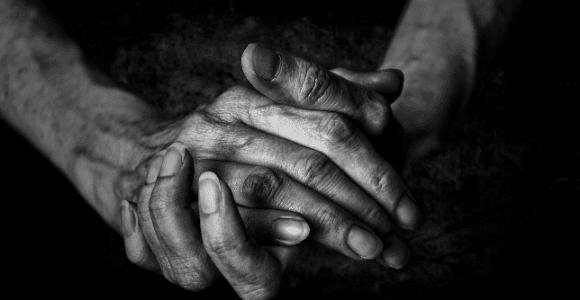
What does this mean for us today? Jesus’ teachings still invite us to experience community where, rather than exercising power over others, we—together—learn how to listen to one another. And instead of lording power or position over each other, we learn what it means and what it looks like to care for each other.
I am convinced that, personally and systemically, our hope as a species is in discovering more effective ways of taking care of one another, not more efficient ways of dominating one another. Today, a few people have solved the human dilemma of their own survival at the expense of others. In so doing they’ve lost a part of their humanity. They’ve lost touch with reality that, whether we live like it or not, we are part of one another. We are all connected. What impacts one, directly and indirectly, impacts us all.
The question I wrestle with most when considering communities like those I just described is how do we protect certain community members from others who may use their strength to overpower, take advantage of, and do harm to those vulnerable within the community? Perhaps you wonder this too. Humanity is not perfect. Humanity is messy. How do we handle that messiness in non-authoritarian ways that mitigate or prevent harm?
I’m reminded of the work of Peter Kropotkin, a Russian activist, writer, revolutionary, and philosopher who lived in the late 19th and early 20th Century. In his book Mutual Aid, he wrote:
“While [Darwin] was chiefly using the term [survival of the fittest] in its narrow sense for his own special purpose, he warned his followers against committing the error (which he seems once to have committed himself) of overrating its narrow meaning. In The Descent of Man he gave some powerful pages to illustrate its proper, wide sense. He pointed out how, in numberless animal societies, the struggle between separate individuals for the means of existence disappears, how struggle is replaced by co-operation, and how that substitution results in the development of intellectual and moral faculties which secure to the species the best conditions for survival. He intimated that in such cases the fittest are not the physically strongest, nor the cunningest, but those who learn to combine so as mutually to support each other, strong and weak alike, for the welfare of the community. ‘Those communities,’ he wrote, ‘which included the greatest number of the most sympathetic members would flourish best, and rear the greatest number of offspring’ (2nd edit., p. 163). The term, which originated from the narrow Malthusian conception of competition between each and all, thus lost its narrowness in the mind of one who knew Nature.”
In Kropotkin’s model, the fittest communities are not those where the strong eat the weak, but those where those who have the ability to take care of those who need their care do so.
From the US government’s failed responses to COVID-19 to our country’s continued refusal to listen to those most deeply harmed by our systemic racial injustice and militarized policing, the past few months of life here in the U.S. have revealed how desperately we are in need of a raised consciousness. We need to recognize the truth that healthy communities are not competitive communities of winners and losers where the disparities between the haves and have-nots continue to expand. Instead, they are communities of care and cooperation where we have learned how to ensure those presently made “least” are centered, cared for, and prioritized.
As Mathew’s gospel reminds us, “The King will reply, ‘Truly I tell you, whatever you did for one of the least of these brothers and sisters of mine, you did for me.’ He will reply, ‘Truly I tell you, whatever you did not do for one of the least of these, you did not do for me’” (Matthew 25:40, 45).
I long for the day when we don’t treat others with dignity, care and respect because we see Jesus in them, although that would be a good start, but we do it simply because we see them as fellow humans, fellow travelers, fellow inhabitants in the short period of life we have been given.
Peter Maurin wrote in The Catholic Worker in August 1936:
“I want a change, and a radical change. I want a change from an acquisitive society to a functional society, from a society of go-getters to a society of go-givers.”
I want to believe a world like that is possible.
At the very minimum, I believe it’s worth working toward.
And to all those who are already working toward a world that looks like this, may future generations look back at you and be grateful. May our work today, building off the work of those who have come before us not be in vain.
And may a just future come, in the words of Matthew’s gospel, “on earth as it is in heaven” (Matthew 6:10).

About Herb Montgomery
Herb Montgomery, director of Renewed Heart Ministries, is an author and adult religious re-educator helping Christians explore the intersection of their faith with love, compassion, action and societal justice. You can read more about the author here.
Previous Post

July 8, 2020
More Effective Ways To Care (Part 2 of 3)
Next Post
July 13, 2020 Mislabelling Social Justice as Foolishness (Part 1 of 3)
Browse Our Archives
Select a Category Ableism Abolition Advent Anti Semitism Christianity Christmas Climate Justice Criminal Justice Democracy Disability Justice Distributive Justice Easter Economic Justice Environmental Justice Equity Feminism Government Immigration Justice Indigenous Justice Interfaith Law and Order LGBTQ Affirmation Liberation Theology Migrant Justice Myth of Redemptive Suffering Nonviolence Prayer Racial Justice Reparation Resistance Resurrection Social Gospel Social Justice Survival Uncategorized Womanism
Select a Month October 2026 September 2026 August 2026 July 2026 June 2026 May 2026 April 2026 March 2026 February 2026 January 2026 December 2025 November 2025 October 2025 September 2025 August 2025 July 2025 June 2025 May 2025 April 2025 March 2025 February 2025 January 2025 December 2024 November 2024 October 2024 September 2024 August 2024 July 2024 June 2024 May 2024 April 2024 March 2024 February 2024 January 2024 December 2023 November 2023 October 2023 September 2023 August 2023 July 2023 June 2023 May 2023 April 2023 March 2023 February 2023 January 2023 December 2022 November 2022 October 2022 September 2022 August 2022 July 2022 June 2022 May 2022 April 2022 March 2022 February 2022 January 2022 December 2021 November 2021 October 2021 September 2021 August 2021 July 2021 June 2021 May 2021 April 2021 March 2021 February 2021 January 2021 December 2020 November 2020 October 2020 September 2020 August 2020 July 2020 June 2020 May 2020 April 2020 March 2020 February 2020 January 2020 December 2019 November 2019 October 2019 September 2019 August 2019 July 2019 June 2019 May 2019 April 2019
Follow Us!
TAKE THE
Religious Wisdom Quiz
What sign did God give Hezekiah to show he would be healed?
Select your answer to see how you score.
A river turned to blood The sun's shadow went backward Fire from heaven Rain in drought
Related posts from Social Jesus



A Wedding Banquet and Participating in Justice

A Wedding Banquet and An Invitation to Justice
TRENDING AT PATHEOS Progressive Christian

When Halloween Unmasks Married Hearts
Written by Dr. David K. Ewen from Eternal Truth Bible College Behind...

Aristotle. He’s been called the father of logic, the father of the...

Methodist Central Hall and Westminster Abbey
Situated on the same square is Methodist Central Hall and Westminster Abbey. ...

57th Dove Awards Honor Dolly Parton, Crown New...
On gospel music’s biggest night, the 57th annual GMA Dove Awards honored...

The First Eucharistic Controversy: Christ’s Real Presence
For Catholics, the Eucharist is the source and summit of the Christian...

What a Stop Sign Can Teach Us About...
How to Make a Decision When You Can't Hear God Main point:...
view all Progressive Christian blogs
Ad-Free & Subscriber Log-In Subscription Support
- About Us
- 2026 Calendar
- Videos
- Podcasts
- Library of World Religions
- Faith In Media Tracker
- Advertise With Us
- Write for Us
- Privacy Policy
- Terms of Service
- Do Not Sell My Data
- Contact Us
- Radiant Digital
- Manage Newsletter Subscriptions
- Unsubscribe From Notifications
- Sitemap
Copyright 2008-2026, Patheos. All rights reserved.
Subscription Support Ad-Free & Subscriber Log-In
Follow Patheos