
BuddhistCatholicContemplativeEvangelicalGeneral ChristianHinduJewishLatter-day SaintMuslimNew VisionsProgressive Christian
Beliefs
- Buddhist
- Catholic
- Contemplative
- Evangelical
- General Christian
- Hindu
- Jewish
- Latter-day Saint
- More Voices
- Muslim
- New Visions
- Pagan
- Progressive Christian
Topics
- Religion News
- Food and Religion
- Sports and Religion
- Religious Art
- Religious Music and Entertainment
- Religious Events
- History and Religion
- Style and Religion
- Politics and Religion
- Women in Religion
- Recreation Outdoors and Religion
- Business Finance and Religion
- Careers Workplace and Religion
- Education and Religion
- Family Parenting and Religion
- Health Fitness and Religion
- Home and Religion
- Relationships and Religion
- Technology and Religion
- Travel and Religion
Columnists
- Buddhist Columnists
- Business Finance and Religion Columnists
- Careers Workplace and Religion Columnists
- Catholic Columnists
- Contemplative Columnists
- Education and Religion Columnists
- Evangelists Columnists
- Family Parenting and Religion Columnists
- General Christian Columnists
- Health Fitness and Religion Columnists
- Hindu Columnists
- History and Religion Columnists
- Home and Religion Columnists
- Jewish Columnists
- More Voices Columnists
- Latter Day Columnists
- Muslim Columnists
- New Visions Columnists
- Nonreligious Columnists
- Pagan Columnists
- Politics and Religion Columnists
- Progressive Columnists
- Recreation Outdoors and Religion Columnists
- Relationships and Religion Columnists
- Religion News Columnists
- Religious Art Columnists
- Religious Events Columnists
- Religious Music and Entertainment Columnists
- Sports and Religion Columnists
- Style and Religion Columnists
- Technology and Religion Columnists
- Travel and Religion Columnists
- Women in Religion Columnists
Resource Library
- 2026 Calendar
- Library of World Religions
- The 100 Most Holy Places on Earth
- Patheos Answers
- Podcasts
- Videos
- Faith Leaders Database
- Anglican Episcopalian
- Bahai
- Baptist
- Buddhism
- Christianity
- Confucianism
- Eastern Orthodoxy
- Hinduism
- Holiness and Pentecostal
- ISKCON
- Islam
- Judaism
- Lutheran
- Methodist
- The Church of Jesus Christ of Latter-day Saints
- New Age
- Paganism
- Presbytarian and Reformed
- Protestantism
- Religion Behind the Scenes
- Roman Catholic
- Scientology
- Shia Islam
- Sikhism
- Sufism
- Sunni Islam
- Taoism
- Zen
- See all religions
Research Tools
 Ad-Free & Subscriber Log-In Subscription Support
Ad-Free & Subscriber Log-In Subscription Support
Follow Patheos 

- Trending:
- Forgiveness
- |
- Marriage
- |
- Consciousness
- |
- Death Penalty
- |
- Election
- |
- Halloween

- Home
- Progressive Christian
- Prioritizing Justice and Compassion for the Marginalized
Prioritizing Justice and Compassion for the Marginalized
Last updated on: October 9, 2019 at 10:00 am by Herb Montgomery
Prioritizing Justice and Compassion for the Marginalized 2019-10-08T11:17:13-04:00 Herb Montgomery
Patheos Explore the world's faith through different perspectives on religion and spirituality! Patheos has the views of the prevalent religions and spiritualities of the world.
Welcome readers! Please subscribe through the buttons at the right if you enjoy this post.
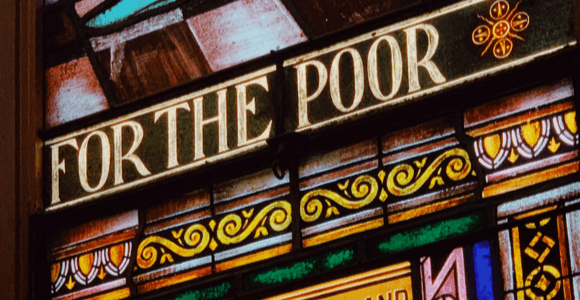
Photo by Jon Tyson on Unsplash
Both Matthew’s and Luke’s gospels speak of a rant by Jesus against some of the Pharisees:
“‘Woe to you, teachers of the law and Pharisees, you hypocrites! You give a tenth of your spices—mint, dill and cumin. But you have neglected the more important matters of the law—justice, mercy and faithfulness. You should have practiced the latter, without neglecting the former . . . Woe to you, teachers of the law and Pharisees, you hypocrites! You clean the outside of the cup and dish, but inside they are full of greed and self–indulgence. Blind Pharisee! First clean the inside of the cup and dish, and then the outside also will be clean. Woe to you, teachers of the law and Pharisees, you hypocrites! You are like whitewashed tombs, which look beautiful on the outside but on the inside are full of the bones of the dead and everything unclean . . . [The Pharisees] love the place of honor at banquets and the most important seats in the synagogues; they love to be greeted with respect in the marketplaces and to have people call them ‘Rabbi.’” (Matthew 23:23, 25–27, 6–7, cf. Luke 11:42, 39, 41, 43–44)
I do not believe this rant to be against all the Pharisees. Many of those who comprised the teaching Pharisees were wise, honest, good people, including the apostle Paul who joined the followers of Jesus later, and perhaps also Jesus himself. The Pharisees were made up of two groups: those of the school of Hillel and those of the school of Shammai. I believe it was the school of Shammai, which Judaism ultimately rejected too, that Jesus is railing against in this saying. Jesus taught much of what the school of Hillel taught (except Hillel’s economic protections of the rich and his socially unjust teachings on divorce for women). The Jesus of the gospels was raised as a poor, working-class Jew. He may also have been raised by parents who resonated deeply with the school of Hillel interpreting the Torah through the lens of the golden rule.
Also, there is nothing anti-Jewish in this rant. Jesus is standing in the very long tradition of the Hebrew prophets in calling religious and political leaders to justice, mercy, and faithfulness. Consider the following from Isaiah:
“Stop bringing meaningless offerings!
Your incense is detestable to me.
New Moons, Sabbaths and convocations—
I cannot bear your evil assemblies.
Your New Moon feasts and your appointed festivals
I hate with all my being.
They have become a burden to me;
I am weary of bearing them.
When you spread out your hands in prayer,
I will hide my eyes from you;
even if you offer many prayers,
I will not listen.
Your hands are full of blood;
wash and make yourselves clean.
Take your evil deeds
out of my sight!
Stop doing wrong,
learn to do right!
Seek justice,
liberate the oppressed.
Defend the cause of the fatherless,
plead the case of the widow.” (Isaiah 1:13-14)
There are also these words from the book of Amos:
“Hear this, you who trample the needy
and do away with the poor of the land,
saying,
‘When will the New Moon be over
that we may sell grain,
and the Sabbath be ended
that we may market wheat?’—
skimping on the measure,
boosting the price
and cheating with dishonest scales,
buying the poor with silver
and the needy for a pair of sandals,
selling even the sweepings with the wheat.” (Amos 8:4-6)
In the same book, the prophet speaks for God when he says:
“I hate, I despise your religious festivals;
I cannot stand your assemblies.
Even though you bring me burnt offerings and grain offerings,
I will not accept them.
Though you bring choice fellowship offerings,
I will have no regard for them.
Away with the noise of your songs!
I will not listen to the music of your harps.
But let justice roll on like a river,
righteousness like a never-failing stream!” (Amos 5:21-24)
Jesus, like the Jewish prophets before him in Judaism, is prioritizing and centering justice for the oppressed, mercy for the less fortunate and disinherited, and faithfulness to the marginalized and downtrodden over and above religious ritual, worship, and festivals.
Ritual can be done in such a way that shapes us into people who actively work toward justice and compassion for the oppressed of our world. But if it doesn’t shape us into active agents of liberation for the oppressed (see Luke 4:18-19), ritual has very little meaning. I resonate deeply with the priorities found in Isaiah, Amos, and this passage about Jesus.
In these gospels, Jesus contrasts conscientious tithing of the most minute items in the market with neglected justice, mercy, and faithfulness toward the poor. He contrasts the external ritual purity rituals (washing hands, etc.) with being generous toward the poor. He then calls to account those who love making a show, receiving accolades, but being inwardly “dead bones.” Remember as we have seen over and over again this year, the reign of Jesus’ God looked like people taking responsibility for taking care of other people.
The Jewish Jesus-followers in the early church preserved a similar statement rooted in Jesus’ teachings:
“Religion that God our Father accepts as pure and faultless is this: to look after orphans and widows in their distress.” (James 1:27)
As someone who doesn’t have much taste for most things “religious” but who resonates with the values of Jesus, I love this statement in James. It reminds me of another statement by the late Marcus Borg:
“For Jesus, compassion had a radical sociopolitical meaning. In his teaching and table fellowship, and in the shape of his movement, the purity system was subverted and an alternative social vision affirmed. The politics of purity was replaced by a politics of compassion.” (Meeting Jesus Again for the First Time, p. 58)
Jesus, much like the Pharisee Hillel a generation before him, taught a politics of compassion, and he taught it very specifically in terms of compassion and justice for the poor, oppressed, and marginalized.
What If We Did What Jesus Taught?
What would Christianity look like today if we began to filter every religious thing we do, even our ritual and liturgies, through the filter of justice and compassion?
Consider again the following from the book of James:
“Listen, my dear brothers and sisters: Has not God chosen those who are poor in the eyes of the world . . .” (James 2:5)
“If one of you says to them, ‘Go in peace; keep warm and well fed,’ but does nothing about their physical needs, what good is it? In the same way, faith by itself, if it is not accompanied by action, is dead.” (James 2:16-17)
“But someone will say, ‘You have faith; I have deeds.’ Show me your faith without deeds, and I will show you my faith by what I do.” (James 2:18)
I love the book of James because it is the only New Testament commentary we have on Jesus’ Sermon on the Mount. Rather than following Paul’s more cosmic Christ, the author expounds on Jesus’ actual teachings and helps other Jewish Jesus followers to practice them.
A practice that would prove beneficial would be that of making central in our present-day teachings the golden rule, the Sermon on the Mount, and how we relate to one another. What would change is we placed matters of dogma, worship, and less practical theology on the periphery. I firmly believe that you and I are bear the image of the divine. That means that, in this life, the closest I will ever come to the Divine, is YOU! This is what I believe the author of 1 John is trying to get at in this verse:
“If we say we love God yet hate a brother or sister, we are liars. For if we do not love a fellow believer, whom we have seen, we cannot love God, whom we have not seen.” (1 John 4:20)
This means that my actions toward others are my faith. They don’t just reflect it. My actions are what I believe. God-talk can become very theoretical and pointlessly argumentative, and harmful as well! It is only when we acknowledge that each of us has a piece of the puzzle and we need to respect each person’s piece that God-talk can bear any good fruit. I want my faith to bear fruit and my focus to be right here on Planet Earth with you.
What would happen if we began to prioritize our practices according to how those practices express compassion and justice in the lives of others, prioritizing matters of justice, compassion, and faithfulness to our fellow humans above all else?

About Herb Montgomery
Herb Montgomery, director of Renewed Heart Ministries, is an author and adult religious re-educator helping Christians explore the intersection of their faith with love, compassion, action and societal justice. You can read more about the author here.
Previous Post

October 7, 2019
How We See Others
Next Post
October 11, 2019 A Primer on Self-Affirming Nonviolence (Part 10)
Browse Our Archives
Select a Category Ableism Abolition Advent Anti Semitism Christianity Christmas Climate Justice Criminal Justice Democracy Disability Justice Distributive Justice Easter Economic Justice Environmental Justice Equity Feminism Government Immigration Justice Indigenous Justice Interfaith Law and Order LGBTQ Affirmation Liberation Theology Migrant Justice Myth of Redemptive Suffering Nonviolence Prayer Racial Justice Reparation Resistance Resurrection Social Gospel Social Justice Survival Uncategorized Womanism
Select a Month October 2026 September 2026 August 2026 July 2026 June 2026 May 2026 April 2026 March 2026 February 2026 January 2026 December 2025 November 2025 October 2025 September 2025 August 2025 July 2025 June 2025 May 2025 April 2025 March 2025 February 2025 January 2025 December 2024 November 2024 October 2024 September 2024 August 2024 July 2024 June 2024 May 2024 April 2024 March 2024 February 2024 January 2024 December 2023 November 2023 October 2023 September 2023 August 2023 July 2023 June 2023 May 2023 April 2023 March 2023 February 2023 January 2023 December 2022 November 2022 October 2022 September 2022 August 2022 July 2022 June 2022 May 2022 April 2022 March 2022 February 2022 January 2022 December 2021 November 2021 October 2021 September 2021 August 2021 July 2021 June 2021 May 2021 April 2021 March 2021 February 2021 January 2021 December 2020 November 2020 October 2020 September 2020 August 2020 July 2020 June 2020 May 2020 April 2020 March 2020 February 2020 January 2020 December 2019 November 2019 October 2019 September 2019 August 2019 July 2019 June 2019 May 2019 April 2019
Follow Us!
TAKE THE
Religious Wisdom Quiz
Who saw a vision of a valley full of dry bones?
Select your answer to see how you score.
Amos Micah Daniel Ezekiel
Related posts from Social Jesus



Parables of Justice, Compassion, and Inclusion

When Compassion Leads to Action
TRENDING AT PATHEOS Progressive Christian

Methodist Central Hall and Westminster Abbey
Situated on the same square is Methodist Central Hall and Westminster Abbey. ...

57th Dove Awards Honor Dolly Parton, Crown New...
On gospel music’s biggest night, the 57th annual GMA Dove Awards honored...

The First Eucharistic Controversy: Christ’s Real Presence
For Catholics, the Eucharist is the source and summit of the Christian...

What a Stop Sign Can Teach Us About...
How to Make a Decision When You Can't Hear God Main point:...

Archdiocese Hosts Military Marriage Retreat in Germany
RASTATT, Germany — The transient military lifestyle, with its frequent deployments and...

Nearly every morning, I make the drive to Detroit with my high-school-age...
view all Progressive Christian blogs
Ad-Free & Subscriber Log-In Subscription Support
- About Us
- 2026 Calendar
- Videos
- Podcasts
- Library of World Religions
- Faith In Media Tracker
- Advertise With Us
- Write for Us
- Privacy Policy
- Terms of Service
- Do Not Sell My Data
- Contact Us
- Radiant Digital
- Manage Newsletter Subscriptions
- Unsubscribe From Notifications
- Sitemap
Copyright 2008-2026, Patheos. All rights reserved.
Subscription Support Ad-Free & Subscriber Log-In
Follow Patheos