
BuddhistCatholicContemplativeEvangelicalGeneral ChristianHinduJewishLatter-day SaintMuslimNew VisionsProgressive Christian
Beliefs
- Buddhist
- Catholic
- Contemplative
- Evangelical
- General Christian
- Hindu
- Jewish
- Latter-day Saint
- More Voices
- Muslim
- New Visions
- Pagan
- Progressive Christian
Topics
- Religion News
- Food and Religion
- Sports and Religion
- Religious Art
- Religious Music and Entertainment
- Religious Events
- History and Religion
- Style and Religion
- Politics and Religion
- Women in Religion
- Recreation Outdoors and Religion
- Business Finance and Religion
- Careers Workplace and Religion
- Education and Religion
- Family Parenting and Religion
- Health Fitness and Religion
- Home and Religion
- Relationships and Religion
- Technology and Religion
- Travel and Religion
Columnists
- Buddhist Columnists
- Business Finance and Religion Columnists
- Careers Workplace and Religion Columnists
- Catholic Columnists
- Contemplative Columnists
- Education and Religion Columnists
- Evangelists Columnists
- Family Parenting and Religion Columnists
- General Christian Columnists
- Health Fitness and Religion Columnists
- Hindu Columnists
- History and Religion Columnists
- Home and Religion Columnists
- Jewish Columnists
- More Voices Columnists
- Latter Day Columnists
- Muslim Columnists
- New Visions Columnists
- Nonreligious Columnists
- Pagan Columnists
- Politics and Religion Columnists
- Progressive Columnists
- Recreation Outdoors and Religion Columnists
- Relationships and Religion Columnists
- Religion News Columnists
- Religious Art Columnists
- Religious Events Columnists
- Religious Music and Entertainment Columnists
- Sports and Religion Columnists
- Style and Religion Columnists
- Technology and Religion Columnists
- Travel and Religion Columnists
- Women in Religion Columnists
Resource Library
- 2026 Calendar
- Library of World Religions
- The 100 Most Holy Places on Earth
- Patheos Answers
- Podcasts
- Videos
- Faith Leaders Database
- Anglican Episcopalian
- Bahai
- Baptist
- Buddhism
- Christianity
- Confucianism
- Eastern Orthodoxy
- Hinduism
- Holiness and Pentecostal
- ISKCON
- Islam
- Judaism
- Lutheran
- Methodist
- The Church of Jesus Christ of Latter-day Saints
- New Age
- Paganism
- Presbytarian and Reformed
- Protestantism
- Religion Behind the Scenes
- Roman Catholic
- Scientology
- Shia Islam
- Sikhism
- Sufism
- Sunni Islam
- Taoism
- Zen
- See all religions
Research Tools
 Ad-Free & Subscriber Log-In Subscription Support
Ad-Free & Subscriber Log-In Subscription Support
Follow Patheos 

- Trending:
- Forgiveness
- |
- Marriage
- |
- Consciousness
- |
- Death Penalty
- |
- Election
- |
- Halloween

- Home
- Progressive Christian
- It’s Easier to Build Monuments
It’s Easier to Build Monuments
Last updated on: October 14, 2019 at 10:00 am by Herb Montgomery
It’s Easier to Build Monuments 2019-10-09T20:59:47-04:00 Herb Montgomery
Patheos Explore the world's faith through different perspectives on religion and spirituality! Patheos has the views of the prevalent religions and spiritualities of the world.
Welcome readers! Please subscribe through the buttons at the right if you enjoy this post.
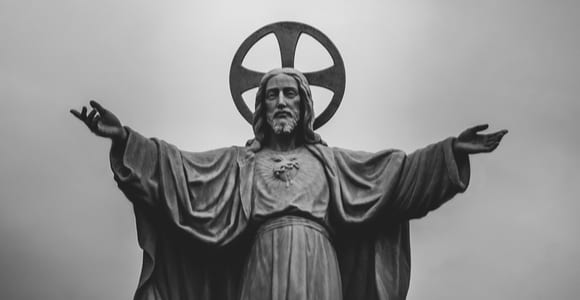
Photo by Arturo Rey on Unsplash
Jesus rant continues in Matthew’s and Luke’s gospels:
“They tie up heavy, cumbersome loads and put them on other people’s shoulders, but they themselves are not willing to lift a finger to move them.” (Matthew 23:4)
“Woe to you, teachers of the law and Pharisees, you hypocrites! You shut the door of the kingdom of heaven in people’s faces. You yourselves do not enter, nor will you let those enter who are trying to.” (Matthew 23:13)
“Woe to you, teachers of the law and Pharisees, you hypocrites! You build tombs for the prophets and decorate the graves of the righteous. And you say, ‘If we had lived in the days of our ancestors, we would not have taken part with them in shedding the blood of the prophets.’ So you testify against yourselves that you are the descendants of those who murdered the prophets. Fill up, then, the measure of the sin of your ancestors!” (Matthew 23:29-32)
(See also Luke 11:46; Luke 11:47-48; and Luke 11:52)
A century before the destruction of Jerusalem in 70 CE, Hillel the Elder, a Pharisee, described the entire Torah in terms of the Golden Rule: “What is hateful to thee, do not unto thy fellow man: this is the whole Law; the rest is mere commentary” (Shab. 31a). Hillel’s contemporary, Shammai, sought to protect Jewish identity through strict interpretations of the Torah and its purity codes that shored up divisions between Jews and Gentiles.
After Hillel’s death and during the days when Jesus taught, the school of Shammai had the upper hand among the working class’s religious teachers in Galilee and Judea. Jesus’ teachings have few parallels with Shammai and have much in common with Hillel, but some elements, in solidarity with the poorer sectors of Jewish society, are unique to Jesus himself. The Pharisees resonated deeply with the working class in Jesus’ day. And I believe that much of Jesus’ critique of the teachers and leaders was directed toward the school of Shammai, not the school of Hillel. Jesus’ critique of the Shammai Pharisees in the saying we’re considering this week could just as easily have been made by Hillel a generation before.
We must also keep in mind Matthew’s use of the political phrase “Kingdom of Heaven.” The Jesus of Matthew’s gospel focusses on the here and now, not the hereafter. Matthew’s gospel is a very Jewish, Galilean telling of the Jesus story, and many today have noticed that rather than using the phrase “Kingdom of God”, Matthew’s gospel replaces the word “God” with “Heaven.” Remember this: Matthew’s Jesus is concerned much less with people gaining access to a post mortem cosmic heavenly realm that keeps them passive in the face of injustice now, and much more passionate about announcing the arrival of the Kingdom of God or the Kingdom of Heaven here on earth today. This Jesus is less concerned with getting people to heaven at some point in the future and much more focused on bringing the liberation of heaven into people’s lives now.
We must critique versions of Christianity that are radically privatized and/or intentionally removed from all social politics, and we must also critique interpretations of Jesus’ teachings that are opiates for the oppressed and encourage them to be passive in the face of injustice.
The most striking potential connection between our passage above and the Pharisees’ view of the school of Shammai is the warning about “exegetes of the Law” who “bind burdens and load on the backs of people” and “do not want to lift your finger to move them.” The exegetes of the school of Shammai were meticulous in adhering to the purity codes (as we saw last week, cf. Matthew 23:23; Luke 11:42), but not very concerned about the economic burdens facing the poor among their constituents. Actually, that’s a bit of a misnomer. They were very concerned about the poverty of the poor but attached moral significance and value to it. If you were poor, you must have broken the purity codes somewhere and YHWH was punishing you. This was a way of interpreting Deuteronomy 28: if you were poor, you weren’t being exploited by the wealthy, you were morally inferior to those whom YHWH was blessing for adhering to the Torah.
This jumps out at me in three ways. First, it blames people for their oppression. Second, as many today do in relation to America’s economic and military status on our globe, religious people often attribute wealth to being “blessed by God” rather than reaping the fruit of stolen or hoarded resources gained by exploiting others. Manifest destiny and the long continuing history of colonialism are examples. And third, Christianity has done both social good and social harm, like the school of Shammai. All religions can be a powerful force for good, survival, resistance, and liberation, or they can be used instead to oppress, marginalize, exclude, and extricate. The choice is ours.
I’m happy to be able to say that the Pharisees and rabbis later rejected the school of Shammai as harmful and chose Hillel’s golden-rule-based interpretation of the Torah instead. The internal struggle among the Pharisees that we glimpse in our saying this week was resolved on the side of compassion and love rather than sacrifice in the first century (cf. Hosea 6:6).
Jesus and the Pharisees of the school of Hillel had much in common. Consider the interaction between Jesus and a follower of Hillel in Mark’s gospel:
“Well said, teacher,” the man replied. “You are right in saying that God is one and there is no other but him. To love him with all your heart, with all your understanding, and with all your strength, and to love your neighbor as yourself is more important than all burnt offerings and sacrifices.” When Jesus saw that he had answered wisely, he said to him, “You are not far from the kingdom of God.” And from then on no one dared ask him any more questions. (Mark 12:32-34 cf. Hosea 6:6 & Matthew 9:13; 12:7)
Those who subscribed to the school of Shammai’s Torah interpretations would have been very put off, and perhaps even angered, by some of Jesus’ more inclusive choices (such as Luke 15). They were refusing to enter into what Jesus called the reign of God and they did their best to use their influence to obstruct the way for everyone around them and call that way dangerous as well.
Jesus’ last rebuke about being the children of those who killed the prophets calls to mind the work of Vincent Harding in the context of the national holiday for Martin Luther King, Jr., and the Reagan Administration co-opting his memory. In Martin Luther King: The Inconvenient Hero, Vincent Harding uses Carl Wendell Hines, Jr.’s poem:
“Now that he is safely dead
Let us praise him
build monuments to his glory
sing hosannas to his name.
Dead men make such convenient heroes: They
cannot rise
to challenge the images
we would fashion from their lives
And besides,
it is easier to build monuments
than to make a better world.
So, now that he is safely dead
we, with eased consciences
will teach our children
that he was a great man… knowing
that the cause for which he lived
is still a cause
and the dream for which he died
is still a dream,
a dead man’s dream.”
These words, first written about Malcolm X, and then applied to King, could also be applied to the Hebrew prophets and to Jesus as well. It is easier to build monuments than to work toward the kind of world these visionaries envisioned could be. Christianity, too often, has done just that.
Let’s not simply build monuments for those whom the system has silenced and we have silenced too. Let’s instead make the choice to engage in the hard work of making a better world.

About Herb Montgomery
Herb Montgomery, director of Renewed Heart Ministries, is an author and adult religious re-educator helping Christians explore the intersection of their faith with love, compassion, action and societal justice. You can read more about the author here.
Previous Post

October 11, 2019
A Primer on Self-Affirming Nonviolence (Part 10)
Next Post
October 23, 2019 This Generation Will Be Held Responsible For It All
Browse Our Archives
Select a Category Ableism Abolition Advent Anti Semitism Christianity Christmas Climate Justice Criminal Justice Democracy Disability Justice Distributive Justice Easter Economic Justice Environmental Justice Equity Feminism Government Immigration Justice Indigenous Justice Interfaith Law and Order LGBTQ Affirmation Liberation Theology Migrant Justice Myth of Redemptive Suffering Nonviolence Prayer Racial Justice Reparation Resistance Resurrection Social Gospel Social Justice Survival Uncategorized Womanism
Select a Month October 2026 September 2026 August 2026 July 2026 June 2026 May 2026 April 2026 March 2026 February 2026 January 2026 December 2025 November 2025 October 2025 September 2025 August 2025 July 2025 June 2025 May 2025 April 2025 March 2025 February 2025 January 2025 December 2024 November 2024 October 2024 September 2024 August 2024 July 2024 June 2024 May 2024 April 2024 March 2024 February 2024 January 2024 December 2023 November 2023 October 2023 September 2023 August 2023 July 2023 June 2023 May 2023 April 2023 March 2023 February 2023 January 2023 December 2022 November 2022 October 2022 September 2022 August 2022 July 2022 June 2022 May 2022 April 2022 March 2022 February 2022 January 2022 December 2021 November 2021 October 2021 September 2021 August 2021 July 2021 June 2021 May 2021 April 2021 March 2021 February 2021 January 2021 December 2020 November 2020 October 2020 September 2020 August 2020 July 2020 June 2020 May 2020 April 2020 March 2020 February 2020 January 2020 December 2019 November 2019 October 2019 September 2019 August 2019 July 2019 June 2019 May 2019 April 2019
Follow Us!
TAKE THE
Religious Wisdom Quiz
According to 1 Peter, what covers over a multitude of sins?
Select your answer to see how you score.
Love Repentance Prayer Faith
Related posts from Social Jesus


Parables of Justice, Compassion, and Inclusion

When Compassion Leads to Action

Encountering the Divine in Working for Justice
TRENDING AT PATHEOS Progressive Christian

Letters on Living the Faith by C.S. Lewis
Most of us met C.S. Lewis as a public intellectual. Mere Christianity....

When Halloween Unmasks Married Hearts
Written by Dr. David K. Ewen from Eternal Truth Bible College Behind...

Aristotle. He’s been called the father of logic, the father of the...

Methodist Central Hall and Westminster Abbey
Situated on the same square is Methodist Central Hall and Westminster Abbey. ...

57th Dove Awards Honor Dolly Parton, Crown New...
On gospel music’s biggest night, the 57th annual GMA Dove Awards honored...

The First Eucharistic Controversy: Christ’s Real Presence
For Catholics, the Eucharist is the source and summit of the Christian...
view all Progressive Christian blogs
Ad-Free & Subscriber Log-In Subscription Support
- About Us
- 2026 Calendar
- Videos
- Podcasts
- Library of World Religions
- Faith In Media Tracker
- Advertise With Us
- Write for Us
- Privacy Policy
- Terms of Service
- Do Not Sell My Data
- Contact Us
- Radiant Digital
- Manage Newsletter Subscriptions
- Unsubscribe From Notifications
- Sitemap
Copyright 2008-2026, Patheos. All rights reserved.
Subscription Support Ad-Free & Subscriber Log-In
Follow Patheos