
BuddhistCatholicContemplativeEvangelicalGeneral ChristianHinduJewishLatter-day SaintMuslimNew VisionsProgressive Christian
Beliefs
- Buddhist
- Catholic
- Contemplative
- Evangelical
- General Christian
- Hindu
- Jewish
- Latter-day Saint
- More Voices
- Muslim
- New Visions
- Pagan
- Progressive Christian
Topics
- Religion News
- Food and Religion
- Sports and Religion
- Religious Art
- Religious Music and Entertainment
- Religious Events
- History and Religion
- Style and Religion
- Politics and Religion
- Women in Religion
- Recreation Outdoors and Religion
- Business Finance and Religion
- Careers Workplace and Religion
- Education and Religion
- Family Parenting and Religion
- Health Fitness and Religion
- Home and Religion
- Relationships and Religion
- Technology and Religion
- Travel and Religion
Columnists
- Buddhist Columnists
- Business Finance and Religion Columnists
- Careers Workplace and Religion Columnists
- Catholic Columnists
- Contemplative Columnists
- Education and Religion Columnists
- Evangelists Columnists
- Family Parenting and Religion Columnists
- General Christian Columnists
- Health Fitness and Religion Columnists
- Hindu Columnists
- History and Religion Columnists
- Home and Religion Columnists
- Jewish Columnists
- More Voices Columnists
- Latter Day Columnists
- Muslim Columnists
- New Visions Columnists
- Nonreligious Columnists
- Pagan Columnists
- Politics and Religion Columnists
- Progressive Columnists
- Recreation Outdoors and Religion Columnists
- Relationships and Religion Columnists
- Religion News Columnists
- Religious Art Columnists
- Religious Events Columnists
- Religious Music and Entertainment Columnists
- Sports and Religion Columnists
- Style and Religion Columnists
- Technology and Religion Columnists
- Travel and Religion Columnists
- Women in Religion Columnists
Resource Library
- 2026 Calendar
- Library of World Religions
- The 100 Most Holy Places on Earth
- Patheos Answers
- Podcasts
- Videos
- Faith Leaders Database
- Anglican Episcopalian
- Bahai
- Baptist
- Buddhism
- Christianity
- Confucianism
- Eastern Orthodoxy
- Hinduism
- Holiness and Pentecostal
- ISKCON
- Islam
- Judaism
- Lutheran
- Methodist
- The Church of Jesus Christ of Latter-day Saints
- New Age
- Paganism
- Presbytarian and Reformed
- Protestantism
- Religion Behind the Scenes
- Roman Catholic
- Scientology
- Shia Islam
- Sikhism
- Sufism
- Sunni Islam
- Taoism
- Zen
- See all religions
Research Tools
 Ad-Free & Subscriber Log-In Subscription Support
Ad-Free & Subscriber Log-In Subscription Support
Follow Patheos 

- Trending:
- Forgiveness
- |
- Marriage
- |
- Consciousness
- |
- Death Penalty
- |
- Election
- |
- Halloween

- Home
- Progressive Christian
- A Primer on Self-Affirming Nonviolence (Part 8)
A Primer on Self-Affirming Nonviolence (Part 8)
Last updated on: September 27, 2019 at 10:00 am by Herb Montgomery
A Primer on Self-Affirming Nonviolence (Part 8) 2019-09-26T14:32:59-04:00 Herb Montgomery
Patheos Explore the world's faith through different perspectives on religion and spirituality! Patheos has the views of the prevalent religions and spiritualities of the world.
Welcome readers! Please subscribe through the buttons at the right if you enjoy this post.
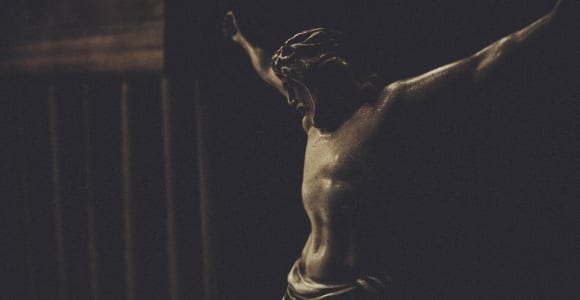
Photo by Ricky Turner on Unsplash
In all four canonical gospels, Jesus disrupts and, in protest, shuts down the economic activity of the Temple courtyards. For some, this conflicts with interpreting Jesus as teaching nonviolence.
Let’s look at all four versions of the story first. Then we’ll look at the objection.
“Jesus entered Jerusalem and went into the temple courts. He looked around at everything, but since it was already late, he went out to Bethany with the Twelve.” (Mark 11:11)
“On reaching [returning to] Jerusalem, Jesus entered the temple courts and began driving out those who were buying and selling there. He overturned the tables of the money-changers and the benches of those selling doves, and would not allow anyone to carry merchandise through the temple courts.” (Mark 11:15-16)
“Jesus entered the temple courts and drove out all who were buying and selling there. He overturned the tables of the money-changers and the benches of those selling doves.” (Matthew 21:12)
“When Jesus entered the temple courts, he began to drive out those who were selling.” (Luke 19:45)
“In the temple courts he found people selling cattle, sheep, and doves, and others sitting at tables exchanging money. So he made a whip out of cords, and drove all from the temple courts, both sheep and cattle; he scattered the coins of the money-changers and overturned their tables. (John 2:14-15)
Mark’s version of this event quickly takes us to the next chapter for Jesus’ explanation of his disruption and protest:
“They devour widows’ houses and for a show make lengthy prayers. These men will be punished most severely.” (Mark 12:40)
“But a poor widow came and put in two very small copper coins, worth only a few cents.” (Mark 12:42)
Jesus considers the temple tax and the temple state’s failure to redistribute funds raised among the poor as economic exploitation that takes everything from those who have nothing to give in the first place.
Jesus’ reason for protesting in Mark is economic and political if one defines politics as the discussion about how power and resources are divided among the polis or people.
It was also religious inasmuch as the Jewish prophets’ similar critiques were, too:
“The multitude of your sacrifices—
what are they to me?” says the LORD.
“I have more than enough of burnt offerings,
of rams and the fat of fattened animals;
I have no pleasure
in the blood of bulls and lambs and goats.
When you come to appear before me,
who has asked this of you,
this trampling of my courts?
Stop bringing meaningless offerings!
Your incense is detestable to me.
New Moons, Sabbaths, and convocations—
I cannot bear your worthless assemblies.
Your New Moon feasts and your appointed festivals
I hate with all my being.
They have become a burden to me;
I am weary of bearing them.
When you spread out your hands in prayer,
I hide my eyes from you;
even when you offer many prayers,
I am not listening.
Your hands are full of blood!
Wash and make yourselves clean.
Take your evil deeds out of my sight;
stop doing wrong.
Learn to do right; seek justice.
Defend the oppressed.
Take up the cause of the fatherless;
plead the case of the widow. (Isaiah 1:11-17)
We must be clear that it’s harmful to interpret Jesus’ actions as Christianity versus Judaism. All of the early followers of Jesus were Jewish. Jesus himself was a Jew and never a Christian. In protesting exploitation, Jesus is not opposed to the Torah, nor to Judaism in general. Jesus’ voice was rather one of many Jewish voices within Judaism in the 1st Century defining what it meant to be faithful to their God, the God of Torah.
I do not believe Jesus’ actions in the temple were anti-Semitic, as some Christians would later interpret them. They were much more about how Jesus saw his own Jewish society and the Jewish Temple State relating to the poor. As both Borg and Crossan remind us, “The issue is not [the Temple state elites member’s] individual virtue or wickedness, but the role they played in the domination system. They shaped it, enforced it, and benefited from it.” (Marcus Borg and John Dominic Crossan, The Last Week, p. 28)
This explains the lethal backlash from Rome and the societal elite of Jerusalem to Jesus’ temple protest. We’ll discuss that in a moment.
First, the objection.
In John’s gospel we read:
“In the temple courts he found people selling cattle, sheep, and doves, and others sitting at tables exchanging money. So he made a whip out of cords, and drove all from the temple courts, both sheep and cattle; he scattered the coins of the money-changers and overturned their tables. (John 2:14-15)
To some, Jesus with a whip in-hand contradicts their understanding of nonviolence.
There are a few things we must keep in mind:
Jesus’ nonviolence is not passivity, it was a way to resist injustice.
Jesus could have made his whip of cords solely to drive out the livestock. It seems to me that he used the whip to drive out the livestock and the turning over of tables drove out the money changers.
Even with this, Jesus’ actions still fall within the parameters of nonviolent action. What must also be held in tension is that none of the force used was lethal. No one’s life was being threatened in his protest.
Add to this that all nonlethal force used was in protest of the ruling classes oppression of the poor. This was not nonlethal force being used to oppressor or marginalize those who were societally vulnerable. Social location matters.
Jesus was not losing his temper. His protest was calculated and well-thought. As we covered in Part 6, Mark’s gospel reveals that Jesus intended this temple state protest to be the climax of his entry into Jerusalem on the back of a donkey. But when he arrived, it was already late in the day and the temple was empty. There was no crowd of people to witness his demonstration and disruption. Therefore he retired to Bethany for the night and returned the next day to disrupt the economic activity of the courtyards:
“Jesus entered Jerusalem and went into the temple courts. He looked around at everything, but since it was already late, he went out to Bethany with the Twelve.” (Mark 11:11)
If we allow Jesus’ nonviolence to inform our own nonviolent protests today, we must also consider whether it is ever appropriate for the property of the economic elite to be damaged during a nonviolent protest. Jesus valued people, especially poor people, above property. Some level of property damage was involved when he protested in the temple that day. If we have ever been more concerned about property being damaged in protests than we are about the injustice to people at the heart of those protests, we may need to reassess which side of the gospel story we would have been on.
By the time of Jesus’s protest, his actions had economic and political implications and the number of his followers was growing, especially among the poor and destitute. Property damage could not go without both Rome and the social elite making an example of Jesus in their own demonstration. Those who engage in protests like this will suffer what follows. Before the end of that week, Jesus was hanging on a cross.
Howard Thurman explains why the elite of Jesus’ society may have been complicit with Rome in opposing property damage:
“[The Sadducees] represented the ‘upper’ class. From their number came the high priests, and most of the economic security derived from contemporary worship in the temple was their monopoly. They did not represent the masses of the people. Any disturbance of the established order meant upsetting their position. They loved Israel, but they seem to have loved security more. They made their public peace with Rome and went on about the business of living. They were astute enough to see that their own position could be perpetuated if they stood firmly against all revolutionaries and radicals. Such persons would only stir the people to resist the inevitable, and in the end, everything would be lost. Their tragedy was in the fact that they idealized the position of the Roman in the world and suffered the moral fate of the Romans by becoming like them. They saw only two roads open before them— become like the Romans or be destroyed by the Romans. They chose the former.” (In Jesus and the Disinherited, p. 24)
When one begins to understand how Jesus’ disruption in the Temple threatened the Temple State’s survival in the Roman empire and how Rome viewed all public disruptions, it becomes quite easy to understand how the week ended with Jesus being crucified. Consider the following statements on the specific purpose for which Rome used crucifixion:
“In first-century Christianity, the cross had a twofold meaning. On the one hand, it represented execution by the empire; only the empire crucified, and then for only one crime: denial of imperial authority. The cross had not yet become a generalized symbol for suffering as it sometimes is today when one’s illness or other hardship can be spoken of as ‘the cross I’ve been given to bear.’ Rather, it meant risking imperial retribution.” (Marcus J. Borg and John Dominic Crossan,The Last Week, Kindle location 519)
“Jesus then suffered persecution, knew why he was suffering it and where it might lead him. This persecution, consciously accepted, is the measure of this faithfulness to God. It reveals him as a human being who not only announces hope to the poor and curses their oppressors but persists in this, despite persecution because this is God’s will. The final violent death does not come as an arbitrary fate, but as a possibility always kept in mind.” (Jon Sobrino,Jesus the Liberator, p. 201.)
Crucifixion was the political punishment for “violating the rule of Roman law and order.” (See Kelly Brown Douglas, Stand Your Ground Black Bodies and the Justice of God, p. 171.)
“Crucifixion was and remains a political and military punishment . . . Among the Romans, it was inflicted above all on the lower classes, i.e., slaves, violent criminals, and the unruly elements in rebellious provinces, not least Judea . . . These were primarily people who on the whole had no rights, in other words, groups whose development had to be suppressed by all possible means to safeguard law and order in the state.” (Ched Myers, Binding the Strong Man: a political reading of Mark’s story of Jesus, p. 372)
Ched Myers reminds us that what got Jesus crucified was not a religious protest, but a protest of the entire political edifice of the Temple state and the Roman empire too.
“As in the modern practice of civil disobedience, which might break the law in order to raise deeper issues of its morality and purpose, so Jesus, just before ‘crossing the line,’ issues a challenge to his audience. Pitting his mission of compassion and justice to the poor against the imperatives of the dominant order, Jesus calls the entire ideological edifice of the law to account.” (Ched Myers, Binding the Strong Man: a political reading of Mark’s story of Jesus, p. 162)
As followers of Jesus, especially ones who choose to embrace Jesus’ rejection of violence, we must remember that Jesus did not stand up to injustice, and suffer for it, on our behalf. He calls us to do the same. As Rustin said, “We need in every community a group of angelic troublemakers.” (Bayard Rustin, ORGANIZING MANUAL NO. 2; FINAL PLANS FOR MARCH ON WASHINGTON FOR JOBS AND FREEDOM, AUGUST 28, 1963)
This is not about redemptive suffering or a call to suffering (see Part 4). Suffering does not bring life. Refusing to let go of life, brings life. Jesus calls us, not to die, but to resist injustice even if threatened with death for doing so. The difference can be subtle, but it results in a world of difference in how we respond to suffering and injustice. As the late liberation theologian James Cone stated, “The only meaningful Christian response is to resist unjust suffering and to accept the painful consequence of that resistance” (James H. Cone, God of the Oppressed). Liberation theologian Jon Sobrino adds: “Suffering in itself has no meaning; the only suffering that has any meaning is the suffering we accept in the fight against suffering.” (Jon Sobrino, Jesus the Liberator)
Jesus’ actions in the temple don’t contradict his nonviolence. Rather, his actions embody his teachings on nonviolent, self-affirming resistance to injustice. Next week we’ll consider one more clarification regarding nonviolence before we conclude. I’m so glad you’ve journeyed with us through this series.

About Herb Montgomery
Herb Montgomery, director of Renewed Heart Ministries, is an author and adult religious re-educator helping Christians explore the intersection of their faith with love, compassion, action and societal justice. You can read more about the author here.
Previous Post

September 25, 2019
A Warning for Our Present Moment
Next Post
September 30, 2019 The Wrong Messiah
Browse Our Archives
Select a Category Ableism Abolition Advent Anti Semitism Christianity Christmas Climate Justice Criminal Justice Democracy Disability Justice Distributive Justice Easter Economic Justice Environmental Justice Equity Feminism Government Immigration Justice Indigenous Justice Interfaith Law and Order LGBTQ Affirmation Liberation Theology Migrant Justice Myth of Redemptive Suffering Nonviolence Prayer Racial Justice Reparation Resistance Resurrection Social Gospel Social Justice Survival Uncategorized Womanism
Select a Month October 2026 September 2026 August 2026 July 2026 June 2026 May 2026 April 2026 March 2026 February 2026 January 2026 December 2025 November 2025 October 2025 September 2025 August 2025 July 2025 June 2025 May 2025 April 2025 March 2025 February 2025 January 2025 December 2024 November 2024 October 2024 September 2024 August 2024 July 2024 June 2024 May 2024 April 2024 March 2024 February 2024 January 2024 December 2023 November 2023 October 2023 September 2023 August 2023 July 2023 June 2023 May 2023 April 2023 March 2023 February 2023 January 2023 December 2022 November 2022 October 2022 September 2022 August 2022 July 2022 June 2022 May 2022 April 2022 March 2022 February 2022 January 2022 December 2021 November 2021 October 2021 September 2021 August 2021 July 2021 June 2021 May 2021 April 2021 March 2021 February 2021 January 2021 December 2020 November 2020 October 2020 September 2020 August 2020 July 2020 June 2020 May 2020 April 2020 March 2020 February 2020 January 2020 December 2019 November 2019 October 2019 September 2019 August 2019 July 2019 June 2019 May 2019 April 2019
Follow Us!
TAKE THE
Religious Wisdom Quiz
How many books are in the major prophets section of the Old Testament?
Select your answer to see how you score.
7 4 3 5
Related posts from Social Jesus


Parables of Justice, Compassion, and Inclusion


When Compassion Leads to Action
TRENDING AT PATHEOS Progressive Christian

When Halloween Unmasks Married Hearts
Written by Dr. David K. Ewen from Eternal Truth Bible College Behind...

Aristotle. He’s been called the father of logic, the father of the...

Methodist Central Hall and Westminster Abbey
Situated on the same square is Methodist Central Hall and Westminster Abbey. ...

57th Dove Awards Honor Dolly Parton, Crown New...
On gospel music’s biggest night, the 57th annual GMA Dove Awards honored...

The First Eucharistic Controversy: Christ’s Real Presence
For Catholics, the Eucharist is the source and summit of the Christian...

What a Stop Sign Can Teach Us About...
How to Make a Decision When You Can't Hear God Main point:...
view all Progressive Christian blogs
Ad-Free & Subscriber Log-In Subscription Support
- About Us
- 2026 Calendar
- Videos
- Podcasts
- Library of World Religions
- Faith In Media Tracker
- Advertise With Us
- Write for Us
- Privacy Policy
- Terms of Service
- Do Not Sell My Data
- Contact Us
- Radiant Digital
- Manage Newsletter Subscriptions
- Unsubscribe From Notifications
- Sitemap
Copyright 2008-2026, Patheos. All rights reserved.
Subscription Support Ad-Free & Subscriber Log-In
Follow Patheos