
BuddhistCatholicContemplativeEvangelicalGeneral ChristianHinduJewishLatter-day SaintMuslimNew VisionsProgressive Christian
Beliefs
- Buddhist
- Catholic
- Contemplative
- Evangelical
- General Christian
- Hindu
- Jewish
- Latter-day Saint
- More Voices
- Muslim
- New Visions
- Pagan
- Progressive Christian
Topics
- Religion News
- Food and Religion
- Sports and Religion
- Religious Art
- Religious Music and Entertainment
- Religious Events
- History and Religion
- Style and Religion
- Politics and Religion
- Women in Religion
- Recreation Outdoors and Religion
- Business Finance and Religion
- Careers Workplace and Religion
- Education and Religion
- Family Parenting and Religion
- Health Fitness and Religion
- Home and Religion
- Relationships and Religion
- Technology and Religion
- Travel and Religion
Columnists
- Buddhist Columnists
- Business Finance and Religion Columnists
- Careers Workplace and Religion Columnists
- Catholic Columnists
- Contemplative Columnists
- Education and Religion Columnists
- Evangelists Columnists
- Family Parenting and Religion Columnists
- General Christian Columnists
- Health Fitness and Religion Columnists
- Hindu Columnists
- History and Religion Columnists
- Home and Religion Columnists
- Jewish Columnists
- More Voices Columnists
- Latter Day Columnists
- Muslim Columnists
- New Visions Columnists
- Nonreligious Columnists
- Pagan Columnists
- Politics and Religion Columnists
- Progressive Columnists
- Recreation Outdoors and Religion Columnists
- Relationships and Religion Columnists
- Religion News Columnists
- Religious Art Columnists
- Religious Events Columnists
- Religious Music and Entertainment Columnists
- Sports and Religion Columnists
- Style and Religion Columnists
- Technology and Religion Columnists
- Travel and Religion Columnists
- Women in Religion Columnists
Resource Library
- 2026 Calendar
- Library of World Religions
- The 100 Most Holy Places on Earth
- Patheos Answers
- Podcasts
- Videos
- Faith Leaders Database
- Anglican Episcopalian
- Bahai
- Baptist
- Buddhism
- Christianity
- Confucianism
- Eastern Orthodoxy
- Hinduism
- Holiness and Pentecostal
- ISKCON
- Islam
- Judaism
- Lutheran
- Methodist
- The Church of Jesus Christ of Latter-day Saints
- New Age
- Paganism
- Presbytarian and Reformed
- Protestantism
- Religion Behind the Scenes
- Roman Catholic
- Scientology
- Shia Islam
- Sikhism
- Sufism
- Sunni Islam
- Taoism
- Zen
- See all religions
Research Tools
 Ad-Free & Subscriber Log-In Subscription Support
Ad-Free & Subscriber Log-In Subscription Support
Follow Patheos 

- Trending:
- Forgiveness
- |
- Marriage
- |
- Consciousness
- |
- Death Penalty
- |
- Election
- |
- Halloween

-
More
- Home
- Progressive Christian
- History and Religion
- Theodore Roosevelt on a Life Lived Well
Theodore Roosevelt on a Life Lived Well
Last updated on: April 13, 2024 at 3:44 pm by Andrew
Theodore Roosevelt on a Life Lived Well 2024-04-13T15:44:29-05:00 Andrew
Patheos Explore the world's faith through different perspectives on religion and spirituality! Patheos has the views of the prevalent religions and spiritualities of the world.
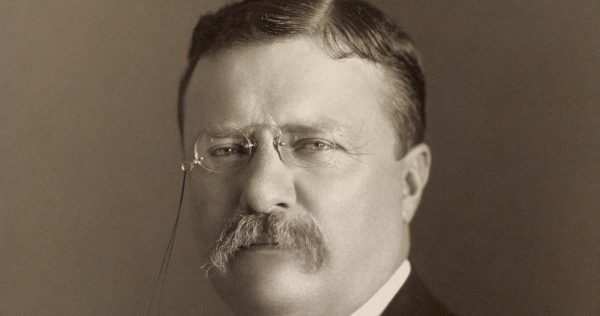
Theodore Roosevelt was highly influenced by Stoic philosophy. Difficult people and situations become an opportunity for development and character formation. Conversely, without adversity, we’re without that perspective that may have been on offer.
In Roosevelt’s words:
“Nothing in the world is worth having or worth doing unless it means effort, pain, difficulty… I have never in my life envied a human being who led an easy life. I have envied a great many people who led difficult lives and led them well.”
This touches on some of the key sentiments from my post on Thoreau, Holmes, and Wallace on Truly Living. In Thoreau’s view, “the mass of men lead lives of quiet desperation” and relatedly to Wallace: “everyman dies, not everyman lives.” For Holmes these souls represent a company of “those that never sing” and they “die with all their music in them.”
An easy and comfortable life is indeed a life of quiet desperation, for what is truly exceptional in comfort and ease? The best version of ourselves requires the crucible of adversity for mutation and natural selection. Along these lines, the famous Stoic philosopher Seneca argued the lack of adversity is the ultimate conduit to unhappiness. In his words:
“No man is more unhappy than he who never faces adversity. For he is not permitted to prove himself”
For Aristotle and Stoic philosophers, “happiness” has a much higher bar than an emotion. For Aristotle, the word “eudaimonia” (often translated to happiness) requires the fulfillment of virtuous action, according to one’s nature and potential. This definition of happiness ultimately requires fulfilling one’s potential which cannot happen with adversity and evolution of one’s character.
Another famous Stoic philosopher Epictetus made a Wrestling Analogy For Adversity as Character Formation. In his words:
“The true man is revealed in difficult times. So when trouble comes, think of yourself as a wrestler whom God, like a trainer, has paired with a tough young buck. For what purpose? To turn you into Olympic-class material. But this is going to take some sweat to accomplish. From my perspective, no one’s difficulties ever gave him a better test than yours, if you are prepared to make use of them the way a wrestler makes use of an opponent in peak condition.”
As effort, adversity, and difficulty is essential to becoming our best selves, Roosevelt argues that for someone who’s been spared from and/or runs from adversity – envy should be the last thing on our minds. Pity would be more appropriate as it represents a life unfulfilled.
We often see this played out in someone with a “lack of perspective.” Those that have been through difficult things (and continue to put themselves through difficult things) often bring a sense of perspective, character, and purpose that is uplifting or inspiring – at the very least a poise that is of an entirely different grain of someone chained by the limits of their own comfort and fears.
To Roosevelt, our envy should be of those that have surmounted and seek difficult things. They offer us a poise and perspective that should inspire and challenge us. We may never go through the same situations, but we can critically assess what challenges and adversity we’re actively taking on or avoiding – and remember that our best selves beckon.
A life lived well, says Roosevelt, is one of grinding towards our potential. In that, a difficult life should our envy.
Image credit: Theodore Roosevelt by the Pach Bros @ Wikimedia Commons

History and Religion
Previous Post

March 13, 2024
Lao Tzu on Servant Leadership
Next Post

April 21, 2024 Deep Scene Breakdown, "The Hard Is What Makes It Great"
Recent Comments
"While all attempts at comprehending the purpose of God's intervention into the natural world, what ..."
""Holy curiosity" is not an idea but rather a practice as well as an attitude. ..."
"Herm,I'm not sure what's going on but I'm not showing anything on my end for ..."
Vance Morgan on Freelance Christianity and ..."
"Andrew, I and God are being misrepresented by a fraud. Compare the number of comments ..."
Vance Morgan on Freelance Christianity and ..."
Browse Our Archives
Select a Category Book Reviews Deep Scene Breakdown Deep Song Breakdown Events with Adam Lee Iron Heart Musings Podcast Quote Bank
Select a Month January 2026 September 2025 August 2025 June 2025 March 2025 February 2025 November 2024 August 2024 April 2024 March 2024 February 2024 January 2024 December 2023 September 2023 August 2023 April 2023 March 2023 February 2023 December 2022 October 2022 September 2022 August 2022 June 2022 May 2022 April 2022 March 2022 February 2022 January 2022 December 2021 November 2021 October 2021 September 2021 February 2021 January 2021 December 2020 November 2020 August 2020 June 2020 March 2020 December 2019 November 2019 October 2019 September 2019 August 2019 June 2019 May 2019 March 2019 November 2018 October 2018 August 2018 July 2018 June 2018 May 2018 April 2018 March 2018 February 2018 January 2018 December 2017 November 2017 September 2017 August 2017 May 2016 April 2016 November 2015 October 2015 August 2015 July 2015 June 2015 May 2015 March 2015 January 2015 December 2014 November 2014 October 2014 September 2014 August 2014 June 2014 May 2014 April 2014 March 2014
Follow Us!
TAKE THE
Religious Wisdom Quiz
Who said, "The Lord gave, and the Lord has taken away; blessed be the name of the Lord"?
Select your answer to see how you score.
Moses Job Solomon David
Related posts from Soapbox Redemption
From Descartes' Doubt to Lee's Jeet Kune Do


Epictetus, the Chief Task, and Trusting the Process

Ford, Lee, and Jordan on the Power of...
TRENDING AT PATHEOS Progressive Christian

Why Christians Have a Sacred Duty to Vote:...
The Bible offers strong support for the sacred duty to vote. Here...

What Being a Modern-Day Apostle Means to Me
In my last column, I discussed the ins and outs of modern-day...

Did Ancient China Once Worship the God of...
Across human history, a common thread weaves through the origins of the...

Love Your Neighbor – Including Earth-Kin: Lev. 19,...
God’s command to love your neighbor means acting in an ethical and...

Lead a Church Study of “Jesus and Lao...
Guest writer Jack Thomas (The Irreverent Reverend) reflects on leading his church...

Principles for Understanding the Apostolic Ministry Today
Whenever people discover that my formal ministry title is "apostle," as in...
view all Progressive Christian blogs
What Are Your Thoughts?leave a comment
Ad-Free & Subscriber Log-In Subscription Support
- About Us
- 2026 Calendar
- Videos
- Podcasts
- Library of World Religions
- Faith In Media Tracker
- Advertise With Us
- Write for Us
- Privacy Policy
- Terms of Service
- Do Not Sell My Data
- Contact Us
- Radiant Digital
- Manage Newsletter Subscriptions
- Unsubscribe From Notifications
- Sitemap
Copyright 2008-2026, Patheos. All rights reserved.
Subscription Support Ad-Free & Subscriber Log-In
Follow Patheos