
BuddhistCatholicContemplativeEvangelicalGeneral ChristianHinduJewishLatter-day SaintMuslimNew VisionsProgressive Christian
Beliefs
- Buddhist
- Catholic
- Contemplative
- Evangelical
- General Christian
- Hindu
- Jewish
- Latter-day Saint
- More Voices
- Muslim
- New Visions
- Pagan
- Progressive Christian
Topics
- Religion News
- Food and Religion
- Sports and Religion
- Religious Art
- Religious Music and Entertainment
- Religious Events
- History and Religion
- Style and Religion
- Politics and Religion
- Women in Religion
- Recreation Outdoors and Religion
- Business Finance and Religion
- Careers Workplace and Religion
- Education and Religion
- Family Parenting and Religion
- Health Fitness and Religion
- Home and Religion
- Relationships and Religion
- Technology and Religion
- Travel and Religion
Columnists
- Buddhist Columnists
- Business Finance and Religion Columnists
- Careers Workplace and Religion Columnists
- Catholic Columnists
- Contemplative Columnists
- Education and Religion Columnists
- Evangelists Columnists
- Family Parenting and Religion Columnists
- General Christian Columnists
- Health Fitness and Religion Columnists
- Hindu Columnists
- History and Religion Columnists
- Home and Religion Columnists
- Jewish Columnists
- More Voices Columnists
- Latter Day Columnists
- Muslim Columnists
- New Visions Columnists
- Nonreligious Columnists
- Pagan Columnists
- Politics and Religion Columnists
- Progressive Columnists
- Recreation Outdoors and Religion Columnists
- Relationships and Religion Columnists
- Religion News Columnists
- Religious Art Columnists
- Religious Events Columnists
- Religious Music and Entertainment Columnists
- Sports and Religion Columnists
- Style and Religion Columnists
- Technology and Religion Columnists
- Travel and Religion Columnists
- Women in Religion Columnists
Resource Library
- 2026 Calendar
- Library of World Religions
- The 100 Most Holy Places on Earth
- Patheos Answers
- Podcasts
- Videos
- Faith Leaders Database
- Anglican Episcopalian
- Bahai
- Baptist
- Buddhism
- Christianity
- Confucianism
- Eastern Orthodoxy
- Hinduism
- Holiness and Pentecostal
- ISKCON
- Islam
- Judaism
- Lutheran
- Methodist
- The Church of Jesus Christ of Latter-day Saints
- New Age
- Paganism
- Presbytarian and Reformed
- Protestantism
- Religion Behind the Scenes
- Roman Catholic
- Scientology
- Shia Islam
- Sikhism
- Sufism
- Sunni Islam
- Taoism
- Zen
- See all religions
Research Tools
 Ad-Free & Subscriber Log-In Subscription Support
Ad-Free & Subscriber Log-In Subscription Support
Follow Patheos 

- Trending:
- Forgiveness
- |
- Marriage
- |
- Consciousness
- |
- Death Penalty
- |
- Election
- |
- Halloween

-
More
- Home
- Progressive Christian
- Book Review: Problems of Philosophy (Bertrand Russell)
Book Review: Problems of Philosophy (Bertrand Russell)
Last updated on: June 10, 2014 at 8:33 pm by Andrew
Book Review: Problems of Philosophy (Bertrand Russell) 2014-06-10T20:33:09-05:00 Andrew
Patheos Explore the world's faith through different perspectives on religion and spirituality! Patheos has the views of the prevalent religions and spiritualities of the world.
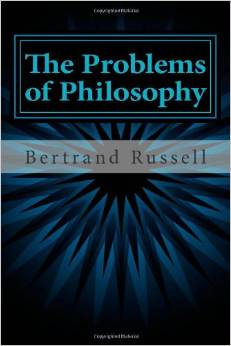 A philosophical giant.
Russell’s whit is undeniable. With a unique ability to tackle complex and timeless issues in philosophy and present them in such a palatable way – it is easy to see why he’s become a monster in the subject.
A review of Berkeley’s idealism (there is no matter only mind) and Descartes’ doubt (how do we know what we perceive as reality is not just our being deceived by an evil demon?) is presented early and prompts question into metaphysics and the reliability of the senses.
“Even if physical objects do have an independent existence, they must differ very widely from sense-data, and can only have a correspondence with sense-data, in the same sort of way in which a catalog has correspondence with the things cataloged. Hence common sense leaves us completely in the dark as to the true intrinsic nature of physical objects…” (page 26)
How, then, can we have knowledge? Can we just add up our experiences of sense-data? Russell moves steps right into problem of induction, perhaps made most apparent by David Hume. Per Hume, my acquaintance of the past (sun rising every day, my only ever experience white swans) says nothing of the future. Relying on the “uniformity of nature” for future predictions would be a mistake. For Hume and strict empricists, one can only have knowledge by experience. I have not experienced the future, thus I am not justified to induce a prediction. Something has gone awry as the Humean empiricist, in arguing for a future cause or outcome, based on the past experience, is arguing on unempirical grounds. In Russell’s words:
“All arguments which, on the basis of experience, argue as to the future or the unexperienced parts of the past or present, assume the inductive principle; hence we can never use experience to prove the inductive principle without begging the question. Thus we must either accept the inductive principle on the ground of its intrinsic evidence, or forgo all justification of our expectations about the future.” (page 48)
He then navigates into Aristotle’s “Laws of Thought”:
The law of identity: “Whatever is, is”
The law of contradiction: “Nothing can both be and not be.”
The law of excluded middle: “Everything must either be or not be.” (page 50)
These principles seem self-evident and independent from the senses. But how could we have knowledge independent from the senses? Here Russell starts to brilliantly distinguish the separation between rationalism and empiricism and the problems associated with the extremes of both camps:
“One of the great historic controversies in philosophy is the controversy between the two schools called respectively ’empiricists’ and ‘rationalists’. The empiricists – who are best represented by the British philosophers, Locke, Berkeley, and Hume – maintained that all our knowledge is derived from experience; the rationalists – who are represented by the Continental philosophers of the seventeenth century, especially Descartes and Leibniz – maintained that, in addition to what we know by experience, there are certain ‘innate ideas’ and ‘innate principles’, which we know independently of experience…It must be admitted, for reasons already stated, that logical principles are known to us, and cannot be themselves proved by experience, since all proof presupposes them…On the other hand…Nothing can be known without the help of experience.” (page 51-52)
Russell puts forth an important argument that there are in fact a priori principles (such as the laws of thought and pure mathematics), yet realizes that knowledge must at least be influenced in part by experience. He also puts forth the consideration that ethical value could also be innate and a priori.
He then navigates through Kant’s interpretation of mathematics being a priori, but that experience affirms the intellect already in place, and touches upon Kant’s separation of phenomena (sense data) and noumena (the cause of sense-data, “things in themselves”, which cannot be known). He also briefly touches upon Plato, “the forms”, and knowledge of universals. The book also contains some gems on defining what philosophy is and it’s value.
“Thus, to sum up our discussion of the value of philosophy; Philosophy is to be studied, not for the sake of any definite answers to its questions, since no definite answers can, as a rule, be known to be true, but rather for the sake of the questions themselves; because these questions enlarge our conception of what is possible, enrich our intellectual imagination and diminish the dogmatic assurance which closes the mind against speculation…” (Page 122)
This brief review only scratches the surface on the depth and rigor of the text. Though the material is heavy at times, Russell serves it up on a silver platter – a tour de force for classic philosophical questions and problems. All in all, a masterpiece and necessary text in any philosopher’s library (lay or professional).
Previous Post

June 1, 2014
Debate Recap
Next Post
August 17, 2014 Origins, The Interpretation of Genesis, and the Young Earth US
Browse Our Archives
Select a Category Book Reviews Deep Scene Breakdown Deep Song Breakdown Events with Adam Lee Iron Heart Musings Podcast Quote Bank
Select a Month January 2026 September 2025 August 2025 June 2025 March 2025 February 2025 November 2024 August 2024 April 2024 March 2024 February 2024 January 2024 December 2023 September 2023 August 2023 April 2023 March 2023 February 2023 December 2022 October 2022 September 2022 August 2022 June 2022 May 2022 April 2022 March 2022 February 2022 January 2022 December 2021 November 2021 October 2021 September 2021 February 2021 January 2021 December 2020 November 2020 August 2020 June 2020 March 2020 December 2019 November 2019 October 2019 September 2019 August 2019 June 2019 May 2019 March 2019 November 2018 October 2018 August 2018 July 2018 June 2018 May 2018 April 2018 March 2018 February 2018 January 2018 December 2017 November 2017 September 2017 August 2017 May 2016 April 2016 November 2015 October 2015 August 2015 July 2015 June 2015 May 2015 March 2015 January 2015 December 2014 November 2014 October 2014 September 2014 August 2014 June 2014 May 2014 April 2014 March 2014
Follow Us!
TAKE THE
Religious Wisdom Quiz
By questioning Moses' authority this person became leperous?
Select your answer to see how you score.
Ithamar Miriam Caleb Aaron
Related posts from Soapbox Redemption

Book Review: Free Speech and Why You Should...

Book Review: How to be a Stoic

Book Review: Why Does the World Exist?

TRENDING AT PATHEOS Progressive Christian

Why Christians Have a Sacred Duty to Vote:...
The Bible offers strong support for the sacred duty to vote. Here...

What Being a Modern-Day Apostle Means to Me
In my last column, I discussed the ins and outs of modern-day...

Did Ancient China Once Worship the God of...
Across human history, a common thread weaves through the origins of the...

Love Your Neighbor – Including Earth-Kin: Lev. 19,...
God’s command to love your neighbor means acting in an ethical and...

Lead a Church Study of “Jesus and Lao...
Guest writer Jack Thomas (The Irreverent Reverend) reflects on leading his church...

Principles for Understanding the Apostolic Ministry Today
Whenever people discover that my formal ministry title is "apostle," as in...
view all Progressive Christian blogs
Ad-Free & Subscriber Log-In Subscription Support
- About Us
- 2026 Calendar
- Videos
- Podcasts
- Library of World Religions
- Faith In Media Tracker
- Advertise With Us
- Write for Us
- Privacy Policy
- Terms of Service
- Do Not Sell My Data
- Contact Us
- Radiant Digital
- Manage Newsletter Subscriptions
- Unsubscribe From Notifications
- Sitemap
Copyright 2008-2026, Patheos. All rights reserved.
Subscription Support Ad-Free & Subscriber Log-In
Follow Patheos