
BuddhistCatholicContemplativeEvangelicalGeneral ChristianHinduJewishLatter-day SaintMuslimNew VisionsProgressive Christian
Beliefs
- Buddhist
- Catholic
- Contemplative
- Evangelical
- General Christian
- Hindu
- Jewish
- Latter-day Saint
- More Voices
- Muslim
- New Visions
- Pagan
- Progressive Christian
Topics
- Religion News
- Food and Religion
- Sports and Religion
- Religious Art
- Religious Music and Entertainment
- Religious Events
- History and Religion
- Style and Religion
- Politics and Religion
- Women in Religion
- Recreation Outdoors and Religion
- Business Finance and Religion
- Careers Workplace and Religion
- Education and Religion
- Family Parenting and Religion
- Health Fitness and Religion
- Home and Religion
- Relationships and Religion
- Technology and Religion
- Travel and Religion
Columnists
- Buddhist Columnists
- Business Finance and Religion Columnists
- Careers Workplace and Religion Columnists
- Catholic Columnists
- Contemplative Columnists
- Education and Religion Columnists
- Evangelists Columnists
- Family Parenting and Religion Columnists
- General Christian Columnists
- Health Fitness and Religion Columnists
- Hindu Columnists
- History and Religion Columnists
- Home and Religion Columnists
- Jewish Columnists
- More Voices Columnists
- Latter Day Columnists
- Muslim Columnists
- New Visions Columnists
- Nonreligious Columnists
- Pagan Columnists
- Politics and Religion Columnists
- Progressive Columnists
- Recreation Outdoors and Religion Columnists
- Relationships and Religion Columnists
- Religion News Columnists
- Religious Art Columnists
- Religious Events Columnists
- Religious Music and Entertainment Columnists
- Sports and Religion Columnists
- Style and Religion Columnists
- Technology and Religion Columnists
- Travel and Religion Columnists
- Women in Religion Columnists
Resource Library
- 2026 Calendar
- Library of World Religions
- The 100 Most Holy Places on Earth
- Patheos Answers
- Podcasts
- Videos
- Faith Leaders Database
- Anglican Episcopalian
- Bahai
- Baptist
- Buddhism
- Christianity
- Confucianism
- Eastern Orthodoxy
- Hinduism
- Holiness and Pentecostal
- ISKCON
- Islam
- Judaism
- Lutheran
- Methodist
- The Church of Jesus Christ of Latter-day Saints
- New Age
- Paganism
- Presbytarian and Reformed
- Protestantism
- Religion Behind the Scenes
- Roman Catholic
- Scientology
- Shia Islam
- Sikhism
- Sufism
- Sunni Islam
- Taoism
- Zen
- See all religions
Research Tools
 Ad-Free & Subscriber Log-In Subscription Support
Follow Patheos 

- Trending:
- Advent
- |
- Forgiveness
- |
- Thanksgiving
- |
- Election
- |
- Seasonal Holidays
- |
- Marriage

- Home
- Progressive Christian
- Politics and Religion
- When a Pastor Falls — and Why the Ending Never Changes
When a Pastor Falls — and Why the Ending Never Changes
Last updated on: August 20, 2026 at 1:29 pm by Stuart Delony
When a Pastor Falls — and Why the Ending Never Changes 2026-08-20T13:29:03-04:00 Stuart Delony
Patheos Explore the world's faith through different perspectives on religion and spirituality! Patheos has the views of the prevalent religions and spiritualities of the world.

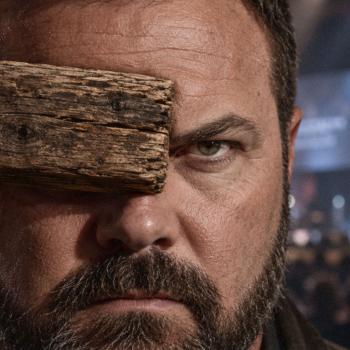
Image created via DALL-E
You know this story. You’ve known it long enough that the details have stopped surprising you and started arriving like weather — something to be noted, endured, and waited out.
The names barely matter. Call him Mark. Or Tony. Or any pastor-shaped silhouette you’ve watched rise, collapse, apologize, disappear, and reappear holding a microphone again.
A church grows. A personality rises. Certainty hardens. Then something breaks.
A statement appears — brokenness, healing, accountability, “a season.” Time passes. Then: a new church, a new ministry, a comeback framed as grace.
We act surprised. We do this every time.
At this point it isn’t a crisis. It’s a liturgy.
The Explanation That Always Saves Us
The church has a ready-made explanation.
A leader sinned. They repented. God forgives. Therefore restoration.
It feels airtight because forgiveness is central to Christianity. But quietly, without noticing, we add a step Scripture never promises: we move from forgiven to fit to hold authority as if they are the same category.
They are not.
Forgiveness restores relationship. Authority requires trust. Forgiveness reconciles a person to God; authority places a person over people. Yet church culture assumes repentance should end in leadership again, because anything less feels ungracious. What we call mercy often turns out to be discomfort with limits.
The Category the Church Cannot Hold
The church has a theology of grace. It does not have a theology of disqualification.
We assume: if someone once had a platform, they must have been called. When they return to a platform, we call that redemption. But a calling understood as stewardship can exist without a stage.
Not all strong leaders are ego-driven. But churches consistently mistake strong personality for spiritual maturity. Confidence feels like conviction. Decisiveness feels like wisdom. Charisma feels like anointing. Then years later we act stunned when the structure buckles.
A calling that only exists while someone is in charge was probably never stewardship. It was compatibility with a system.
What a theology of disqualification might look like isn’t mysterious. It would simply hold that some roles carry weight that not every repentant person should carry again — not as punishment, but as protection. For the congregation. And for the pastor. The absence of that framework isn’t humility. It’s the church refusing to think carefully about power because thinking carefully about power is uncomfortable.
What Actually Gets Lost
We imagine a fallen pastor longing to return to ministry. Often they are trying to return to existence.
For years, their identity was built on being needed, deferred to, and treated as the interpreter in the room. Remove the platform and something deeper than employment disappears. Leadership wasn’t just work. It was self-definition — and the church trained them to live there.
This is the part we don’t say plainly: the church is often the architect of that dependency, not just its victim. When we make a pastor the singular conduit of vision, the sole voice of authority, the person whose personality is the institution — we are not just describing a leadership style. We are building a person who cannot survive without the room. The role shapes the self over years, rewarding certainty and punishing doubt, until the pastor and the platform become indistinguishable.
This is why the urgency to return matters. Not because repentance is fake, but because the loss being repaired may not be ministry at all. It may be identity. And identity loss is a different wound than moral failure — one that restoration to a platform will not actually heal.
If obscurity feels unbearable, the role was sustaining the person more than the person was serving the people.
We are often less comfortable with a pastor who disappears into ordinary faithfulness than with one who reappears on a stage. The comeback is legible to us. It fits our categories. But a person who falls, repents, and then quietly teaches a small class, visits the sick, raises their kids, and never leads anything again — that is not a lesser story. That might be the more complete one. Our discomfort with that ending tells us something about what we actually believe faithfulness requires.
The Dog, the Vomit, and the Platform
There is a biblical proverb about a dog returning to its vomit. It usually gets wielded as a moral insult about repeating a sin.
But the image isn’t about one bad act. It’s about unchanged appetite.
The proverb describes returning to what once sustained you, even when it harmed you. And here is where the metaphor cuts deeper than most applications allow: the “vomit” in these cycles isn’t the scandal. Not the affair, the financial abuse, the rage, the manipulation. Those are symptoms. The deeper draw — the thing being returned to — is the environment: admiration, certainty, insulation, the particular intoxication of being the most important person in a room full of people who need you.
But the leader is not the only one with that appetite.
The congregation has it too.
When a community rebuilds the same authority structure around the same personality type and calls it restoration, both parties are returning to the same ecosystem that made the collapse possible. The leader craves the role. The congregation craves the clarity a singular, commanding voice provides. Uncertainty is hard. Decentralized authority is harder. A charismatic leader who takes responsibility for the community’s spiritual direction relieves people of the discomfort of their own discernment.
We call it redemption because it feels like grace. But it also happens to be familiar. And familiarity is far easier than the structural reckoning that genuine repentance might require — from everyone.
Redemption or Reinstatement
We have quietly replaced repentance with reinstatement.
Real repentance changes a person’s relationship to power. A genuinely transformed person can still teach, still serve, still have deep faith — but the compulsion to stand above others weakens. Real repentance can live without a platform.
Institutional redemption requires a stage. A restored leader comforts a congregation because it proves nothing was fundamentally wrong. Grace reconciles someone to God; it does not automatically qualify them to govern souls. Sometimes the most faithful outcome of a fall is not a comeback, but a different life.
Why the Ending Never Changes
The return doesn’t just repair the leader’s story. It repairs the church’s self-understanding.
If a leader was never suited for that kind of authority, then the community helped create the problem. We rewarded certainty, confused confidence with maturity, outsourced discernment to personality. Admitting that is a different and more threatening kind of repentance — one without a ceremony, without a stage, without a clear ending.
So we hurry toward restoration. Not because we are exceptionally gracious, but because the alternative would require us to sit with what we built. The system protects itself by interpreting a structural warning as a personal failure. And we let it, because we are implicated too.
The Hard Question
The real question after a fall is not whether God has forgiven them.
It’s whether we are willing to be changed by what happened.
Not the pastor. Us. The people who filled the seats, shared the content, deferred to the certainty, and felt safer for having someone else hold the weight of discernment. The fall reveals something about the leader, yes. But it also reveals what we were looking for when we handed someone that much authority in the first place.
Some people are forgiven and should not lead again — not as punishment, but as clarity. That’s not a hard theological position. It’s just honesty about what trust requires and what its breach sometimes costs.
The liturgy keeps repeating because we keep wanting the same thing from it.
The only way the ending changes is if we want something different.
Evangelical
Relationships and Religion

About Stuart Delony
I’m Stuart Delony, a former pastor who walked out of the church but couldn’t shake the ways of Jesus. These days, I host Snarky Faith—a podcast and platform that wrestles with faith, culture, and meaning from the fringe. I’m not here to fix Christianity. I’m here to name what’s broken, find what’s still worth keeping, and hold space for the questions that don’t have clean answers. If you’ve been burned, disillusioned, or just done with the noise—welcome. You’re in good company. You can read more about the author here.
Previous Post

April 28, 2026
Tom Bombadil and the God Who Won't Manage Your Life
Next Post

May 12, 2026 Why Humans Need Stories That Don’t Pretend to Be God
Recent Comments
"Years ago I was deeply moved by Michael Novak's book Belief and Unbelief. One of ..."
"I left evangelicalism some decades ago, due to such factors as: (1) the Trinity (which ..."
Crabs in a Bucket: Why Evangelicalism ..."
"Excellent article premised upon a great analogy, Stuart."
Crabs in a Bucket: Why Evangelicalism ..."
"I've seen Noah believers use the claim "every culture tells stories of a flood, so ..."
Noah Was Never About the Animals
Browse Our Archives
Select a Category Abuse & Power abuse coverups Abuse in the Church Advent AI AI and Technology American Christianity American democracy American Evangelicalism American Governance Antisemitism Apocalypse Culture Apocalyptic Theology Authentic Love Author Insights Authoritarianism Bible Bible & Scripture Bible Criticism Biblical Authority Biblical Interpretation Biblical Satire Book of Revelation book reviews Books and Reviews Capitalism Catholicism Charismatic Christianity Christian Activism Christian apocalypse culture Christian Commentary Christian Conservatism Christian Critique Christian Culture Christian History Christian Literature Christian Living Christian Music Christian Mysticism Christian Myths Christian Nationalism Christian Satire Christian Traditions Christian Zionism Christianity Christmas Church & Culture Church Abuse Church Accountability Church and State church corruption Church Critique Church Culture Church History Church Leadership Church Power and Abuse Churches of God Civil Rights Comic Book Analysis Commentary community Complementarianism Conservative Politics Conspiracy Theories Consumerism conversations cosmic philosophy Creation and Spirituality Creationism Critical Essays critical thinking Critique Cults Cultural Commentary cultural identity culture Culture and Society Culture Critique culture war Christianity Culture Wars Current Event Data & Religion Deconstruction Dominionism Dunning-Krueger Effect Easter Economics Editorial Education and Religion Election Emotional Health in Religion Emotional Wellness Empire End Times End Times Theology Environment Environmental Collapse equality Eschatology ethics Evangelical Culture Evangelical Hypocrisy Evangelicalism Evangelicalism Critique Evangelism existential journey Exorcisms Faith Faith & Culture Faith & Deconstruction Faith & Doubt Faith & Identity Faith & Politics Faith and Culture faith and doubt Faith and Mental Health Faith and Power Faith and Spirituality Faith critique Faith Deconstruction Faith Exploration Faith Formation faith journey Faith vs. Science Faith-based Scams False Prophets family Family and Relationships Family Gatherings Feminism Feminism and Conservatism football Gaza gender Gender and Power Gender Equality Gender Roles Geopolitics gospel music Grace Grief and Loss Growth and Change Gun Violence Hamas Healing and Recovery Healthcare Justice historical analysis History History and Religion Holiday Survival Holidays hope Humor Identity Idolatry in Modern Christianity Independence Day Intellectual Reads Interfaith Dialogue interview Israel Jesus' Teachings Kamala Kamala Harris Lament Late-Stage Capitalism leadership LGBTQ+ Literary Analysis Love MAGA Masculinity Meaning & Ethics Media Analysis Media and Religion Memorial Day mental health Militarism mimetic theory Misinterpretations Misogyny Modern Christianity modern culture modern faith Monasticism Music Music and Culture Mysticism Nationalism Nature and the Divine NCAA NDA opinion Orthodoxy vs Orthopraxy Pacifism Patriarchy Peace Personal Development Personal Growth Personal Reflection philosophy Philosophy of Faith podcast Political Commentary Political Humor Political Theology politics Politics & Culture politics & current events Politics and Religion pop culture Post-Evangelical power and control Power and Religion Power Dynamics Privilege Progressive Christian Progressive Christianity Prophetic Satire Prophetic Witness Prosperity Gospel psychology Psychology and Society Purity Culture Quantum Physics radical love rapture theology Recognizing Cultish Behavior Reflection and Critique Refugee & Immigration Policy Relationships Religion Religion & Culture Religion & Politics Religion & Spirituality Religion and Ethics Religion and Politics Religion and Public Safety Religion and Science Religion and Society Religion History Religion News Religious Accountability Religious Criticism Religious Critique Religious Diversity Religious Hypocrisy Religious Propaganda religious satire Religious Trauma Reproductive Rights Resilience Resurrection Revelation sarcasm satire Satirical Guides Scandal Science & Spirituality Science and Religion science fiction review scriptural interpretation scripture Scripture & Misreadings Seasonal Holidays Second Amendment Sermon on the Mount Sex Sexuality and Culture Skepticism Snarky Faith Social Analysis Social Commentary Social Issues Social Justice Social Media Critique Social Trends society Society & Culture Soul Southern Baptist Convention Spiritual Abuse spiritual exploration Spiritual Growth Spiritual Practices Spiritual Psychology spiritual truths Spirituality sports Storytelling and Theology suffering Superstition & Faith Technology & Religion Televangelism Televangelists Television Thanksgiving theocracy Theology Theology Gone Wrong Toxic Theology Trump Trump and Religion U.S. Politics UFO Uncategorized War War and Religion weaponized scripture Weaponized Theology White Supremacy Women’s Autonomy Worship Worship Culture
Select a Month November 2026 October 2026 September 2026 August 2026 July 2026 June 2026 May 2026 April 2026 March 2026 February 2026 January 2026 December 2025 November 2025 October 2025 September 2025 August 2025 July 2025 June 2025 May 2025 April 2025 March 2025 February 2025 January 2025 December 2024 November 2024 October 2024 September 2024 August 2024 July 2024 June 2024 May 2024 April 2024 March 2024 February 2024 January 2024 December 2023 November 2023 October 2023 September 2023 August 2023 July 2023 June 2023
Follow Us!
TAKE THE
Religious Wisdom Quiz
"Thou preparest a table for me in the presence of mine _____."
Select your answer to see how you score.
Children Kinsmen Enemies Friends
Related posts from Snarky Faith

Check the Ingredients: The Biblical Bait and Switch
Solomon's Paradox: Everyone's Deceived but Us


TRENDING AT PATHEOS Progressive Christian

For many years, Catholicism has been caught up in division over the...

'Statements of Faith' never get shorter
Nothing demonstrates a conservative commitment to faith and faithfulness like a "statement...

Michele's Reviews - Future Grace by John Piper
In God's Place, at God's Pace, by Future Grace Impatience is...

Bama Gramma's Blackout Christmas: the Power of Light...
Another Christmas Skit: I have an alter ego: Bama Gramma. She shows...

Thanksgiving as a Way of Life: A Christian...
Each year, Thanksgiving brings families and friends together to share meals, stories,...

Two Women Doctors Who Went Against the Current
Women physicians who transformed healthcare for "Indians" “I shall have an advantage...
view all Progressive Christian blogs
What Are Your Thoughts?leave a comment
Ad-Free & Subscriber Log-In Subscription Support
- About Us
- 2026 Calendar
- Videos
- Podcasts
- Library of World Religions
- Faith In Media Tracker
- Advertise With Us
- Write for Us
- Privacy Policy
- Terms of Service
- Do Not Sell My Data
- Contact Us
- Radiant Digital
- Manage Newsletter Subscriptions
- Unsubscribe From Notifications
- Sitemap
Copyright 2008-2026, Patheos, part of the Radiant Digital network of media brands. All rights reserved.
Subscription Support Ad-Free & Subscriber Log-In
Follow Patheos