
BuddhistCatholicContemplativeEvangelicalGeneral ChristianHinduJewishLatter-day SaintMuslimNew VisionsProgressive Christian
Beliefs
- Buddhist
- Catholic
- Contemplative
- Evangelical
- General Christian
- Hindu
- Jewish
- Latter-day Saint
- More Voices
- Muslim
- New Visions
- Pagan
- Progressive Christian
Topics
- Religion News
- Food and Religion
- Sports and Religion
- Religious Art
- Religious Music and Entertainment
- Religious Events
- History and Religion
- Style and Religion
- Politics and Religion
- Women in Religion
- Recreation Outdoors and Religion
- Business Finance and Religion
- Careers Workplace and Religion
- Education and Religion
- Family Parenting and Religion
- Health Fitness and Religion
- Home and Religion
- Relationships and Religion
- Technology and Religion
- Travel and Religion
Columnists
- Buddhist Columnists
- Business Finance and Religion Columnists
- Careers Workplace and Religion Columnists
- Catholic Columnists
- Contemplative Columnists
- Education and Religion Columnists
- Evangelists Columnists
- Family Parenting and Religion Columnists
- General Christian Columnists
- Health Fitness and Religion Columnists
- Hindu Columnists
- History and Religion Columnists
- Home and Religion Columnists
- Jewish Columnists
- More Voices Columnists
- Latter Day Columnists
- Muslim Columnists
- New Visions Columnists
- Nonreligious Columnists
- Pagan Columnists
- Politics and Religion Columnists
- Progressive Columnists
- Recreation Outdoors and Religion Columnists
- Relationships and Religion Columnists
- Religion News Columnists
- Religious Art Columnists
- Religious Events Columnists
- Religious Music and Entertainment Columnists
- Sports and Religion Columnists
- Style and Religion Columnists
- Technology and Religion Columnists
- Travel and Religion Columnists
- Women in Religion Columnists
Resource Library
- 2026 Calendar
- Library of World Religions
- The 100 Most Holy Places on Earth
- Patheos Answers
- Podcasts
- Videos
- Faith Leaders Database
- Anglican Episcopalian
- Bahai
- Baptist
- Buddhism
- Christianity
- Confucianism
- Eastern Orthodoxy
- Hinduism
- Holiness and Pentecostal
- ISKCON
- Islam
- Judaism
- Lutheran
- Methodist
- The Church of Jesus Christ of Latter-day Saints
- New Age
- Paganism
- Presbytarian and Reformed
- Protestantism
- Religion Behind the Scenes
- Roman Catholic
- Scientology
- Shia Islam
- Sikhism
- Sufism
- Sunni Islam
- Taoism
- Zen
- See all religions
Research Tools
 Ad-Free & Subscriber Log-In Subscription Support
Ad-Free & Subscriber Log-In Subscription Support
Follow Patheos 

- Trending:
- Forgiveness
- |
- Marriage
- |
- Consciousness
- |
- Death Penalty
- |
- Election
- |
- Halloween
 Slow Church
- Home
- Progressive Christian
- Ken Wytsma – The Grand Paradox [Patheos Book Club]
Ken Wytsma – The Grand Paradox [Patheos Book Club]
Last updated on: February 12, 2015 at 1:52 pm by Christopher Smith
Ken Wytsma – The Grand Paradox [Patheos Book Club] 2015-02-12T13:52:44-05:00 Christopher Smith
Patheos Explore the world's faith through different perspectives on religion and spirituality! Patheos has the views of the prevalent religions and spiritualities of the world.
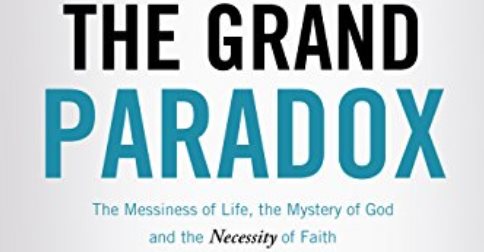 [ This post is part of the Patheos Book Club
discussion of THE GRAND PARADOX ]
The Grand Paradox:* *The Messiness of Life, the Mystery of God and the Necessity of Faith
Ken Wytsma
Hardback: Thomas Nelson, 2015.
In my early years of college, I went through somewhat of a crisis of faith, questioning who God was and how God relates to humanity. It was a pretty bleak time, but eventually through long series of conversations with friends and through reading certain works of writers in the Christian tradition like C.S. Lewis, Madeleine L’Engle and Frederick Buechner, I eventually grew into a deeper, more resilient understanding of God, and of how God is at work in humanity.
This crisis in my own life came to mind as I was reading Ken Wytsma’s new book The Grand Paradox: The Messiness of Life, the Mystery of God and the Necessity of Faith. I suspect that had it been in existence over two decades ago, when I was in college, I would have found this book immensely helpful and comforting amidst my struggles.
Wytsma introduces the task he is undertaking in the book:
We want answers from God. We have a ravenous appetite for clarity in life. And often, we desire justification or, at least, some kind of explanation for why He allows certain things to transpire. God, however, is more mysterious than we think He should be or wish He were. Most of the time, we don’t receive the desired answers or the clarity for which we clamor. In spite of our seeking, God seems just out of our reach. Try as we might, we can’t pin Him down.
In short, the truth is: life is messy, and God is mysterious.
We struggle with these truths. We spend our energy, often wrestling in prayer, hoping to attain that place of peace in which our life is less difficult, painful and challenging.
…
So how do we live, grow, flourish, and remain content in the mess? How do we trust, follow, and continue to obey God when He seems to remain elusive? (xix-xx)
Writing in a very accessible style that would work well with college student or other young adults (or even students in the upper years of high school), Wytsma wrestles with questions of faith and doubt, justice and happiness, love and vocation. The Grand Paradox is sensitive to all of the technological and philosophical challenges of living in the twenty-first century. In the chapter “Complexity and the Limits of Human Understanding,” Wytsma asks the pointed questions:
Though learning, traveling, and understanding are all good things, is there a saturation point? Is there a point where the pressure to see and do everything becomes unhealthy? How do we know when to stop, to take a step back, and let go of our hunger for more? When we always can do more, it requires trust to stop and not do any more. … What are the effects of these influences on our faith? How are we supposed to cling to faith in the midst of such a turbulent era? (105)
In spite of all his refreshingly honest questioning, Wytsma ultimately comes out on the side of faith, hope, and love: faith that God is sovereign, hope that guides us through doubt and dark nights of the soul, and God’s love that ever sustains us and helps us to grow.
For those who are interested in Slow Church, there is a helpful chapter on the importance of the local church. My only (tiny) criticism about this exceptionally helpful book is that I wish the significance of the church could have been sprinkled liberally throughout all the chapters of the book, and not simply relegated to a late chapter in the arc of book’s narrative, which would have strengthened not only Wytsma’s argument on behalf of the local church, but also the primary argument of the book, as the church – at its best and most faithful – can be an anchor for us amidst the storms of doubt and the crises of life, as well as a tangible expression of God’s love and care for us. Maybe we are too deeply formed by the individualism of Western culture that such an argument would not connect with the expected audience of this book? I do appreciate the ecclesiology that Wytsma offers, I simply wish that the book as a whole would have been a little more saturated with it.
My minor quibble aside, this is an extraordinary and helpful book. Had I read it in the midst of my own crises of faith, I might have been spared a substantial amount of grief. I pray that Wytsma’s words here will be wise and comforting friends to many folks (young and old), who are going through their own periods of darkness.
Previous Post

February 5, 2015
An Interview with Tim Suttle
Next Post
February 18, 2015 Alexander Schmemann - Lent is a Time of Slowing Down
Browse Our Archives
Select a Category Abundance Advent Books Community Conferences Conversations Ecology Economics Emergent Eucharist Family Food Gratitude Happenings Health history Hospitality Justice Lent Meditations Neighborhoods News Peace Place Poetry Politics Sabbath Scripture Stories Technology The Table Theology Uncategorized What is Slow Church? Youth
Select a Month January 2017 December 2016 November 2016 March 2016 June 2015 March 2015 February 2015 December 2014 November 2014 October 2014 September 2014 August 2014 July 2014 June 2014 May 2014 April 2014 March 2014 February 2014 January 2014 December 2013 November 2013 October 2013 September 2013 August 2013 July 2013 June 2013 May 2013 April 2013 March 2013 February 2013 January 2013 December 2012 November 2012 October 2012 September 2012 August 2012 July 2012 June 2012 May 2012 April 2012 March 2012 February 2012 January 2012 December 2011 November 2011 October 2011 September 2011
Follow Us!
TAKE THE
Religious Wisdom Quiz
Where was Jesus praying the night before He was crucified?
Select your answer to see how you score.
Tarsus Galilee The Garden of Gethsemane Antioch
Related posts from Slow Church


The Hopeful Politics of "Everyday Attentive Reciprocity"
An Open Apology to Chris Rock.
Indiana's New RFRA Bill Hits Home on Indy's...
TRENDING AT PATHEOS Progressive Christian

Why Christians Have a Sacred Duty to Vote:...
The Bible offers strong support for the sacred duty to vote. Here...

What Being a Modern-Day Apostle Means to Me
In my last column, I discussed the ins and outs of modern-day...

Did Ancient China Once Worship the God of...
Across human history, a common thread weaves through the origins of the...

Love Your Neighbor – Including Earth-Kin: Lev. 19,...
God’s command to love your neighbor means acting in an ethical and...

Lead a Church Study of “Jesus and Lao...
Guest writer Jack Thomas (The Irreverent Reverend) reflects on leading his church...

Principles for Understanding the Apostolic Ministry Today
Whenever people discover that my formal ministry title is "apostle," as in...
view all Progressive Christian blogs
Ad-Free & Subscriber Log-In Subscription Support
- About Us
- 2026 Calendar
- Videos
- Podcasts
- Library of World Religions
- Faith In Media Tracker
- Advertise With Us
- Write for Us
- Privacy Policy
- Terms of Service
- Do Not Sell My Data
- Contact Us
- Radiant Digital
- Manage Newsletter Subscriptions
- Unsubscribe From Notifications
- Sitemap
Copyright 2008-2026, Patheos. All rights reserved.
Subscription Support Ad-Free & Subscriber Log-In
Follow Patheos