
BuddhistCatholicContemplativeEvangelicalGeneral ChristianHinduJewishLatter-day SaintMuslimNew VisionsProgressive Christian
Beliefs
- Buddhist
- Catholic
- Contemplative
- Evangelical
- General Christian
- Hindu
- Jewish
- Latter-day Saint
- More Voices
- Muslim
- New Visions
- Pagan
- Progressive Christian
Topics
- Religion News
- Food and Religion
- Sports and Religion
- Religious Art
- Religious Music and Entertainment
- Religious Events
- History and Religion
- Style and Religion
- Politics and Religion
- Women in Religion
- Recreation Outdoors and Religion
- Business Finance and Religion
- Careers Workplace and Religion
- Education and Religion
- Family Parenting and Religion
- Health Fitness and Religion
- Home and Religion
- Relationships and Religion
- Technology and Religion
- Travel and Religion
Columnists
- Buddhist Columnists
- Business Finance and Religion Columnists
- Careers Workplace and Religion Columnists
- Catholic Columnists
- Contemplative Columnists
- Education and Religion Columnists
- Evangelists Columnists
- Family Parenting and Religion Columnists
- General Christian Columnists
- Health Fitness and Religion Columnists
- Hindu Columnists
- History and Religion Columnists
- Home and Religion Columnists
- Jewish Columnists
- More Voices Columnists
- Latter Day Columnists
- Muslim Columnists
- New Visions Columnists
- Nonreligious Columnists
- Pagan Columnists
- Politics and Religion Columnists
- Progressive Columnists
- Recreation Outdoors and Religion Columnists
- Relationships and Religion Columnists
- Religion News Columnists
- Religious Art Columnists
- Religious Events Columnists
- Religious Music and Entertainment Columnists
- Sports and Religion Columnists
- Style and Religion Columnists
- Technology and Religion Columnists
- Travel and Religion Columnists
- Women in Religion Columnists
Resource Library
- 2026 Calendar
- Library of World Religions
- The 100 Most Holy Places on Earth
- Patheos Answers
- Podcasts
- Videos
- Faith Leaders Database
- Anglican Episcopalian
- Bahai
- Baptist
- Buddhism
- Christianity
- Confucianism
- Eastern Orthodoxy
- Hinduism
- Holiness and Pentecostal
- ISKCON
- Islam
- Judaism
- Lutheran
- Methodist
- The Church of Jesus Christ of Latter-day Saints
- New Age
- Paganism
- Presbytarian and Reformed
- Protestantism
- Religion Behind the Scenes
- Roman Catholic
- Scientology
- Shia Islam
- Sikhism
- Sufism
- Sunni Islam
- Taoism
- Zen
- See all religions
Research Tools
 Ad-Free & Subscriber Log-In Subscription Support
Ad-Free & Subscriber Log-In Subscription Support
Follow Patheos 

- Trending:
- Forgiveness
- |
- Marriage
- |
- Consciousness
- |
- Death Penalty
- |
- Election
- |
- Halloween
 Slow Church
- Home
- Progressive Christian
- An Interview with Tim Suttle
An Interview with Tim Suttle
Last updated on: February 5, 2015 at 4:53 pm by John Pattison
An Interview with Tim Suttle 2015-02-05T16:53:30-05:00 John Pattison
Patheos Explore the world's faith through different perspectives on religion and spirituality! Patheos has the views of the prevalent religions and spiritualities of the world.
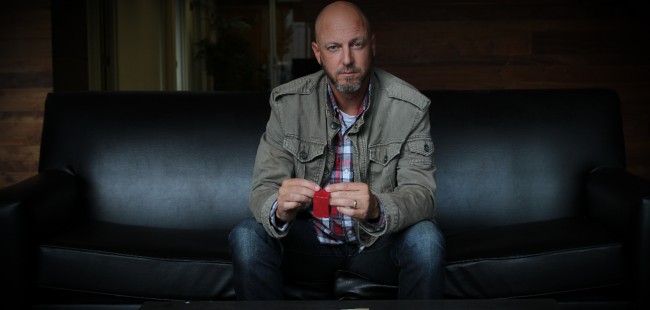
Tim Suttle’s Shrink: Faithful Ministry in a Church-Growth Culture was one of our favorite books of 2014. In fact, Chris has said that Shrink is “one of the wisest and most significant evangelical books” that he’s read in the last decade. I would agree with that. The book is deeply resonant with the themes of Slow Church.
I had the opportunity to interview Tim for the most recent print edition of the Englewood Review of Books. I encourage you to check it out. Below you’ll find an excerpt from the published interview and bonus material we couldn’t bear to leave on the editing room floor. We think you’ll find Tim’s message as compelling as we do.
EXCERPT
PATTISON
Are you encouraging churches to shrink? Are you saying that churches, in order to be live more faithfully in our neighborhood, necessarily need to be smaller?
SUTTLE
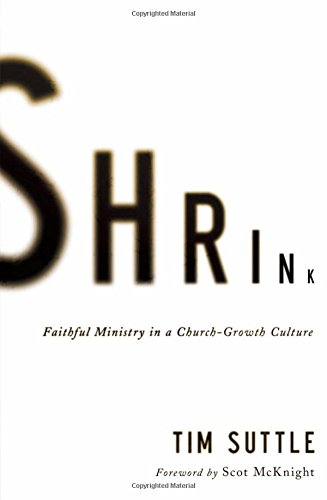 I mean “shrink” in more than sense. I don’t want the Church — in a universal sense — to get smaller. And I don’t necessarily want most churches to shrink, because most churches are already pretty small. The vast majority of churches are under 200 people. Yet nearly all our leadership advice comes from megachurch pastors. That’s a fundamental disconnect.
So it’s not that I necessarily want churches to shrink. What I want is for the Church to be faithful. I’m convinced that the Church has bought into a narrative of success and pragmatism that has co-opted the entire leadership conversation. Even the pieces I’ve been really hopeful about, and have an affinity for—the missional vein, for example—are plagued by an enduring, unshakeable pragmatism. Until we shake that pragmatism, we can’t represent an alternative way of life, which is central to what it means to be the Church.
What I’m urging people toward doesn’t have a specific number attached to it. But American culture is fascinated with all things “bigger, better, stronger, higher, faster.” The extent to which the Church has swallowed the American story of success, I think is a huge mistake. And the extent to which we try to correct that mistake, we can’t expect people to like it. It messes with assumptions about the way the world is and what is considered virtuous. We assume bigger is better. We assume that you ought to do whatever helps get you a leg up in this world. If you can then you should. Retraining ourselves to follow the way of Christ, a fundamentally different way of being in the world, I think we’ll shrink. There’s probably no way around it.
BONUS MATERIAL
PATTISON
Have we left conversations about ecclesiology too much to the professionals? Do we need to preach and teach more about ecclesiology in our churches, and have these discussions with our whole congregations?
SUTTLE
I think so. Every January, I visit church websites to see how all the big pastors are casting their visions for the year. I just laugh because I never have to do that. Unless there is some huge movement that God is asking us to do, some big move that we need to make as a church together, I don’t cast a vision. Yet I feel like I’m always talking about the Church. Always. I’m always talking about what it means to be the people of God. I would be surprised if I don’t use the phrase “people of God” every week. It is a fundamental preoccupation.
If you came to our church and started talking about “success,” I wouldn’t have to say a word. The people in our church would say themselves, “That’s not really what we’re about. We’re trying to be faithful. So whether it works or not, we’re going to do this because that’s what the Church does.” I hear that kind of thing all the time.
You know what else? Most of the things you do aren’t going to be successful — at least not by the normal standards of success. My church isn’t a “success.” No, I think my church is a living and breathing miracle. Take the fact that we are able to keep afloat when a significant number of our people are alcohol and drug addicts who make their home on the streets — there’s no way we should be able to stay afloat.
At some point you just stop worrying how it looks, because I think deep down this is what Scripture and Christian tradition tell me is what it means to be faithful. The people I’m with here support that. We leave the outcome to God.
PATTISON
I was part of a church where a very vocal minority in the church was trying to push out a recently hired pastor. The pastor was calling the church to a deeper level of faithfulness in our community, but some people didn’t like him and a number of folks had left the church. During one business meeting, the head of the Stewardship Committee, who was basically making the financial case to fire the pastor, held up a list of all the major givers who had left our church. He said that while it’s true that some new people had started coming to our church, many of them couldn’t afford to tithe or didn’t know they were supposed to. I responded by saying that I look forward to the time when we proudly hold up a list of all the poor people who had started attending our church.
SUTTLE
You can only say that if you’ve been formed in a different narrative. If you say that to a person who can’t recognize it as anything other than utter nonsense, it becomes a point of conflict. We are trying to live our lives in such a way that they are completely unintelligible — foolish and stupid, in fact — unless Jesus was God. If Jesus was God, then we had better live this way, or else we are bowing down to a false god.
My conviction is that God loves us very much, and although there’s always grace, and even though God only ever works with whatever brokenness we give, the Church in America is bowing down to the false God of American exceptionalism and a fascination with success.
You think your church was shrinking, look at the Church in America. It’s time for us to ask hard questions about why this is happening. We need to look outside the American narrative for the answers. In other words, candles are not going to help you. Turning the lights down low, burning incense, and singing the latest Hillsong worship set is not going to fix your problems. We have to switch stories. Until we switch stories, we will become less and less relevant to the people in our communities and our workplaces and our neighborhoods who already can’t figure out what God has to offer them.
Image Credit: Featured image from Storylight Studios, where you can also watch the Shrink trailer.
Previous Post
February 4, 2015
Dietrich Bonhoeffer on Slow Church...
Next Post

February 12, 2015 Ken Wytsma - The Grand Paradox [Patheos Book Club]
Browse Our Archives
Select a Category Abundance Advent Books Community Conferences Conversations Ecology Economics Emergent Eucharist Family Food Gratitude Happenings Health history Hospitality Justice Lent Meditations Neighborhoods News Peace Place Poetry Politics Sabbath Scripture Stories Technology The Table Theology Uncategorized What is Slow Church? Youth
Select a Month January 2017 December 2016 November 2016 March 2016 June 2015 March 2015 February 2015 December 2014 November 2014 October 2014 September 2014 August 2014 July 2014 June 2014 May 2014 April 2014 March 2014 February 2014 January 2014 December 2013 November 2013 October 2013 September 2013 August 2013 July 2013 June 2013 May 2013 April 2013 March 2013 February 2013 January 2013 December 2012 November 2012 October 2012 September 2012 August 2012 July 2012 June 2012 May 2012 April 2012 March 2012 February 2012 January 2012 December 2011 November 2011 October 2011 September 2011
Follow Us!
TAKE THE
Religious Wisdom Quiz
True or False: Noah's ark was made of cedar wood.
Select your answer to see how you score.
TRUE FALSE
Related posts from Slow Church

The Hopeful Politics of "Everyday Attentive Reciprocity"

A Politics of Hope in the Trump Age


Scot McKnight - A Fellowship of Differents [Patheos...
TRENDING AT PATHEOS Progressive Christian

Why Christians Have a Sacred Duty to Vote:...
The Bible offers strong support for the sacred duty to vote. Here...

What Being a Modern-Day Apostle Means to Me
In my last column, I discussed the ins and outs of modern-day...

Did Ancient China Once Worship the God of...
Across human history, a common thread weaves through the origins of the...

Love Your Neighbor – Including Earth-Kin: Lev. 19,...
God’s command to love your neighbor means acting in an ethical and...

Lead a Church Study of “Jesus and Lao...
Guest writer Jack Thomas (The Irreverent Reverend) reflects on leading his church...

Principles for Understanding the Apostolic Ministry Today
Whenever people discover that my formal ministry title is "apostle," as in...
view all Progressive Christian blogs
Ad-Free & Subscriber Log-In Subscription Support
- About Us
- 2026 Calendar
- Videos
- Podcasts
- Library of World Religions
- Faith In Media Tracker
- Advertise With Us
- Write for Us
- Privacy Policy
- Terms of Service
- Do Not Sell My Data
- Contact Us
- Radiant Digital
- Manage Newsletter Subscriptions
- Unsubscribe From Notifications
- Sitemap
Copyright 2008-2026, Patheos. All rights reserved.
Subscription Support Ad-Free & Subscriber Log-In
Follow Patheos