
BuddhistCatholicContemplativeEvangelicalGeneral ChristianHinduJewishLatter-day SaintMuslimNew VisionsProgressive Christian
Beliefs
- Buddhist
- Catholic
- Contemplative
- Evangelical
- General Christian
- Hindu
- Jewish
- Latter-day Saint
- More Voices
- Muslim
- New Visions
- Pagan
- Progressive Christian
Topics
- Religion News
- Food and Religion
- Sports and Religion
- Religious Art
- Religious Music and Entertainment
- Religious Events
- History and Religion
- Style and Religion
- Politics and Religion
- Women in Religion
- Recreation Outdoors and Religion
- Business Finance and Religion
- Careers Workplace and Religion
- Education and Religion
- Family Parenting and Religion
- Health Fitness and Religion
- Home and Religion
- Relationships and Religion
- Technology and Religion
- Travel and Religion
Columnists
- Buddhist Columnists
- Business Finance and Religion Columnists
- Careers Workplace and Religion Columnists
- Catholic Columnists
- Contemplative Columnists
- Education and Religion Columnists
- Evangelists Columnists
- Family Parenting and Religion Columnists
- General Christian Columnists
- Health Fitness and Religion Columnists
- Hindu Columnists
- History and Religion Columnists
- Home and Religion Columnists
- Jewish Columnists
- More Voices Columnists
- Latter Day Columnists
- Muslim Columnists
- New Visions Columnists
- Nonreligious Columnists
- Pagan Columnists
- Politics and Religion Columnists
- Progressive Columnists
- Recreation Outdoors and Religion Columnists
- Relationships and Religion Columnists
- Religion News Columnists
- Religious Art Columnists
- Religious Events Columnists
- Religious Music and Entertainment Columnists
- Sports and Religion Columnists
- Style and Religion Columnists
- Technology and Religion Columnists
- Travel and Religion Columnists
- Women in Religion Columnists
Resource Library
- 2026 Calendar
- Library of World Religions
- The 100 Most Holy Places on Earth
- Patheos Answers
- Podcasts
- Videos
- Faith Leaders Database
- Anglican Episcopalian
- Bahai
- Baptist
- Buddhism
- Christianity
- Confucianism
- Eastern Orthodoxy
- Hinduism
- Holiness and Pentecostal
- ISKCON
- Islam
- Judaism
- Lutheran
- Methodist
- The Church of Jesus Christ of Latter-day Saints
- New Age
- Paganism
- Presbytarian and Reformed
- Protestantism
- Religion Behind the Scenes
- Roman Catholic
- Scientology
- Shia Islam
- Sikhism
- Sufism
- Sunni Islam
- Taoism
- Zen
- See all religions
Research Tools
 Ad-Free & Subscriber Log-In Subscription Support
Ad-Free & Subscriber Log-In Subscription Support
Follow Patheos 

- Trending:
- Forgiveness
- |
- Marriage
- |
- Consciousness
- |
- Death Penalty
- |
- Election
- |
- Halloween
 Slow Church
- Home
- Progressive Christian
- The Parable of the Old Runner
The Parable of the Old Runner
Last updated on: August 6, 2014 at 1:12 pm by Christopher Smith
The Parable of the Old Runner 2014-08-06T13:12:58-05:00 Christopher Smith
Patheos Explore the world's faith through different perspectives on religion and spirituality! Patheos has the views of the prevalent religions and spiritualities of the world.
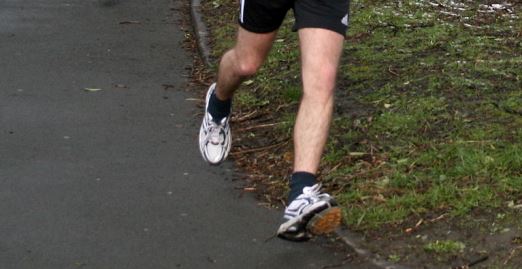
There’s an old runner I know who recently shared a story that I think will be helpful for churches that desire to be healthy. (Actually, it probably would be helpful for all communities: neighborhoods, other faith communities, etc., but this is the Slow CHURCH blog after all and our audience here is mostly Christian).
The Old Runner realized earlier this year that after over a decade of pretty-much-not-running, he had grown fat and out-of-shape. So, he worked hard for several months, and started running regularly, and felt himself getting back into decent shape, and worked up to being able to run 10K (a little over 6 miles). But earlier this summer, a number of things happened and the Old Runner pulled several muscles/tendons in his leg, from his Achilles to his hamstring. Initially, none of these injuries was major, and he would rest a little and try to keep running somewhat regularly. But the Old Runner, would be in a hurry and wouldn’t stretch his legs well, or he wouldn’t be paying very much attention, and would step in a hole or on a patch of sidewalk that had heaved itself up a little, and he kept re-injuring one part of his leg or another. And his shoes were pretty worn out in ways that accentuated the injuries, and he didn’t really have the money to replace them, which didn’t help matters much. The final straw was that — in a fit of prideful stupidity — the Old Runner tried to beat a bunch of much younger runners in a sprint race and felt his hamstring go “POP!” in the middle of the sprint, a much worse injury than any of the previous ones. The Old Runner could barely walk for a few days, and had to stop running for a few weeks. This forced rest, and his slow, cautious return to running in recent weeks, caused the Old Runner to reflect a bit on his predicament. The Old Runner, put on some weight during his rest, and now struggles to run 5K. Here are some things that the Old Runner learned that seem to me like they might contain a wee bit of wisdom for churches.
Humility – Setbacks, like the injuries that the Old Runner experienced, are part of life. If we want to be healthy, we must accept this reality, and bounce back slowly and painfully after setbacks, and keep pursuing health. Also, it’s important not to compare ourselves or to try to compete with others, and especially others that are in very different health and situations than we are (e.g., the young runners that the Old Runner thought he could beat).
Preparation – The Old Runner’s injuries reminded him, and particularly as an OLD runner whose muscles just weren’t as flexible as they used to be, that he always needed to prepare carefully before running by stretching his muscles and especially those in his legs. For churches, many of the things we do that don’t seem like we’re doing anything — say prayer, or grieving with those who grieve, or studying scripture, or engaging in conversations about theology or discernment — are actually very important as preparation for our action as a community in the world, and like the Old Runner, we may be setting ourselves up for setbacks if we’re not attentive to the ways in which we prepare ourselves. (I realize that the metaphor breaks down a little here, as the things I described above are important of themselves, and although they help us prepare, they are not merely preparation)
Diversity – The Old Runner found, as he was getting back into running after his injuries, that in order to run well, he couldn’t simply focus on running, he had to do a number of things: eating less and better would help to manage his weight, walking and biking would help to foster cardio health (especially until his legs were completely healed), sleeping well would be important too. Health cannot simply be measured by a single metric: the 10k time for the Old Runner or perhaps, the size of a congregation, for churches. Healthy communities are diverse ones; they contain diverse people and are engaged deeply in diverse activities. Being engaged as a community in a number of different activities might mean that we may not be able to do one activity as quickly or on the scale that we would prefer, but the activities insofar as they promote health, will augment one another, and will help navigate the inevitable setbacks with more grace.
Vigilant Attentiveness – The Old Runner found as he resumed running, that he had to be attentive to his every footstep, learning the lay of the land, and steering clear of even tiny depressions or rises in the land. This attentiveness, of course, had to be secondary to the main task of running; he couldn’t be captivated by the ground and stop to gaze at it, but the Old Runner knew painfully well what happened when he didn’t pay attention to every footstep. Similarly, as we do things as a church community, we need to be attentive to what’s going on around us, even small “bumps in the road” can cause substantial pain if we don’t see them coming.
Tenacity – This lesson goes hand-in-hand with humility. When you know what you are called to do, keep at it even when there are setbacks or stoppages. Learn to bounce back after complications or even failure. Or in the spirit of diversity, consider the other sorts of related activities will help you be more healthy in general and also may reinforce your efforts in any particular area.
Economic Creativity – The Old Runner came to realize that although it didn’t seem he had the money to do so, he probably could find a way to replace those pesky beat-up shoes that amplified the injuries he was having in his legs. There are always plenty of resources to do what is healthy. We may have to get creative or to make sacrifices, but the resources are always there. I don’t have the space to explore this in depth here, but there are a host of opportunities for churches to generate resources, from special fundraising campaigns to renting out space in the church building or on its land to starting initiatives that engage neighbors and generate income (coffeehouse, restaurant, home repairs, the possibilities are endless!)
These virtues that the Old Runner is painfully learning are essential to the health and well-being of communities, and especially churches. What other virtues must we cultivate as we slow down and seek to be more faithful communities of God’s people in our particular places?
Image Credit: Paul Holloway, Creative Commons License via Wikimedia Commons.
Previous Post

July 26, 2014
Slow Church, Sin and Repentance.
Next Post

August 10, 2014 Hope for Iraq. For other conflict zones. And for the world.
Browse Our Archives
Select a Category Abundance Advent Books Community Conferences Conversations Ecology Economics Emergent Eucharist Family Food Gratitude Happenings Health history Hospitality Justice Lent Meditations Neighborhoods News Peace Place Poetry Politics Sabbath Scripture Stories Technology The Table Theology Uncategorized What is Slow Church? Youth
Select a Month January 2017 December 2016 November 2016 March 2016 June 2015 March 2015 February 2015 December 2014 November 2014 October 2014 September 2014 August 2014 July 2014 June 2014 May 2014 April 2014 March 2014 February 2014 January 2014 December 2013 November 2013 October 2013 September 2013 August 2013 July 2013 June 2013 May 2013 April 2013 March 2013 February 2013 January 2013 December 2012 November 2012 October 2012 September 2012 August 2012 July 2012 June 2012 May 2012 April 2012 March 2012 February 2012 January 2012 December 2011 November 2011 October 2011 September 2011
Follow Us!
TAKE THE
Religious Wisdom Quiz
Multitudes of locusts came in waves—the cutting, swarming, hopping, and destroying locusts. What did this plague foreshadow?
Select your answer to see how you score.
A famine God's wrath The day of the Lord An invasion
Related posts from Slow Church

A Politics of Hope in the Trump Age

Deeper into Your Love and Compassion - A...

Indiana's New RFRA Bill Hits Home on Indy's...
TRENDING AT PATHEOS Progressive Christian

Why Christians Have a Sacred Duty to Vote:...
The Bible offers strong support for the sacred duty to vote. Here...

What Being a Modern-Day Apostle Means to Me
In my last column, I discussed the ins and outs of modern-day...

Did Ancient China Once Worship the God of...
Across human history, a common thread weaves through the origins of the...

Love Your Neighbor – Including Earth-Kin: Lev. 19,...
God’s command to love your neighbor means acting in an ethical and...

Lead a Church Study of “Jesus and Lao...
Guest writer Jack Thomas (The Irreverent Reverend) reflects on leading his church...

Principles for Understanding the Apostolic Ministry Today
Whenever people discover that my formal ministry title is "apostle," as in...
view all Progressive Christian blogs
Ad-Free & Subscriber Log-In Subscription Support
- About Us
- 2026 Calendar
- Videos
- Podcasts
- Library of World Religions
- Faith In Media Tracker
- Advertise With Us
- Write for Us
- Privacy Policy
- Terms of Service
- Do Not Sell My Data
- Contact Us
- Radiant Digital
- Manage Newsletter Subscriptions
- Unsubscribe From Notifications
- Sitemap
Copyright 2008-2026, Patheos. All rights reserved.
Subscription Support Ad-Free & Subscriber Log-In
Follow Patheos