
BuddhistCatholicContemplativeEvangelicalGeneral ChristianHinduJewishLatter-day SaintMuslimNew VisionsProgressive Christian
Beliefs
- Buddhist
- Catholic
- Contemplative
- Evangelical
- General Christian
- Hindu
- Jewish
- Latter-day Saint
- More Voices
- Muslim
- New Visions
- Pagan
- Progressive Christian
Topics
- Religion News
- Food and Religion
- Sports and Religion
- Religious Art
- Religious Music and Entertainment
- Religious Events
- History and Religion
- Style and Religion
- Politics and Religion
- Women in Religion
- Recreation Outdoors and Religion
- Business Finance and Religion
- Careers Workplace and Religion
- Education and Religion
- Family Parenting and Religion
- Health Fitness and Religion
- Home and Religion
- Relationships and Religion
- Technology and Religion
- Travel and Religion
Columnists
- Buddhist Columnists
- Business Finance and Religion Columnists
- Careers Workplace and Religion Columnists
- Catholic Columnists
- Contemplative Columnists
- Education and Religion Columnists
- Evangelists Columnists
- Family Parenting and Religion Columnists
- General Christian Columnists
- Health Fitness and Religion Columnists
- Hindu Columnists
- History and Religion Columnists
- Home and Religion Columnists
- Jewish Columnists
- More Voices Columnists
- Latter Day Columnists
- Muslim Columnists
- New Visions Columnists
- Nonreligious Columnists
- Pagan Columnists
- Politics and Religion Columnists
- Progressive Columnists
- Recreation Outdoors and Religion Columnists
- Relationships and Religion Columnists
- Religion News Columnists
- Religious Art Columnists
- Religious Events Columnists
- Religious Music and Entertainment Columnists
- Sports and Religion Columnists
- Style and Religion Columnists
- Technology and Religion Columnists
- Travel and Religion Columnists
- Women in Religion Columnists
Resource Library
- 2026 Calendar
- Library of World Religions
- The 100 Most Holy Places on Earth
- Patheos Answers
- Podcasts
- Videos
- Faith Leaders Database
- Anglican Episcopalian
- Bahai
- Baptist
- Buddhism
- Christianity
- Confucianism
- Eastern Orthodoxy
- Hinduism
- Holiness and Pentecostal
- ISKCON
- Islam
- Judaism
- Lutheran
- Methodist
- The Church of Jesus Christ of Latter-day Saints
- New Age
- Paganism
- Presbytarian and Reformed
- Protestantism
- Religion Behind the Scenes
- Roman Catholic
- Scientology
- Shia Islam
- Sikhism
- Sufism
- Sunni Islam
- Taoism
- Zen
- See all religions
Research Tools
 Ad-Free & Subscriber Log-In Subscription Support
Follow Patheos 

- Trending:
- Advent
- |
- Forgiveness
- |
- Thanksgiving
- |
- Election
- |
- Seasonal Holidays
- |
- Marriage
 Slow Church
- Home
- Progressive Christian
- Watershed Discipleship [Earth Day 2014]
Watershed Discipleship [Earth Day 2014]
Last updated on: April 22, 2014 at 9:09 pm by Christopher Smith
Watershed Discipleship [Earth Day 2014] 2014-04-22T21:09:07-05:00 Christopher Smith
Patheos Explore the world's faith through different perspectives on religion and spirituality! Patheos has the views of the prevalent religions and spiritualities of the world.
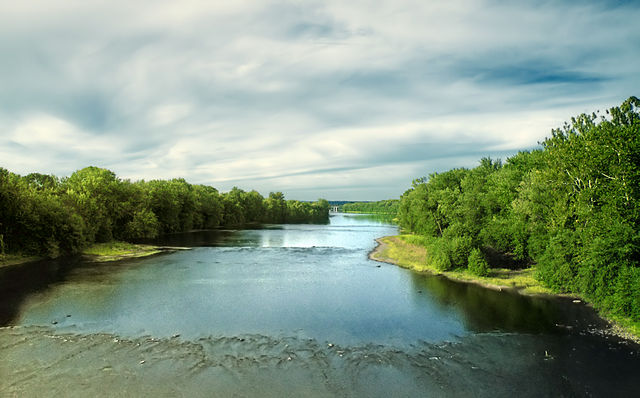
Since today is Earth Day and since I reflected yesterday on some of the ecological themes in in the NOAH movie, I thought it fitting to share an idea that I have recently been introduced to that might help us what church communities might look like that are attentive to their places and creatures, land and ecology of their places.
Ched Myers, whom some of you may know from his important commentary on the book of Mark, Binding the Strong Man, or on his work on Sabbath Economics, has recently been exploring the idea of Watershed Discipleship.
What is Watershed Discipleship? (via WatershedDiscipleship.org )
“Watershed discipleship” is an intentional triple entendre.
-
The ecological endgame that stalks our history puts humanity in a watershed moment that demands serious, sustained engagement from Christians; we must choose between denial and discipleship. Both our love for the Creator and the interlocking crises of global warming, peak “everything,” and widening ecological degradation should compel us to make environmental justice and sustainability integral to everything we do as disciples**—and as citizen inhabitants of specific places.** This requires us to embrace deep paradigm shifts and broad practical changes of habit in our homes, churches, and denominations. It is time to embrace the vocation envisioned by the Apostle Paul: the “children of God” must take a stand of passionate solidarity with a Creation that is enslaved to our dysfunctional and toxic civilizational lifeways, and commit ourselves to the liberation to the earth and all its inhabitants (Rom 8:20f).
-
Churchly theologies of “Creation Care” have gained remarkable traction among a wide and ecumenical spectrum of North American churches over the last two decades–yet they are still often too abstract and/or unfocused. We cannot stand against the prevailing industrial system of robbery (of the poor and of the earth) if we have no place to stand. Wendell Berry rightly points out that “global thinking” is often merely a euphemism for abstract anxieties or passions that are useless for engaged efforts to save actual landscapes. “The question that must be addressed,” he contends, “is not how to care for the planet, but how to care for each of the planet’s millions of human and natural neighborhoods, each of its millions of small pieces and parcels of land, each one of which is in some precious way different from all the others.” We are thus persuaded that the best way to orient the church’s work and witness is through bioregionally-grounded planning and action which focuses on the actual watersheds (defined here) we inhabit. Because this orientation is still foreign to our Christian communities, our task is to nurture watershed consciousness and engagement in our faith traditions.
-
To be faithful disciples in a watershed at this watershed historical moment, as Todd Wynward reminds us, we need to become disciples of our watersheds, which have everything to teach us about interrelatedness and resiliency. This requires literacy; to paraphrase Baba Dioum, a Senegalese environmentalist:• We won’t save places we don’t love.
• We can’t love places we don’t know.
• And we don’t know places we haven’t learned.
This is both a warning and a promise that we believe sums up our vocation as church in the present crisis.
We think a good vehicle for the tasks of education, advocacy and organizing required to learn, love and save real places could be a “watershed discipleship alliance.”
—————–
- THIS PAGEhas some helpful introductory videos to this idea…
- Some more very helpful background here…
This idea of Watershed Discipleship seems to be moving in a similar direction to Slow Church, and provides some helpful, specific language for imagining churches as becoming rooted in specific places and attentive to the life of creation in those places.
What are some ways that we can begin we “nurture watershed consciousness and engagement” in our own churches and neighborhoods?
Previous Post

April 21, 2014
There's Always an Ark! [Thoughts on the NOAH film]
Next Post

April 24, 2014 Phil Kenneson - Toward a Theology of Sleep
Browse Our Archives
Select a Category Abundance Advent Books Community Conferences Conversations Ecology Economics Emergent Eucharist Family Food Gratitude Happenings Health history Hospitality Justice Lent Meditations Neighborhoods News Peace Place Poetry Politics Sabbath Scripture Stories Technology The Table Theology Uncategorized What is Slow Church? Youth
Select a Month January 2017 December 2016 November 2016 March 2016 June 2015 March 2015 February 2015 December 2014 November 2014 October 2014 September 2014 August 2014 July 2014 June 2014 May 2014 April 2014 March 2014 February 2014 January 2014 December 2013 November 2013 October 2013 September 2013 August 2013 July 2013 June 2013 May 2013 April 2013 March 2013 February 2013 January 2013 December 2012 November 2012 October 2012 September 2012 August 2012 July 2012 June 2012 May 2012 April 2012 March 2012 February 2012 January 2012 December 2011 November 2011 October 2011 September 2011
Follow Us!
TAKE THE
Religious Wisdom Quiz
Which Psalm is often read at funerals: "Even though I walk through the valley..."?
Select your answer to see how you score.
Psalm 51 Psalm 90 Psalm 23 Psalm 137
Related posts from Slow Church

The Hopeful Politics of "Everyday Attentive Reciprocity"
An Open Apology to Chris Rock.
Indiana's New RFRA Bill Hits Home on Indy's...
TRENDING AT PATHEOS Progressive Christian

Personal Devotion After Deconstruction
It’s pretty standard for progressive believers to reject aspects of their religious...

The Secret behind A Charlie Brown Thanksgiving
Where Franklin Sat at Charlie Brown's Thanksgiving Table Sparky was sticking to...

Bridging the Gap Between God and Man
From Far Off to the Ultimate Embrace “God is a Spirit: and...

Let Matthew 25 Guide You to a Greater...
With the crisp feel of fall in the air, our minds quickly...

Can a Chatbot Touch Your Soul?
Can a chatbot offer genuine spiritual counsel? One conversation brought me to...

Religion and Politics: How Should We Then Live?
Two cultural axioms get repeated in polite company. Don't mix religion and...
view all Progressive Christian blogs
Ad-Free & Subscriber Log-In Subscription Support
- About Us
- 2026 Calendar
- Videos
- Podcasts
- Library of World Religions
- Faith In Media Tracker
- Advertise With Us
- Write for Us
- Privacy Policy
- Terms of Service
- Do Not Sell My Data
- Contact Us
- Radiant Digital
- Manage Newsletter Subscriptions
- Unsubscribe From Notifications
- Sitemap
Copyright 2008-2026, Patheos, part of the Radiant Digital network of media brands. All rights reserved.
Subscription Support Ad-Free & Subscriber Log-In
Follow Patheos