
BuddhistCatholicContemplativeEvangelicalGeneral ChristianHinduJewishLatter-day SaintMuslimNew VisionsProgressive Christian
Beliefs
- Buddhist
- Catholic
- Contemplative
- Evangelical
- General Christian
- Hindu
- Jewish
- Latter-day Saint
- More Voices
- Muslim
- New Visions
- Pagan
- Progressive Christian
Topics
- Religion News
- Food and Religion
- Sports and Religion
- Religious Art
- Religious Music and Entertainment
- Religious Events
- History and Religion
- Style and Religion
- Politics and Religion
- Women in Religion
- Recreation Outdoors and Religion
- Business Finance and Religion
- Careers Workplace and Religion
- Education and Religion
- Family Parenting and Religion
- Health Fitness and Religion
- Home and Religion
- Relationships and Religion
- Technology and Religion
- Travel and Religion
Columnists
- Buddhist Columnists
- Business Finance and Religion Columnists
- Careers Workplace and Religion Columnists
- Catholic Columnists
- Contemplative Columnists
- Education and Religion Columnists
- Evangelists Columnists
- Family Parenting and Religion Columnists
- General Christian Columnists
- Health Fitness and Religion Columnists
- Hindu Columnists
- History and Religion Columnists
- Home and Religion Columnists
- Jewish Columnists
- More Voices Columnists
- Latter Day Columnists
- Muslim Columnists
- New Visions Columnists
- Nonreligious Columnists
- Pagan Columnists
- Politics and Religion Columnists
- Progressive Columnists
- Recreation Outdoors and Religion Columnists
- Relationships and Religion Columnists
- Religion News Columnists
- Religious Art Columnists
- Religious Events Columnists
- Religious Music and Entertainment Columnists
- Sports and Religion Columnists
- Style and Religion Columnists
- Technology and Religion Columnists
- Travel and Religion Columnists
- Women in Religion Columnists
Resource Library
- 2026 Calendar
- Library of World Religions
- The 100 Most Holy Places on Earth
- Patheos Answers
- Podcasts
- Videos
- Faith Leaders Database
- Anglican Episcopalian
- Bahai
- Baptist
- Buddhism
- Christianity
- Confucianism
- Eastern Orthodoxy
- Hinduism
- Holiness and Pentecostal
- ISKCON
- Islam
- Judaism
- Lutheran
- Methodist
- The Church of Jesus Christ of Latter-day Saints
- New Age
- Paganism
- Presbytarian and Reformed
- Protestantism
- Religion Behind the Scenes
- Roman Catholic
- Scientology
- Shia Islam
- Sikhism
- Sufism
- Sunni Islam
- Taoism
- Zen
- See all religions
Research Tools
 Ad-Free & Subscriber Log-In Subscription Support
Ad-Free & Subscriber Log-In Subscription Support
Follow Patheos 

- Trending:
- Forgiveness
- |
- Marriage
- |
- Consciousness
- |
- Death Penalty
- |
- Election
- |
- Halloween
 Slow Church
- Home
- Progressive Christian
- Not Just for the Young and Hip…
Not Just for the Young and Hip…
Last updated on: March 31, 2014 at 8:00 am by Christopher Smith
Not Just for the Young and Hip… 2014-03-31T08:00:48-05:00 Christopher Smith
Patheos Explore the world's faith through different perspectives on religion and spirituality! Patheos has the views of the prevalent religions and spiritualities of the world.
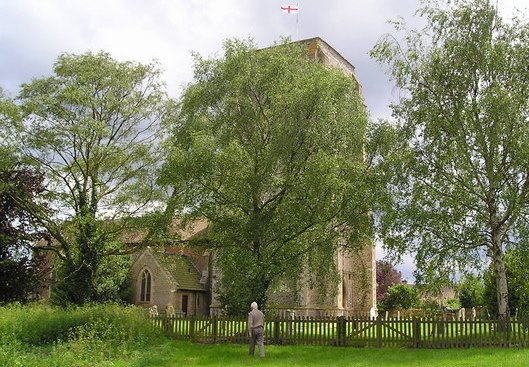
We were thrilled with the RNS article on Slow Church that ran in The Washington Post (and at least a dozen other news outlets) over the weekend. Great as the article was, there was one perplexing section, the interview with sociologist of religion Scott Thumma, who opined that Slow Church would appeal primarily to the young and hip demographic. Our friend Brent Bill, who by his own admission, is neither young nor hip, has penned a response, which we are honored to share here…
“We believe Slow Food and the other Slow movements hold important lessons for the American churches. They compel us to ask ourselves tough questions about the ground our faith communities have ceded to the cult of speed. And they invite all of us—clergy, theologians, and laypeople—to start exploring and experimenting with the possibilities of Slow Church. Not as another Church Growth strategy, but as a way of re-visioning what it means to be communities of believers gathered and rooted in particular places at a particular time.” (from the intro to SLOW CHURCH)
When I began reading C. Christopher Smith and John Pattison’s Slow Church: Cultivating Community in the Patient Way of Jesus, this section of the introduction grabbed my attention. Especially the sentence, “Not as another Church Growth strategy, but as a way of re-visioning what it means to be communities of believers gathered and rooted in particular places at a particular time.” That’s something I’ve been thinking about for a long time. For many years I have served as a congregational consultant and seen group after group looking at program after program that would draw new people to them. Few did. That’s because, I think, so many congregations have been wanting to grow by the vampire method – “We need new blood!”
As Slow Church points out, we are asked to be “communities of believers gathered and rooted in particular places at a particular time.” Which means seeking to serve and be God’s people where we are. A question that I have long said congregations need to ask (and rarely do is) “What is God calling us to do with this people in this place in this time?” We are called to create deep communities rooted in worship and living out “faith and practice,” as we Quakers say. “Swift, Lord you are not” says Catholic poet Kilian McDonnell. And so neither should God’s church be.
Now I’m not saying any of this as some inner city, hipster type. Which is who my friend Scott Thumma implied would be the sort of person interested in the Slow Church movement when he was interviewed for a recent article about it.
“This would likely appeal to an educated, younger hip group of people,” said Thuma. “There aren’t many of them in small churches.”
I think he’s wrong on both counts.
On the first count, this theory/movement/theology/practice appeals to me and as I already said I’m not young or hip. I’m in my early sixties, live on a farm where I raise (of all things!) trees and prairie grass, and I’m a Quaker. Not because I’m a natural contemplative or peace-nik, but because I am often a conflict enjoying, driven Type-A personality who needs to be told to be still and settled and peaceful. The type of congregations that will come as a result of Slow Church are just what I – and society, I believe – need at this time.
Second, I think there are more educated, young hip people in small churches than he realizes. True, they may not be flocking to more formerly rural, exurban congregations like the one I attend. As I travel around the US and Canada talking to people who are starting new Quaker congregations, though, I am engaged with many young adults who are participating in small congregations – either in homes or storefronts or church buildings. And the sort of Slow Church mixture of faith and practice proposed by Smith and Pattison seems to be exactly what they’re looking for.
I realize that Thumma has spent a lot of time studying mega-churches and what we can learn from them. And it’s good, important work. But his lenses of who might be interested in this movement might just be a bit colored by all his research. The Slow Church process proposed in this book is far different from the program-driven processes that led to the rise of the mega-churches. This is much more about recovering a deep sense of personal faith and life in community than it is about attracting numbers of people – some of whom stay and many of whom don’t.
The Slow Church movement is radical, simple, and contemporary. It is rooted in various manifestations throughout Christian history (the first century churches in particular and various reform movements), but is a contemporary as the people practicing it today. It is radically counter-cultural, as the church should be, comprised as it is of key ingredients of Christ’s teaching that are diametrically different than modern society and much of modern Churchianity. It calls us to be witnesses to the power of the Gospel in challenging the powers and principalities whilst living in deep Love and community. It is simple, but not simple-minded.
You don’t have to be an educated, young hipster to find such authenticity appealing. You just have to be a person who longs to go deeper with God in community in ways that nurture the soul and the neighborhood.
Sign me up for Slow.
——–
Brent Bill is a Quaker minister and author who works to help establish new Quaker congregations across the US and Canada. He is author of over 20 books and lives on a farm outside of Indianapolis.
IMAGE CREDIT: Creative Commons License via Wikimedia Commons…

Previous Post

March 27, 2014
"A Great Day For the Children of Indiana"
Next Post

April 9, 2014 Scott Thumma: Further Conversation on Sociology and Slow Church.
Browse Our Archives
Select a Category Abundance Advent Books Community Conferences Conversations Ecology Economics Emergent Eucharist Family Food Gratitude Happenings Health history Hospitality Justice Lent Meditations Neighborhoods News Peace Place Poetry Politics Sabbath Scripture Stories Technology The Table Theology Uncategorized What is Slow Church? Youth
Select a Month January 2017 December 2016 November 2016 March 2016 June 2015 March 2015 February 2015 December 2014 November 2014 October 2014 September 2014 August 2014 July 2014 June 2014 May 2014 April 2014 March 2014 February 2014 January 2014 December 2013 November 2013 October 2013 September 2013 August 2013 July 2013 June 2013 May 2013 April 2013 March 2013 February 2013 January 2013 December 2012 November 2012 October 2012 September 2012 August 2012 July 2012 June 2012 May 2012 April 2012 March 2012 February 2012 January 2012 December 2011 November 2011 October 2011 September 2011
Follow Us!
TAKE THE
Religious Wisdom Quiz
What does "Jabez" mean in Hebrew?
Select your answer to see how you score.
Sorrow Strength Victory The Lord Saves
Related posts from Slow Church


The Hopeful Politics of "Everyday Attentive Reciprocity"

A Politics of Hope in the Trump Age
An Open Apology to Chris Rock.
TRENDING AT PATHEOS Progressive Christian

Why Christians Have a Sacred Duty to Vote:...
The Bible offers strong support for the sacred duty to vote. Here...

What Being a Modern-Day Apostle Means to Me
In my last column, I discussed the ins and outs of modern-day...

Did Ancient China Once Worship the God of...
Across human history, a common thread weaves through the origins of the...

Love Your Neighbor – Including Earth-Kin: Lev. 19,...
God’s command to love your neighbor means acting in an ethical and...

Lead a Church Study of “Jesus and Lao...
Guest writer Jack Thomas (The Irreverent Reverend) reflects on leading his church...

Principles for Understanding the Apostolic Ministry Today
Whenever people discover that my formal ministry title is "apostle," as in...
view all Progressive Christian blogs
Ad-Free & Subscriber Log-In Subscription Support
- About Us
- 2026 Calendar
- Videos
- Podcasts
- Library of World Religions
- Faith In Media Tracker
- Advertise With Us
- Write for Us
- Privacy Policy
- Terms of Service
- Do Not Sell My Data
- Contact Us
- Radiant Digital
- Manage Newsletter Subscriptions
- Unsubscribe From Notifications
- Sitemap
Copyright 2008-2026, Patheos. All rights reserved.
Subscription Support Ad-Free & Subscriber Log-In
Follow Patheos